
Business
17:38, 18-May-2018
China cooperates with Canada in environmental sector
 ["china"]
Share







Copied
03:18
Canada is working closely with China on clean technology and low carbon buildings. That came after Chinese Environment Minister Li Ganjie and his Canadian counterpart Catherine McKenna headed the first Environmental Ministers' Dialogue in December 2017 in Beijing, where they signed deals on water and chemicals management as well as an agreement on environmental emergency response.
Now both countries boost Public-Private-Partnership projects and encourage investments in such sectors.
Ryan Baerg, consul and senior trade commissioner at Consulate General of Canada in Shanghai, told CGTN that Chinese investors are investing in different areas, clean tech being one of them.
For example, Baerg mentioned one company that is doing a technology called the nano-photation. They're doing a demonstration project in northern Alberta in Canada, which is the home to the Canadian oil sands. He added a group of Canadian companies in the sector had visited and taken part in a Shanghai expo, which signals increasing partnerships in the area.
The Canada Dream Home in Shanghai is another proof. It’s a best practice and pilot program for energy saving. The home features plenty of natural daylight, a constant temperature without heating or cooling and a water recycling system.
Weldon Epp, Consul General of Canada in Shanghai, said that the building is a model of clean technology and was made of wood with a sustainable way.
“A lot of stuff takes close collaboration, because the Chinese Ministry of Housing and Urban-Rural Development, the ministry responsible for housing and urban development, as well as the Shanghai municipal equivalent of that are very much working with Canada to update the building codes, so safety codes for engineers, for architects. Unless you have that, the private sector can't do its work,” he said.
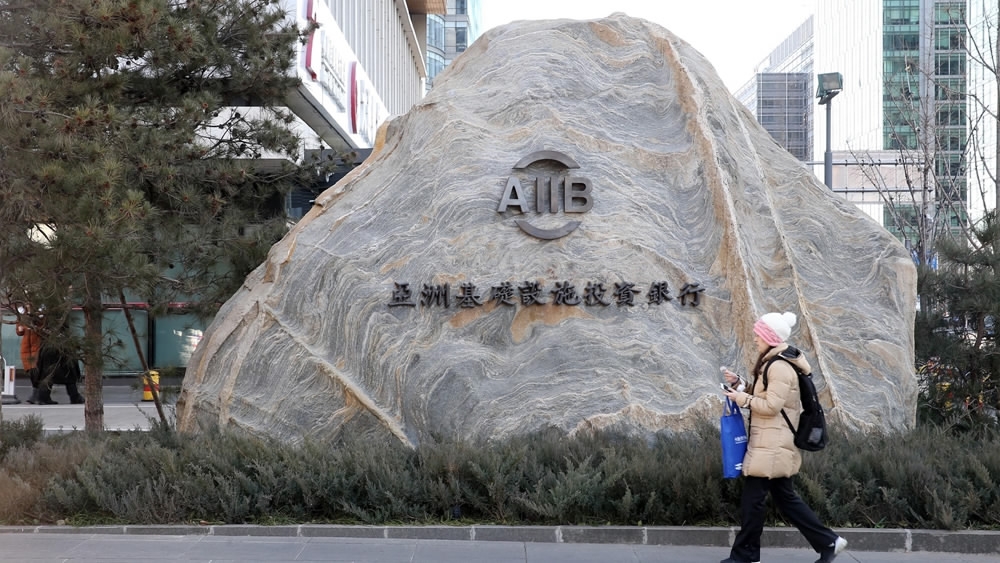
Logo of the Asian Infrastructure Investment Bank (AIIB) is displayed at the bank's headquarters building in Beijing, China. /VCG Photo
Logo of the Asian Infrastructure Investment Bank (AIIB) is displayed at the bank's headquarters building in Beijing, China. /VCG Photo
Projects can’t be run without funding. Canada in 2017 joined the Asian Infrastructure Investment Bank that was first proposed by China. It was announced during Prime Minister Justin Trudeau's first official visit to China in 2016.
Epp said that Canada has long been a partner with the Chinese government in investment on big projects. He also said Canada has mature and established Public-Private Partnership (PPP) model to be used to finance large infrastructure, or even things like hospital facilities and medical care, adding that Canadian government wants to share the experience with China and seek more chances in the Chinese market.
“Those firms, I think, will be looking forward to opportunities to work with partners from China or beyond, through the AIIB funded projects. It's inevitable that as China moves towards liberalizing their currency, opening up the financial sector. You'll see early movers like some of our banks, and insurance companies, they're already here,” he explained.
Currently, clean technology is not the only focus. Chinese and Canadian governments, as well as private companies, have also invested in PPP projects including transportation and tourism.