
Tech & Sci
22:29, 10-May-2018
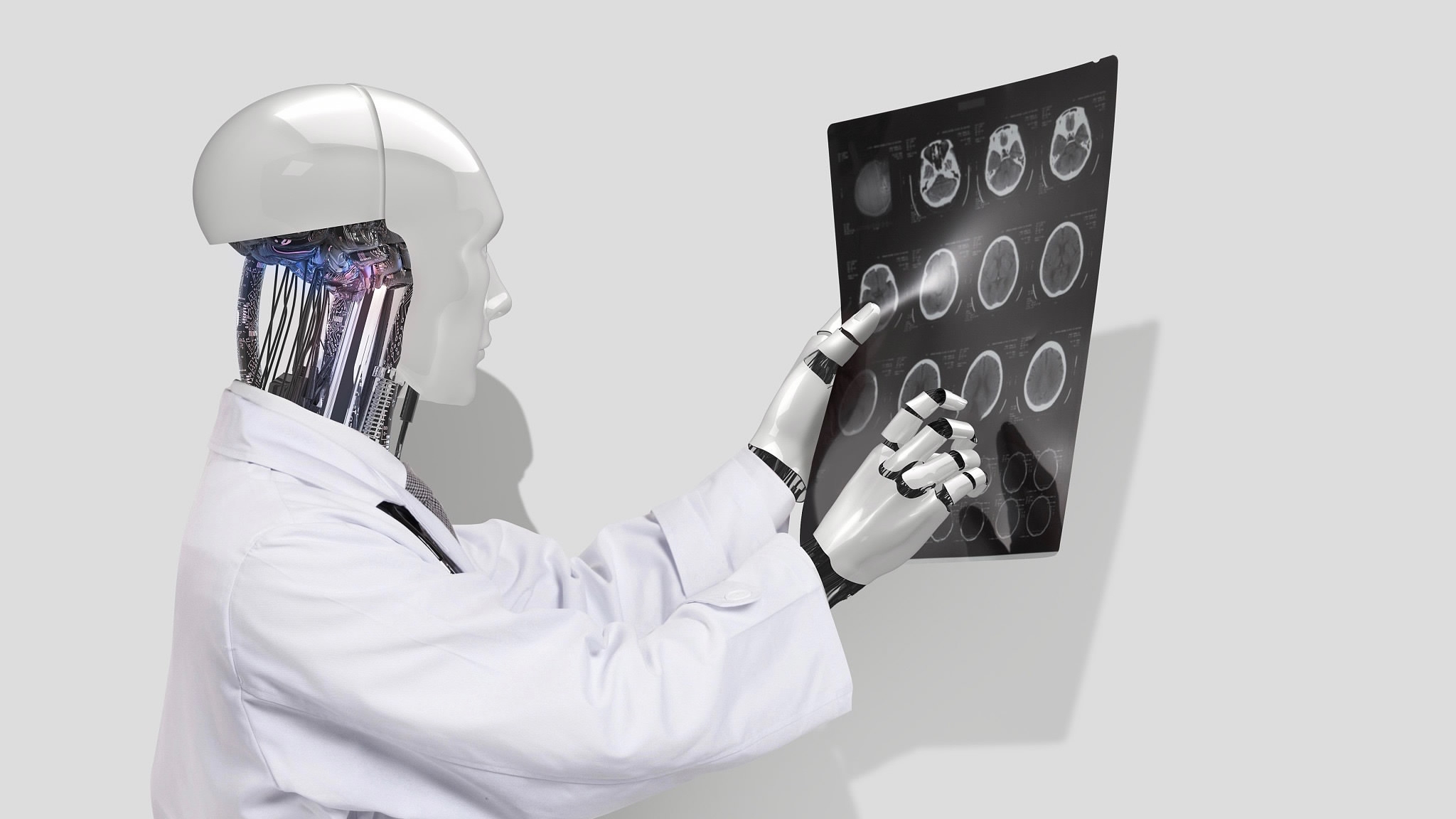
Competition will pit doctors against AI in identifying brain disease
 ["china"]
Share







Copied
Artificial
intelligence (AI) has seized the public imagination in recent
years, as highly publicized events like world-class Go players being outmaneuvered by computer program AlphaGo redefine what we think machines are capable of.
Meanwhile,
governments are pouring money into the field to gain a leg up in
sectors where humans have long reigned supreme, like transportation
or healthcare. China even set the goal of becoming a global AI leader
by 2030 in a State Council guideline issued last year.
Now the country’s
foremost research center for neurological diseases will launch a
competition in late June to pit doctors against AI in identifying
some of the brain’s most serious problems. Contestants will diagnose patients using MRI and CT scans, a complex task that involves acute pattern recognition abilities.
The organizers say
that it will train a proprietary program called “BioMind” with a
database of cases from Beijing Tiantan Hospital, which houses the
research center.
The hospital’s vice president and neurology
department’s chief physician Wang Yongjun believes that smart
diagnostic tools can eventually be used in clinical settings nationwide to
provide high-quality service to patients far from centers of care,
especially in small towns or rural areas.
Having machines help
diagnose patients quickly and accurately could alleviate China’s
overburdened healthcare system. A trained AI could reach a diagnostic accuracy rivaling that of an experienced physician, noted Wang at the press conference announcing the competition.
Will machines cast doctors aside?
Machine algorithms
are already helping diagnose lung cancer and bone fractures that a human could miss.
A Stanford study found that the
researchers’ machine learning model performed better than radiologists in
detecting problems with fingers and wrists. However, the model did worse on elbows,
forearms, and many other body parts.
The
study goes on to conclude that the model could help prioritize images
that are considered abnormal so that doctors can attend to patients with
urgent need sooner,
while also warding off “radiologist fatigue” from overwork, which
can affect diagnostic accuracy.
Healthcare experts assert that such technology is primarily intended to assist medical professionals. In
a journal article reviewing the current state of AI in healthcare, Wang and other
authors note that though AI can help doctors make better clinical
decisions, “human physicians will not be replaced by machines in
the foreseeable future.”