
Business
15:35, 25-Jul-2018
Shanghai factories move as Yangtze River Delta accelerates
Updated
15:05, 28-Jul-2018
 ["china"]
Share







Copied
05:27
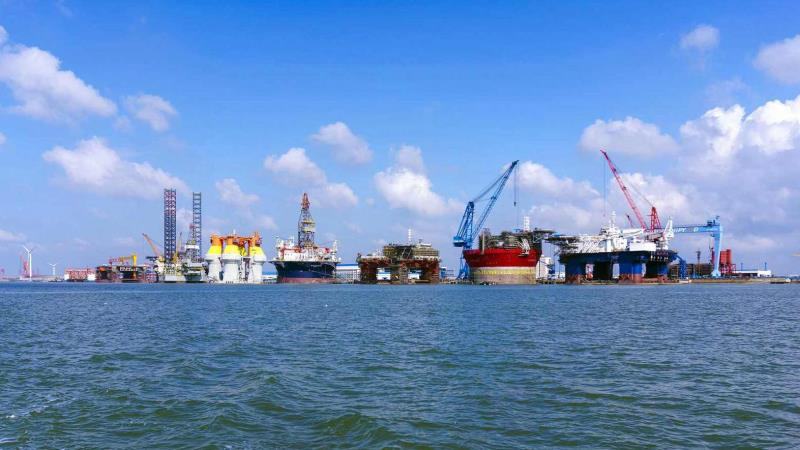
The integration of China's Yangtze River Delta is accelerating under the coordination of the region's local governments. One result is that many factories in the region's largest city of Shanghai are moving to take advantage of the changes.
Shanghai and the provinces of Jiangsu, Zhejiang and Anhui form a giant administrative region in the Yangtze River Delta. The region covers 359,000 square kilometers and houses a permanent population of 220 million. It also boasts an economy worth 19.5 trillion yuan (around 2.86 trillion US dollars) annually.
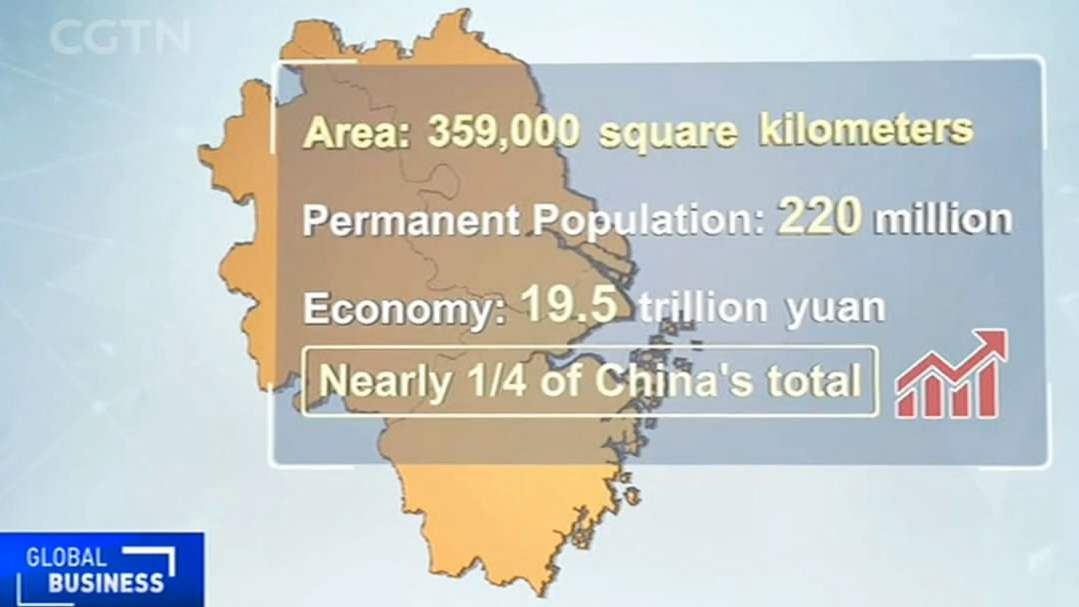
Shanghai, Jiangsu, Zhejiang and Anhui together take nearly one-quarter of the the country's output. /CGTN screenshot
Shanghai, Jiangsu, Zhejiang and Anhui together take nearly one-quarter of the the country's output. /CGTN screenshot
“The integration of the Yangtze [River] Delta was a trend at the time. And the question was who would be the first to leave,” said Zeng Xiwen, vice president of Unilever North Asia. The consumer goods company closed seven plants in Shanghai in 2002 and moved its production facilities to Hefei in Anhui Province.
The move caused quite a stir at that time. But the plant that Unilever built in Hefei now is the company's largest production base. And the development zone there has become the largest one in central and western China, with a gross industrial output value topping 350 billion yuan (51.47 billion US dollars) in 2017, according to Zhang Lu, deputy director of the Hefei Economic and Tech Development Zone Management Commission.
Other cities in the region have been adapting to the integration too. Take Ningbo, which was never previously known as a port city. “Previously petrochemicals were the primary industry here. But in 2017, the auto industry took over the No. 1 status in the manufacturing sector,” noted Cai Shijie, deputy director of the Ningbo Hangzhou Bay New Area Management Commission.
However, the integration will be difficult as different regions have their own industrial policies and systems, as well as market rules.
“To completely eliminate the institutional differences brought about by these administrative divisions, it is necessary to do so in a step-by-step manner and to realize high-level match-ups in the process of cooperation and integration,” said Zhang Tianpei, director of the Anhui Development and Reform Commission.
Moreover, Wen Jianrong, deputy director of the Zhejiang Development and Reform Commission, called for a consistent qualification criteria for personnel in the region. The different qualifications, are a “dilemma” in his mind as they are crippled both by the cross-regional operations of high-quality companies and the market itself.
And Ma Chunlei, director of the Shanghai Municipal Development and Reform Commission, told CGTN the city would take the initiative and work with Jiangsu, Zhejiang and Anhui provinces to streamline the industrial layout, improve the business environment and formulate market standards for better services along the Yangtze Economic Belt.
“So the country can better brace itself for international competition,” Ma said.