
Politics
10:51, 24-Oct-2018
US renews call on Pakistan to cut off extremists
Updated
10:02, 27-Oct-2018
 ["china"]
Share







Copied
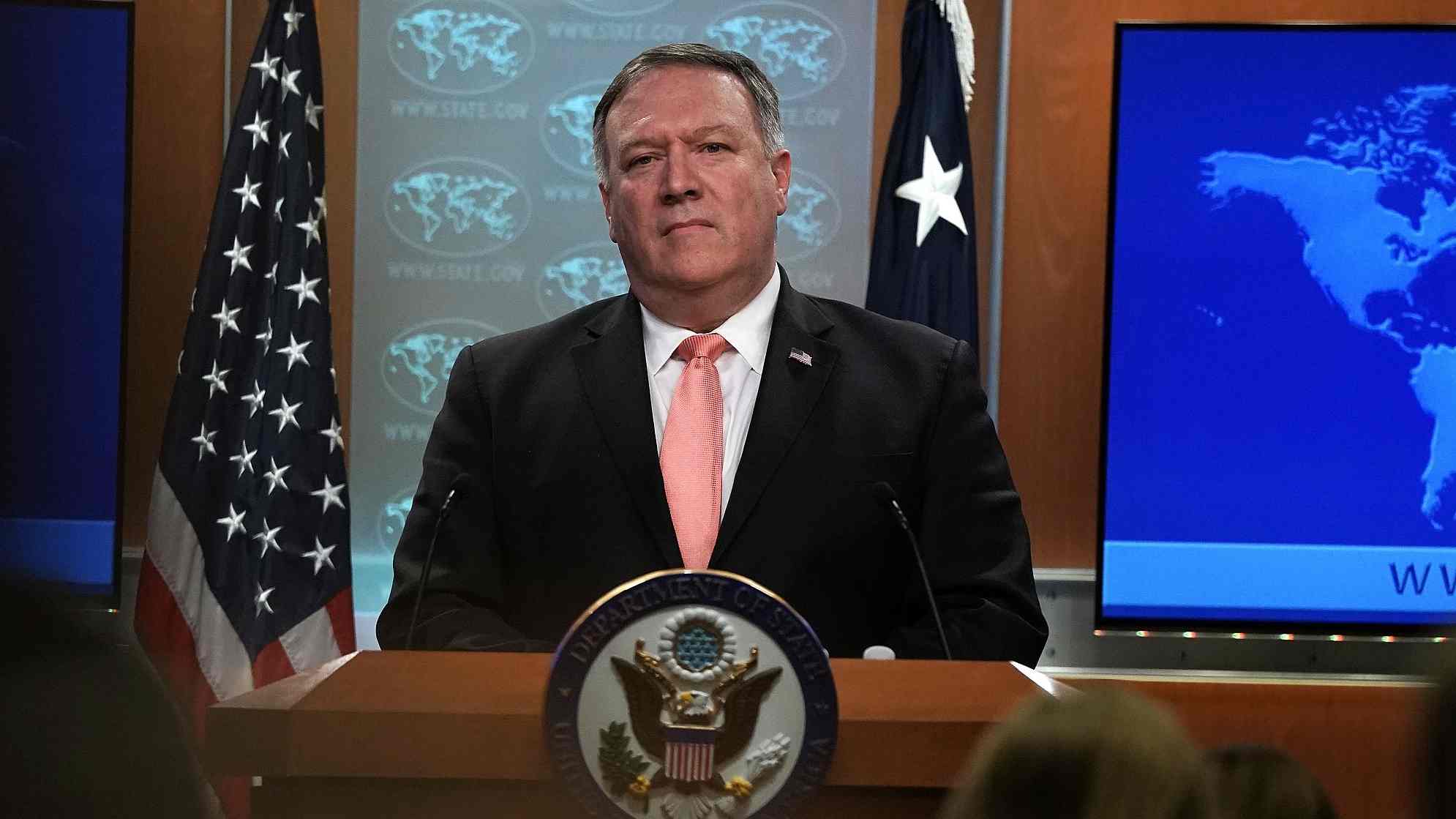
US Secretary of State Mike Pompeo on Tuesday renewed calls on Pakistan to curb extremists fighting in Afghanistan, saying Washington was holding its uneasy war partner accountable.
Pompeo made the comment as he welcomed long-delayed legislative elections in Afghanistan, saying the United States was "encouraged" by voter turnout, despite reports of widespread problems including poll centers that failed to open or lacked voter rolls.
"Our expectation is that Pakistan will not provide safe harbor to terrorists on their western border," Pompeo told reporters when asked about Islamabad's role.
"We couldn't have made that message any more clear," he said, adding: "Pakistan will be held to account if they don't achieve that, if they're not sincere in that effort."
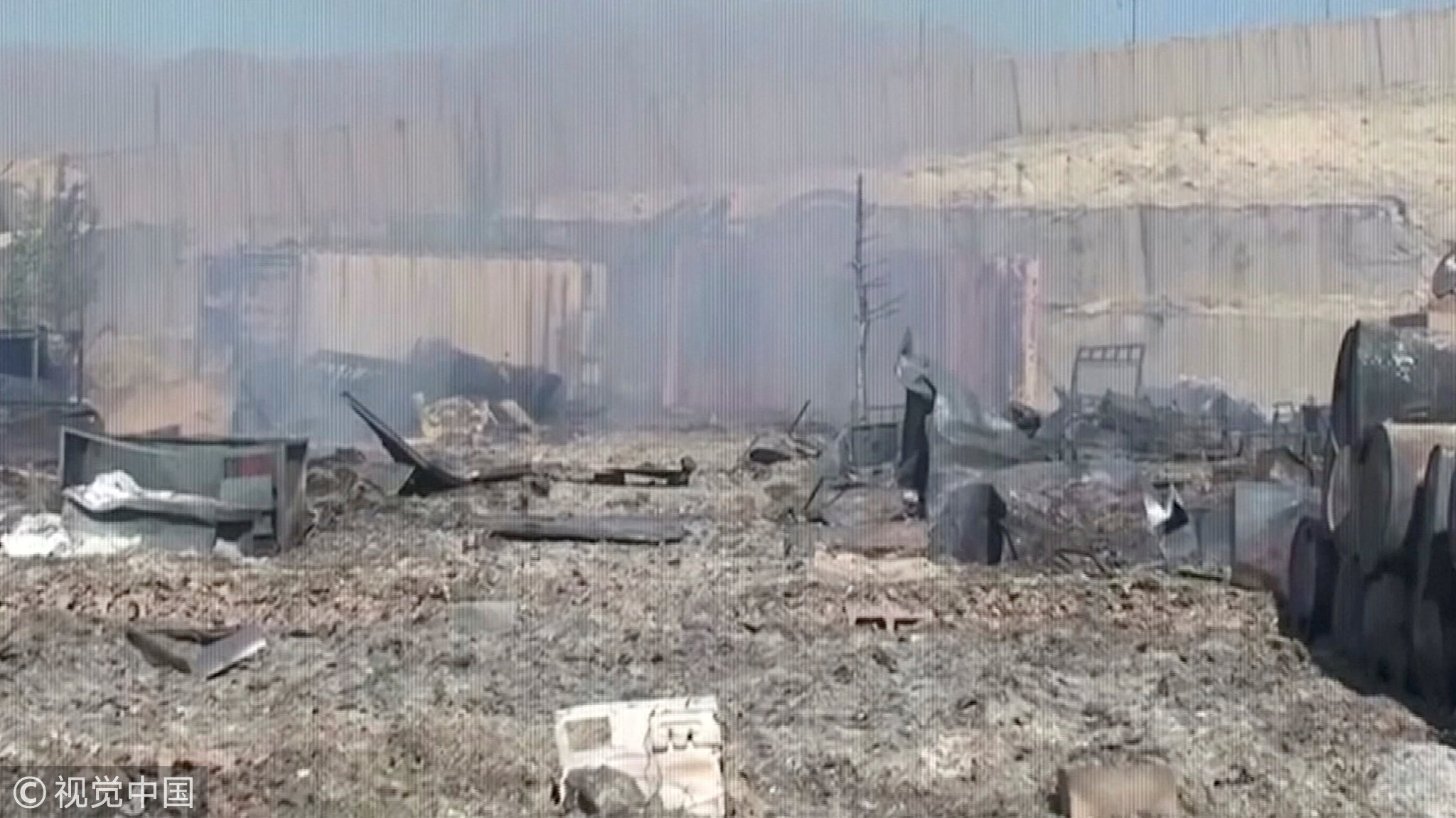
Damaged police headquarters is seen after an attack by Taliban in Sayeed Abad district, Wardak Province, Afghanistan, in this still image taken from video on October 7, 2018. /VCG Photo
Damaged police headquarters is seen after an attack by Taliban in Sayeed Abad district, Wardak Province, Afghanistan, in this still image taken from video on October 7, 2018. /VCG Photo
"Everyone wants a reconciliation in Afghanistan and to achieve that, you can't have a safe harbor for Taliban, for Haqqani and for others inside of Pakistan," he said, listing extremist movements fighting in Afghanistan.
President Donald Trump's administration last month cut 300 million US dollars in military aid to Pakistan after years of US complaints that Islamabad has kept nurturing ties with militants that target both Afghanistan and rival India.
Pakistan has countered that it has paid a heavy price internally for fighting militants and that it can help bring the Taliban to the table.
A Taliban delegation earlier this month met in Qatar with a US envoy. Pakistan's new Prime Minister Imran Khan is a longstanding supporter of negotiations to end the war in Afghanistan, where the United States has been deployed since 2001.
The cricketer-turned-leader has faced a slew of economic challenges ever since he was inaugurated.
According to latest numbers of Pakistani State bank, right now the country is facing a deficit payment crisis of nearly 18 billion US dollars.
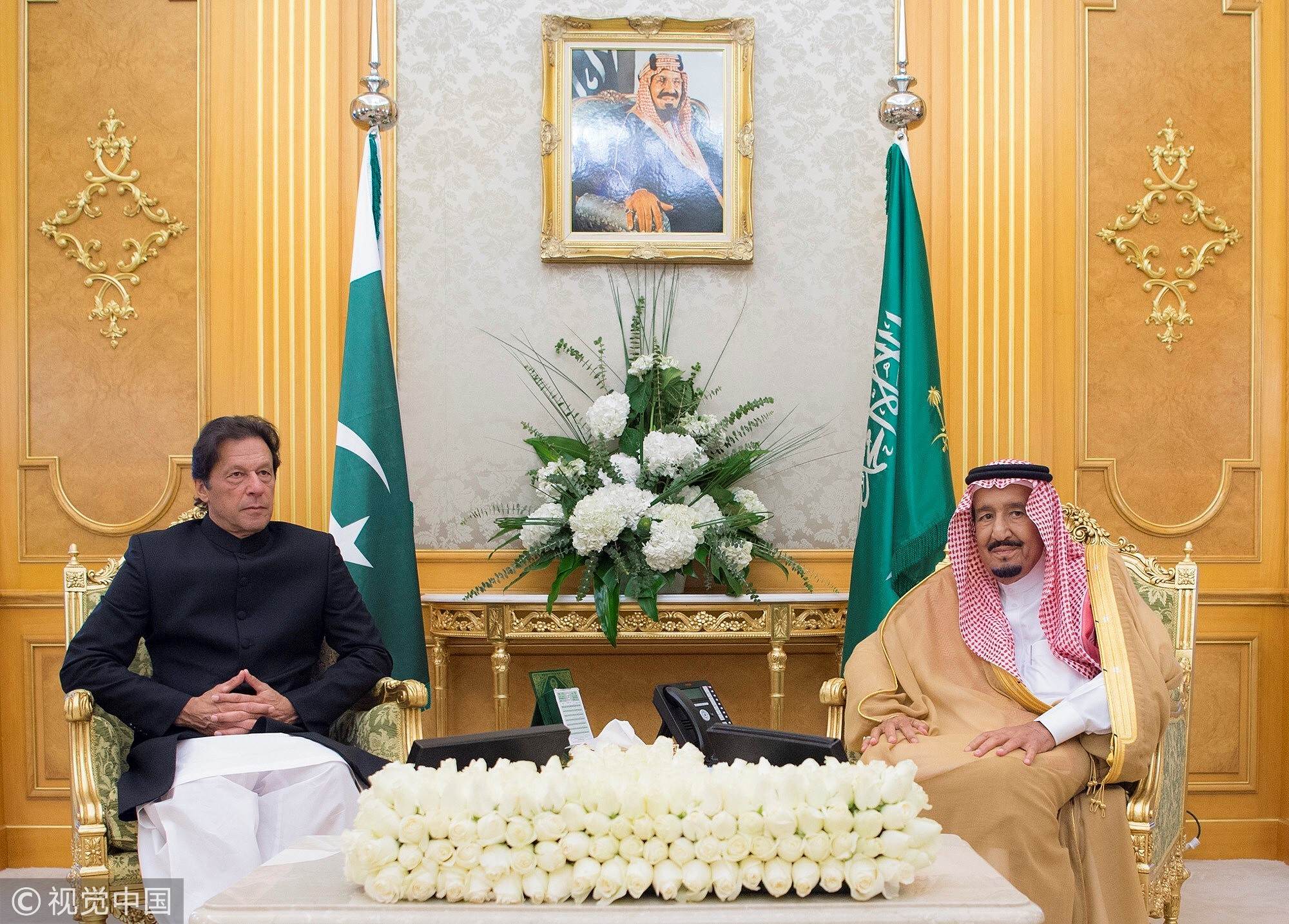
Pakistani Prime Minister Imran Khan meets King of Saudi Arabia, Salman bin Abdulaziz Al Saud at Al-Salam Royal Palace in Jeddah, Saudi Arabia, September 19, 2018. /VCG Photo
Pakistani Prime Minister Imran Khan meets King of Saudi Arabia, Salman bin Abdulaziz Al Saud at Al-Salam Royal Palace in Jeddah, Saudi Arabia, September 19, 2018. /VCG Photo
Although no more support from the world's number one economy, Pakistan's close economic and strategic partner Saudi Arabia still chose to stand by its side.
The Gulf kingdom has agreed to offer a total of six billion US dollars – three billion US dollars of payment support and another three billion of loan for oil imports, based off Pakistan foreign ministry – which coincides with the pledge Saudi Arabia made earlier in building a mega oil city in Pakistan.
The agreement comes in place just weeks after Islamabad requested talks with the International Monetary Fund (IMF), hoping to alleviate the economic crisis. Within weeks, an IMF team is expected to visit Pakistan to start the negotiations.
(With inputs from AFP)
(Top image: US Secretary of State Mike Pompeo speaks in the briefing room of the State Department, Washington, DC, US, October 23, 2018. /VCG Photo)