02:33
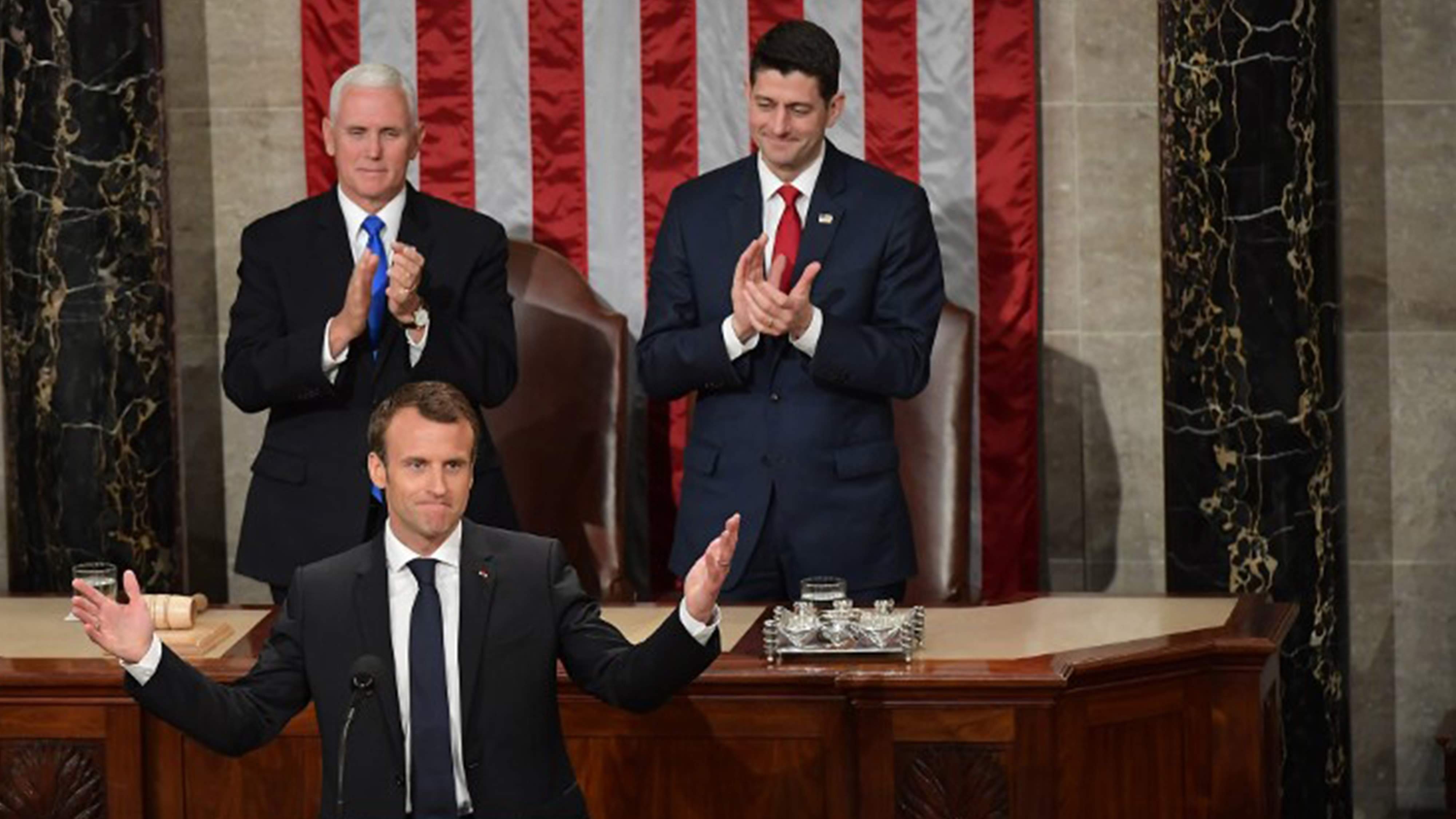
France's President Emmanuel Macron urged the United States to embrace multilateralism and warned of the perils of a trade war, in an address to Congress pushing back against Donald Trump's "America First" agenda.
The French leader's speech to lawmakers was a dramatic twist at the end of a three-day visit that had showcased his warm personal relationship with Trump, despite the gulf between their visions of world affairs.
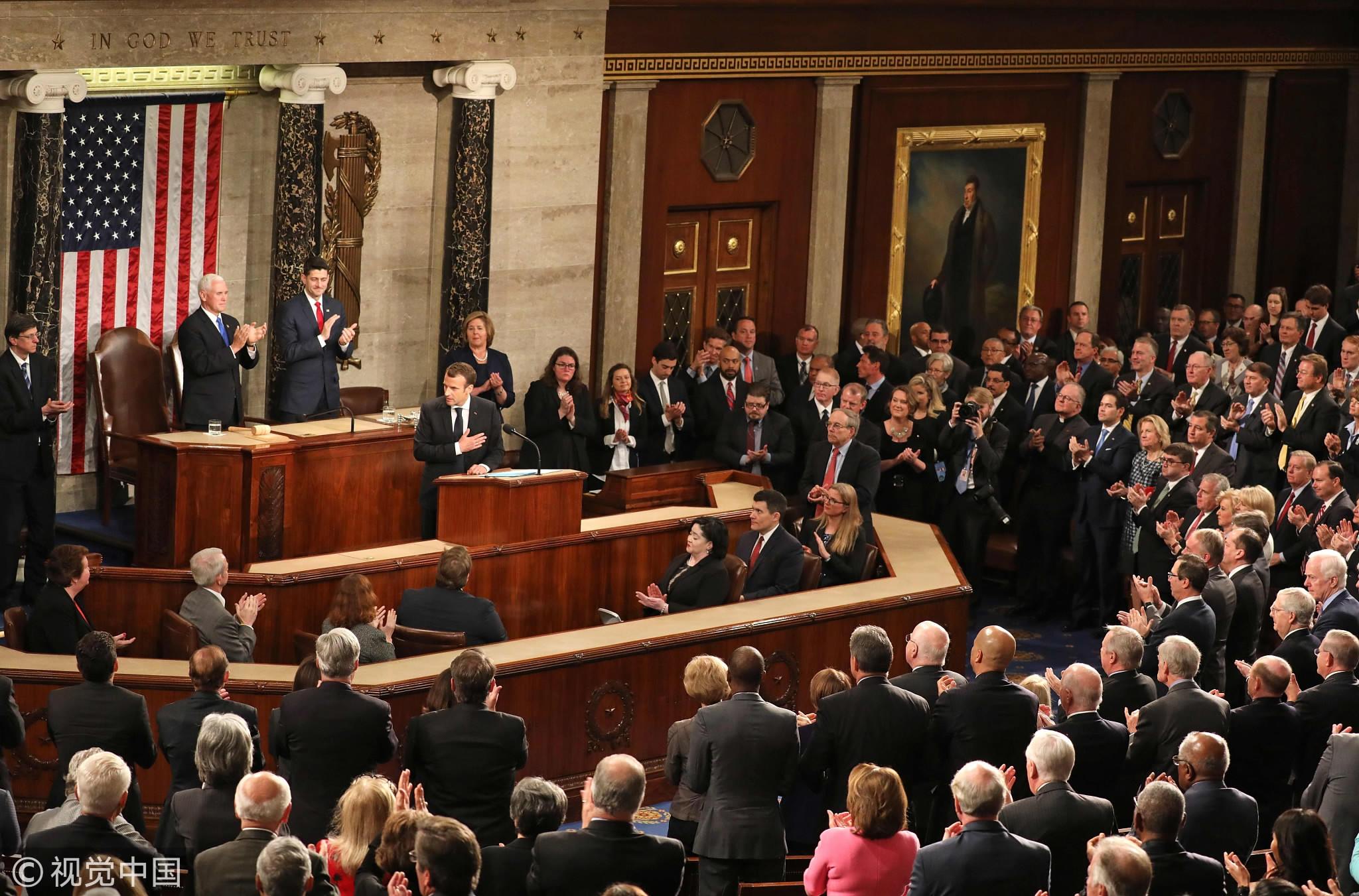
French President Emmanuel Macron is welcomed with a standing ovation during a joint meeting of the US Congress in the House Chamber at the US Capitol, April 25, 2018, in Washington, DC. /VCG Photo
French President Emmanuel Macron is welcomed with a standing ovation during a joint meeting of the US Congress in the House Chamber at the US Capitol, April 25, 2018, in Washington, DC. /VCG Photo
The two presidents had literally embraced each other, repeatedly talking up their much-vaunted friendship during the trip, but in his speech to Congress Macron pushed back against Trump's trade, climate and non-proliferation policies.
"We can build the 21st century world order based on a new breed of multilateralism, based on a more effective, accountable, and result oriented multilateralism," Macron said, defending the rules-based world order.
Trump has threatened to tear up international trade deals, scorns the United Nations, accuses US allies of not pulling their weight, walked away from Paris climate accord, and hates dealing with transnational bodies like the European Union.
But Macron, who one day earlier had appeared hand-in-hand with Trump at the White House, received applause from the US leader's domestic Democratic opponents by calling for a "strong multilateralism."
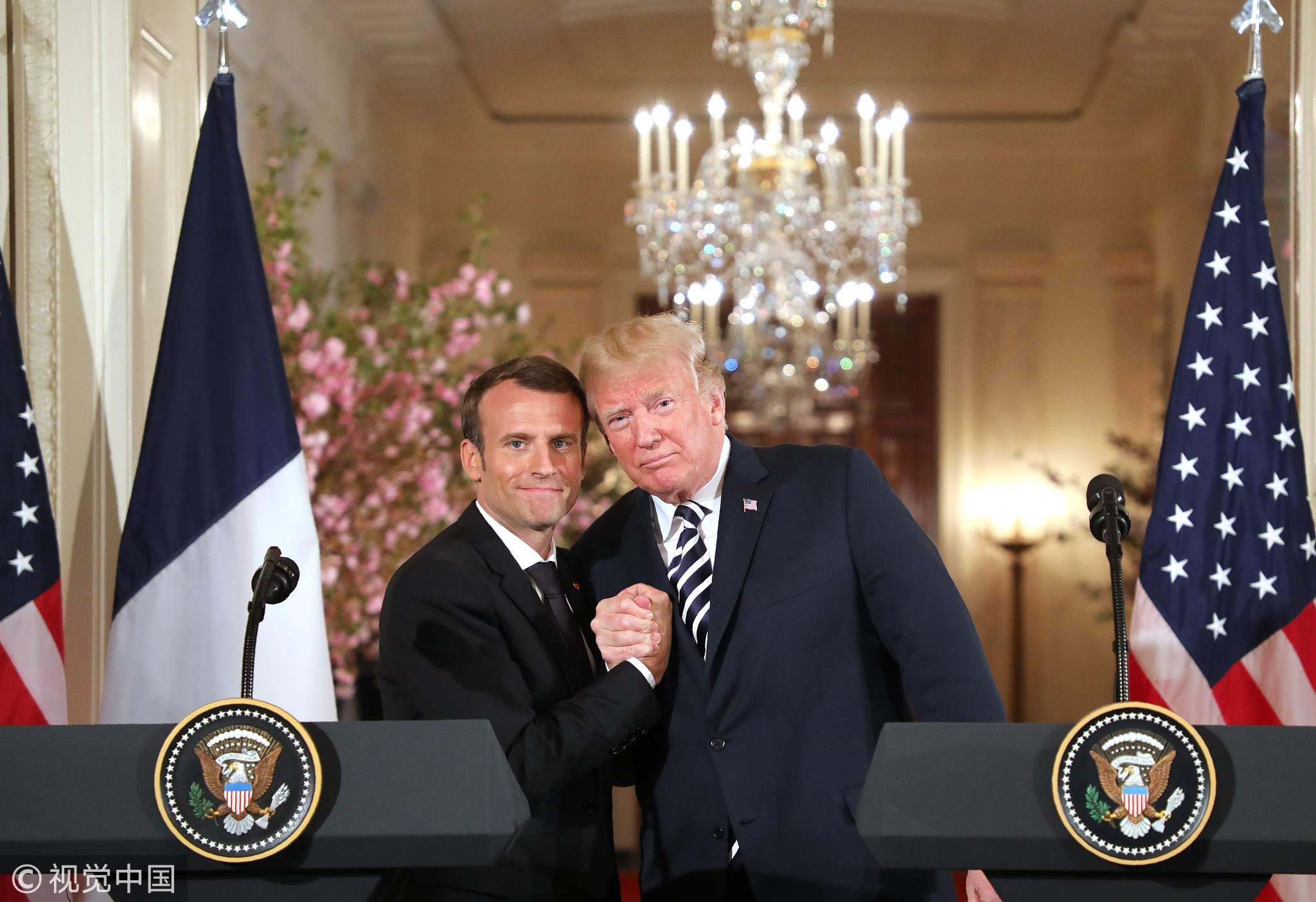
US President Donald Trump and French President Emmanuel Macron hold a joint press conference at the White House in Washington, DC, April 24, 2018. /VCG Photo
US President Donald Trump and French President Emmanuel Macron hold a joint press conference at the White House in Washington, DC, April 24, 2018. /VCG Photo
He declared that France would not pull out of the Iran nuclear deal, warned against imposing trade tariffs on allies and stressed that global action on climate change is vital because there is no "Planet B."
'He is perfect'
"The United States is the one who invented this multilateralism. You're the ones now who have to help to preserve and reinvent it," he said, in a tacit nod to Trump's efforts to shake off international shackles.
In doing so, he flipped the script of the trip – the Trump White House's first full state visit – which was until now dominated by intimate images of the French and US first couples planting trees, kissing each other and socializing.
Trump at one point brushed Macron's shoulder and said: "He is perfect."
Transatlantic political reality reasserted itself on Wednesday, however, as Macron – speaking in an accented but increasingly confident English – recalled the glories of past US-French cooperation.
Trump's trade sanctions against European steel and aluminum will enter into force in the coming weeks unless Trump agrees to sign a waiver. Despite his affection for Macron, he has not yet said he will do so.
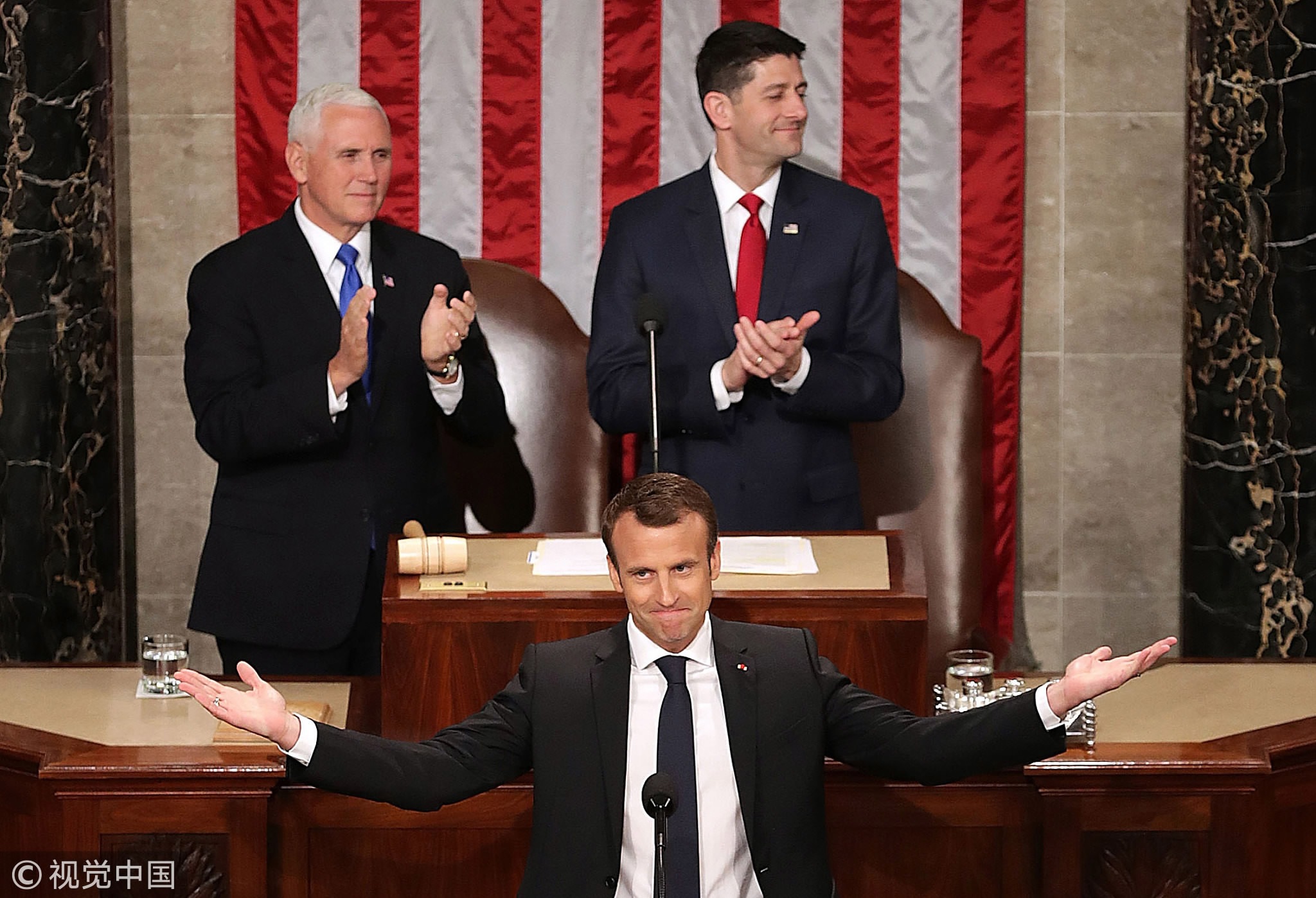
House Speaker Paul Ryan((R), US Vice President Mike Pence, members of Congress and others applaud after France's President Emmanuel Macron addressed a joint meeting of Congress inside the House chamber, April 25, 2018, at the US Capitol in Washington, DC. /VCG Photo
House Speaker Paul Ryan((R), US Vice President Mike Pence, members of Congress and others applaud after France's President Emmanuel Macron addressed a joint meeting of Congress inside the House chamber, April 25, 2018, at the US Capitol in Washington, DC. /VCG Photo
Macron hit back.
"We need a free and fair trade, for sure," Macron said. "A commercial war opposing allies is not consistent with our mission, with our history, with our current commitments for global security."
Iran deal
Capping a three-day visit to the United States in which he urged President Donald Trump to stay in the Iran pact, Macron told a joint meeting of Congress the current deal was not perfect but must remain in place until a replacement was forged.
"It is true to say that this agreement may not address all concerns and very important concerns," Macron said. "But we should not abandon it without having something substantial and more substantial instead. That's my position."
Trump has often vowed to pull the United States out of the 2015 nuclear pact between Iran and six major powers. He will decide by May 12 whether to restore US economic sanctions on Tehran, which could be a first step to ending the deal.
The two leaders pledged during Macron's visit to seek stronger measures to contain Iran but Trump made no commitments to stay in the nuclear deal, negotiated by former President Barack Obama. Trump also threatened Tehran with retaliation if it restarted its nuclear program.
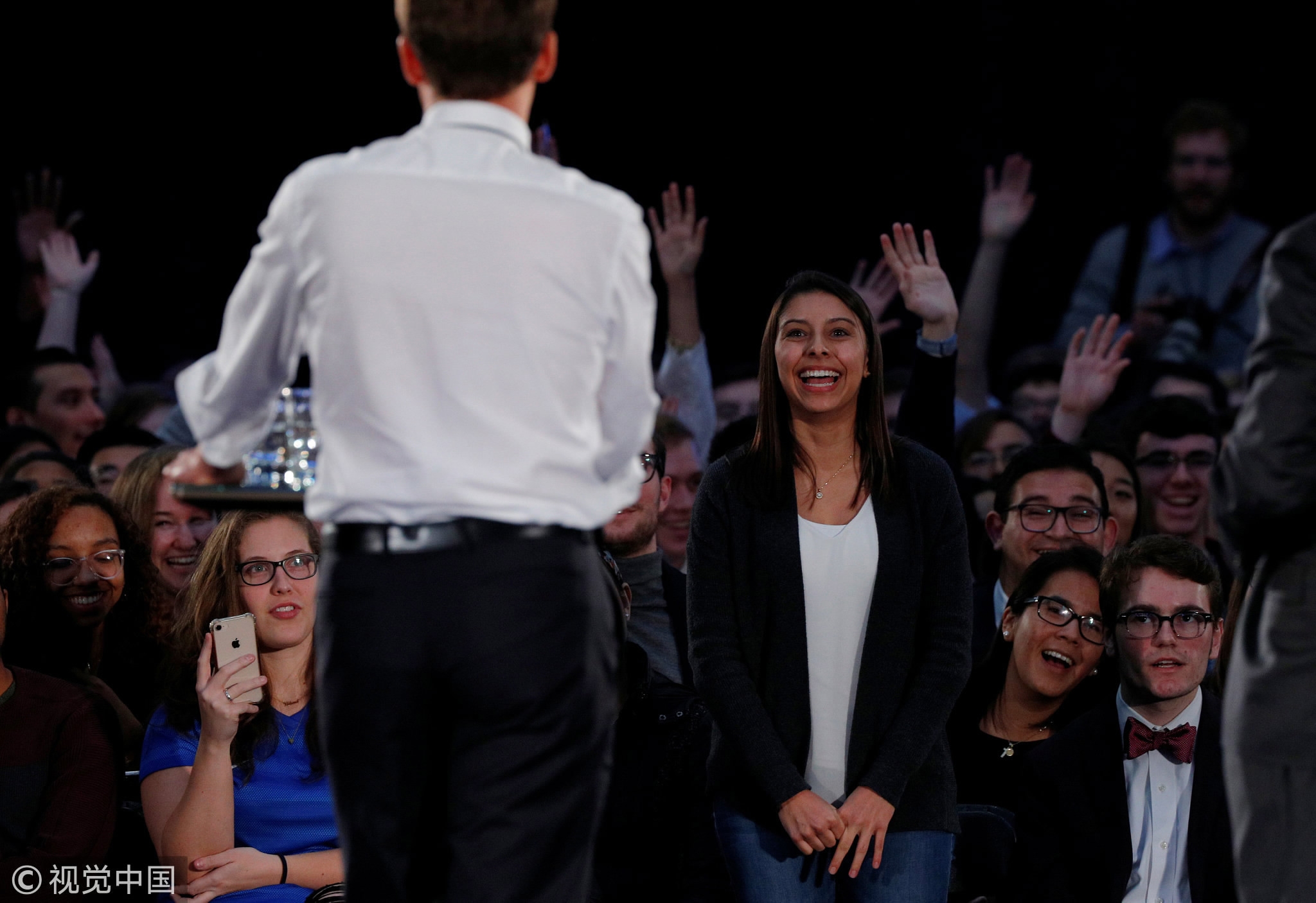
French President Emmanuel Macron takes questions from students during a town hall meeting at George Washington University in Washington, US, April 25, 2018. /VCG Photo
French President Emmanuel Macron takes questions from students during a town hall meeting at George Washington University in Washington, US, April 25, 2018. /VCG Photo
Macron has sought a new approach that would see the United States and Europe agree to address any Iranian nuclear activity after 2025, tackle Iran's ballistic missile program and seek a political solution to contain Iran in Yemen, Syria, Iraq and Lebanon.
"What I want to do and what we decided together with your president is that we can work on a more comprehensive deal addressing all these concerns," Macron said, adding that France remains committed to the bottom line goal of preventing Iran from developing nuclear weapons.
"Iran shall never possess any nuclear weapon. Not now not in five years, not in 10 years, never," he told clapping lawmakers.
Macron is the eighth French president to address a joint meeting of Congress, and the first since Nicolas Sarkozy in 2007, House of Representatives Speaker Paul Ryan's office said. The last foreign leader to address a joint meeting was Indian Prime Minister Narendra Modi in 2016.
Source(s): AFP
,Reuters

 ["china"]