
Opinions
23:32, 26-Jun-2018
Opinion: From Shenzhen to Beijing – a trip to encounter an open China
Updated
22:30, 29-Jun-2018
 ["china"]
Share







Copied
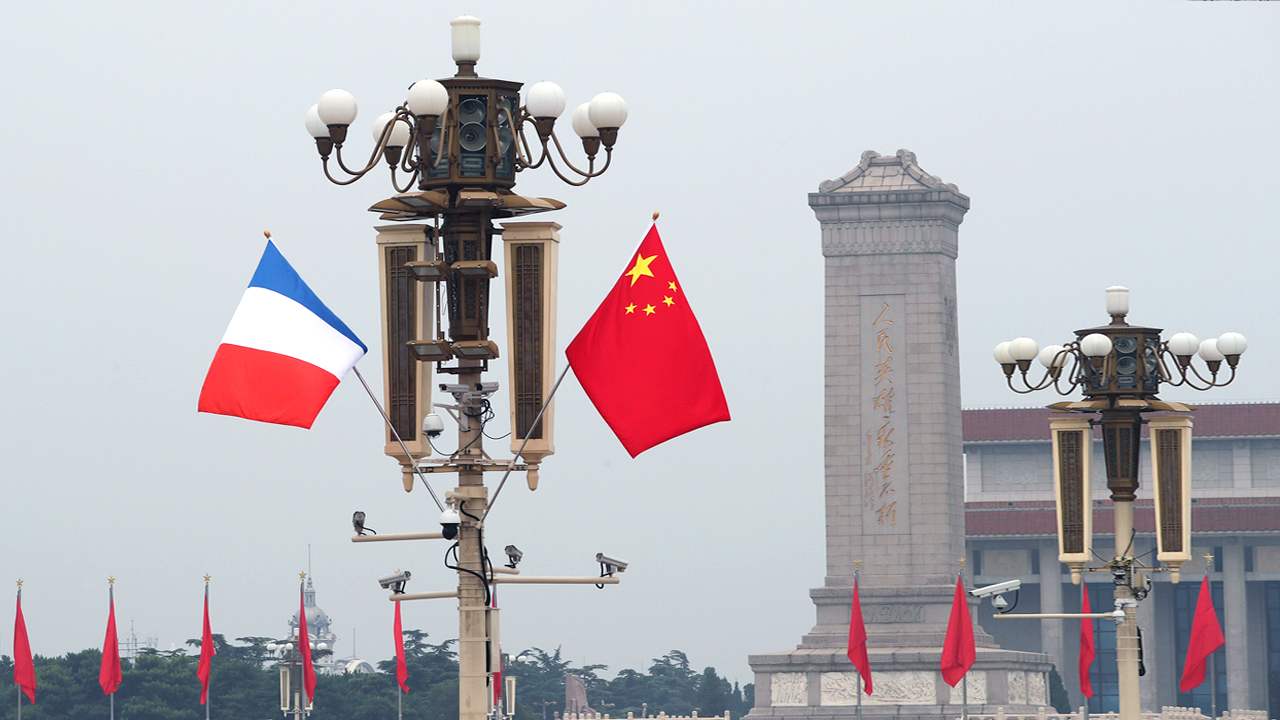
Editor’s note: This article is based on an interview with Liu Baocheng, dean of the Center for International Business Ethics at the University of International Business and Economics; Feng Zhongping, Vice President of the China Institutes of Contemporary International Relations.
French Prime Minister Edouard Philippe has concluded his four-day visit to China which started on June 22. After French president Emmanuel Macron’s visit in January and former French President Francois Hollande’s visit in May, Edouard Philippe is the third French official that visited China in the past six months.
President Xi Jinping said that China is willing to work with France to enrich the comprehensive strategic partnership between the two countries when he met Edouard Philippe on Monday. He also indicated that both the French president and prime minister had visited China within the last six months shows that France attached high importance to developing bilateral ties with China, and the ties are at the high level according to Xinhua.
Shenzhen, Shanghai, Beijing- An itinerary to encounter an open China
01:27
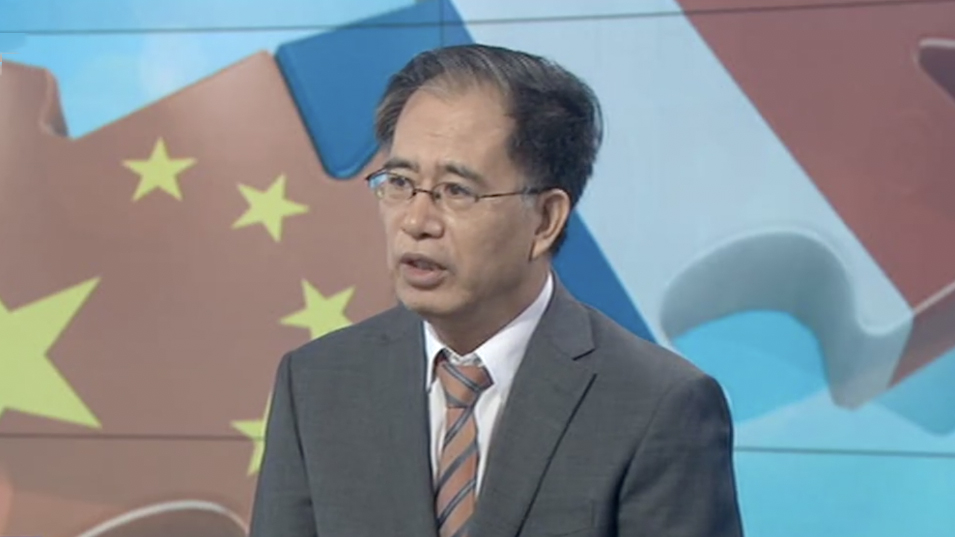
Edouard Philippe’s four-day visit began with Shenzhen, followed by Shanghai and ended in Beijing. An itinerary “interesting and meaningful” according to Liu Baocheng, dean of the Center for International Business Ethics at the University of International Business and Economics.
“Shenzhen is really the bridgehead for Chinese opening-up policy and it is the great beneficiary in terms of the cultural diversity, innovation and financial market development,” said Liu.
Edouard Philippe compared Shenzhen to the Chinese Silicon Valley, the innovation and research & development center of China. He said he has visited Beijing, Shanghai, Chengdu and other Chinese cities before, but he felt that a trip without Shenzhen is incomplete for one to fully understand the process of modernization in China.
As the first French prime minister that visited Shenzhen, Edouard Philippe expressed his appreciation for the city. He reckoned Shenzhen as the hub of advanced industry and represents the future trends of development in China. And he expressed his strong willing to strengthen the cooperation between Shenzhen and France according to his interview with People's Daily.
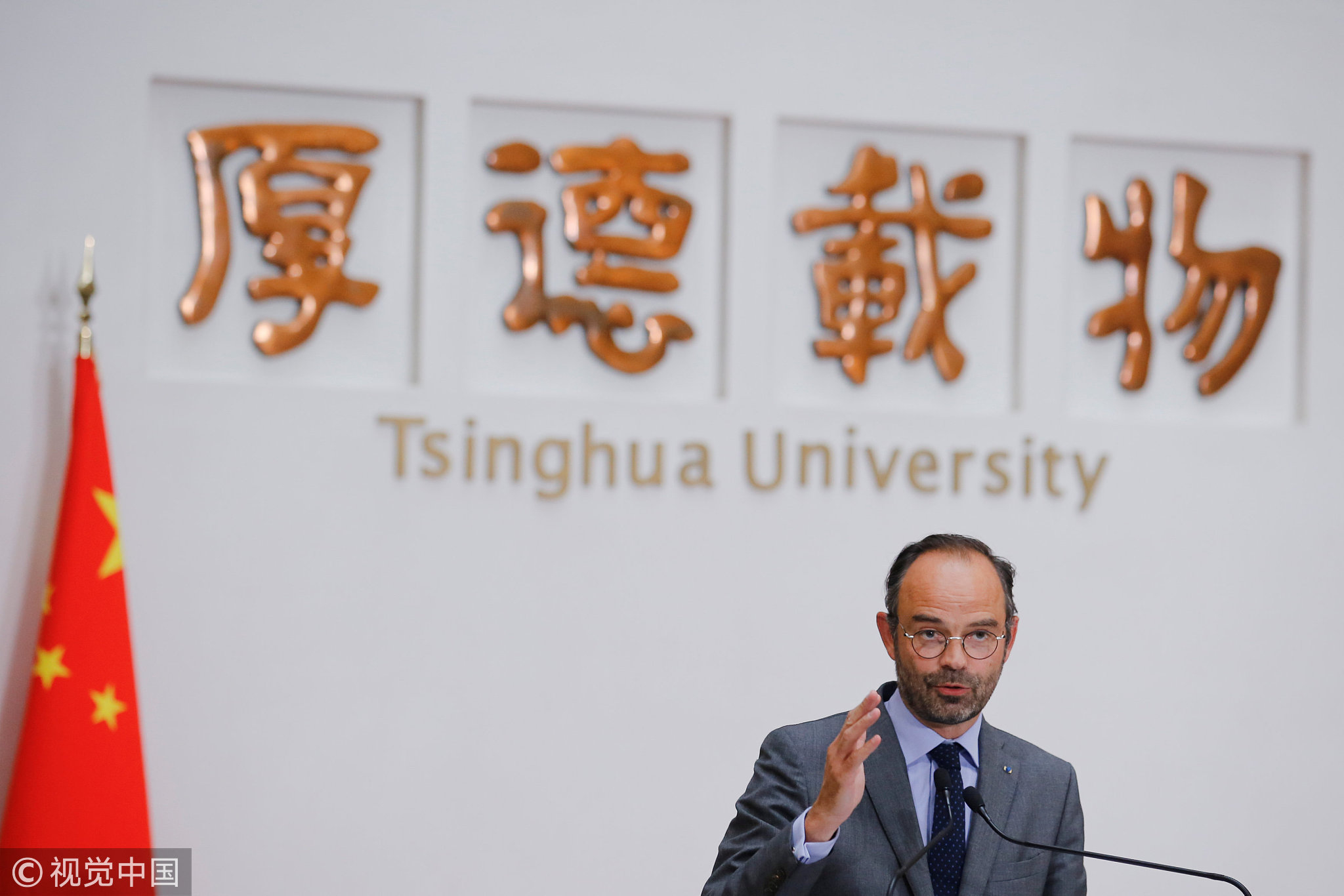
French Prime Minister Edouard Philippe delivers a speech at Tsinghua University in Beijing, China, June 24, 2018./VCG Photo
French Prime Minister Edouard Philippe delivers a speech at Tsinghua University in Beijing, China, June 24, 2018./VCG Photo
Philippe's second stop was Shanghai, the financial capital in China, a city that represents China's openness to the outside world. And Beijing, his terminal of visit, not only a political center, but also a city that represents China's commitment to the climate change according to Liu.
"That (itinerary of visit) is a very clear indication that France wanted to engage with an open China, with Chinese financial market, and innovation, the itinerary is arranged in a very interesting and meaningful way," said Liu.
A China France plus third-market model: 1+1+1>3
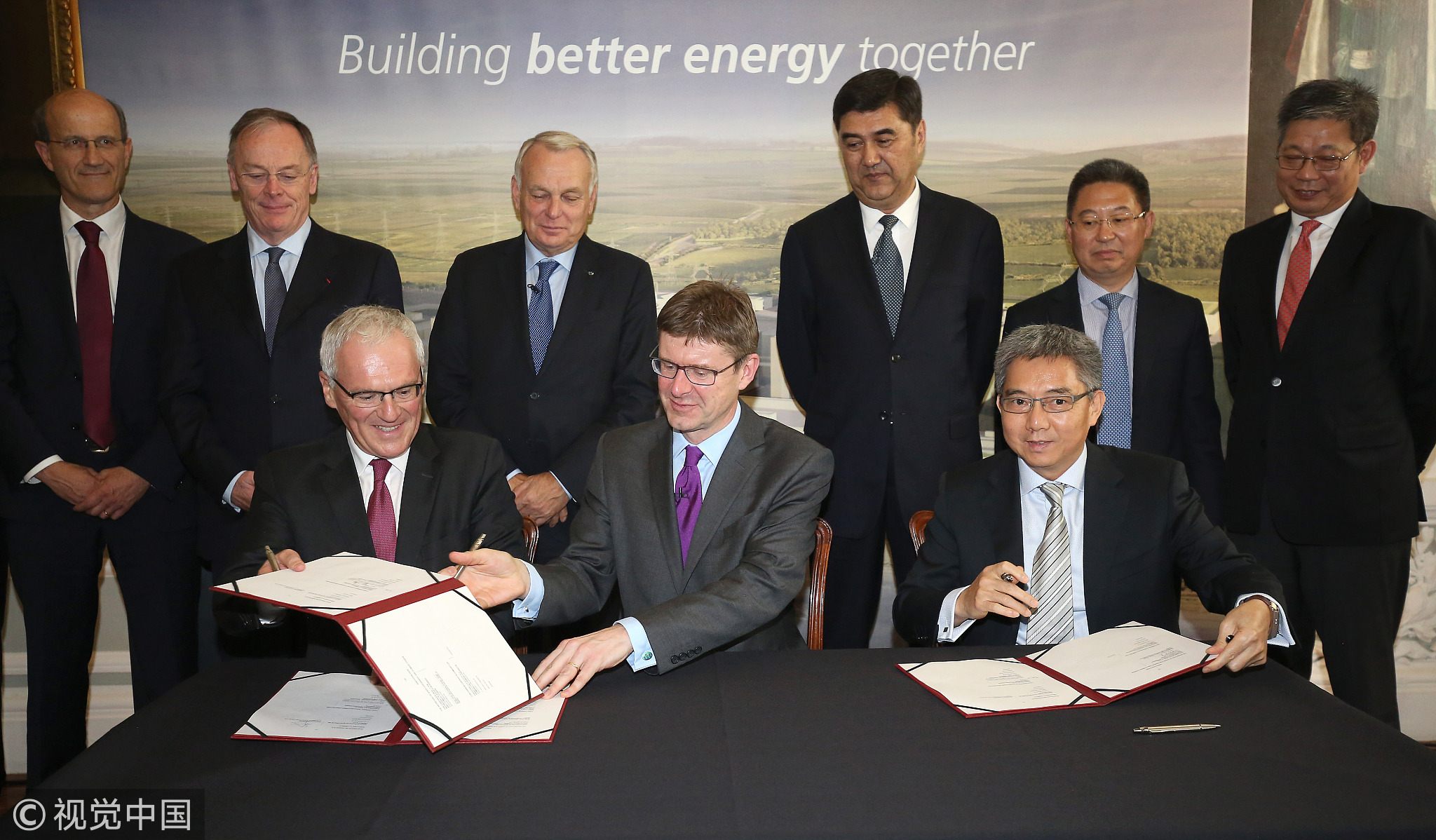
Signing ceremony to finalise the deal to build Hinkley Point, the first new UK nuclear power station in a generation, on September 29, 2016 in London, United Kingdom./VCG Photo
Signing ceremony to finalise the deal to build Hinkley Point, the first new UK nuclear power station in a generation, on September 29, 2016 in London, United Kingdom./VCG Photo
In the joint press conference, Premier Li Keqiang called for China and France to promote the synergy of third-market cooperation and the Belt and Road Initiative that according to Feng Zhongping, vice President of the China Institutes of Contemporary International Relations a model that makes the Belt and Road Initiative cooperation more productive.
In June, 2015, Chinese and French government has published the Joint Declaration between China and France on the partnerships in third-party markets which is also the first time that China has proposed the conception of "third-party market cooperation". A model that combines China's manufacturing capacity with the advanced technology in developed countries to provide good products and services to the third-party market.
President Xi Jinping said that China appreciated France's active part in the Belt and Road initiative on Monday. And according to Feng, France's attitude towards the Belt and Road initiative is very important because it help to reduce misunderstandings.
"My trip to France two weeks ago gave me the impression that there are still some people in Europe have misunderstandings towards the Belt and Road Initiative, have some doubts on the Chinese desires. Some people believe that China's initiative is for the geopolitical desire. So I think China and France should strengthen the strategic communications to help reduce misconceptions on this initiative," said Feng.
More trades amid of protectionism and unilateralism
01:28
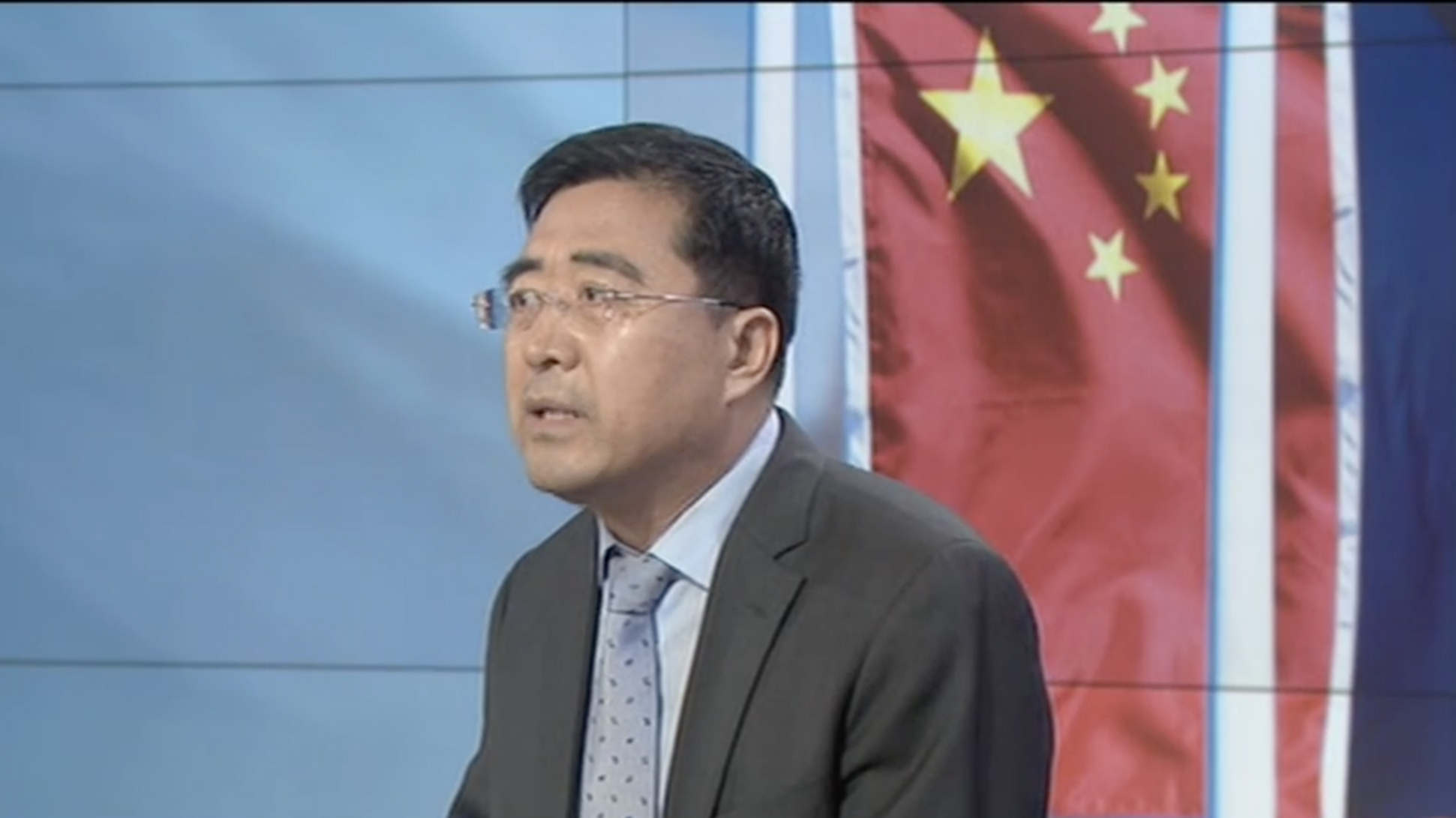
Both Premier Li and Philippe have stressed the willingness to work together to safeguard multilateralism and free trade system, and oppose protectionism and unilateralism at the joint presser. And two sides have signed cooperation documents involving dozen fields such as energy, science and technology, farm products and health care.
According to Feng, in confront of the challenge of protectionism and unilateralism, China and France should cooperate on both bilateral and multilateral levels to ensure the healthy development of the world trade.
"On the bilateral levels, both China and France should make sure that we continue to support free trade. On the multilateral level, I think this is even more important regarding Trump's unilateral approach to trade. Two sides should work together to safeguard the global system, like UN, WTO, G20, to continue to support multilateralism. Because only with the multilateralism, the global trade can continue to flush," commented Feng.