
Opinions
13:11, 06-Jul-2018
Opinion: American wallets will bleed dry in Trump's war
Updated
12:28, 09-Jul-2018
 ["china","north america"]
Share






Copied
Editor's note: The author is a journalist for CGTN Opinion. The article reflects her views, and not necessarily those of CGTN.
"Oh, I'm going to stock up on a lot of American goods," a colleague of mine said, a day before Donald Trump's administration implements tariffs on 34 billion US dollars' worth of Chinese goods. Across the pond, a friend in Chicago is already rushing in a buying spree of daily necessities that are either Made in China or have intermediate parts provided by China, from clothing to electronics.
Ordinary consumers, who once felt that a trade war was far-off over the past few months of tit-for-tat exchange, are starting to feel the pain. Numerous American brands are Made in China: most bits and pieces of final products are bought from China, while plenty of components are assembled on the world's big factory floor.
According to the American Apparel and Footwear Association, around 33 percent of apparel and 72 percent of footwear sold in the US are manufactured in China. Once Donald Trump's hefty tariffs go into effect, American consumers, especially working families, will pay a dear price for what they wear every day.
Prices of other household basics will also go up. Apple has most of its iPhones, iPads and other gadgets assembled in Taipei-headquartered Foxconn. With tariff hikes on steel and aluminum, Americans are already paying more for cars and even travel because most planes are made out of aluminum.
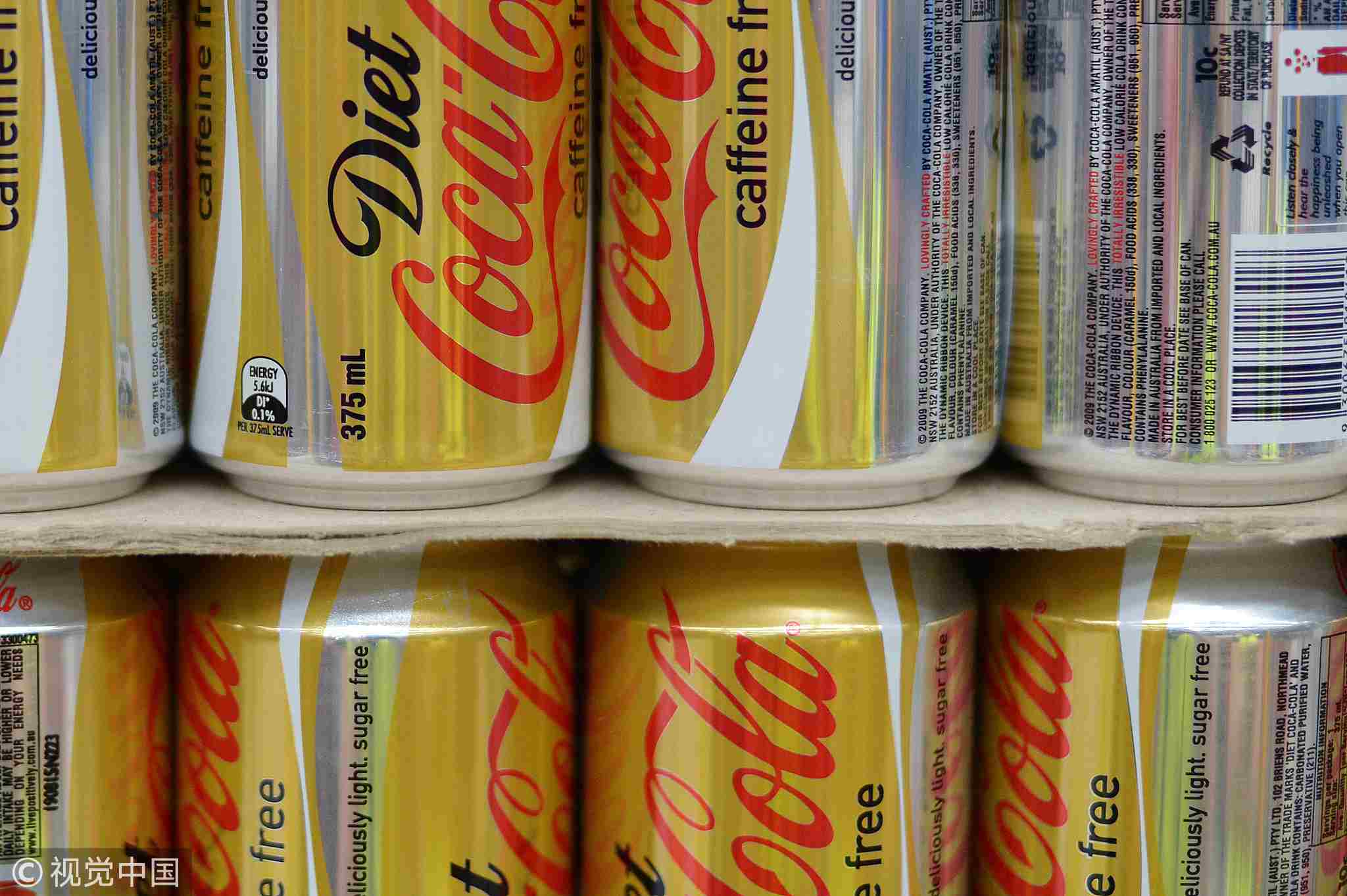
Empty caffeine-free Diet Coca-Cola cans /VCG Photo
Empty caffeine-free Diet Coca-Cola cans /VCG Photo
Don't forget beer and coke and other bubbly beverages – Americans will fork over more for their cans. I once saw news saying that Trump downs 12 cans of diet coke every day. Perhaps the president, a real estate mogul, doesn't care how much average Americans will pay for their drinks.
There are even some surprises lurking in Trump's tariff list. Google Nest thermostats, vaping devices, electronics effects units have failed to go unpunished. Their assembly, packaging and testing are done in labor-intensive China.
Moreover, some rarely heard items are also on the July 6 list, which contains 818 goods. Laboratory equipment, supplies and reagents essential to scientific research from "basic electrical parts, microscopes to geological-survey devices" are all subject to the tariffs, according to the journal Nature.
The ADMX dark-matter detector at the University of Washington in Seattle will be adversely affected, the journal reported. A number of scientists have shown immense concern for future research and development capacity as the current budgets on science and technology projects are already meager.
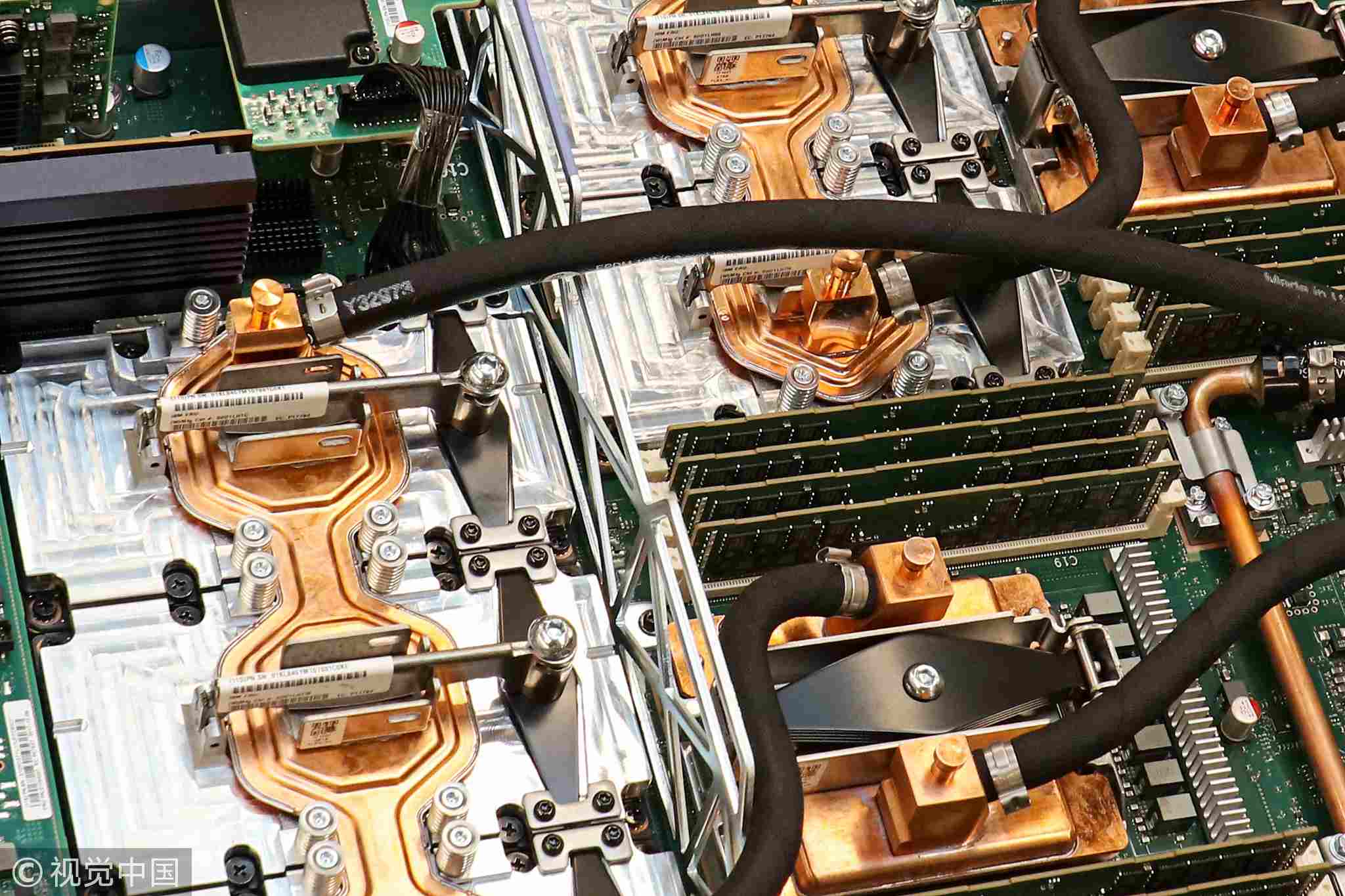
The US unveils the world's fastest supercomputer. /VCG Photo
The US unveils the world's fastest supercomputer. /VCG Photo
It seems that the president has put the hi-tech sector, in which the US leads and Americans take pride, in the trade crossfire. Its first place in the Global Science Scorecard will be jeopardized.
Of course, businesses that have been sparing no efforts to dodge the realization of the nightmare over the past months are bracing for a hard landing. From Apple to Dell, from Intel to Qualcomm, from General Motor to Tesla – none of them can survive Trump's fire and fury.
Apple's business in Greater China generated 20 percent of its aggregate revenue last year given China's cheaper labor and sourcing parts. In the first quarter of this year, it increased its inventories by 3.2 billion US dollars compared with the previous quarter, amid fears that a trade war will ruin its future production.
Tesla, in the middle of striking a deal to open a factory in Shanghai, may lose its largest overseas market. In 2017, its revenue in China surged by over 90 percent. If Beijing takes countermeasures, it will likely be hamstrung. The same fate will also strike General Motors, for whom China has been the largest retail market for six consecutive years.
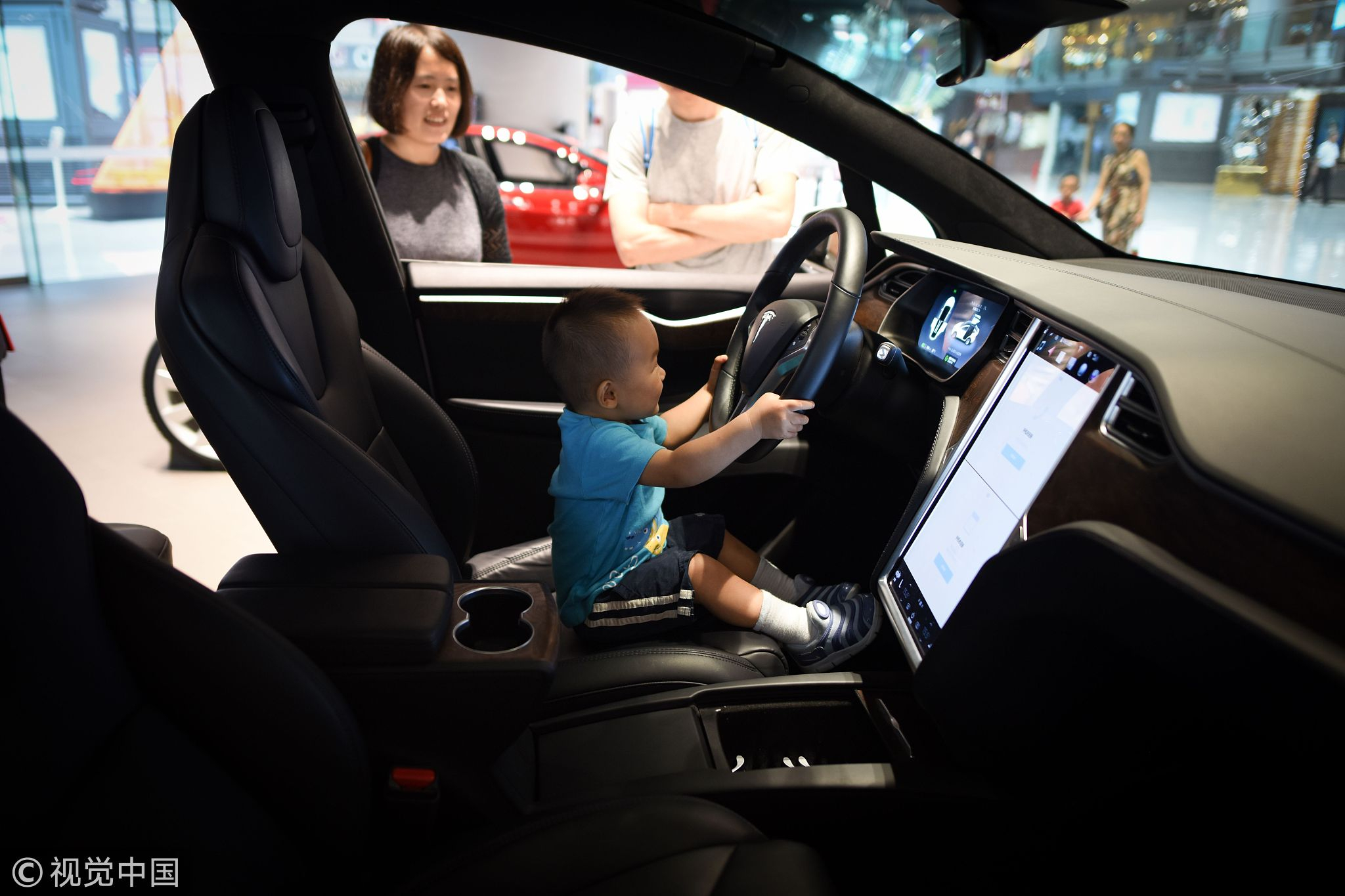
A boy sits in a Tesla car during a visit at Tesla showroom in Beijing on July 4, 2018. /VCG Photo
A boy sits in a Tesla car during a visit at Tesla showroom in Beijing on July 4, 2018. /VCG Photo
Actually in Trump's tariff list lie many non-Chinese corporations. Reuters quoted Syracuse University economics professor Mary Lovely as saying that "87 percent of electronics-related products targeted were from non-Chinese multinationals and foreign-invested joint ventures."
Qualcomm gained half of its revenue from China thanks to a huge number of Chinese tech firms that use their chips. The Semiconductor Industry Association in the US stated that it was alarmed that chips imported from China was on the tariff list.
Trump's tariffs are putting US consortiums in limbo, lowering the country's scientific research capacity, and making the American people pay a more sizable chunk for their lives.
In 1984, just one year before the Plaza Accord was clinched between the US and Japan, American consumers paid some 53 billion US dollars more given import restrictions.
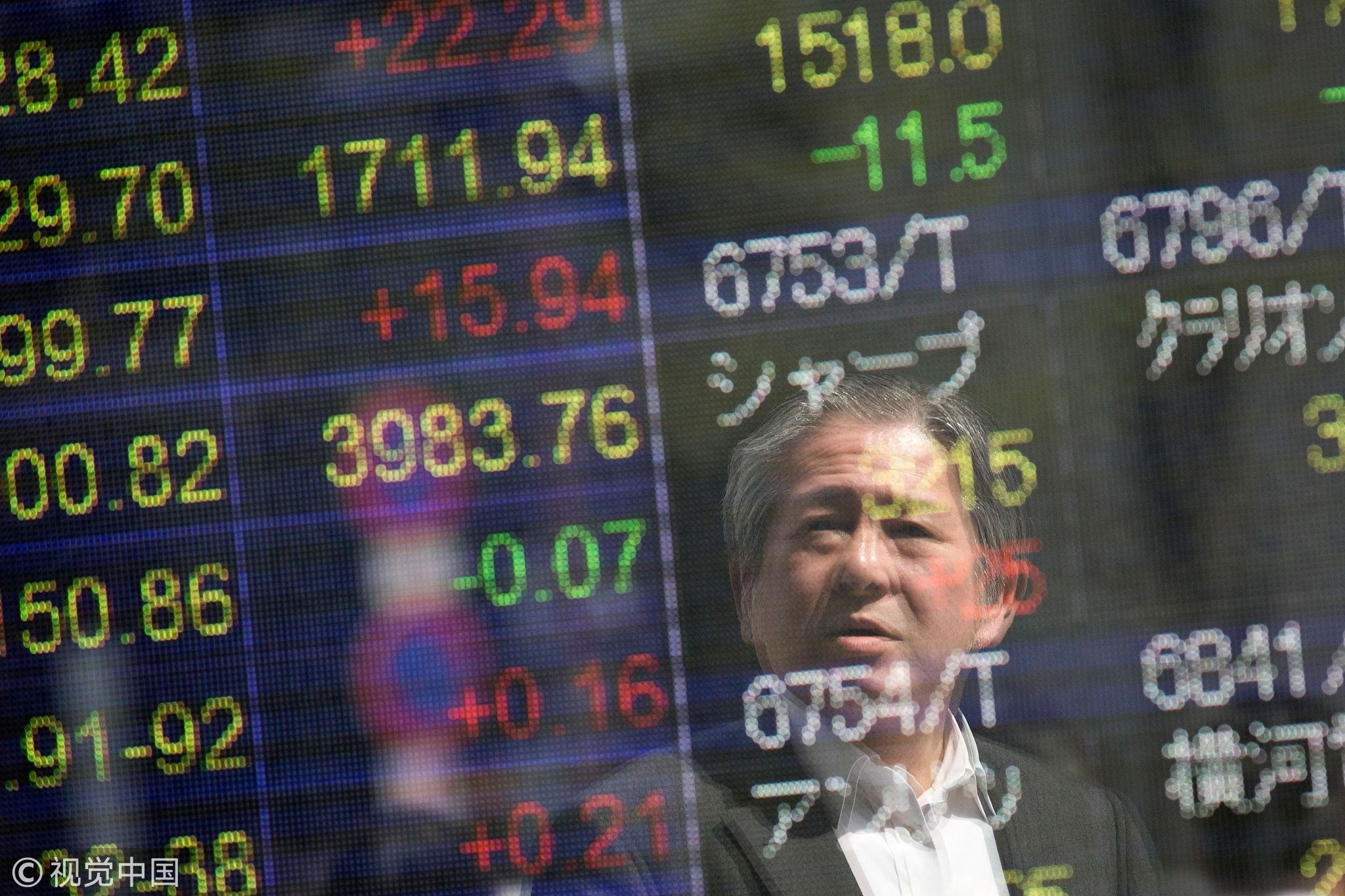
A man looks at a stock indicator showing share prices of Japanese companies in Tokyo on April 5, 2018. /VCG Photo
A man looks at a stock indicator showing share prices of Japanese companies in Tokyo on April 5, 2018. /VCG Photo
When the US economy goes south, will it just be "a little pain" as Trump said?
Besides taking an economic toll, the trade rift will not reduce the so-called trade deficit at all. In the 1980s when the Ronald Reagan administration tried to address the US’ huge deficit with Japan through protectionist measures, the deficit actually swelled from 1.3 percent of the US' GDP in 1980 to 3.7 percent in 1989.
Trump resorted to the same recipe today, but nothing good will come of it. He could end up paying the ultimate political price.
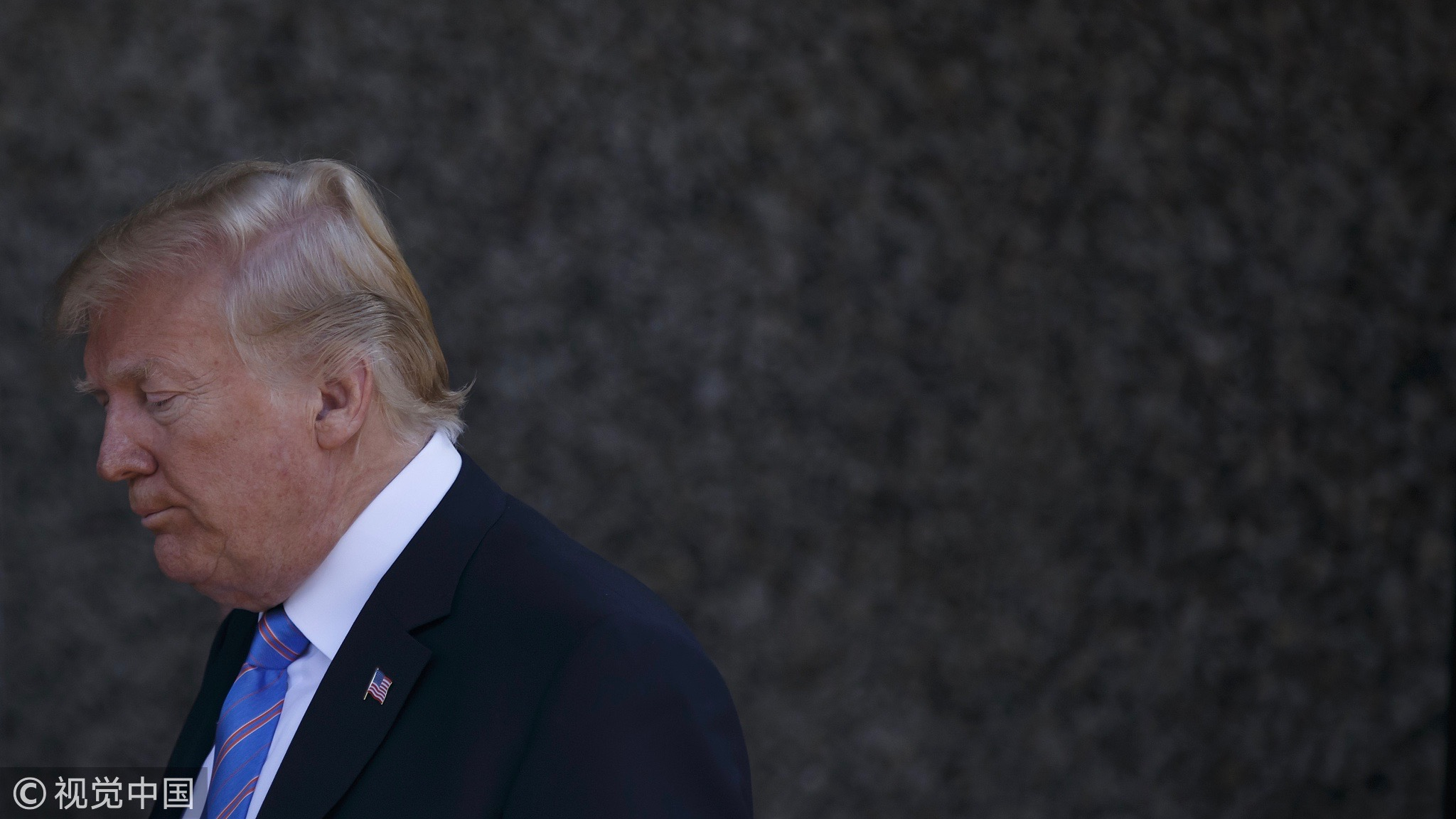
(Cover photo: US President Donald Trump departs a meeting during the Group of Seven Leaders' Summit in La Malbaie, Quebec, Canada, June 9, 2018. /VCG Photo)