
Opinions
16:57, 10-Jul-2018
Opinion: Appeasers cannot escape falling victim to a trade war
Updated
16:30, 13-Jul-2018
 ["china"]
Share







Copied
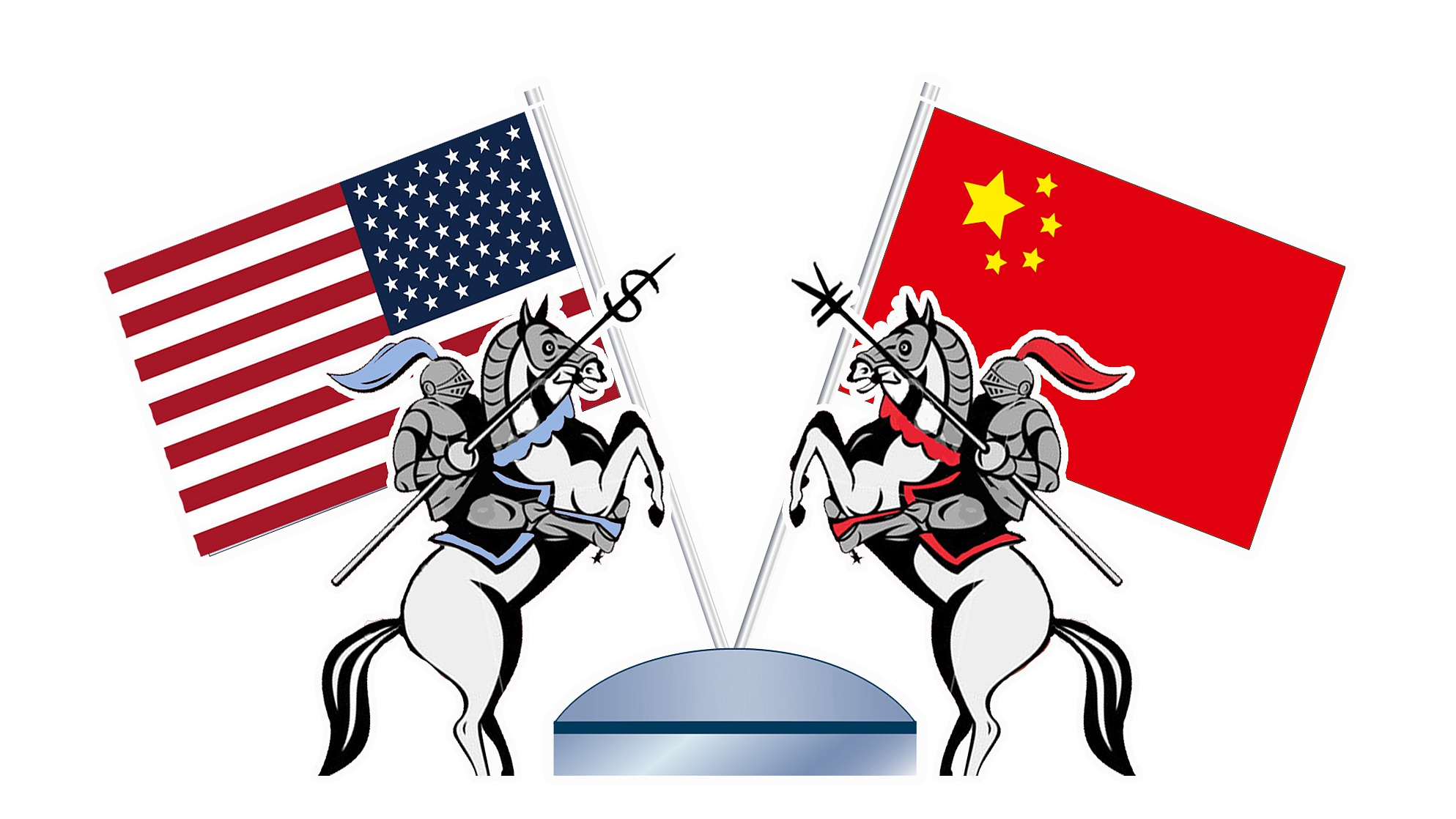
Editor's note: The following is an edited translation of a commentary on the US-initiated trade dispute from the Chinese-language "Commentaries on International Affairs."
Since July, several countries have taken retaliatory measures against the trade war ignited by the Trump administration.
After Canada imposed additional tariffs on US products worth about 12.6 billion US dollars, Mexico launched a second round of countermeasures levying other duties on US products worth 3 billion US dollars.
On July 6th, China was forced to announce the implementation of retaliatory tariffs on U.S. goods worth 34 billion dollars. On the same day, Russia also introduced additional import tariffs on a range of US goods.
It’s anticipated more countries will become embroiled in this trade war that impacts on all parties’ interests in the global industrial chain.
For those who want to appease the Trump administration should be aware that one day their actions may come back to bite them.
First of all – Remember who started this
The US reported an additional 213,000 jobs for June, with the manufacturing sector seeing a rise in line with the general increase.
President Donald Trump reportedly said country after country had called him in the hope of reaching a consensus with the US, seeking a solution to the trade dispute. Some believed the US was coming out the winner in the trade war. But is that the case?
According to reports in the New York Times on the same day, soybean future prices in the US have fallen 15 percent since May 25th, and American farmers were considering spending less on equipment and materials in the face of lower incomes due to the stiff tax on soybean imports, a bearishness that could eventually trickle through to the broader economy.
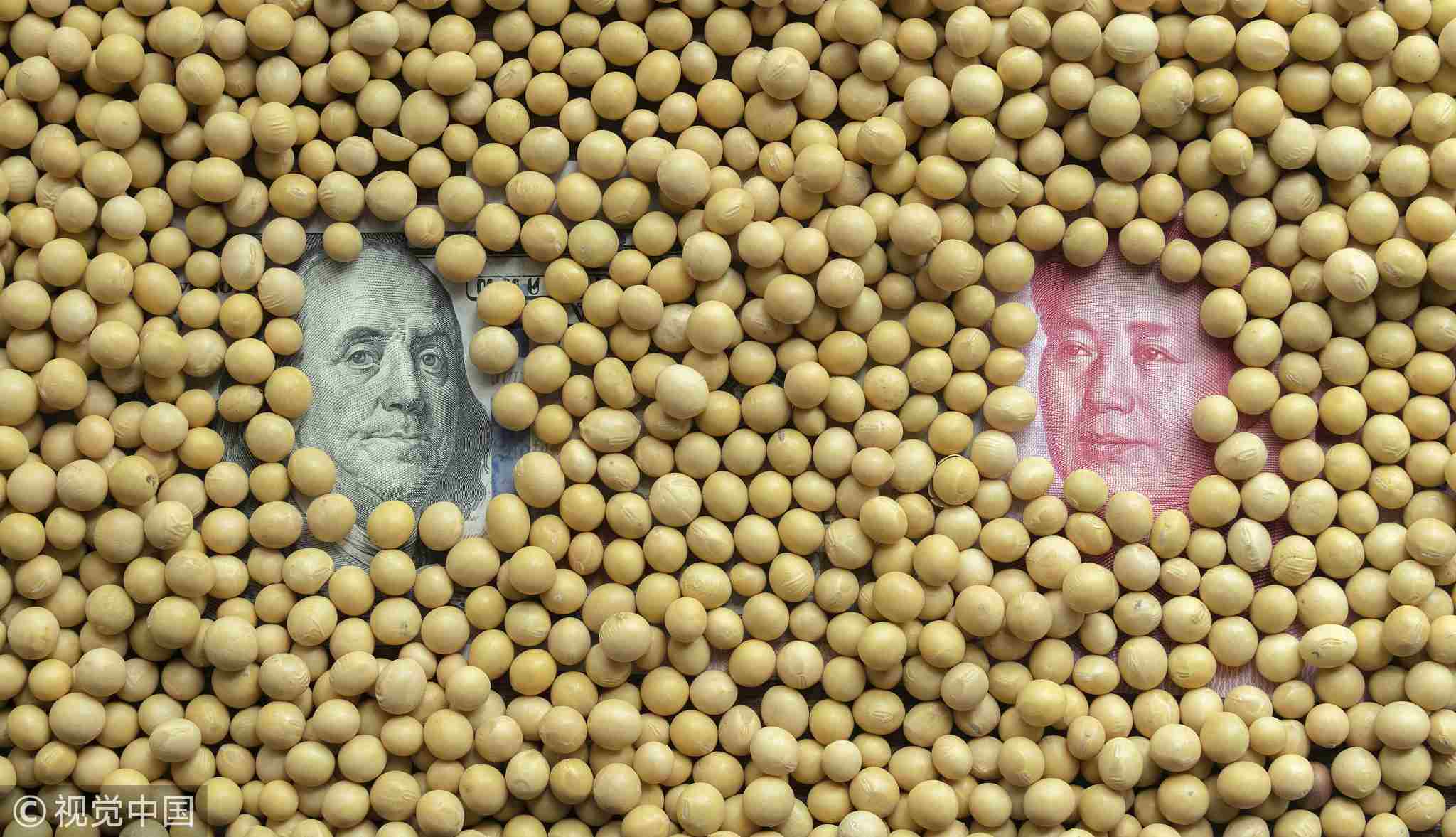
In April, the US government issued a Customs Duty list, which would impose a 25 percent tariff on the 1333 products exported to China with a total value of 50 billion US dollars. / VCG Photo
In April, the US government issued a Customs Duty list, which would impose a 25 percent tariff on the 1333 products exported to China with a total value of 50 billion US dollars. / VCG Photo
The report quoted John Heisdorffer, the president of the American Soybean Association, as saying “My son, who farms with me, is going to spend the rest of his life trying to get that back, and that scares the hell out of me.”
As the trade war bites, it’s easy to forget why it was ignited, as well as who the “arch criminal” responsible for the war. In the internet age, “short” seems to be the order of the day. Information is short; videos are short in length, but so are people’s memories and sight.
The US ignited the trade war, and retaliatory measures against US tariffs, regardless of whether they came from Canada, Mexico or China, are all proportionate in scale and intensity.
It should not be forgotten who started this trade war. It’s up to Donald Trump to take the first step towards peace.
Secondly – There can be no bystanders
Figures show that up until July 8th, countries have levied total retaliatory tariffs on US goods worth 75 billion US dollars, with China imposing duties on goods worth 34 billion US dollars, giving the impression that this is a conflict between two countries.
However, a report from Syracuse University in the United States suggests that 87 percent of the computers and electronic products subject to US tariffs are produced by multinationals operating in China, while solely Chinese firms produce only 13 percent.
The Federal Reserve Bank of San Francisco pointed out as far back as 2011 that for every “Made in China” product sold at one dollar, 55 percent of the money is earned by US service providers. That was seven years ago when economic globalization was not as thriving as it is today.
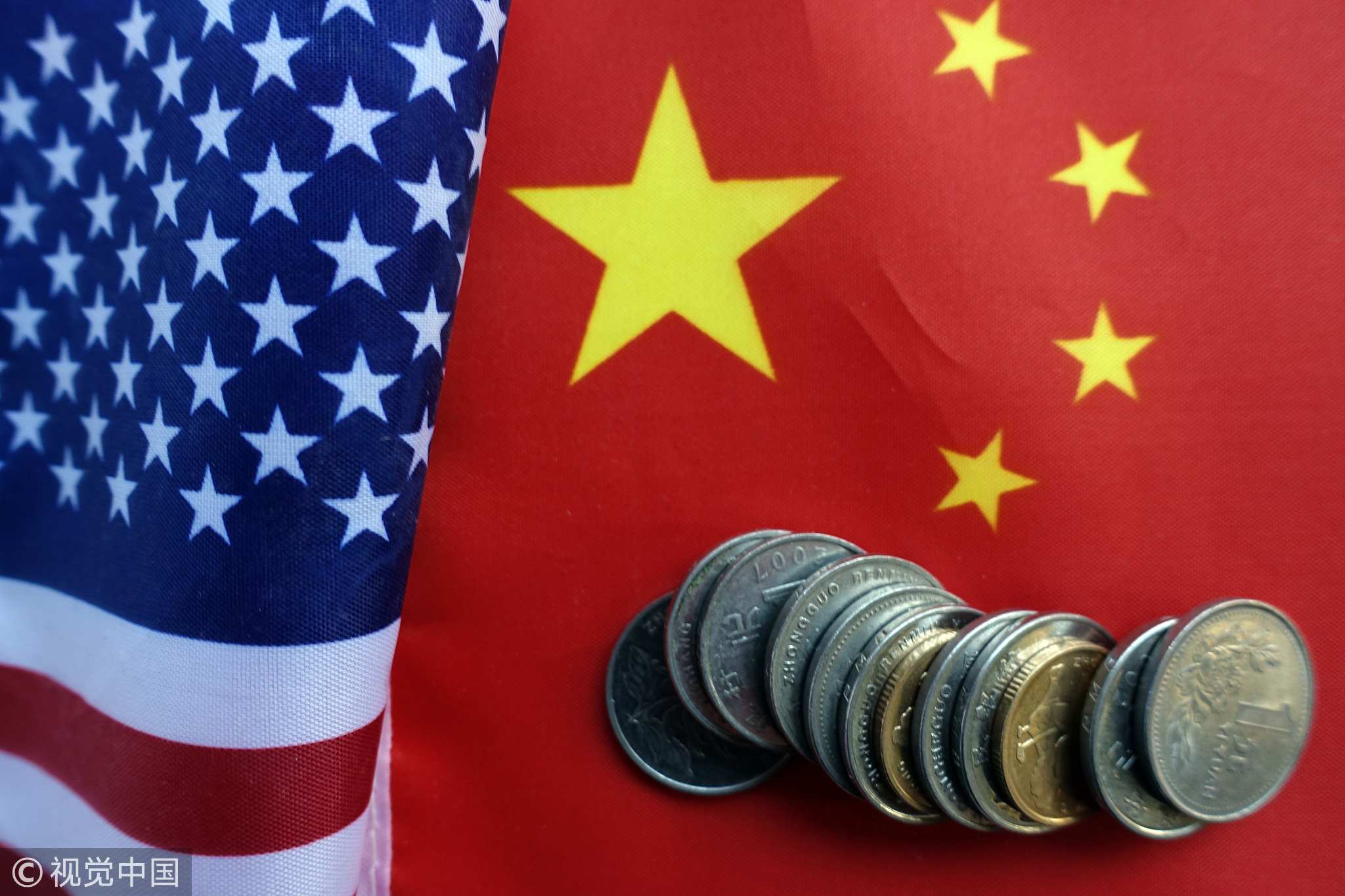
Sino-US trade war./ VCG Photo
Sino-US trade war./ VCG Photo
Therefore, there can be no “bystanders” in this trade war. All parties have a role to play. It’s up to everyone to take up the challenge. Even Japan, which has so far kept silent, has come to the same conclusion.
According to a commentary released by the Nikkei Asian Review on July 7, the trade war ignited in 1930 by then the US President Herbert Hoover should serve as a warning.
Against the judgment of over 1000 economists, Hoover raised duties on foreign goods to protect American industry, only inviting reprisals from European countries.
The commentary warned that the resulting trade war was considered a reason why the US stock market crash of 1929 evolved into the Great Depression and called on advanced economies to continue to try to convince Trump of the importance of free trade with one voice.
It also called on Japanese and European corporations to work with their US counterparts to lobby against the Trump administration’s protectionist policies.
Third – Never be a backstabber
Jointly meeting the press with Austrian Foreign Minister Karin Kneissl on July 5, Chinese State Councilor and Foreign minister Wang Yi said China’s resistance to trade protectionism is not only to safeguard its own legitimate interests but also to protect the common interests of all countries in the world, including those in the European Union.
China now stands in the vanguard of opposition to unilateralism and trade protectionism, and trust no one will stab it in the back.
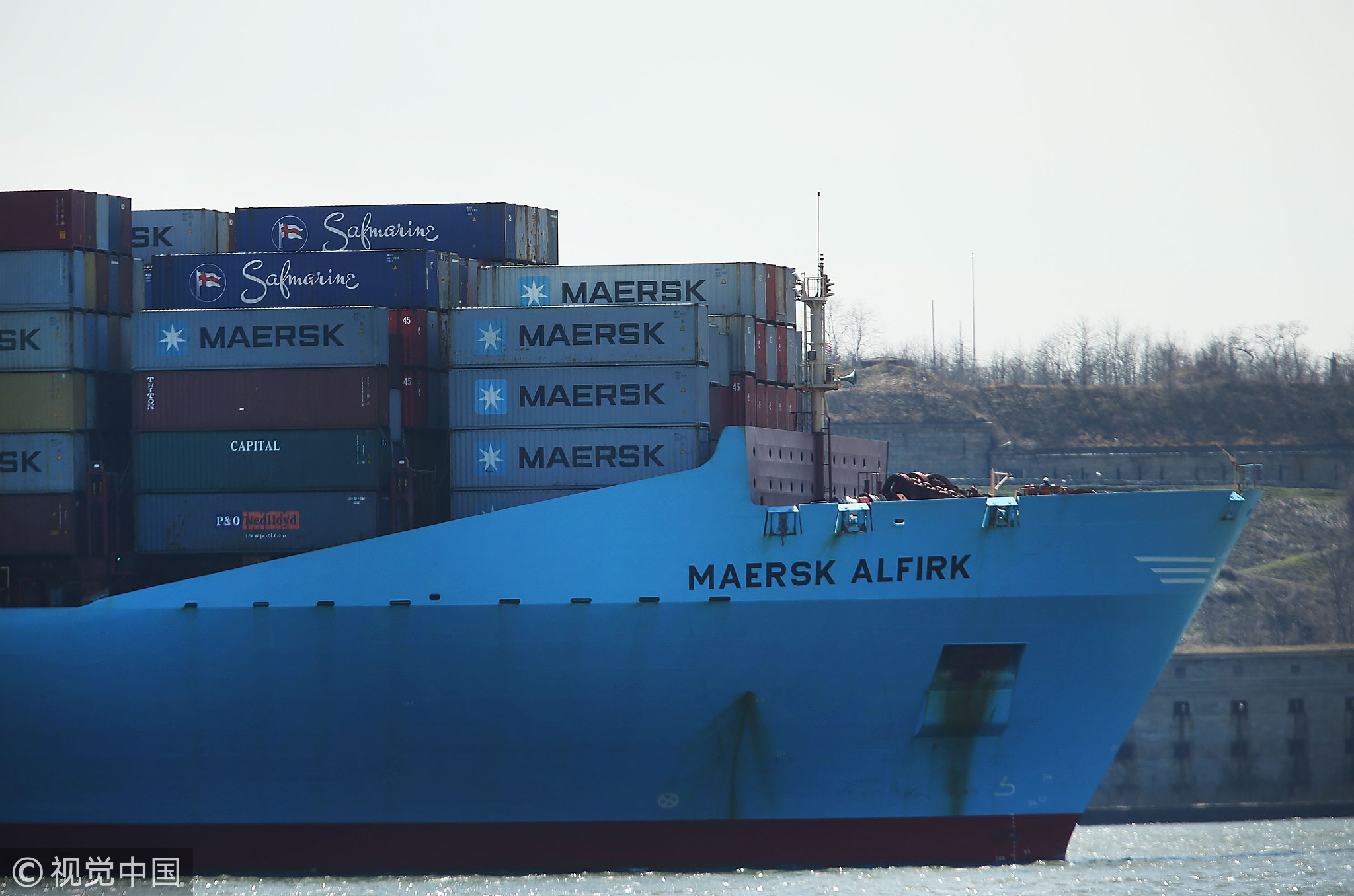
April 9, 2018: A cargo ship owned by Maersk arrives into the New York harbor in New York City. / VCG Photo
April 9, 2018: A cargo ship owned by Maersk arrives into the New York harbor in New York City. / VCG Photo
One of the main characters of economic globalization is the precise, highly-integrated international division of labor in the industrial and value chain. All countries are linked with each other and share both wealth and woes.
The trade war ignited by the Trump administration does restrain not only China’s development but also declares war against economic globalization. It seemingly affects one side, but damages all parties’ interests in the industrial and value chain.
For instance, Fiat Chrysler automobiles are one of the three major car makers in the US. The company has 23 factories across the states, employing over 56,000 people. Fiat from Italy purchased the holding company set up by the US firm, Chrysler, and then registered it in the Netherlands. Its headquarters are in the UK. The company also trades stocks in New York and Milan and has established factories in Italy, China and Brazil.
US media reports say that if the Trump administration implemented tariffs on vehicles as planned, Fiat Chrysler will see its annual profits drop by 860 million US dollars.
Under globalization, if one side ignites a trade war, the other parties should come together to shoulder their obligations and responsibilities jointly, to share their benefits, and work together to lower the adverse effects on the world economic recovery and development, brought by unilateralism and trade protectionism.
As this is a “war,” someone must inevitably charge the enemy line. China, as a responsible country, is standing at the forefront and trusts no one will stab it in the back. Those doing the stabbing should realize they might also find themselves the victim of this US's trade war.
As for the ordinary people, this trade war touches everyone, and nobody can avoid it.
No wonder then that Canadian television host Steve Paikin wrote on his blog “America, you just don’t deserve our money,” announcing that for the first time in many years, his family will not do an American baseball road trip, “unless you change your minds about Canada.”