In China you may need a vacation to get over the National holiday!
About half of China’s population of 1.3 billion is expected to travel during the country’s National Day holiday from October 1st to 7th, according to China Tourism Academy (CTA). All the extra travel and sightseeing can put pressure not only on tourism services and sites but also the poor Chinese tourists themselves who often have to endure long delays, massive crowds and shoulder-to-shoulder crushes.
REST OR TEST?
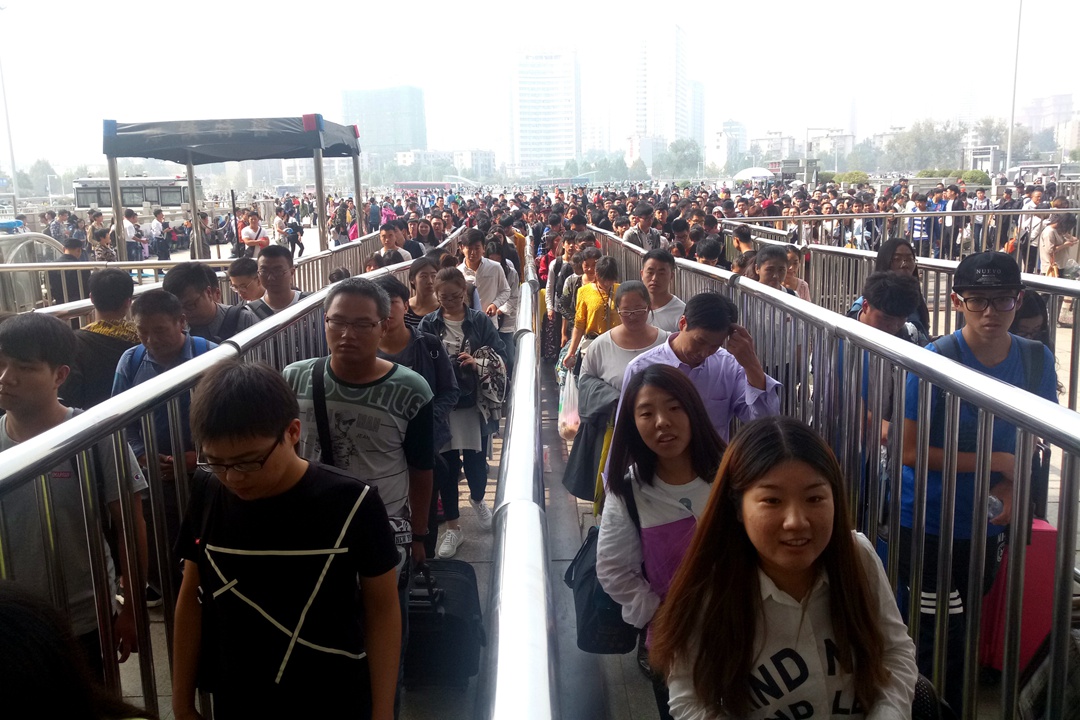
China’s national transportation network has been the first to have its capacity tested.
During the course of 7 days the country’s expressway network is bracing itself for a predicted 650 million passenger trips, according to the Ministry of Transport. The figure represents a 1.7 percent year-on-year increase.
14 million people flocked to railway stations on October 1st, data from China Railway showed, setting a record for the highest number of people traveling by train on a single day.
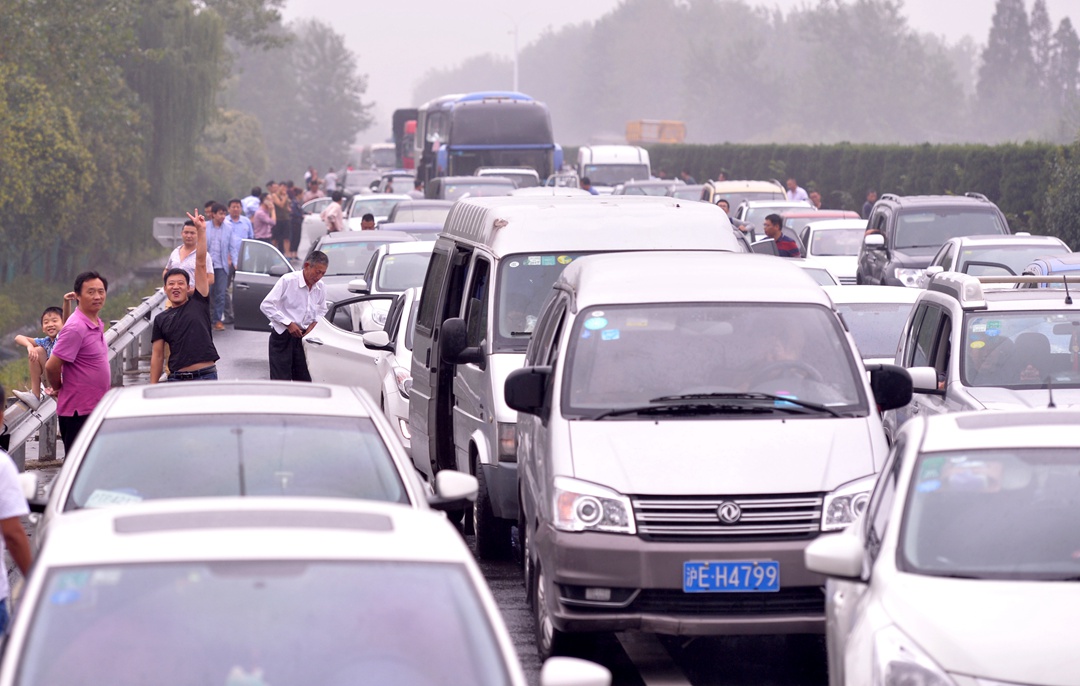
Expressway jam, Jiangsu Province, October 2nd
Transportation almost grounds to a halt in some big cities due to the large number of outward travels.
Ordinary road trips can also become nightmares due to the sudden increase in traffic. In the southern city of Guangzhou for example, 47 would-be holiday makers were left stranded at the airport after their tour guide, who had their passports, was stuck in a traffic jam for 7 hours on the way to meet them on September 30, a trip that normally takes about 2 hours. The group was forced to cancel their plans.
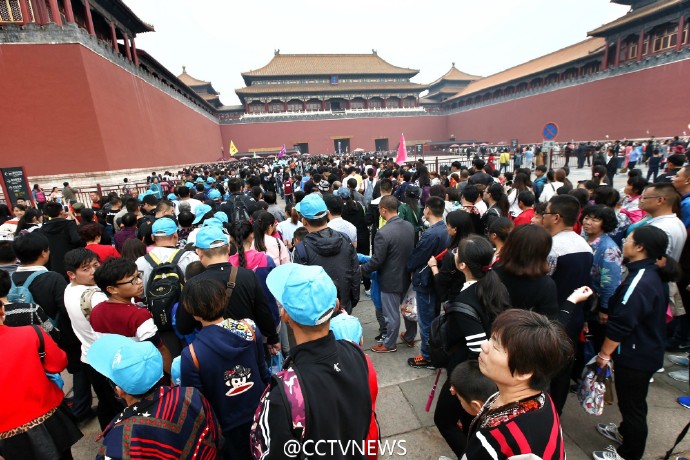
Beijing Palace Museum, also known as the Forbidden City, October 1st
Well-known domestic tourist sites have also been packed with visitors since day one of the national holiday this year.
Beijing’s Forbidden City had to impose a daily ticket quota in case of huge number of tourists overwhelming the former royal residency. On Sunday, 80,000 tickets to the attraction were sold out within two hours, 20,000 were sold at the gate with a further 60,000 being bought online.
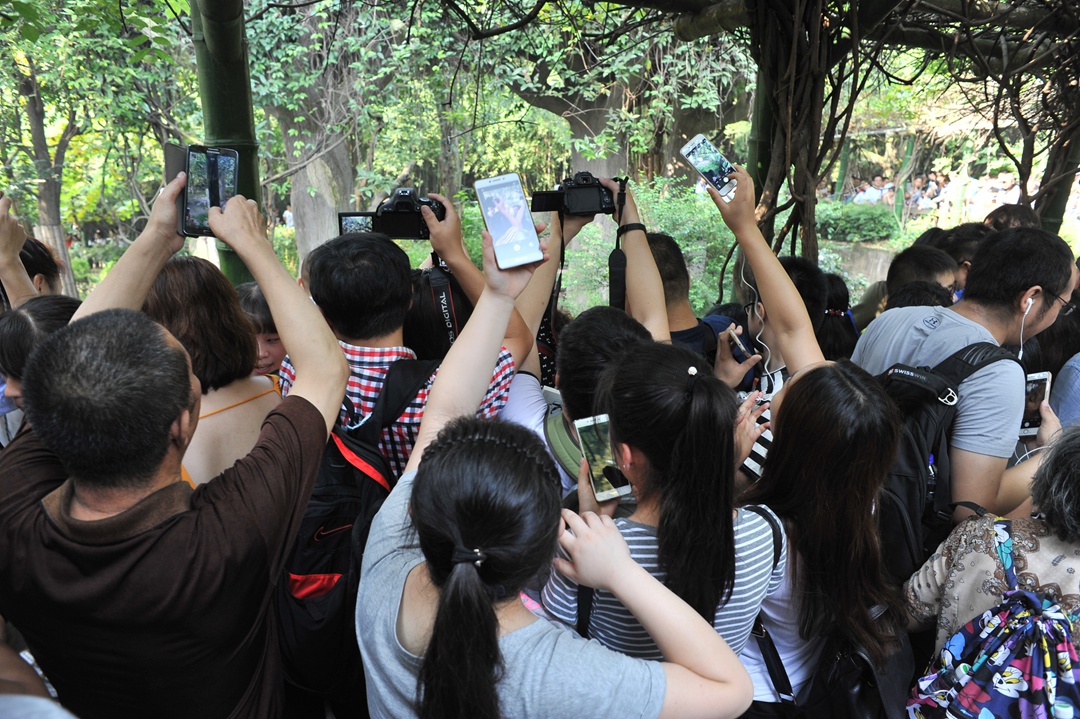
Giant pandas, a Chinese national icon, should be happy as they have just been taken off the endangered species list, but even they could be depressed at the prospect of seeing too many people in a day.
Almost 30,000 panda lovers tried to catch a glimpse of the hairy chubby animal on Sunday in Chengdu Research Base of Giant Panda, Sichuan Province.
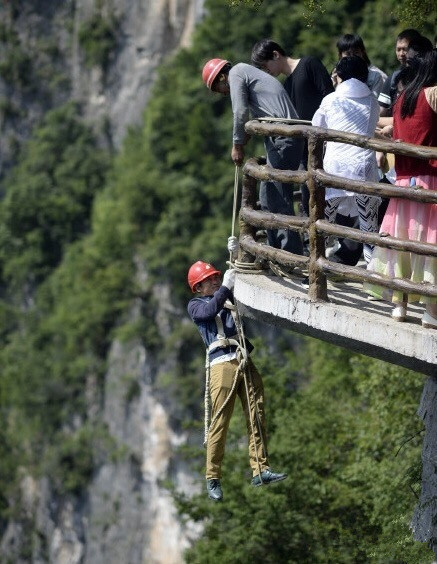
A worker sent down a cliff to pick up litter chucked away by tourists, Chongqing, September 27.
Also under distress are the managers of the attractions. The surge in tourists has also caused surge in litter. Authorities in scenic mountain areas across China have to hire specially trained “spider men” to collect trash chucked away carelessly.
COULD PAID LEAVE BE A SOLUTION?
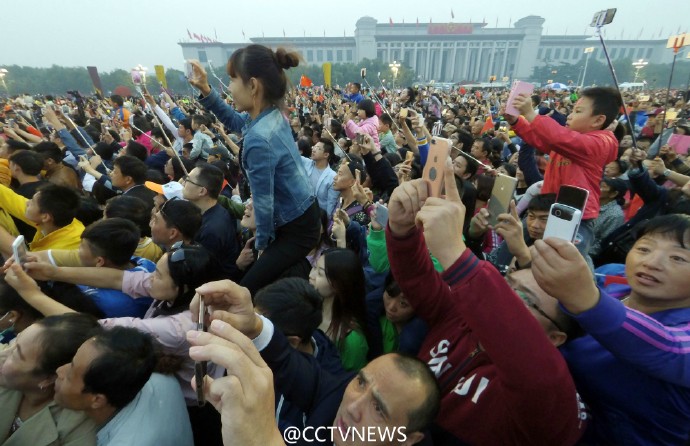
Tian'anmen Square, people are celeberating for the National Day. October 1st.
The strain on public services the 7-day national holiday brings has long been under criticism, but could there be an alternative?
Tourism has proved to be able to make a large contribution to China’s economic growth. The CTA’s report predicted that tourism revenue could jump to over 480 billion yuan in 2016, an increase of 13.5 percent from last year.
The absence of “institutional protection” of people’s right had led to the encroachment in people working longer, the survey concluded.
The average length of annual paid leave for Chinese people is barely 7 days. More than 70% of private sector employees had never taken all their annual leave as stipulated in their contracts, the survey discovered.
A 2014 survey done by China National Tourism Administration showed that half of the country’s population hadn’t even been able to put into practice their annual paid leave.
But supporters of the lengthy national holidays are worried that given the inferior position ordinary workers often find themselves in when negotiating with employers for their paid leave, national holidays have actually protected their vacation right.
China began its 7-day holiday for the National Day and the traditional Spring Festival in 2000. Before 2008, the same national arrangement was applied to the May Day as well, which later was scraped and shortened to three days.
Critics argue that the entire country being mobilized to take out holiday plans at the same time causes huge pressure on tourist resources and transportation networks, which damages the tourist experience. One possible solution could be longer, or more flexible, annual leave so that people could make their own holiday plans instead of only taking them during public holidays.
