
Politics
23:16, 04-May-2018
What to expect from Premier Li's Indonesia, Japan trip
 ["china"]
Share







Copied
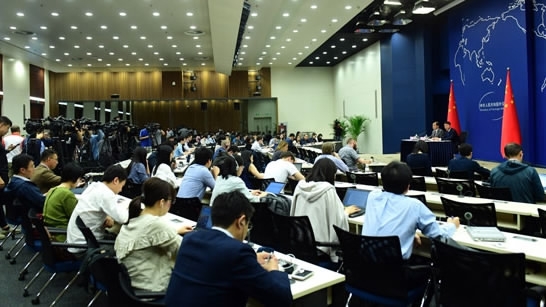
Chinese Premier Li Keqiang's trips to Indonesia and Japan will be his first trip overseas since the reshuffle of the Chinese government earlier this year, China's Vice Foreign Minister Kong Xuanyou said at a press conference on Friday.
Li, who started his second five-year term in March as China's head of government, will pay official visits to Indonesia and Japan, and attend the seventh China-Japan-South Korea leaders' meeting in Japan from May 6 to 11.
15 years of China-ASEAN strategic partnership
This year marks the fifth anniversary of the establishment of the China-Indonesia comprehensive strategic partnership and the 15th anniversary of the strategic partnership between China and the Association of Southeast Asian Nations (ASEAN), Kong noted.
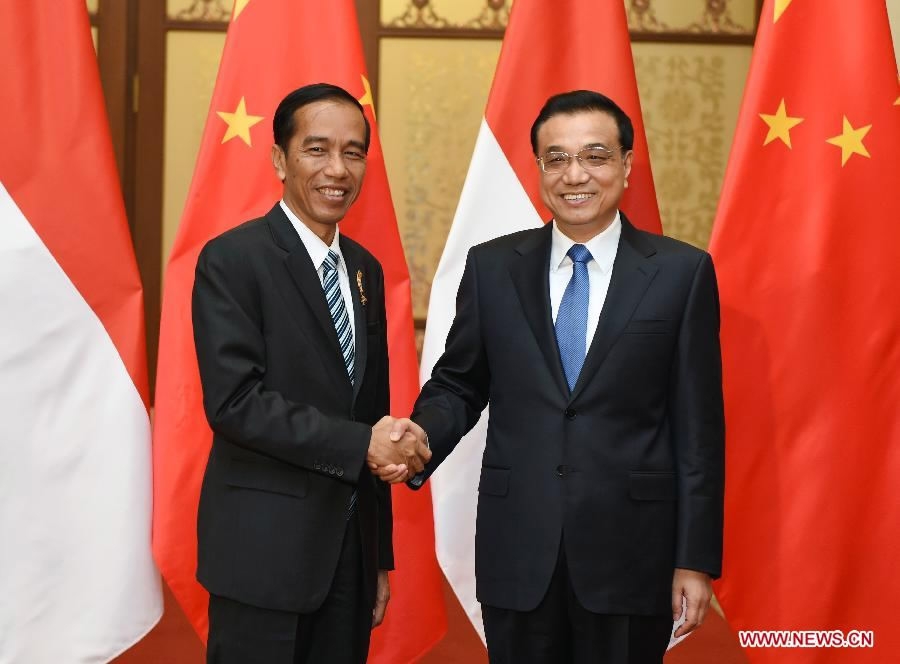
Chinese Premier Li Keqiang (R) meets with visiting Indonesian President Joko Widodo at the Great Hall of the People in Beijing, March 27, 2015. /Xinhua Photo
Chinese Premier Li Keqiang (R) meets with visiting Indonesian President Joko Widodo at the Great Hall of the People in Beijing, March 27, 2015. /Xinhua Photo
Li will visit the ASEAN Secretariat in Indonesia and attend an event in honor of the 15th anniversary of the China-ASEAN strategic partnership, Kong added. ASEAN countries are important partners of China in building the Belt and Road, he said, referring to an initiative proposed by Chinese President Xi Jinping in 2013.
Hailing Indonesia as an important emerging market, Kong said China and Indonesia will sign a number of commercial deals during Li's visit.
China-Japan-South Korea summit to focus on economy
The upcoming China-Japan-ROK leaders' meeting in Japan will be the first such meeting in two and a half years, Kong said, noting that next year marks the 20th anniversary of the trilateral cooperation mechanism.
He revealed that Li, Japanese Prime Minister Shinzo Abe and South Korean President Moon Jae-in will brief the press after their meeting. The Chinese premier will also address a business leaders' meeting of the three countries.
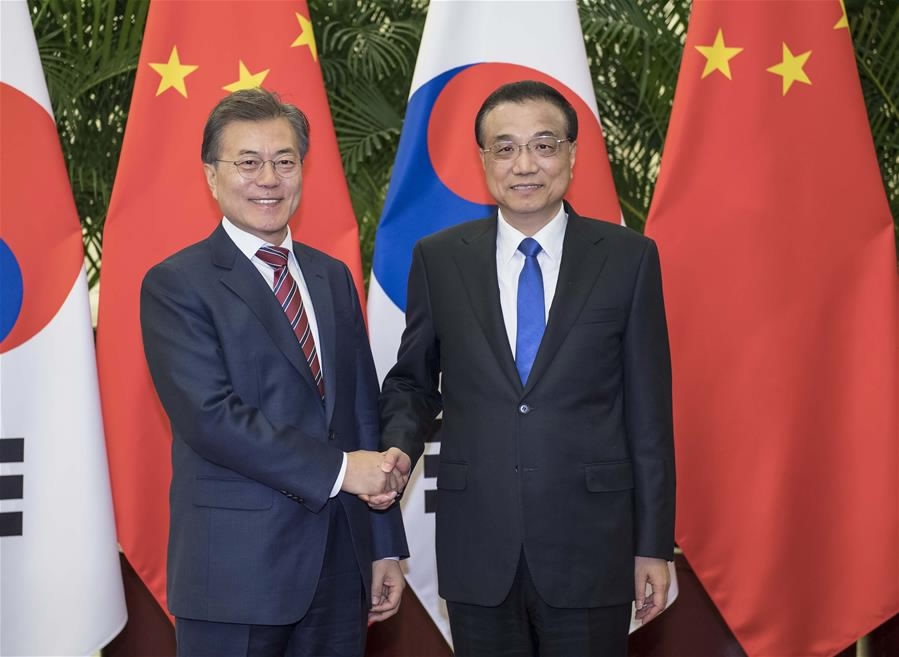
Chinese Premier Li Keqiang (R) meets with President of the Republic of Korea (ROK) Moon Jae-in in Beijing, capital of China, Dec. 15, 2017. /Xinhua Photo
Chinese Premier Li Keqiang (R) meets with President of the Republic of Korea (ROK) Moon Jae-in in Beijing, capital of China, Dec. 15, 2017. /Xinhua Photo
The Chinese side looks forward to exchanging views with Japanese and South Korean leaders on trilateral cooperation as well as international and regional situations, the vice foreign minister said.
China also expects to make joint efforts with Japan and South Korea to facilitate the negotiations on the Regional Comprehensive Economic Partnership (RCEP), oppose trade protectionism, and promote regional economic integration, according to Kong.
Li to speak on China-Japan relations
This year marks the 40th anniversary of the signing of the China-Japan Treaty of Peace and Friendship, Kong said, noting that ties between the two countries have been improving.
Li will be the first Chinese premier to visit Japan since his predecessor Wen Jiabao attended the fourth China-Japan-South Korea leaders' meeting in Tokyo in 2011.
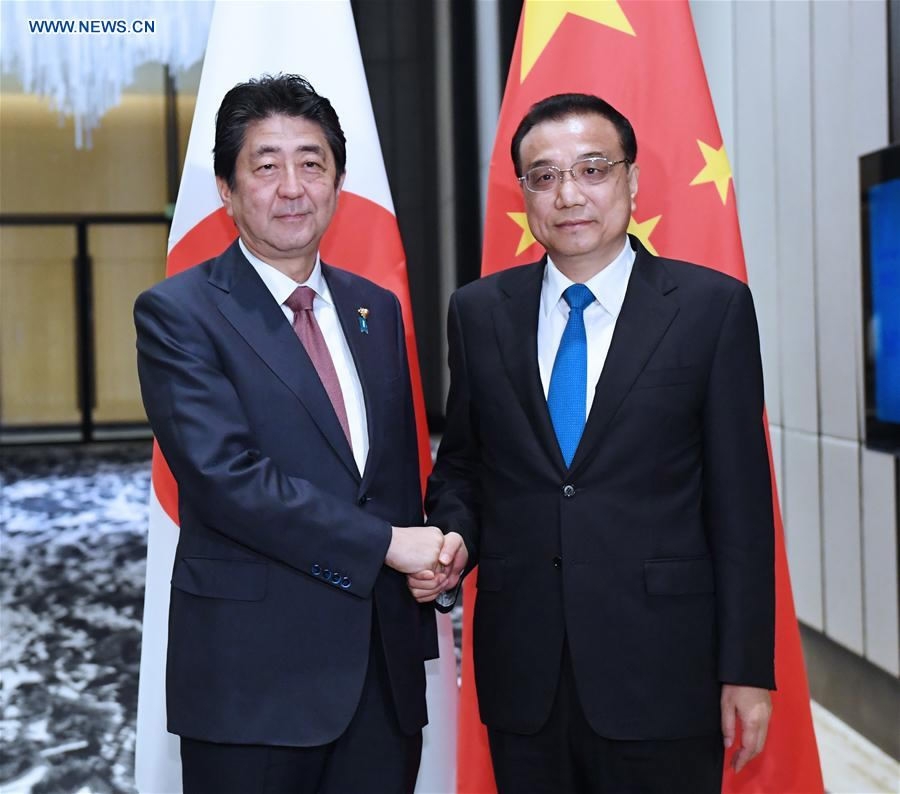
Chinese Premier Li Keqiang (R) meets with Japanese Prime Minister Shinzo Abe in Manila, the Philippines, Nov. 13, 2017. /Xinhua Photo
Chinese Premier Li Keqiang (R) meets with Japanese Prime Minister Shinzo Abe in Manila, the Philippines, Nov. 13, 2017. /Xinhua Photo
Li will hold talks with Abe, meet Japan's Emperor Akihito, and deliver a speech at a major event marking the 40th anniversary of the signing of the China-Japan Treaty of Peace and Friendship, according to Kong. The Chinese premier will also visit Hokkaido in northern Japan.
Kong said Li will exchange views with Abe on enhancing political and strategic trust, expanding cooperation, and properly handling differences between the two countries, striving to bring bilateral relations back on track.
Li's visit will inject new imputes to the improvement and development of China-Japan relations and chart a new course for future development of bilateral ties, Kong told reporters.