
Politics
10:08, 26-Apr-2018
What to expect in Turkey's snap election?
 ["china"]
Share







Copied
04:14
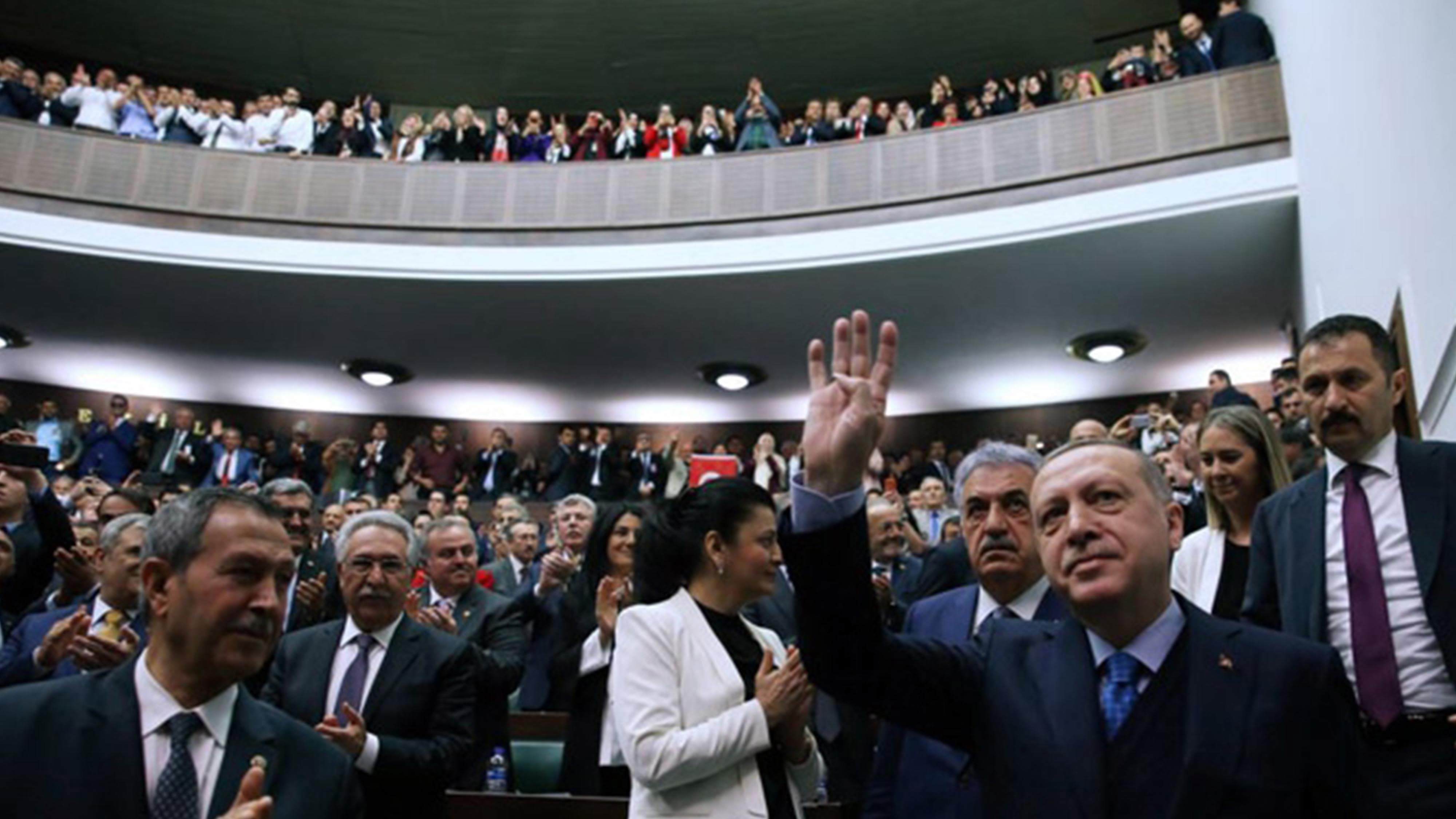
Ever since Turkish President Recep Tayyip Erdogan announced Turkey would carry out snap parliamentary and presidential elections on June 24th – more than a year earlier than expected – politicians in Ankara have been in a chaotic rush of meetings.
One thing is clear – opposition parties are determined to collaborate at all costs to create a stronger front against Erdogan.
The main opposition Republican People’s Party Kemal Kilicdaroglu has said they will take all steps necessary. And they have already backed their words with action. On Sunday a surprising move was made by the CHP when 15 of their members switched to the newly formed IYI “Good” Party. This move made the Good Party – which is a breakaway party from the nationalist MHP – eligible for elections.
Kilicdaroglu said with this move, they “defended democracy in this country, the presence of democracy with all its’ rules in every institution” and that they desire “to live together in peace.”
However, one critical decision is yet to be made by the CHP – who their presidential candidate will be. It is expected to be announced by this weekend. And that is what is causing the chaos in Ankara. Leaders of the Felicity Party “SP”, the CHP and the IYI Party are holding back to back meetings with one another to sort out whether or not they can come up with a joint presidential candidate.
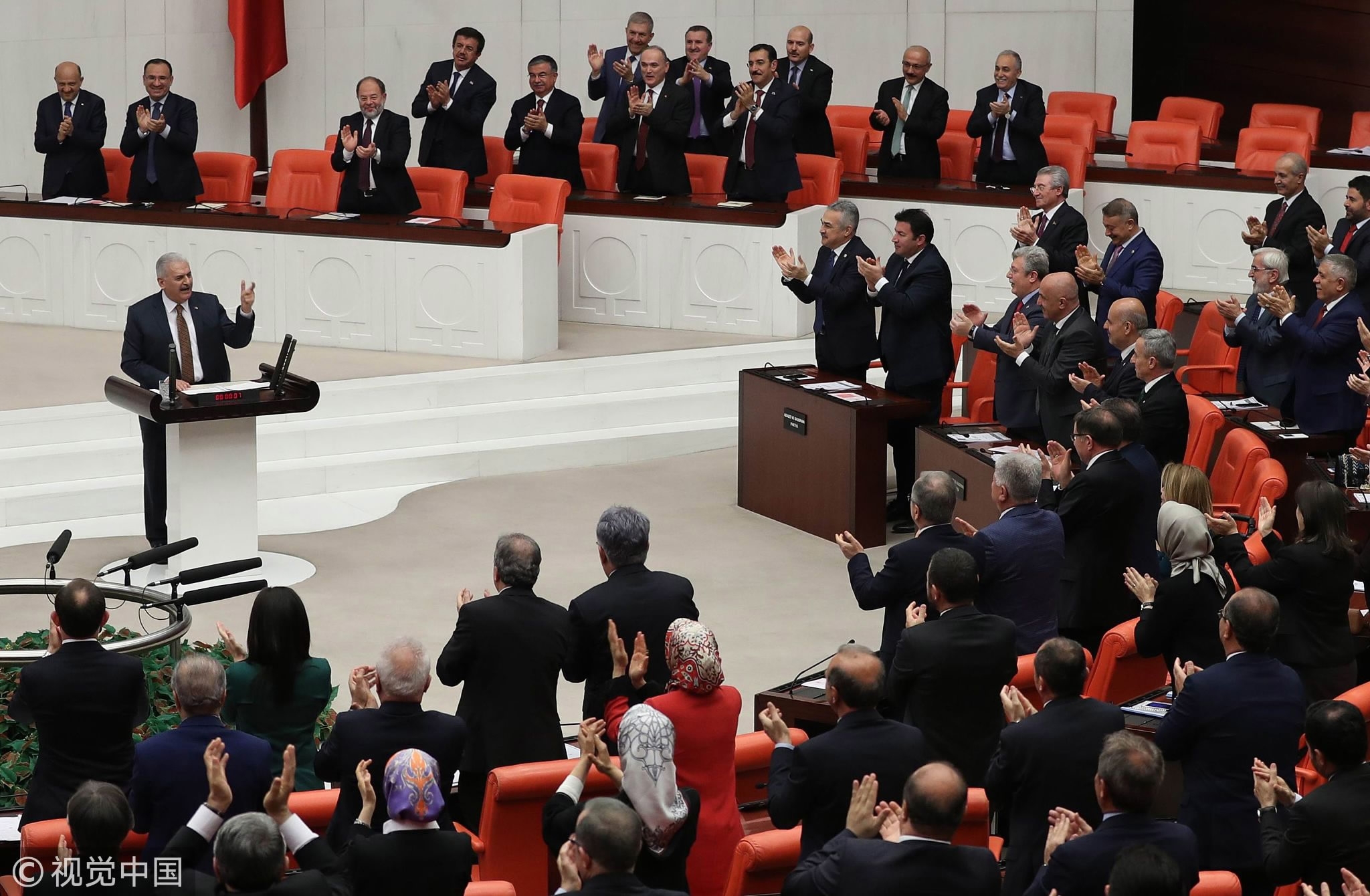
Members of Parliament applaud as Turkish Prime Minister Binali Yildirim (L) speaks during the debate motion on proposed early presidential and parliamentary elections, April 20, 2018, at the Grand National Assembly of Turkey (TBMM) in Ankara. /VCG Photo
Members of Parliament applaud as Turkish Prime Minister Binali Yildirim (L) speaks during the debate motion on proposed early presidential and parliamentary elections, April 20, 2018, at the Grand National Assembly of Turkey (TBMM) in Ankara. /VCG Photo
The big question is whether there is a figure that would be able to attract voters from different parts of the spectrum, the seculars, the nationalists and also from the conservatives who under normal circumstances would vote for Erdogan.
It’s been reported in local media that one name frequently coming up is reported to be former President Abdullah Gul, once a close ally of Erdogan.
One key contender seems to be Meral Aksener, the leader of IYI Party. She is perceived as a strong politician by many in Turkey. Some critics say, running against a woman could prove to be a challenge for Erdogan, who under normal circumstances would easily say extremely harsh words against an opponent. Political analyst Gareth Jenkins says, due to some Turkish values, bad mouthing a woman the same way could backfire.
Jenkins also stresses that the timing is critical, both because it does not give the opposition enough time to prepare but also due to Turkey’s recent military operations in Syria. In January, Turkey launched a military operation in Syria’s Afrin to clear border areas of the Kurdish group YPG. Erdogan claimed victory over the operation, that he said was crucial for Turkey’s security.
Jenkins said Afrin “was an easy victory, and it only occurred because Russia allowed Turkey to use the airspace, but if we’ve seen Erdogan’s rhetoric – he’s been saying Afrin was just the beginning, after Afrin we’re going to go to Manbij, this is impossible. Russia won’t allow it to happen, so it’s also very important to the MHP ultranationalists and Erdogan – they go the polls before it becomes clear to the Turkish people that Afrin was easy, the rest is impossible.”
One other issue during the campaign process will also be Turkey’s relations with EU countries, as several have already signaled they will ban Turkish political rallies in their countries. This similar move by Austria, the Netherlands and Germany had caused tension with Turkey during the referendum in 2017. It appears ties may once again be strained even further.
The elections will take place during an ongoing state of emergency first declared following the coup attempt in 2016. On Monday, Kilicdaroglu described this as a “civil coup” increasing the tension among party leaders, making it clear the race will be a rough one.