
World
11:04, 15-Jul-2018
Two dead in Nicaragua as govt forces open fire on protest
Updated
10:50, 18-Jul-2018
 ["other"]
Share







Copied
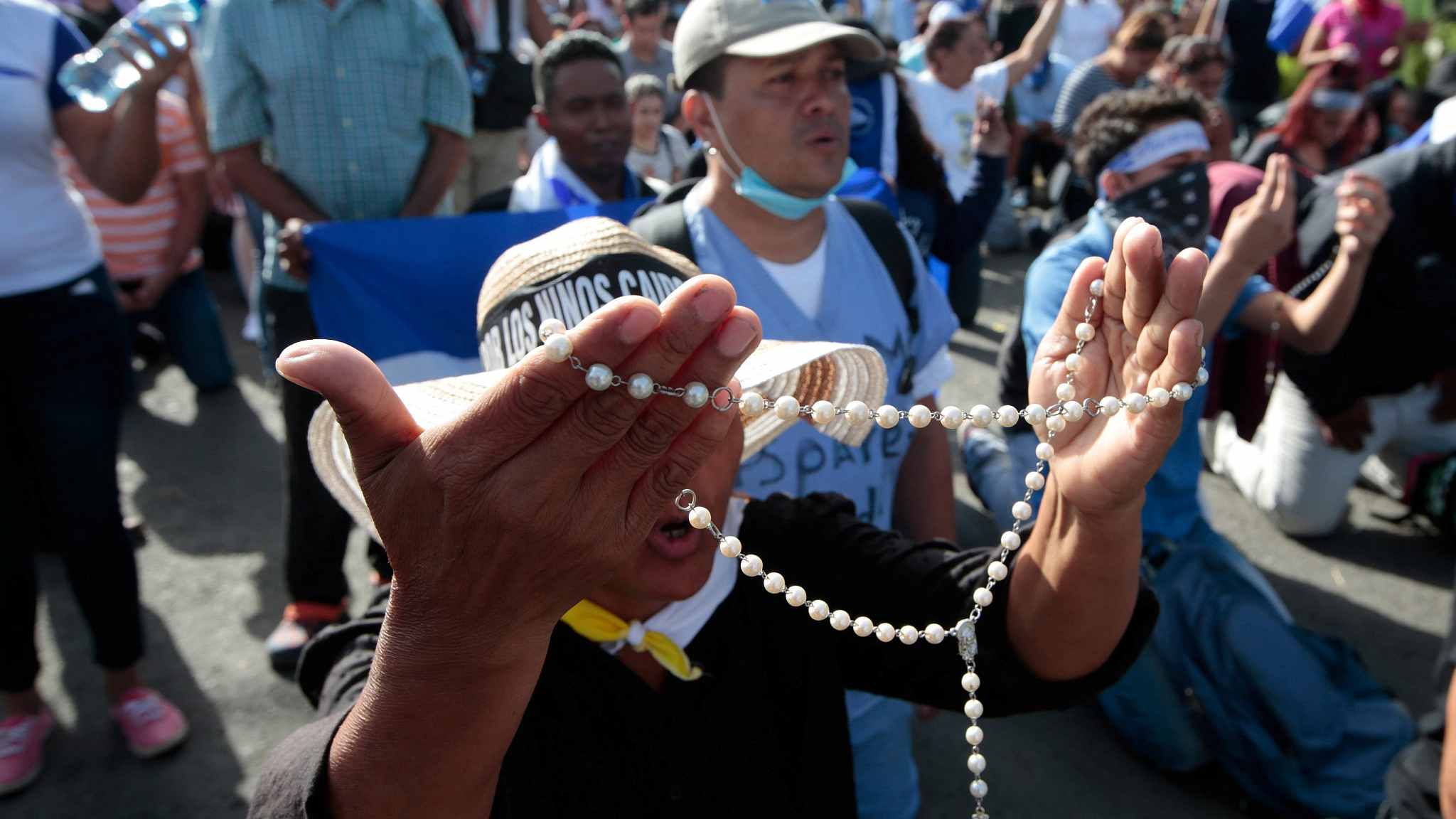
Government forces in Nicaragua shot dead two young men on Saturday as protesters were camped out at a church on the third day of nationwide demonstrations against President Daniel Ortega.
The latest violence brings to at least nine the toll in the Central American country since Thursday, when protesters intensified their opposition to the government after three months of unrest which have left around 270 people dead.
"They are telling us that we have two dead and several wounded," Cardinal Leopoldo Brenes said upon reaching the besieged parish with Vatican envoy Stanislaw Waldemar Sommertag on Saturday.
"They were shooting to kill," one young protester told reporters.
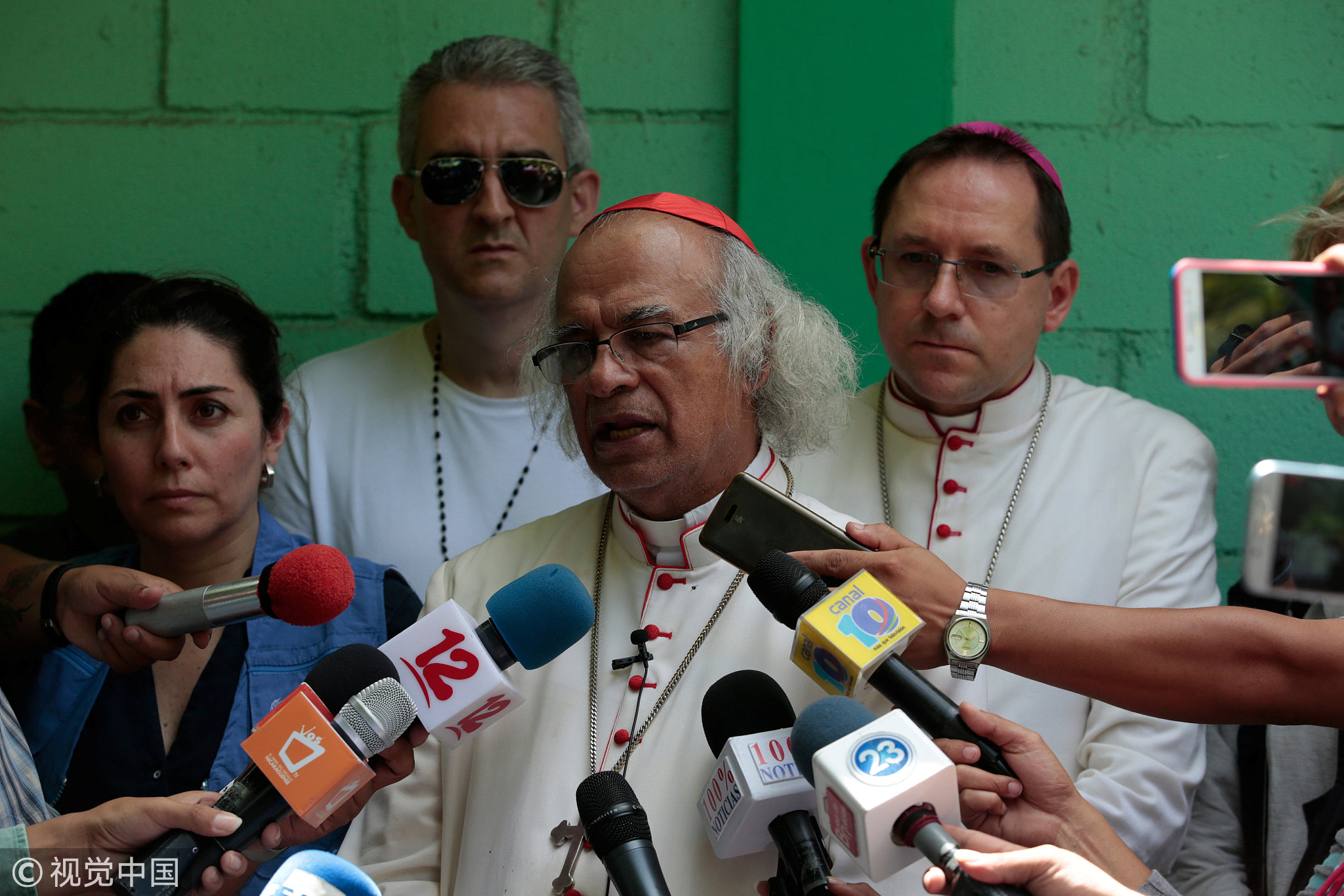
Roman Catholic Cardinal Leopoldo Brenes speaks during a news conference in Managua, Nicaragua, July 14, 2018. /VCG Photo
Roman Catholic Cardinal Leopoldo Brenes speaks during a news conference in Managua, Nicaragua, July 14, 2018. /VCG Photo
Hundreds of demonstrators took to the streets in a protest parade in Managua on Saturday, demanding justice and early elections.
The latest events followed a general strike on Friday and a peaceful procession by thousands on Thursday.
The students had been encamped at the parish since Friday and came under attack late that night following an assault on the National Autonomous University of Nicaragua next door, a last bastion of student resistance.
After a night of gunfire and fear at the church compound, the religious leaders mediated the release of dozens of students.
Church leaders reported about 20 people wounded. Brenes said the government was "solely responsible for these actions," calling on it to guarantee the students' safety.
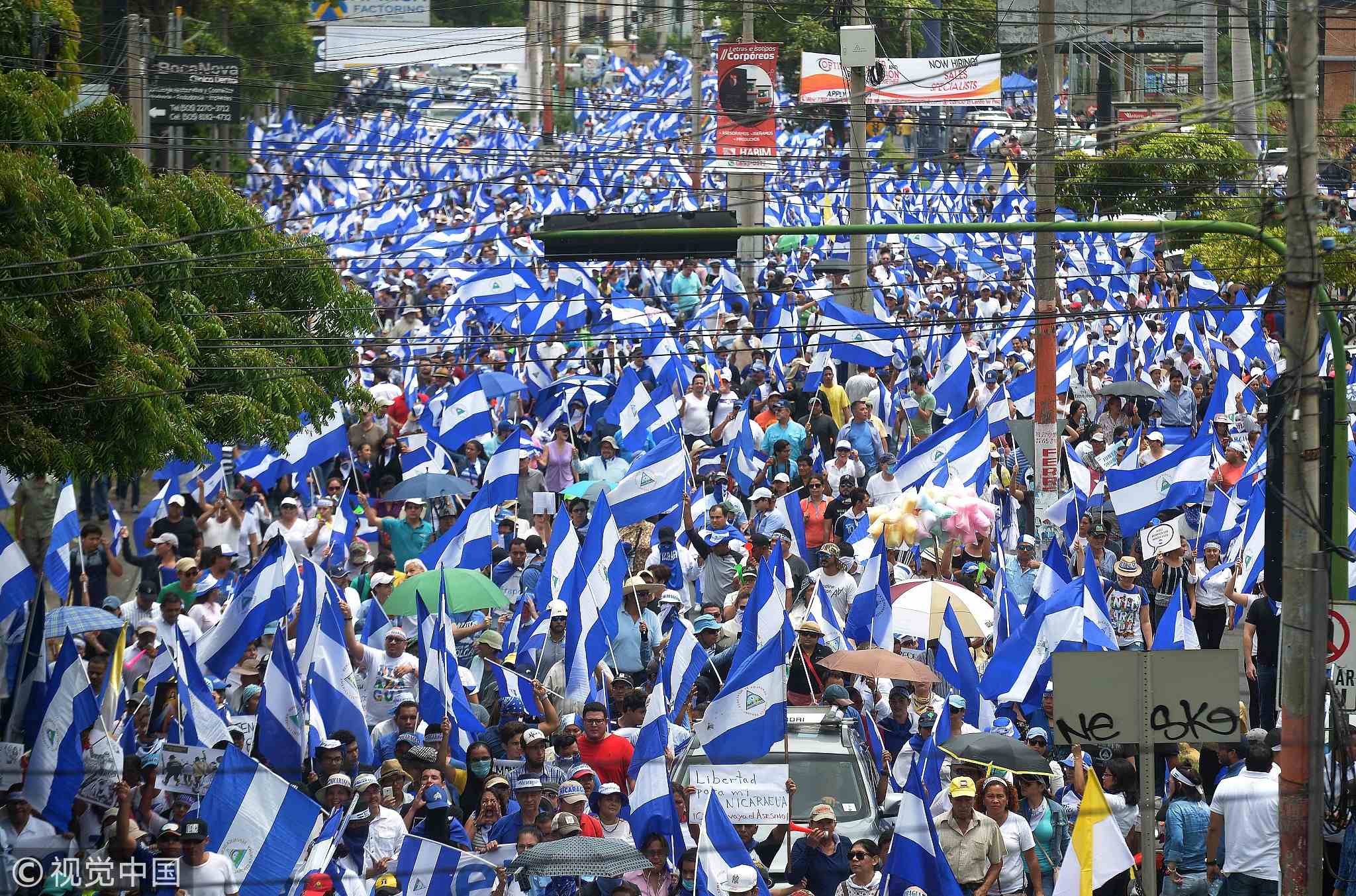
Nicaraguan opposition demonstrators take part in a nationwide march in Managua, July 12, 2018. /VCG Photo
Nicaraguan opposition demonstrators take part in a nationwide march in Managua, July 12, 2018. /VCG Photo
The events brought widespread condemnation and calls for an end to the violence, including from the secretary-general of the Organization of American States, the United Nations High Commissioner for Human Rights, and officials of the US, Brazil and Chile.
"The escalation of violence against civil society, with physical aggression against the clergy, journalists and human rights defenders, is unacceptable," Brazil's Foreign Ministry said.
Political tensions have soared since protests against a now-aborted pension reform began on April 18 and mushroomed into general opposition to Ortega and his government.
On Thursday, four police officers and a protester died in clashes between opposition activists and government forces and their paramilitary allies in the southeastern town of Morrito.
The opposition is demanding either early elections or the resignation of the 72-year-old Ortega and his wife, Vice President Rosario Murillo, accusing them of corruption and despotism.
(Top picture: People pray in front of police blocking the entrance of Divine Mercy Catholic Church in Managua, Nicaragua, July 14, 2018. /VCG Photo)
Source(s): AFP