
Tech & Sci
16:50, 31-May-2018
Getting up to speed: The voice recognition software changing court proceedings
 ["china"]
Share







Copied
By Laura Schmitt
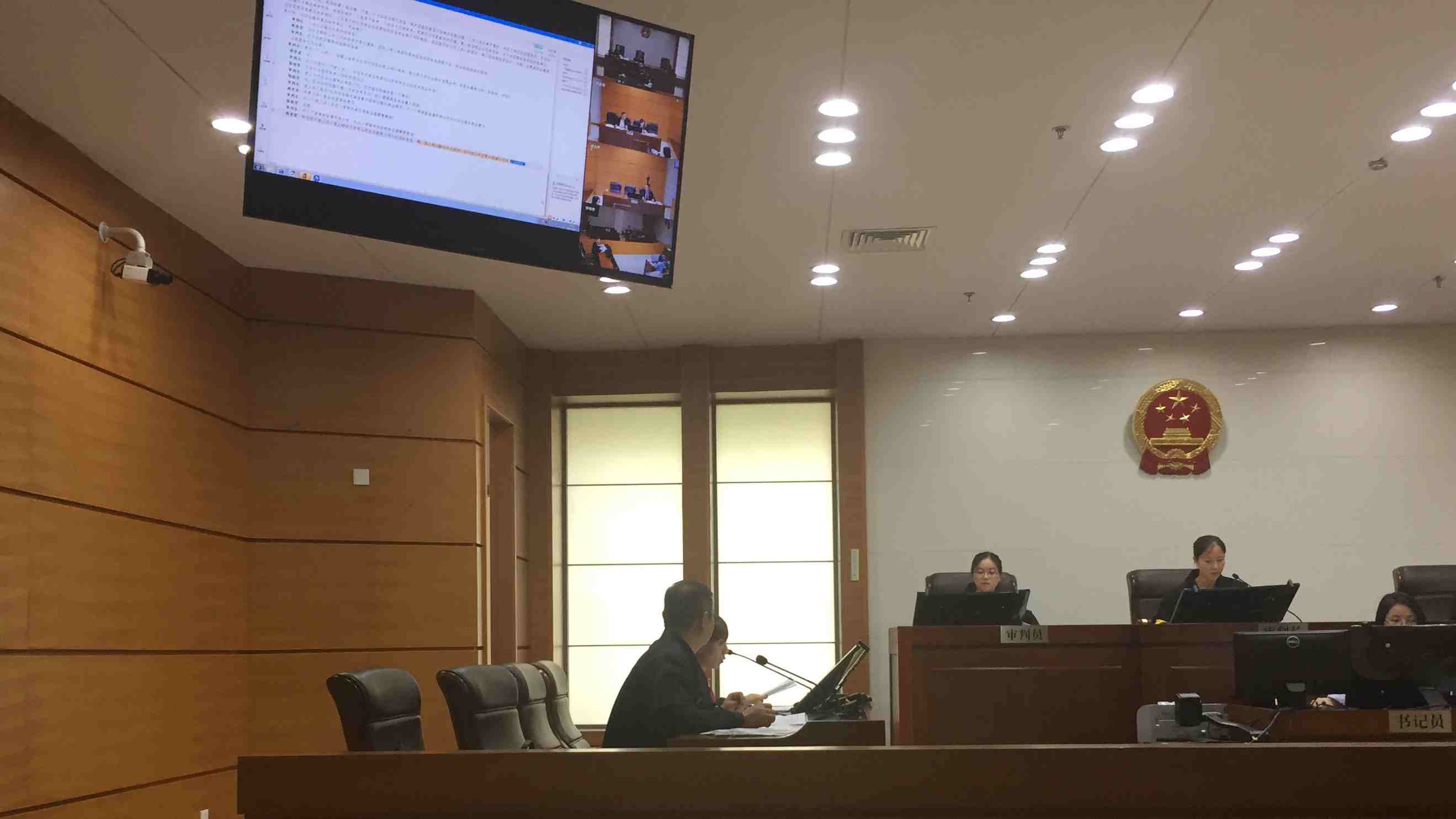
With technology improving efficiency in virtually every aspect of human life, it was only a matter of time before it was embraced even by the most traditional of institutions, the justice system. Leading the way is Suzhou Intermediate People’s Court, which has recently adopted voice recognition software in its proceedings.
The system’s biggest advantage is its speed. However hard a human stenographer works to make his or her typing as fast as possible, the reality is the human hand cannot always keep up with the speed of human speech.
Wang Mei, a stenographer at Suzhou Intermediate People’s Court, explains: “Our speed was 80 to 120 characters a minute. It was fast, but not fast enough. We had to interrupt the judge, litigant or procurator, and ask them to repeat what they’d said.”
Suzhou solicitor Chen Xiaojun confirms that such interruptions could affect the flow of court proceedings. “We used to deliberately speak slowly, so it would be easier for the stenographer. Now, we speak faster, and the transcription is more accurate.”
02:55
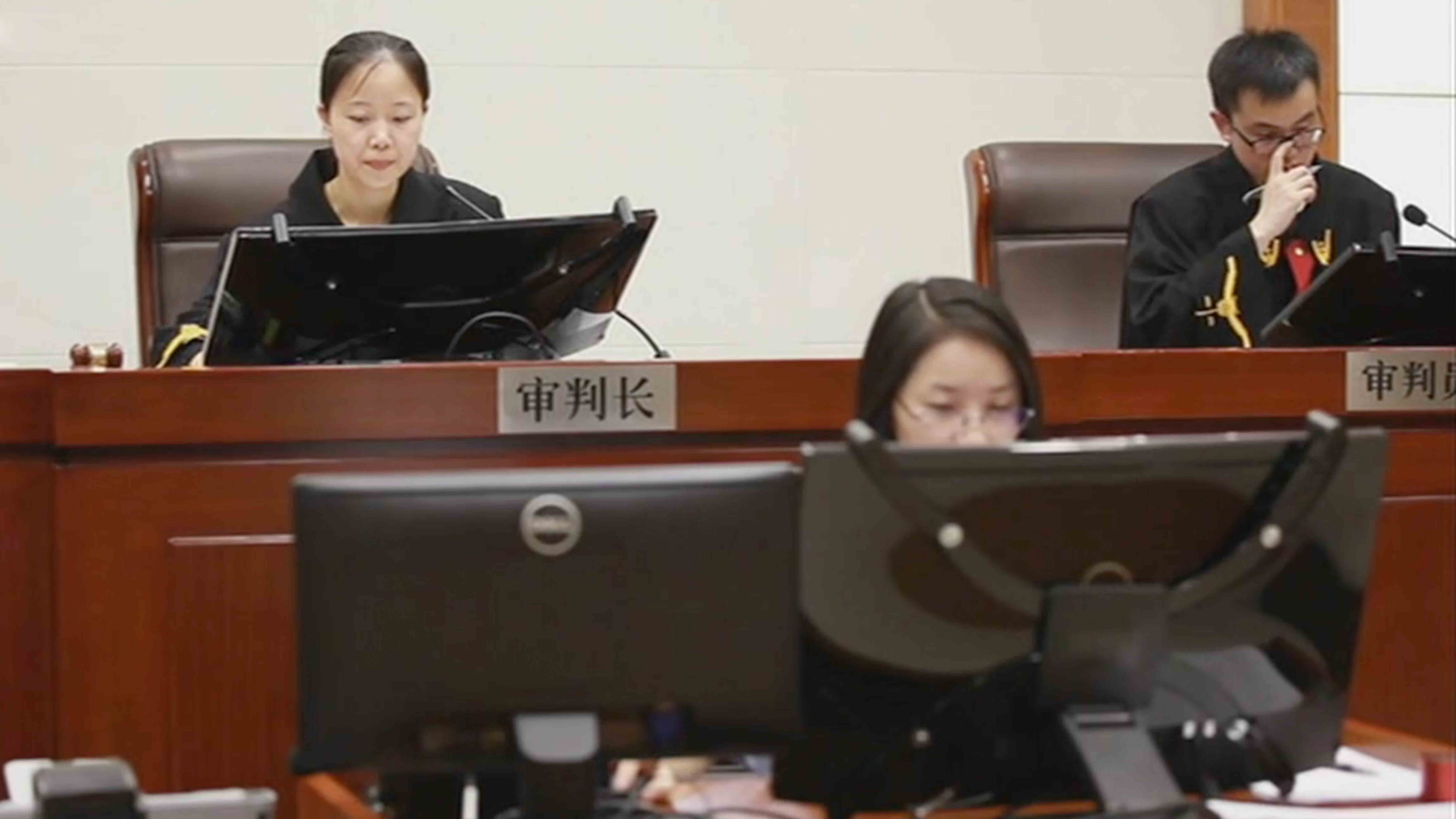
Faster transcription isn’t the new system’s only advantage. Proceedings are rendered even more efficient because everyone has real-time access to the notes on their screen. This means they can check for errors while the trial is still on-going, rather than after the event.
Shen Lijing, a judge at the Suzhou court, explains that previously she was able to hear an average of four cases a day, but since the voice recognition system was introduced, the figure is seven. “We’re currently short-staffed, so it’s a big help,” she says.
However, the new system hasn’t completely replaced the stenographers. Their chief responsibility now is to read the transcription and correct any errors made by the software. Developer iFlytek claims a 95 percent accuracy rate for the system, so there are still occasions when it misunderstands certain words or phrases.
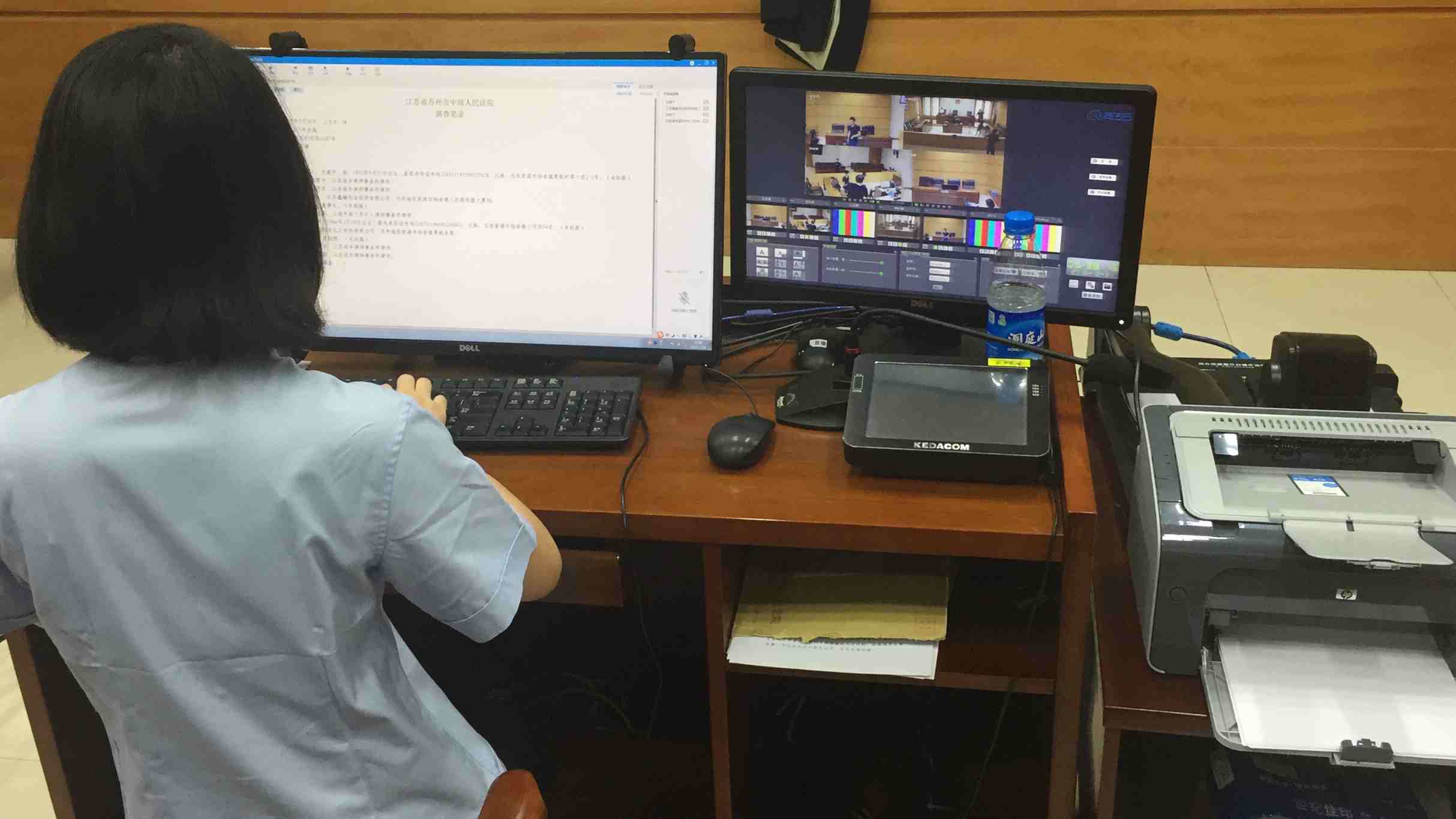
The stenographers’ job has changed to monitoring the accuracy of the transcription and editing when necessary. /CGTN Photo
The stenographers’ job has changed to monitoring the accuracy of the transcription and editing when necessary. /CGTN Photo
The main problem is with strong dialects and accents. “The system works with standard Mandarin,” says Yu Shujian, deputy presiding judge at Suzhou Intermediate People’s Court. “If there’s an accent, naturally the accuracy will be reduced. Sometimes the accent can be strong, or the litigant simply doesn’t speak standard Mandarin. In such situations, the stenographer will mute the litigant’s microphone, and record what they say, shorthand.”
Still, the system’s trial at Suzhou Intermediate People’s Court is generally considered a success. And as more users are found for voice recognition software in other areas of human activity, the shortcomings are likely to be ironed out.
Rediscovering China is a 30-minute features program offering in-depth reports on the major issues facing China today. It airs Sunday at 10:30 a.m. BJT (0230GMT), with a rebroadcast at 11:30 p.m. (1530GMT), as well as Monday 8:30 a.m. (0030GMT) and Friday 1:30 p.m. (0530GMT).