
Politics
08:20, 01-Jun-2018
Chinese FM dispels EU's worries over 16+1 cooperation between China, CEE countries
 ["china"]
Share







Copied
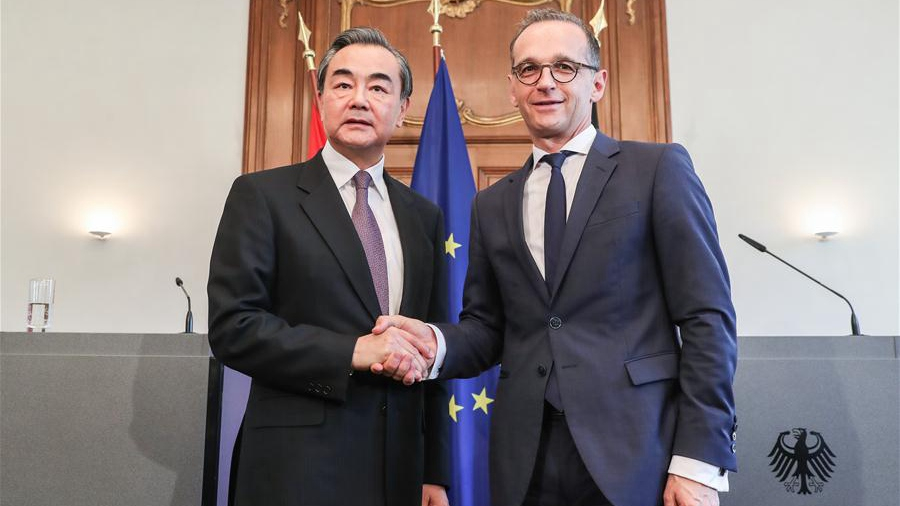
Chinese State Councilor and Foreign Minister Wang Yi said on Thursday that the cooperation between China and 16 Central and Eastern European countries is conducive to European integration, and a divided, weakened EU is not in China's interests.
Wang made the remarks at a joint press conference with his German counterpart Heiko Maas, in response to Xinhua's questions concerning EU and Germany's worries over the issue.
The 16+1 cooperation, a mechanism between China and 16 Central and Eastern European (CEE) countries, is viewed by China as a part and a supplement of China-Europe relations, Wang added.
China has always firmly supported European integration process, and China hopes the European Union will maintain unity, stability and prosperity, said Wang.
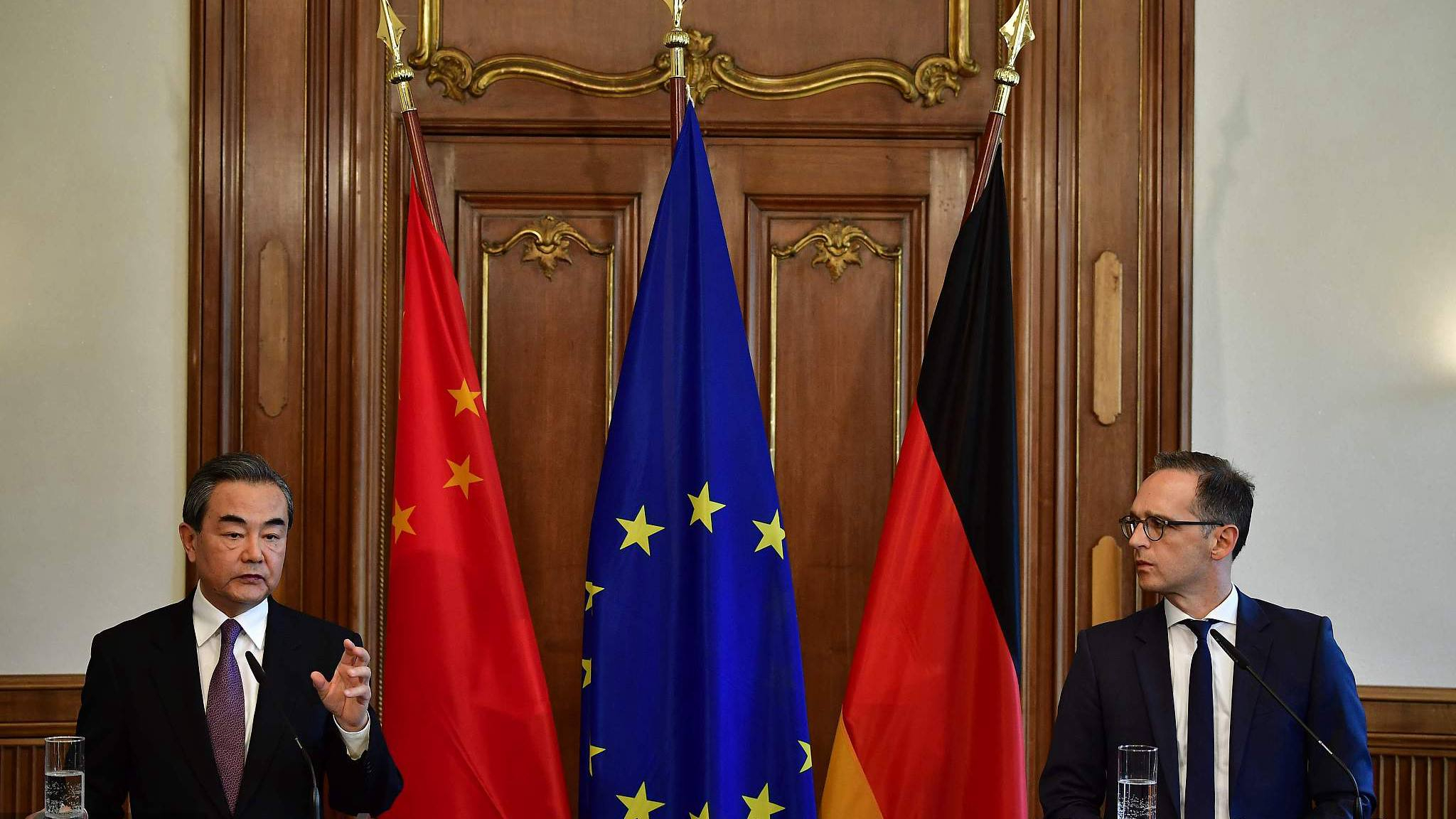
Chinese State Councilor and Foreign Minister Wang Yi (L) and his German counterpart Heiko Maas hold a joint press conference in Berlin, May 31, 2018. /VCG Photo
Chinese State Councilor and Foreign Minister Wang Yi (L) and his German counterpart Heiko Maas hold a joint press conference in Berlin, May 31, 2018. /VCG Photo
Wang noted that both are supporters of multilateralism, maintainers of world stability and advocates of free trade, China and the EU have become key trading partners of each other with emerging common interests, so that a weakened and divided EU is not in China's interests, or what China wants to see.
The 16+1 cooperation mechanism is a voluntary cross-regional cooperation framework between China and CEE countries, which will help give full play to the complementary advantages of China and CEE countries. It will also be conducive to narrow the gap inside EU, and thus achieve the balanced development of Europe, said Wang.
"Time will prove that 16+1 cooperation will facilitate European integration process," said Wang.
In a bid to display the openness and inclusiveness of the mechanism, China has always cooperated with CEE countries under the framework of China-EU relations and EU's laws and rules, which can be found in the outcome documents of 16+1 meetings.
China is now considering inviting representatives from EU and its members to take part in the next 16+1 summit, said Wang.
As Germany and CEE countries are closely linked, China is also considering conducting the third-party cooperation with Germany in central and eastern European region, expecting that economic advantages of China and Germany can be combined with the development demands in this region, according to Wang.
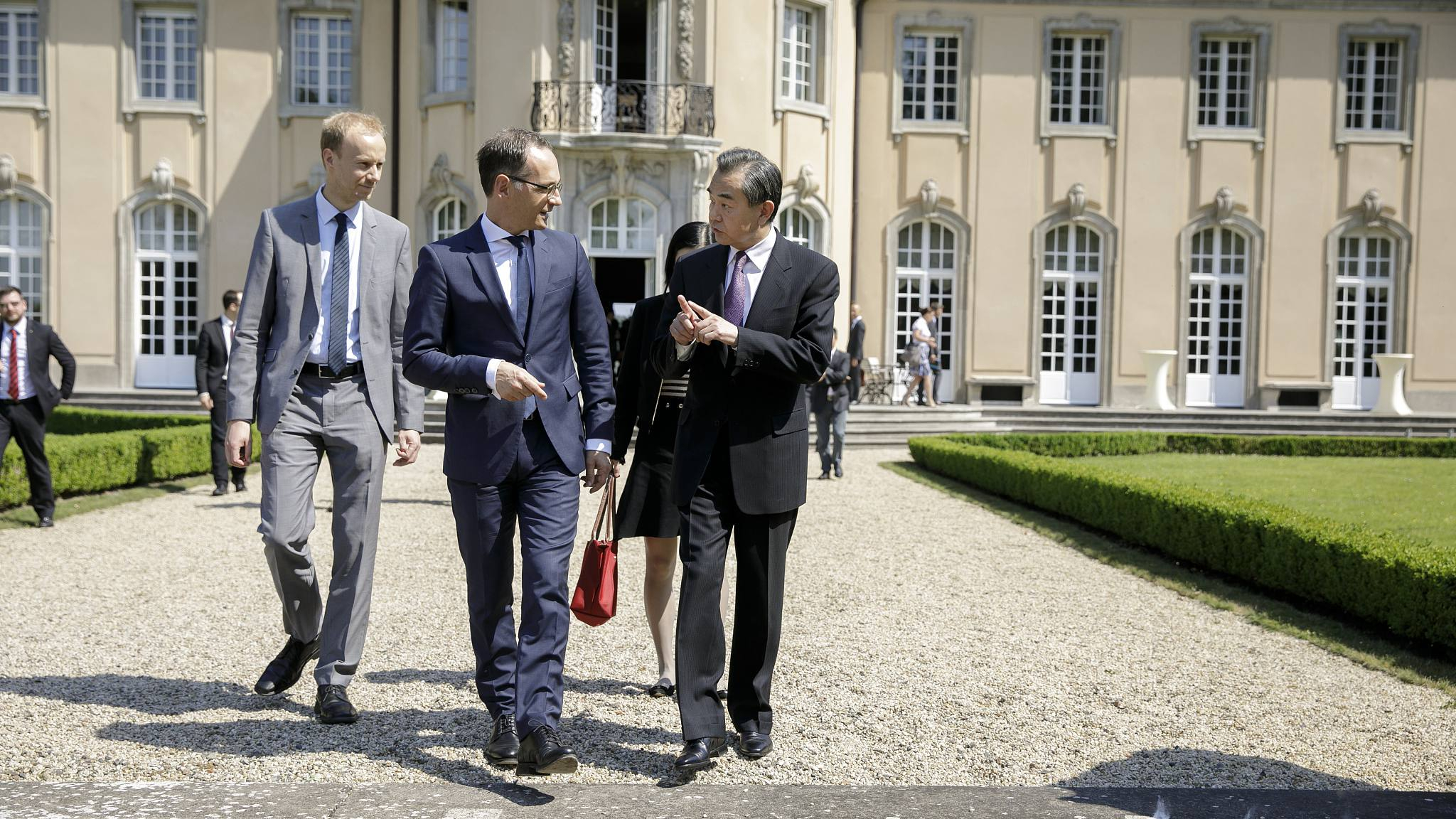
Chinese State Councilor and Foreign Minister Wang Yi (R) and German Foreign Minister Heiko Maas go for a walk in the garden of Villa Borsig, Berlin, Germany, May 31, 2018. /VCG Photo
Chinese State Councilor and Foreign Minister Wang Yi (R) and German Foreign Minister Heiko Maas go for a walk in the garden of Villa Borsig, Berlin, Germany, May 31, 2018. /VCG Photo
China also welcomes companies from other EU members to take part in 16+1 cooperation, in a bid to achieve win-win situation, the Chinese foreign minister said.
Wang Yi: China, Germany should jointly help stabilize world amid unilateralism, protectionism
Wang said the current international situation is undergoing unprecedented, profound changes, with complicated and hotspot issues one after another, and unilateralism and protectionism are on the rise.
As responsible countries and comprehensive strategic partners, China and Germany should jointly influence the world positively and help stabilize the world, he said.
The two sides will hold the fifth round of inter-governmental consultation in July, which will further enrich China-Germany cooperation, said Wang.
The two sides will also support the healthy and stable development of two-way investment, added Wang, who noted that China's new round of market opening policies will provide German companies operating in China with broader space and more opportunities.
"The Chinese side hopes that Germany views Chinese investment in Germany with an objective and positive attitude, and also builds a fair and friendly environment and a stable legal framework."
China will also build platforms for Chinese and German companies in the third party cooperation, in a bid to make more opportunities and make the market larger, Wang said.
China has always firmly supported Europe in choosing a path of integration. He added that China hopes the European Union will maintain unity, stability, openness and prosperity, and play a key role on the word stage, said Wang.
"As major economies and maintainers of the existing world order, the two countries will also jointly safeguard multilateralism and free trade," Wang told reporters, adding that the two sides will strengthen cooperation under the G20 framework, in a bid to play a constructive role in promoting world peace and regional stability.
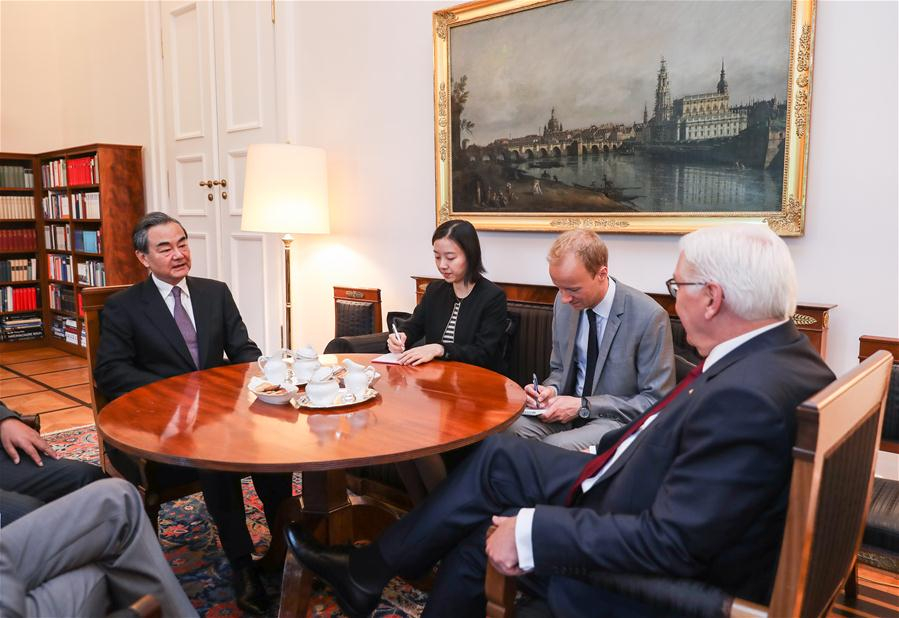
German President Frank-Walter Steinmeier (1st R) meets with visiting Chinese State Councilor and Foreign Minister Wang Yi (1st L) in Berlin, capital of Germany, on May 31, 2018. /Xinhua Photo
German President Frank-Walter Steinmeier (1st R) meets with visiting Chinese State Councilor and Foreign Minister Wang Yi (1st L) in Berlin, capital of Germany, on May 31, 2018. /Xinhua Photo
German President Frank-Walter Steinmeier also met Wang on Thursday, with the two sides agreeing to safeguard the multilateral system.
In the meeting at the presidential residence Bellevue, Steinmeier highly appraised the first China International Import Expo (CIIE) scheduled to be held in November, in which Germany will fully take part. Steinmeier said the Expo will send a strong signal against trade protectionism.
The German side takes a positive attitude toward the Belt and Road Initiative, according to Steinmeier, who added that Germany is willing to actively cooperate bilaterally and trilaterally with China under this framework.
For his part, Wang said China welcomed Germany to take part in the first CIIE, and China is also willing to work with Germany and other sides to send a strong signal for safeguarding a multilateral trade system and building an open world economy.
In addition, Wang said the Chinese side supports the European integration process, and hopes to work with Germany to exert the driving role of China-Germany bilateral ties in China-EU relations.
7368km
Source(s): Xinhua News Agency