
World
11:41, 20-Jul-2018
Women in Brazil struggle for more political representation in 2018 elections
Updated
10:57, 23-Jul-2018
 ["china"]
Share







Copied
Andrea Werner is the mother of a 10-year-old autistic child. It was because of Theo that she became an activist for the rights of special-needs children and created a blog for them and their families.
As her name grew in popularity, two political parties invited her to run for office this year. Andrea accept and will run as a left-wing Liberty and Socialism Party (PSOL) candidate—trying to win a seat in Brazil's male-dominated Parliament.
"It's a battle but it's ok. I am prepared and I am not afraid. More women should do this because the men there are not thinking about problems in our daily lives", said Andrea. "When you see some countries that have more women working in the Congress, they worry more about health and education."
Currently only 55 of Brazil's 513 Federal Deputies are women (10.7 percent). In the Senate there are 12 women out of a total 81 Senators (14.8 percent). This ranks Brazil 152 out of 194 countries on a list compiled by the International Parliamentary Union.
In 1997 Brazil enacted a law determining that the parties' candidates list had to have at least 30 percent of women. However, the new rule did little to increase female presence in Congress.
"Actually many women are listed as candidates, but they are not running for real. Parties just put their names there because they need to fill the 30 percent quota but do not invest in the candidacies", said Rosemary Segurado, politics professor from São Paulo's Catholic University (PUC). "When it's time to share the party funds for a campaign, usually the money does not reach these female candidates."
Marlene Campos Machado will run for Parliament for center-right Brazil Labor Party (PTB). She's never held office, but her husband, Antonio Campos Machado, is a long serving Deputy in the State Assembly and an important party leader. She aims to be the first woman ever elected to parliament by her party in São Paulo state.
"Women can't be candidates just because of the quotas. We need to have a life in politics. That's why we are trying to develop in our party to get women to really participate in the debates and have a say."
It's not easy for newcomers to make a name in politics. But in Brazil, there are signs that a growing number of women are willing to accept that challenge.
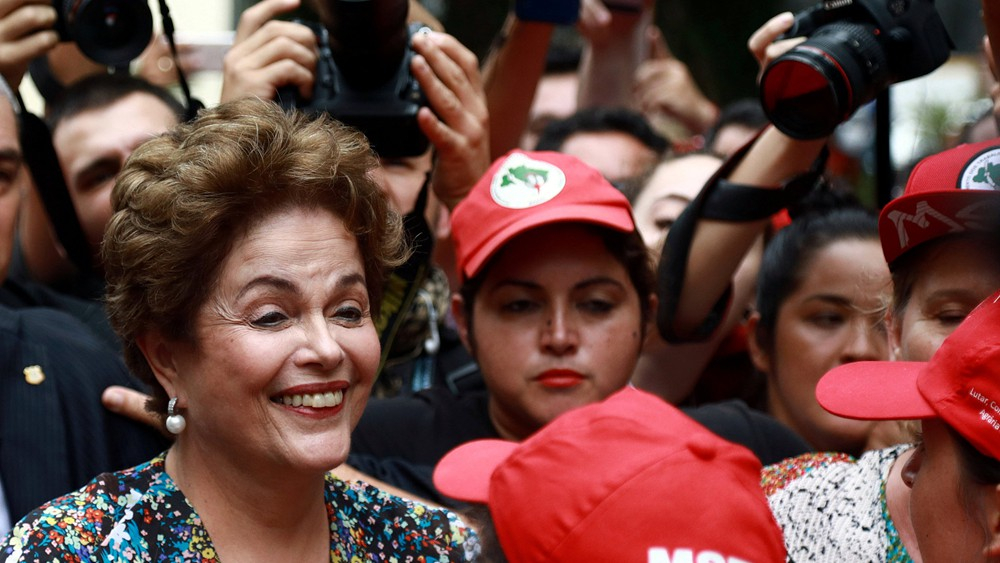
(Cover: Former Brazilian President Dilma Rousseff attends a meeting with members of the Women's Movement for Democracy in Porto Alegre, January 23, 2018. /VCG Photo)