
Politics
18:19, 04-Jul-2018
Populism in Europe: Is the EU power balance shifting?
Updated
17:51, 07-Jul-2018
 ["europe"]
Share







Copied
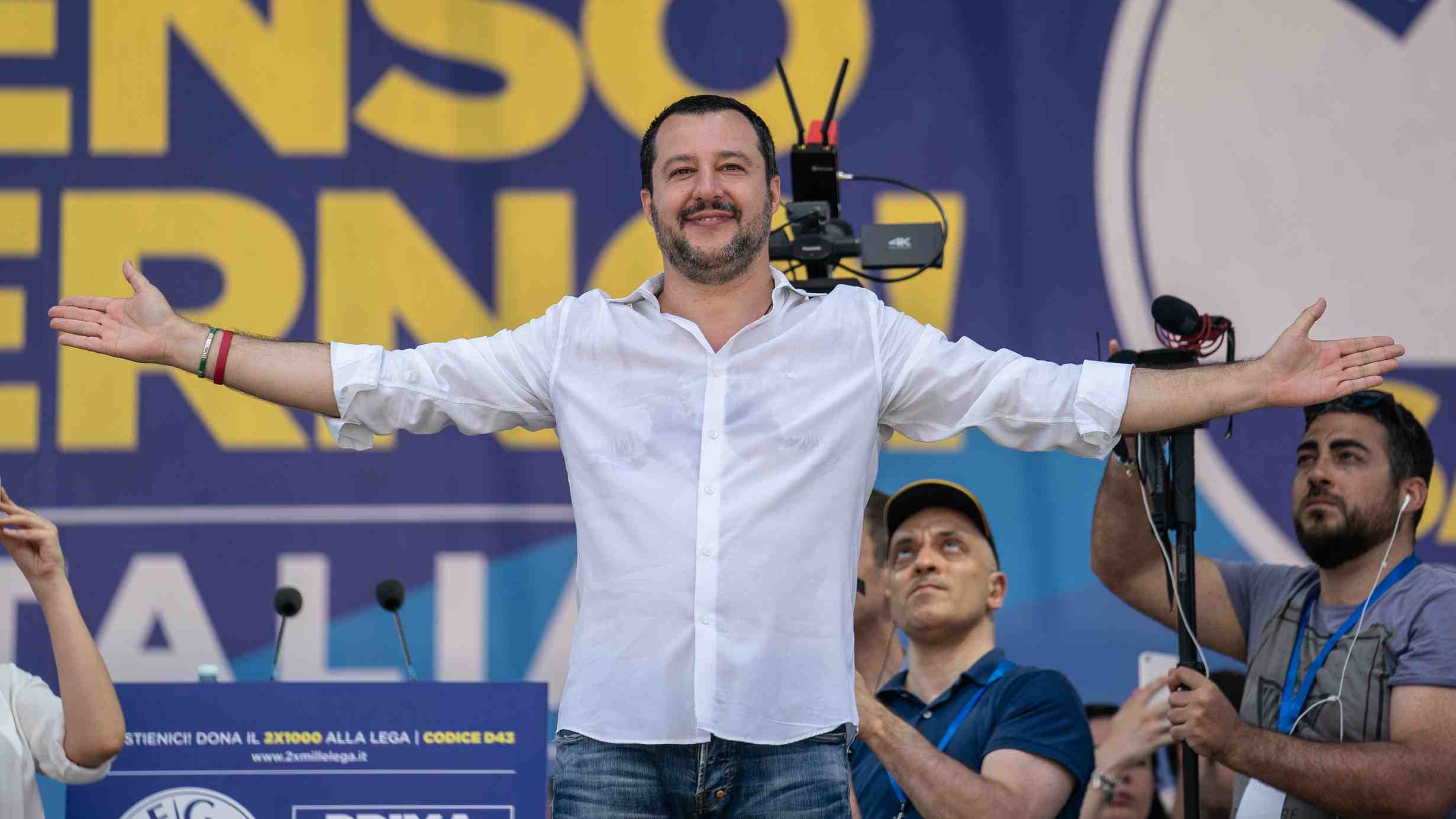
Conservative, nationalistic forces are gaining influence in Europe – and to the frustration of powerhouses Germany and France, proving effective in directing European Union (EU) policy.
Emmanuel Macron fought for the French presidency on a platform promising to reshape France and the EU, but progress at home has not been replicated in Brussels, which is floundering as right-wing leaders in Austria, Hungary and Italy, among others, have grabbed the agenda – most notably over migration.
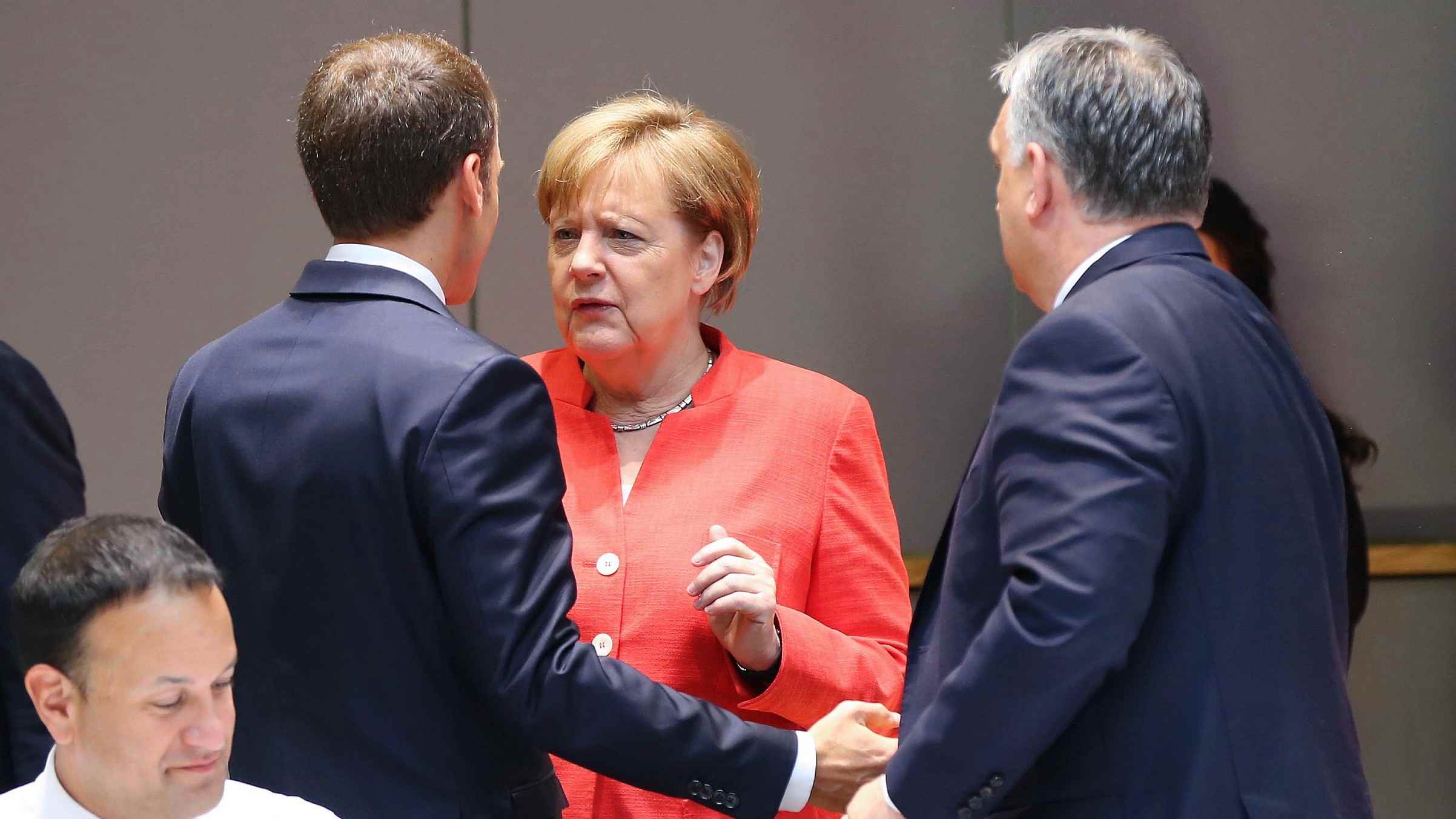
German Chancellor Angela Merkel (C) chats with President of France Emmanuel Macron (L) and Prime Minister of Hungary Viktor Orban (R) during the second day of the European Union Leaders' Summit in Brussels, Belgium on June 29, 2018. /VCG Photo
German Chancellor Angela Merkel (C) chats with President of France Emmanuel Macron (L) and Prime Minister of Hungary Viktor Orban (R) during the second day of the European Union Leaders' Summit in Brussels, Belgium on June 29, 2018. /VCG Photo
Last week's EU summit, dominated by all-night talks over migration policy, is a notable case. Brexit, eurozone reform and the EU-US trade spat were sidenotes.
The agreement eventually struck helped shore up the government of German Chancellor Angela Merkel, who reached a further compromise with her coalition partners on the issue on Monday.
But the running was made by Italy's new populist coalition – driven by interior minister Matteo Salvini – at EU level and German interior minister Horst Seehofer, whose Christian Social Union (CSU) is under pressure from the far-right, domestically.
"We still have a lot of work to do to bridge the different views," Merkel conceded after the EU deal had been hammered out over nine hours of talks.
The centrality of migration as an issue comes despite the number of illegal entrants into the EU having fallen by 96 percent since their peak in October 2015, according to the European Council. This has led some, including Macron, to describe the focus on the issue as "political."
Rise of the right
Right-wing populist parties have picked up increasing shares of the vote over the past decade in all but five EU countries, research by Euronews shows.
While populist forces are strengthening across Europe, they are far from uniform. Professor Ruth Wodak of Lancaster University told CGTN that the parties – which she describes as radical right-wing – are "very context-dependent and have very different histories, and aims and objectives."
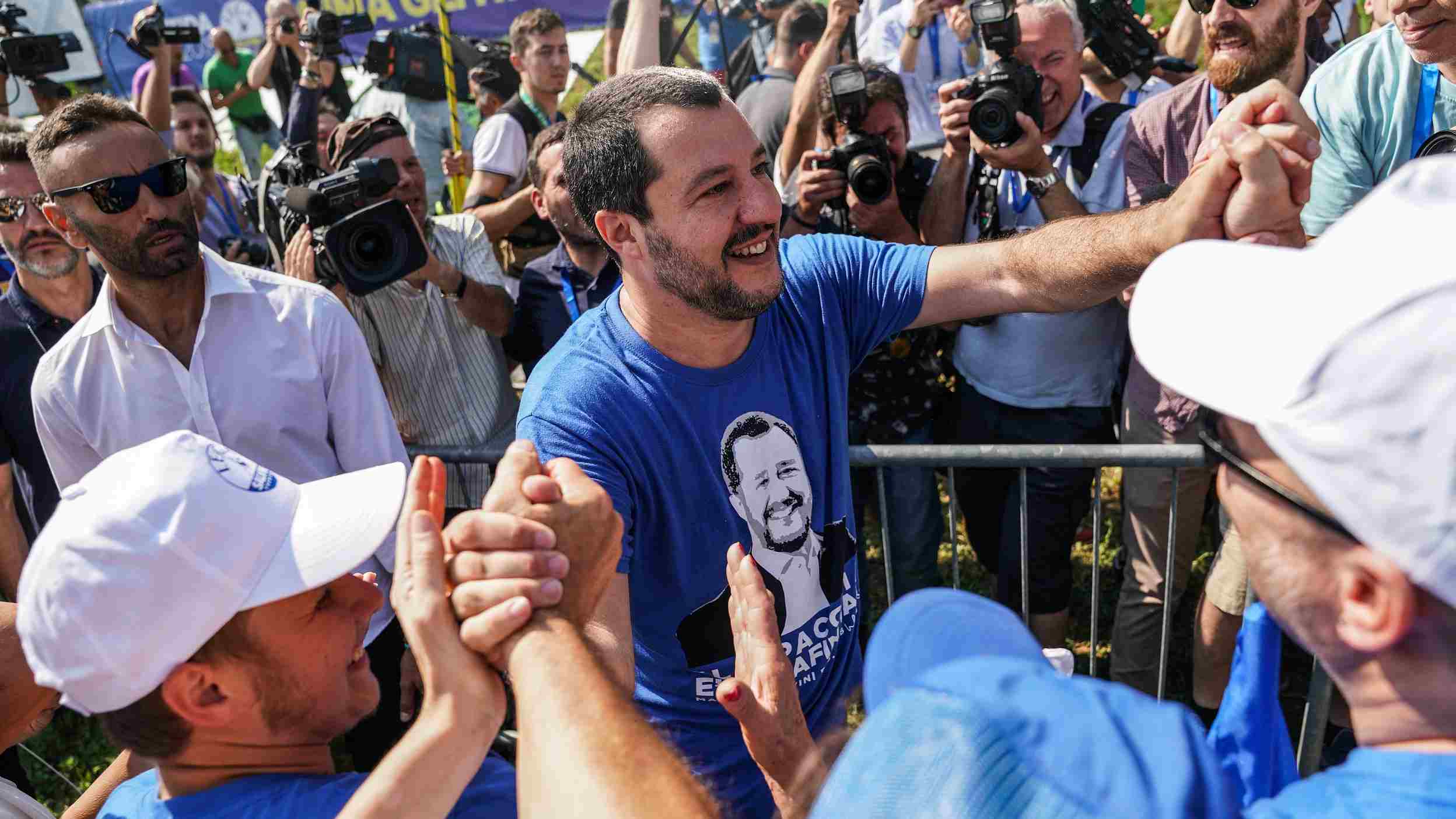
Matteo Salvini, Italy's interior minister and leader of the League, greets supporters during a rally in Pontida, Italy, on July 1, 2018. /VCG Photo
Matteo Salvini, Italy's interior minister and leader of the League, greets supporters during a rally in Pontida, Italy, on July 1, 2018. /VCG Photo
The populist trend across Europe is often attributed to the financial crisis a decade ago, the austerity measures that followed it, and the migration crisis that peaked in 2015. Wodak suggests that it began earlier, however, with hardline security policies after the 9/11 attacks in the US legitimizing the policy positions of far-right parties.
Macron, who has clashed repeatedly with Salvini, in June likened the rise of populists to the spread of disease. " You can see them rise a bit like a leprosy all across Europe, in countries where we thought that would be impossible to see them again, in neighboring countries.”
The University of Kent's Professor Matthew Goodwin, writing in the New York Times, argues that a values gap has driven the rise in populism to a greater extent than economic forces.
"These populist revolts have been a long time coming and have staying power," Goodwin wrote. "There are no easy answers for the left, but one thing is clear: The traditional strategy of strongly condemning populism while avoiding the tougher job of bridging the values gap has broken down."
Normalization?
Wodak, writing in CARR in July, argued that "exclusionary rhetoric and measures have become mainstream."
It is a trend Macron also identified when speaking in June at the height of the dispute over the Aquarius migrant ship. "They’re saying the worst things, and we’re getting used to it. They’re making provocations, and nobody is horrified by that."
The change in discourse, which mirrors that in the US, is sometimes referred to as "moving the Overton window."
Political theorist Joseph Overton argued that there is a “window” of policies that are deemed acceptable by the public, and the only way to shift that window is to propose extremes which make ideas that previously lay outside the window acceptable by comparison.
What happens next?
Populist parties are now looking to cement their gains in Europe.
Parties are adapting as voters reject mainstream offerings – and many are heading rightward on migration and other issues. Salvini, whose popularity is soaring at home, has proposed setting up a Europe-wide alliance against "mass immigration."
On Sunday, Salvini said that elections to the European Parliament in 2019 would be a referendum on "a Europe without borders… and a Europe that protects its citizens." A survey by SWG this week showed Salvini's League in a statistical tie with its coalition partner Five Star at almost 30 percent support.
The difficulties faced by Merkel, champion of open borders, over recent weeks epitomize the broader challenge to find unity in the EU. She fears that by turning away migrants who had registered elsewhere in the bloc at Germany's orders, the borderless Schengen area will be jeopardized.

Austrian Chancellor Sebastian Kurz and German Chancellor Angela Merkel on Jan. 17, 2017 in Berlin, Germany. /VCG Photo
Austrian Chancellor Sebastian Kurz and German Chancellor Angela Merkel on Jan. 17, 2017 in Berlin, Germany. /VCG Photo
Yet she accepted a compromise this week under pressure from Seehofer – whose own Christian Social Union is under pressure from the far-right Alternative for Germany ahead of regional elections in October – that will see tighter border controls imposed and asylum seekers already registered elsewhere in the EU held at "transit centers."
Austria's coalition government, which assumed the EU presidency on Sunday and includes the far-right Freedom Party, has sought to form an "axis of the willing" on migration with Seehofer and Salvini.
By Tuesday, Austrian Chancellor Sebastian Kurz had suggested he would take measures to "protect" his country's southern borders in response to the proposed German policy – the very result Merkel feared.
At present, the hardline rhetoric of the populists is setting the EU agenda – and that could signal big changes for the bloc in the months ahead.