
Culture
17:35, 20-Mar-2019
American scholar’s 37-year experience in China
Updated
22:09, 20-Mar-2019
 ["china"]
Share







Copied
03:42
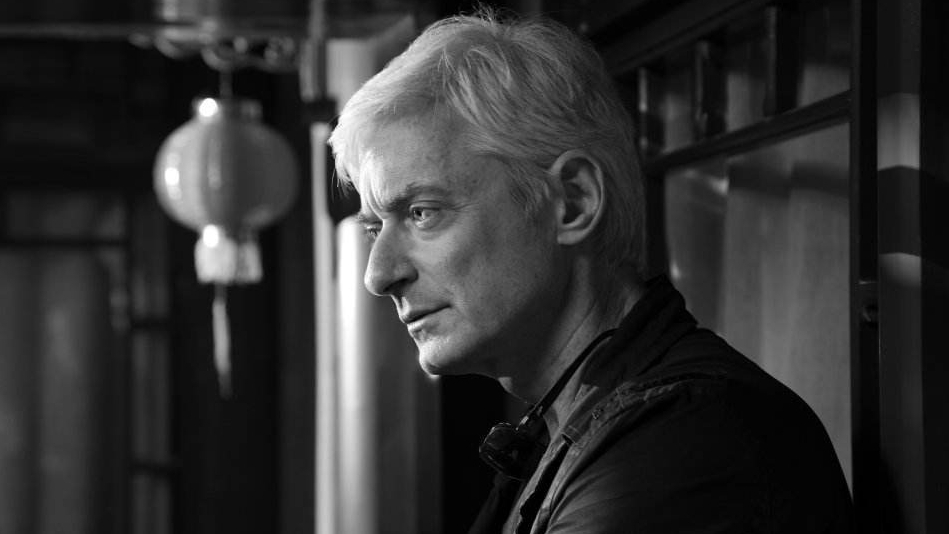
China's 40 years of reform and opening-up hasn’t only transformed the fate of Chinese people. Many foreigners with a connection to the country have also seen the direction of their life change. American scholar Laurence Brahm has been living in China for 37 years.
Brahm is a writer, lawyer, and film-maker. In December, he published a new book series, called "Searching for China," in which he explores Chinese culture.
His previous publications include "China's Century: The Awakening of the Next Economic Powerhouse," and "China as No. 1." Now, he's turning his attention to a particular Chinese region – Tibet.
"I am going to make a new film specializing in extreme Himalayan expeditions, focusing on stories in China, India, and Nepal. And I also plan to write a series of books on Himalayan expeditions," he said.
Brahm has spent much of the past 37 years living and working in China, having first come to the country as an exchange student in June 1981.
As a witness to China's reform and opening up, he likes to relate his experiences from a personal perspective.
"At that time, we lacked material things, in an extreme way. I came to China from the United States. In the U.S., I could buy whatever I wanted to buy, and eat whatever I wanted to eat, so long as I had money. But in China, you needed to have food stamps," he added.
After completing his studies at Nankai University, Brahm headed to Hong Kong, to continue studying law and Chinese.
In Hong Kong, he joined a law firm. In 1983, he came to Beijing, when his company set up an office in the city.
With China opening its doors to the world, Brahm found he had a stage for displaying his unique expertise.
"My first experience in China was as a lawyer. My job was to help foreign investment come to China. Many companies intended to invest in China at that time," he said.
With time, he became more closely involved in economic cooperation between Chinese and foreign companies.
But he always maintained an interest in traditional Chinese culture. He believed he could develop a more intimate understanding of Chinese people's lives – the highs and lows – by becoming better integrated into the local community. So, he moved to a courtyard house in Beijing.
Architecture is the dialogue between human beings and their culture. To protect culture, the first step is to protect the language, and the second is to protect architecture.
It was around this time that Beijing began a program of building skyscrapers, and many traditional courtyard houses were demolished.
In 1995, Brahm bought a courtyard house and set about restoring it. He drew his own sketches and brought in a team to help him. Step by step, the house was restored to its original appearance.
In 1998 and 2000, Brahm acquired two more courtyard homes. Renovating each one took over a year. In 2002, he made another important decision. He started looking for a more pristine China, and his thoughts turned to Shangri-la.
In 1933, the British-American writer James Hilton published a novel called Lost Horizon. So powerful was his description of the natural beauty of Shangri-la that many explorers, poets, and writers set out to look for it. Laurence Brahm also embarked on a journey in search of Shangri-la.
"In 2002, I went to the west of China to shoot the film "Searching for Shangri-la." I began to know a lot about the culture of China's ethnic minorities," said he.
He hiked through Tibet Autonomous Region, and Qinghai and Yunnan Provinces, interviewing artists, dancers, musicians, fashion designers, writers, pop singers, environmentalists and herders.
He said that they changed his view of China. He began to realize that Shangri-la was not only a place but also an idea. He could find the real Shangri-la through giving and doing good deeds for others.
"For example, we do things for the disabled and set up workshops for them to learn skills. I recently set up a medical center in Qinghai Province and provide cheap medical services," he said.
Laurence Brahm said China is his home. He has many more projects he plans to work on in China, and he also wants to help more people learn about China.