
Politics
17:57, 10-Aug-2018
Young ROK athletes head to Pyongyang
Updated
17:40, 13-Aug-2018
 ["china"]
Share







Copied
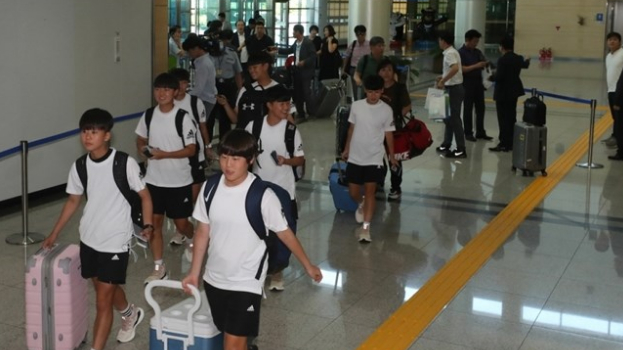
More than 150 Republic of Korea (ROK) athletes, journalists and officials left for Pyongyang on Friday for a football tournament, in the latest effort at sports diplomacy between the neighbors.
The ROK and Democratic People's Republic of Korea (DPRK) agreed to increase sports exchanges at a landmark summit between ROK President Moon Jae-in and DPRK leader Kim Jong Un in April, and held a friendly basketball match in Pyongyang last month.
Read more:
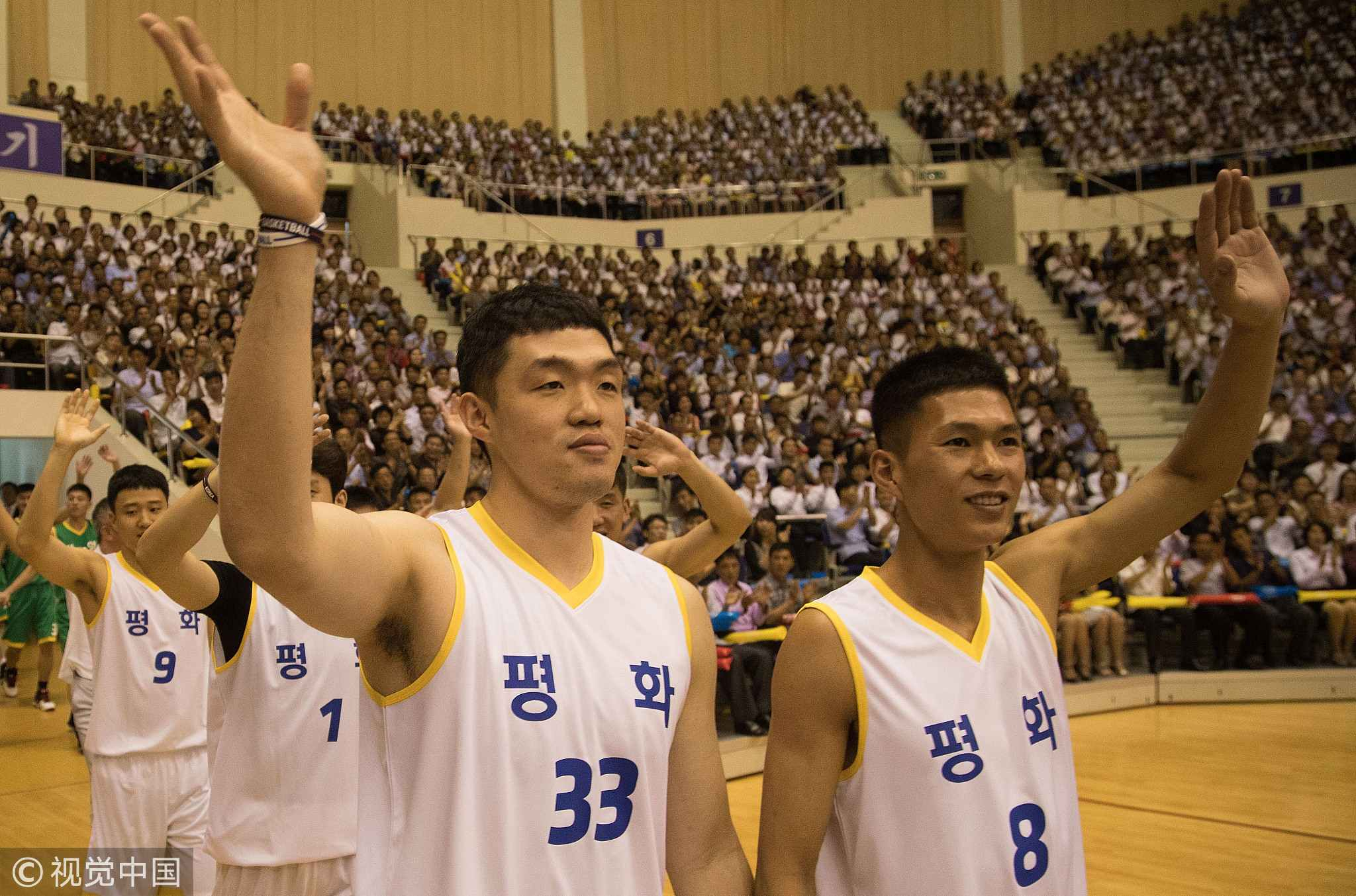
July 4, 2018: Players of Team Peace enter the stadium during an inter-Korean basketball match at Ryugyong Chung Ju-Yung Gymnasium, in Pyongyang, DPRK. /VCG Photo
July 4, 2018: Players of Team Peace enter the stadium during an inter-Korean basketball match at Ryugyong Chung Ju-Yung Gymnasium, in Pyongyang, DPRK. /VCG Photo
The delegation – including 84 young footballers – will travel by bus to Pyongyang for their 10-day visit, marking the first overland trip by ROK civilians to DPRK's capital in nearly seven years.
Two ROK U-15 teams – FC Gangwon and Yeoncheon Miracle – will compete in the Ari Sports Cup, a youth football tournament that runs from August 13 to 18 and also includes China, Russia, Uzbekistan, and Belarus.
A coach from the ROK said the "rare opportunity" to play football in the DPRK capital would be a "great experience" for his players regardless of the end result.
"Rather than obsessing about the score, we will try to serve as a peace delegation with a mission to advance ROK-DPRK sports exchange," Lee Sung-keun of FC Gangwon said.
As the ROK delegation traveled north, 64 DPRK workers arrived in Seoul for a football match slated for Saturday.
Waving mini white and blue "unification" flags – a pale blue silhouette of the Korean Peninsula – the head of the DPRK group, Ju Yong Gil, said the football game will "create momentum for reunification throughout all classes."
It will mark the fourth such football match between DPRK and ROK workers, with the last game taking place in Pyongyang in 2015.
Civilian communication between the two countries – which remain technically at war after the 1950-53 Korean War ended with an armistice instead of a peace treaty – is banned unless approved by the governments.
Sporting cooperation helped spark the current diplomatic thaw, after Pyongyang sent a high-level delegation, athletes, cheerleaders, and performers to this year's Winter Olympics in Seoul.
The two sides will also field joint teams at the Asian Games later this month and march together at the opening and closing ceremonies in Indonesia.
Source(s): AFP