
World
14:17, 24-Jul-2018
ICJ orders UAE to unite Qatari families amid reports of ‘staged’ London protest against Emir
Updated
14:04, 27-Jul-2018
 ["other","europe","Middle East"]
Share







Copied
Qatar on Monday got a major boost in its ongoing crisis with other Gulf neighbors after the International Court of Justice (ICJ) ordered the United Arab Emirates (UAE) to protect the rights of Qatari citizens living in its territory.
The ruling from the top UN court in the Hague came on a day when the visiting Qatari Emir was greeted in London by hundreds of protesters while British media reports claimed a casting agency had advertised to hire actors for an “anti-Qatar event,” prompting speculations on whether Doha’s Gulf rivals were behind the "staged" demonstration.
The ICJ narrowly ruled in a provisional but binding decision that the UAE must allow families that include Qatari nationals to be reunited, and also directed Abu Dhabi to grant Qatari students a chance to complete their education in the UAE.
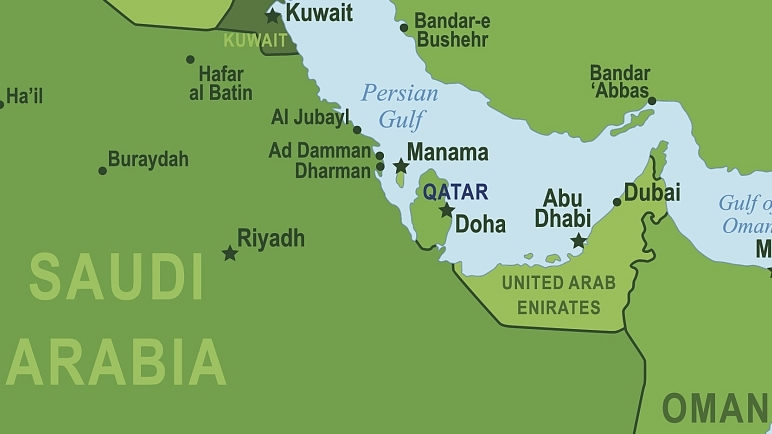
A map showing the Persian Gulf region /VCG Photo
A map showing the Persian Gulf region /VCG Photo
The decision came after Qatar appealed to the ICJ last month to impose emergency measures against the UAE, which Doha accused of violating international laws by expelling thousands of Qataris – many of whom have family or own property in the UAE.
Qatari nationals were given only 14 days to leave the country last year in June after the UAE along with Saudi Arabia, Bahrain, Egypt and other allies all broke diplomatic ties with Doha and imposed a land, air and sea blockage against the country. They accused Qatar of backing terrorism and cozying up to regional rival Iran, which Doha vehemently rejected.
In its appeal to the ICJ, Qatar also accused Abu Dhabi of breaking the 1965 International Convention on the Elimination of All Forms of Racial Discrimination (CERD), including discrimination on the basis of nationality. Both Qatar and the UAE are signatories of the CERD convention, but Saudi Arabia, Bahrain and Egypt are not.
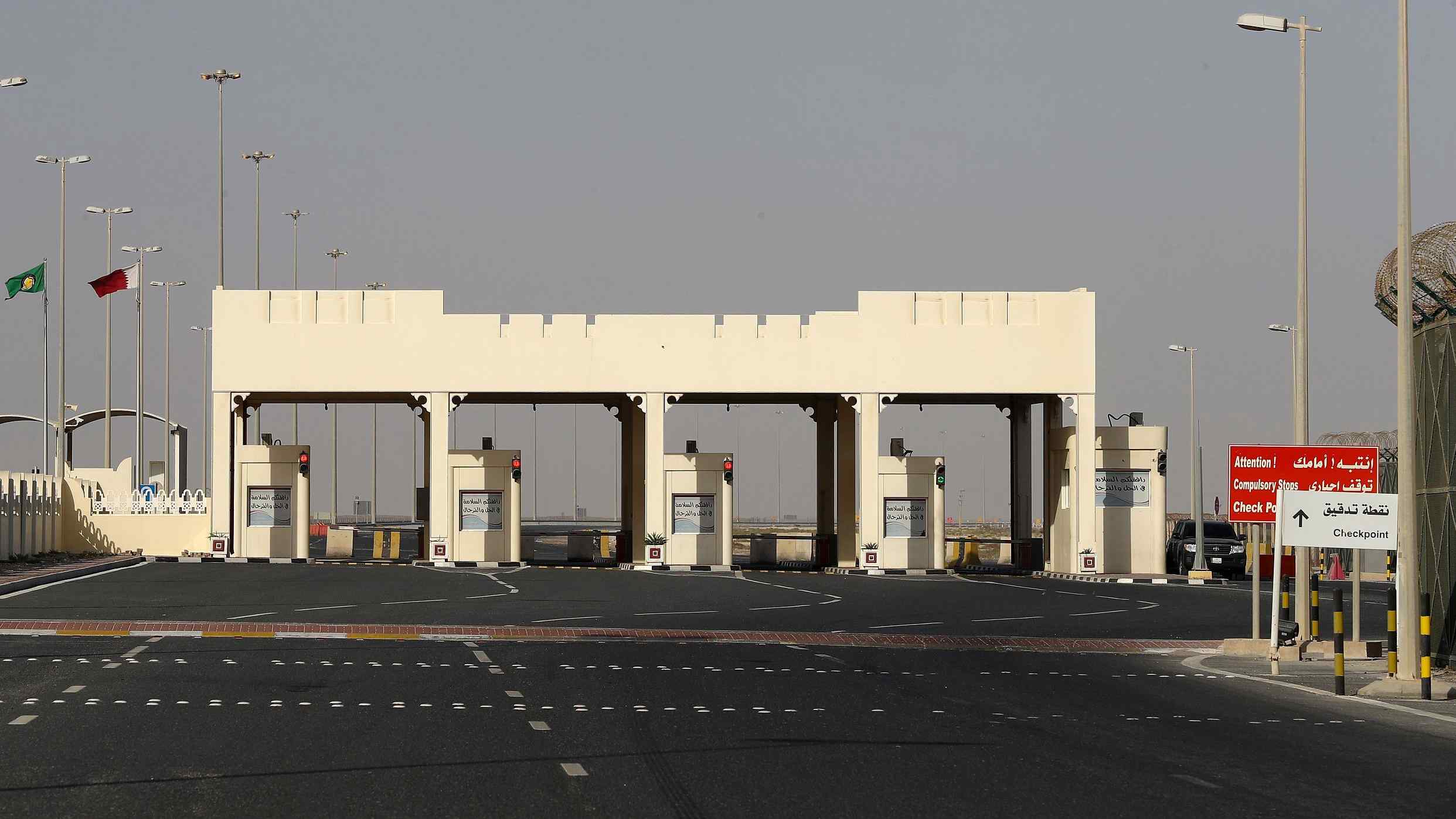
A general view of the Qatari side of the Abu Samrah border crossing with Saudi Arabia, on June 23, 2017. /VCG Photo
A general view of the Qatari side of the Abu Samrah border crossing with Saudi Arabia, on June 23, 2017. /VCG Photo
In last month’s hearing, Doha alleged that the UAE has enforced a "climate of fear" among Qataris living there, forcefully separating families and causing "substantial pain" during the more than a year-long blockade.
The ICJ judges on Monday ruled narrowly in Doha’s favor and ruled that the measures imposed by the UAE risked causing "irreparable harm" to Qatari citizens. While eight judges voted in favor of the series of provisional measures, seven voted against.
Welcoming the ICJ ruling, Qatar’s foreign ministry spokesperson Lulwa al Khater, in comments published by state news agency QNA, said: “This is only the first step on a long road to defend our rights, but at the same time this sends an early strong signal that there will be no tolerance shown to countries that take arbitrary measures against Qataris.”
Khater’s fellow spokesperson at the foreign ministry Ahmed bin Saeed al-Rumaihi tweeted that his country "was not seeking to escalate the dispute with the Emirates, but to repair the prejudice imposed on its citizens".
Casting agency retracts ad after exposé
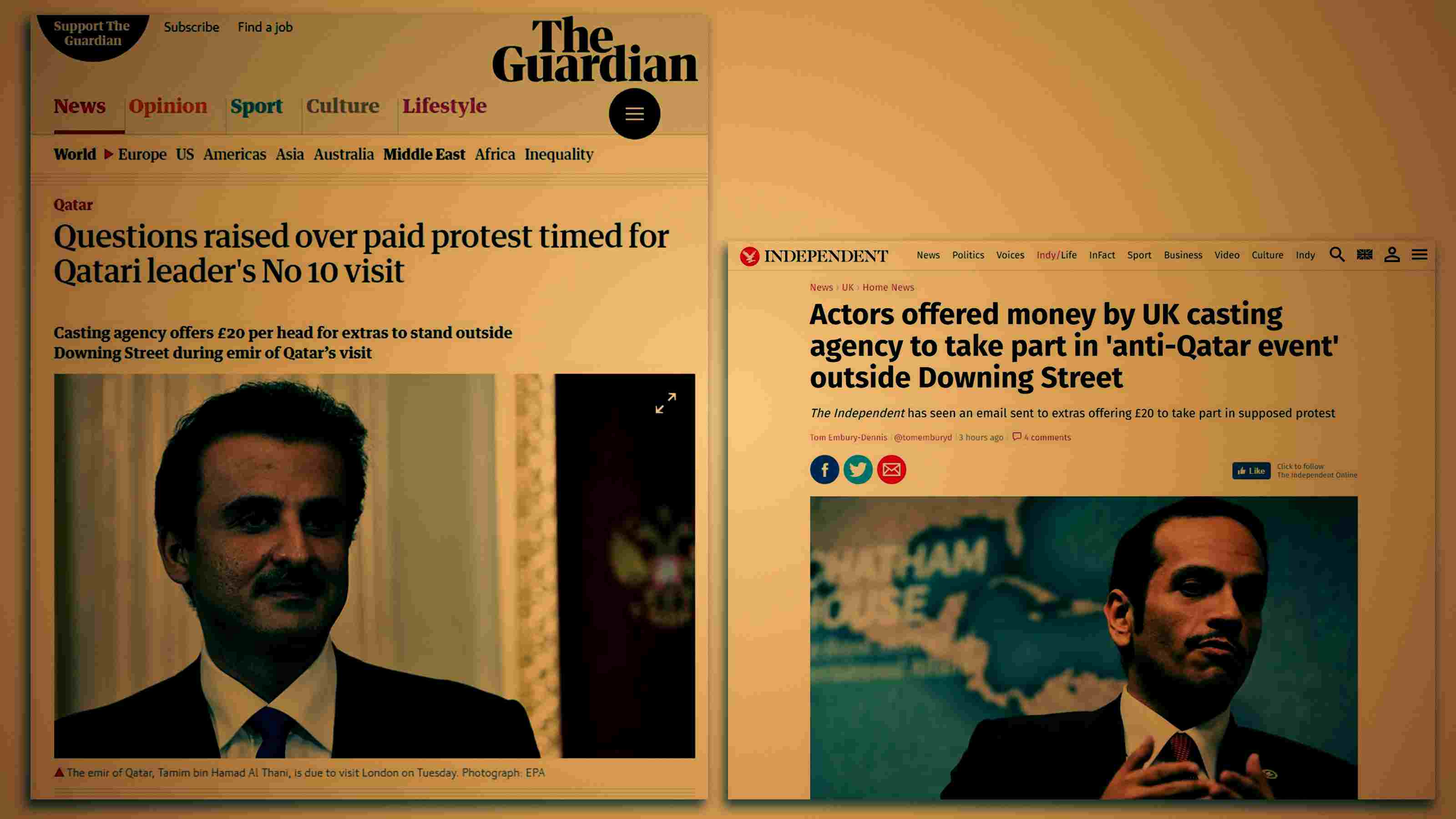
Screenshots to British newspapers The Guardian and The Independent reporting that actors were offered money to take part in "anti-Qatar" event in London.
Screenshots to British newspapers The Guardian and The Independent reporting that actors were offered money to take part in "anti-Qatar" event in London.
The developments came on a day when reports emerged in a section of the British media alleging that a UK casting agency has been offering actors money to take part in an “anti-Qatar event” outside Downing Street during a meeting between visiting Qatari Emir Sheikh Tamim bin Hamad Al Thani and British Prime Minister Theresa May on Tuesday.
The Independent newspaper reported that it has seen an email sent to extras offering 20 British pounds per person to take part in the supposed protest from 11:00 am to 12:30 pm on Tuesday, just before the Qatari Emir is expected to arrive at the prime minister’s residence at 10 Downing Street.
“This is NOT a film or TV production,” The Independent cited the email circulated by casting agency Extra People among its actors as saying. “The company are looking for a large group of people to fill space outside Downing Street during the visit of the president of Quatar (sic). This is an ANTI-Qatar event – You will not have to do or say anything, they just want to fill space. You will be finished at 12:30.”
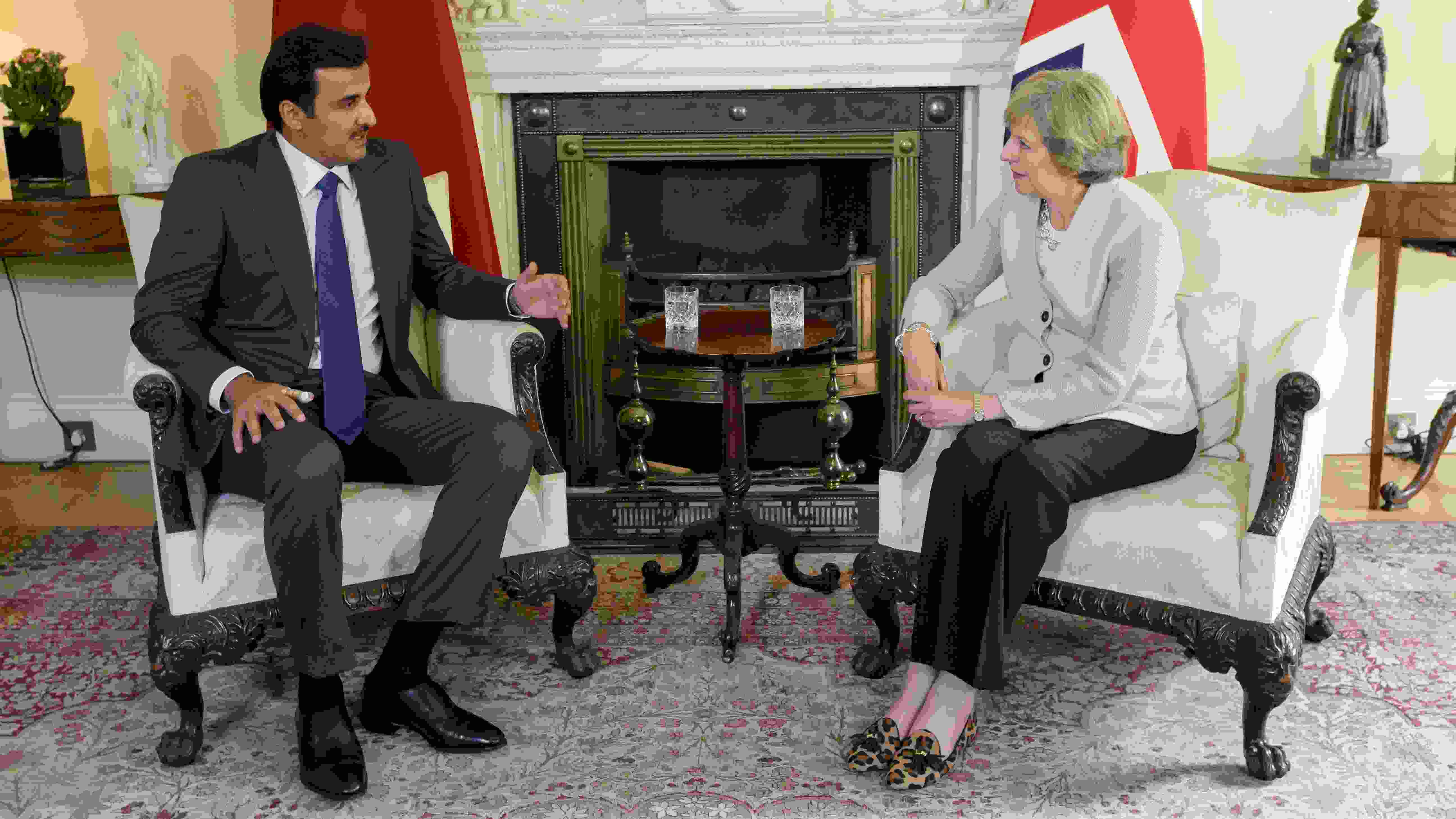
British Prime Minister Theresa May (right) and Qatari Emir Sheikh Tamim bin Hamad Al Thani at 10 Downing Street, in London, on Sept. 15, 2016. /AP Photo
British Prime Minister Theresa May (right) and Qatari Emir Sheikh Tamim bin Hamad Al Thani at 10 Downing Street, in London, on Sept. 15, 2016. /AP Photo
The Guardian also reported on the alleged advertisement by Extra People, saying it prompted “accusations that Qatar’s Gulf rivals are paying protesters to oppose the country’s activities and create the impression of an upswell of British support against the country.”
Extra People told The Independent it was “contacted by an individual” to “source people” for the event, but refused to reveal the identity of the client.
Both the British newspapers said the casting agency retracted the advert shortly after media reports began to circulate about the job offer, saying they didn’t want to be involved in the project.
“Upon receiving further information about the event, which regrettably was after our enquiry went out to our artistes, we began to understand what the hirer was asking of our artistes and the event involved,” a spokesperson for the booking agency was quoted as saying.
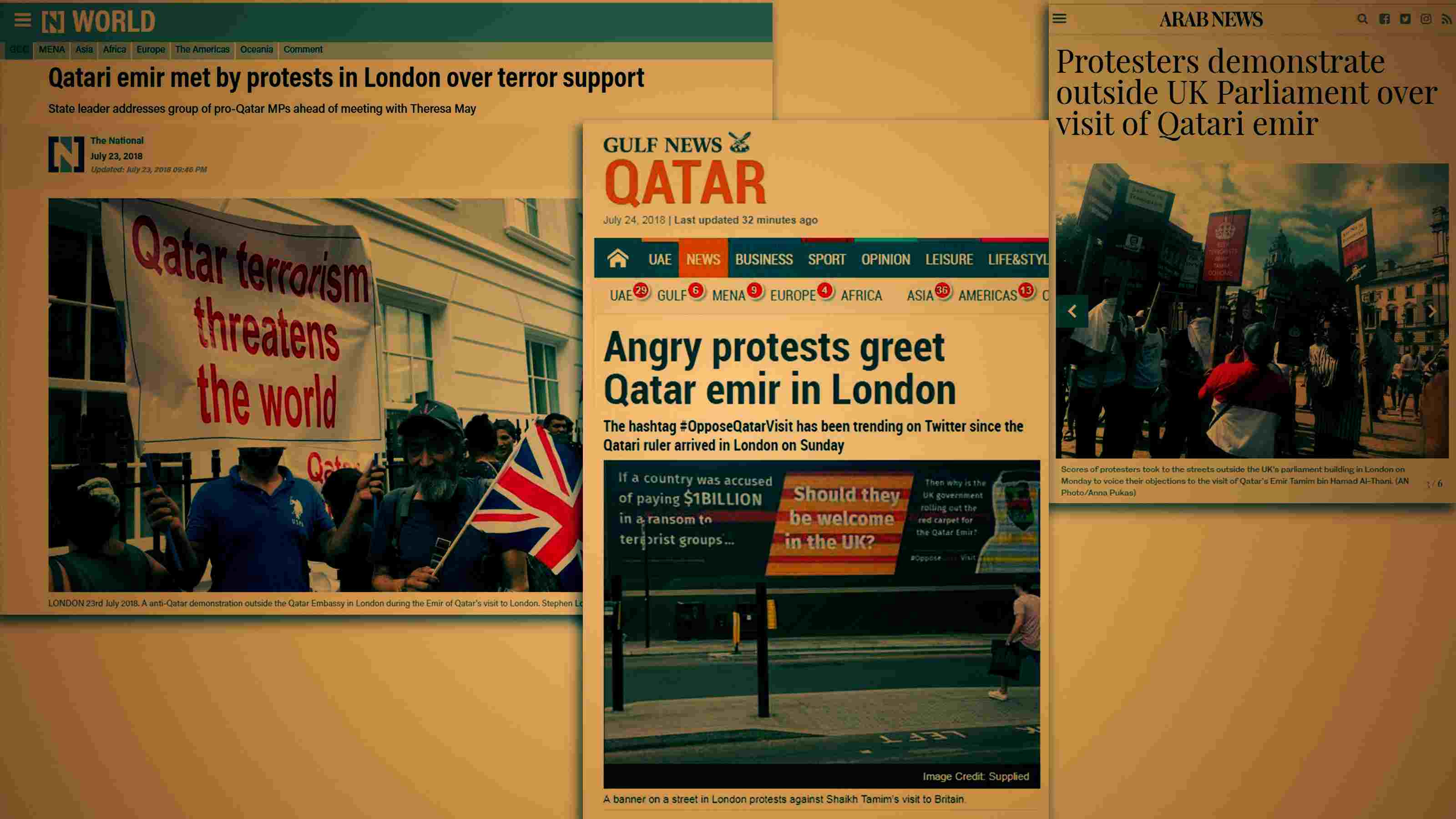
Screenshots of several newspapers showing reports of protests against Qatari Emir Sheikh Tamim bin Hamad al Thani in London on Monday.
Screenshots of several newspapers showing reports of protests against Qatari Emir Sheikh Tamim bin Hamad al Thani in London on Monday.
Earlier, several mainstream media in the UAE, Saudi Arabia and Bahrain such as Gulf News, The National, Arab News and Khaleej Times reported how the Qatari Emir faced a barrage of protests on Monday outside the British parliament, where he addressed the All Party Parliamentary Group on Qatar led by MP Alistair Carmichael..
Dubai-based Gulf News reported that banners condemning Sheikh Tamim’s visit appeared on main London roads and that the hashtag #OpposeQatarVisit trended on Twitter since the emir arrived in the British capital on Sunday.
Protests were also held outside the Qatari embassy in Mayfair, reported Abu Dhabi-based The National newspaper.
Qatar dismissed the protests as “staged” by its regional rival in the ongoing media war to discredit each other. “The blockading countries have a long history of using paid protesters to try and discredit those who do not agree with their views,” a Qatari diplomat told The Guardian.
(With input from agencies)
[Cover: The entrance of the International Criminal Court (ICC) is seen in The Hague, Netherlands. /Reuters Photo]
7883km