
Disease
11:18, 11-Aug-2018
Kenyan woman helps people living with vitiligo
Updated
10:53, 14-Aug-2018
 ["china"]
Share







Copied
03:10
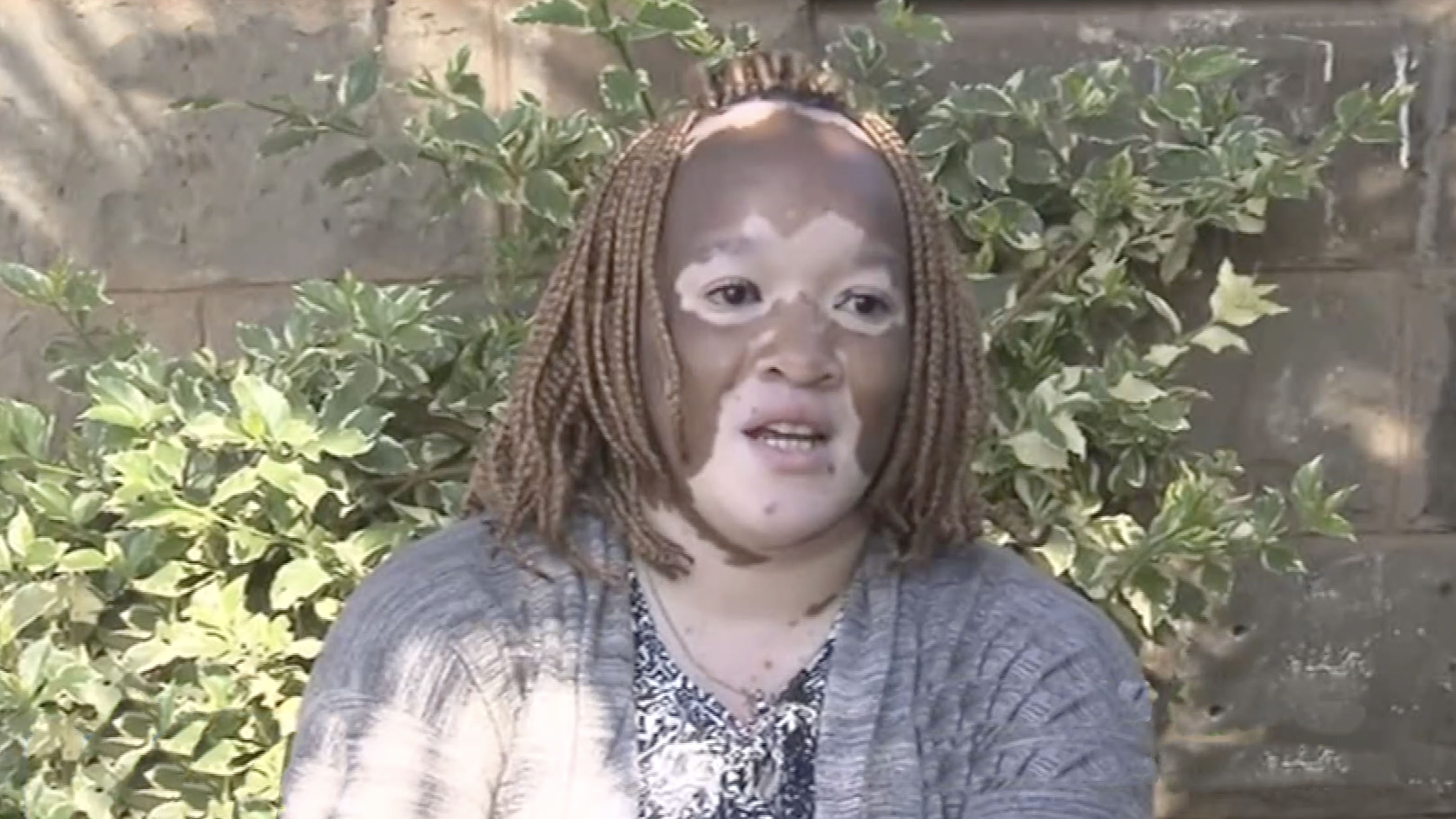
Vitiligo is a rare skin condition in which the body's immune system attacks melanin cells, resulting in depigmentation. It is a hugely stigmatized and misunderstood condition in Africa, considered by many as a curse. But a young Kenyan woman with vitiligo is challenging those perceptions by raising awareness and reminding those with or without the disease that vitiligo is beautiful.
Wangui Njeeh is the ambassador of Vitiligo Kenya. She helps people to live with vitiligo and distributes sunscreens to them.
"I know how it feels like to be stared at, to get burnt to go apply for jobs and not get – so I believe being an ambassador helps me encourage them," she said.
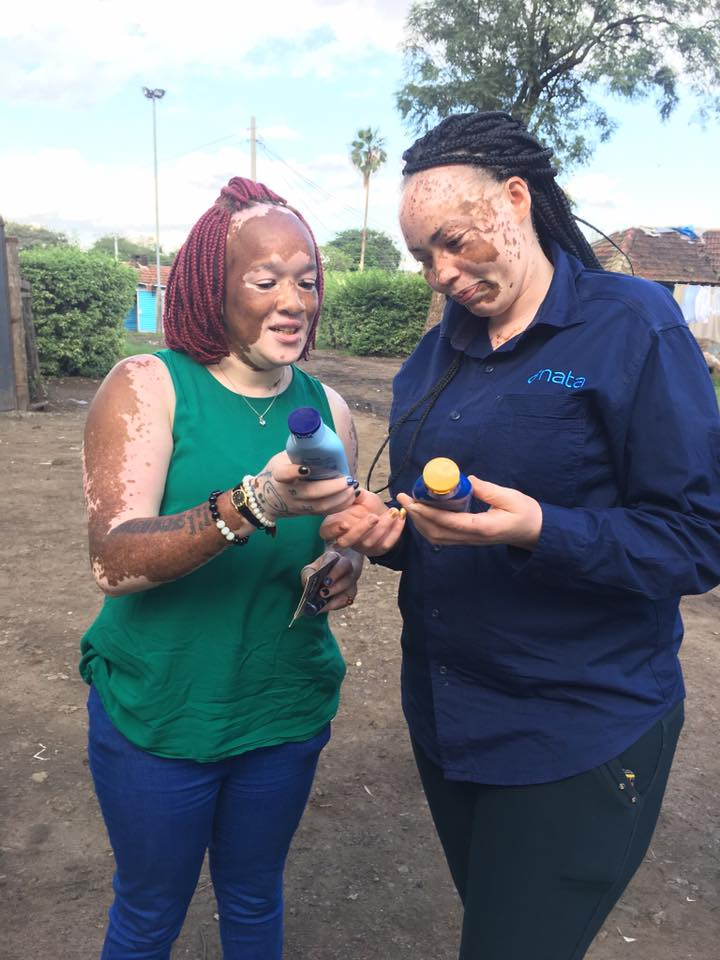
Wangui Njeeh (L) distributes sunscreens to people with vitiligo. /Photo via Facebook
Wangui Njeeh (L) distributes sunscreens to people with vitiligo. /Photo via Facebook
Vitiligo can come at any age. When she got her first spot at 14, her friend told her, "You have a white spot. You have chalk on your eye." The doctor said it’s vitiligo.
It didn’t bother her that much at first because she was too young. But when she got to the age 19, vitiligo started coming to her hands, even her whole body. It really bothered her since then.
Njeeh used to be a model. "It has been a tough journey to be honest," Njeeh said.
"When you walk on the road, everywhere, you hear people saying snide comments like hey why you burnt, did you steal someone’s husband, were you bewitched? It’s a curse and such things."
But now Njeeh has accepted her vitiligo fully. "For me I was beautiful and I'm still beautiful so it doesn’t change anything and I accepted it," she said.
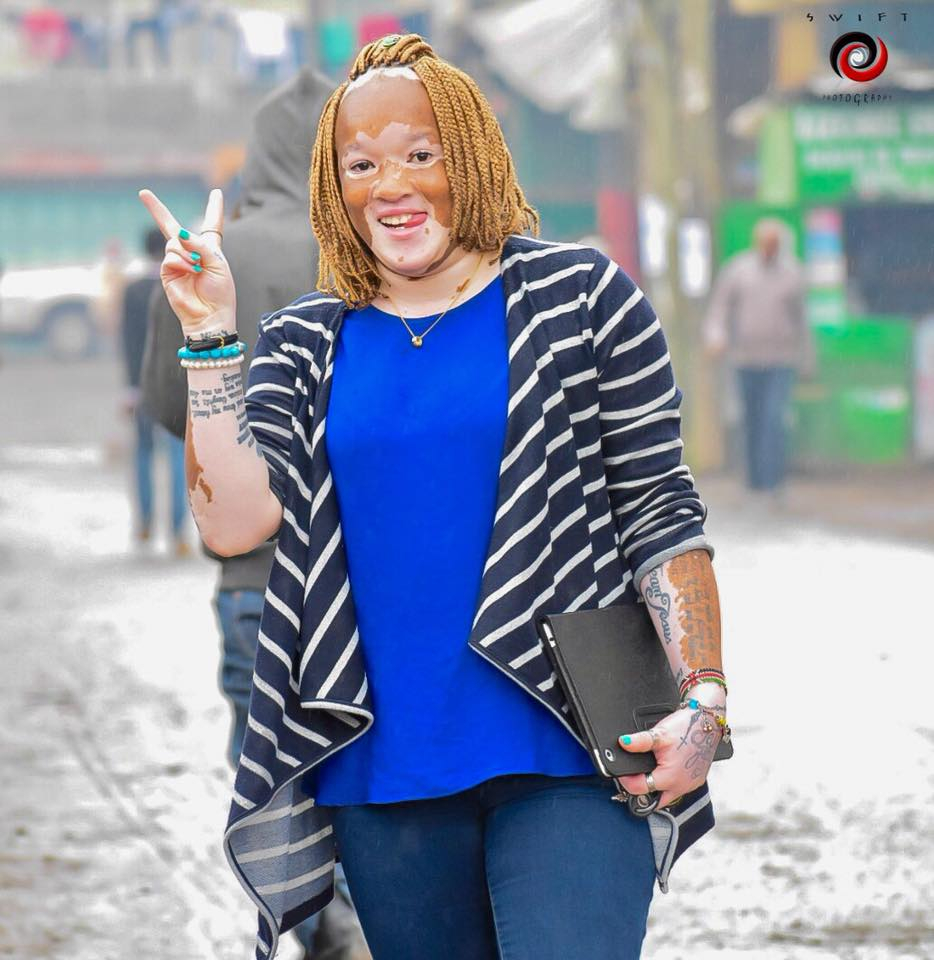
Wangui Njeeh hopes to win a Nobel Prize for what she did for the vitiligo community in Kenya. /Photo via Facebook
Wangui Njeeh hopes to win a Nobel Prize for what she did for the vitiligo community in Kenya. /Photo via Facebook
Njeeh is no exception to get stares because of her vitiligo. She tried to cover it with tattoos so that people will see the ink rather than the white patches.
"Some people think I'm white, some people think I’m black," Njeeh said. She was once pulled from the "African line" in Israel because of her skin color. "I had to even talk Swahili... so that they understand I’m from Kenya."
Njeeh used to be a banker. “I was a teller, but no one would come where I was. People were actually afraid of me."
"Now I'm a politician," she said.
Politics made her learned a lot, not only about people with vitiligo but the society as a whole. In her efforts, bills have passed concerning the annual allocation of money for sunscreen and protective gear for people living with vitiligo. Njeeh said it’s her proudest achievements.
Njeeh hopes to win a Nobel Prize for what she did for the vitiligo community in Kenya. She said, “I believe I have already left a mark and I will do more to leave more marks."