03:27

Italy's populist parties on Thursday reached a new coalition deal reviving their plans to take power, narrowly avoiding snap elections and setting in motion an anti-austerity government in the eurozone's third largest economy.
On Thursday evening, President Sergio Mattarella gave a mandate for the second time to Giuseppe Conte – the populist's pick for prime minister.
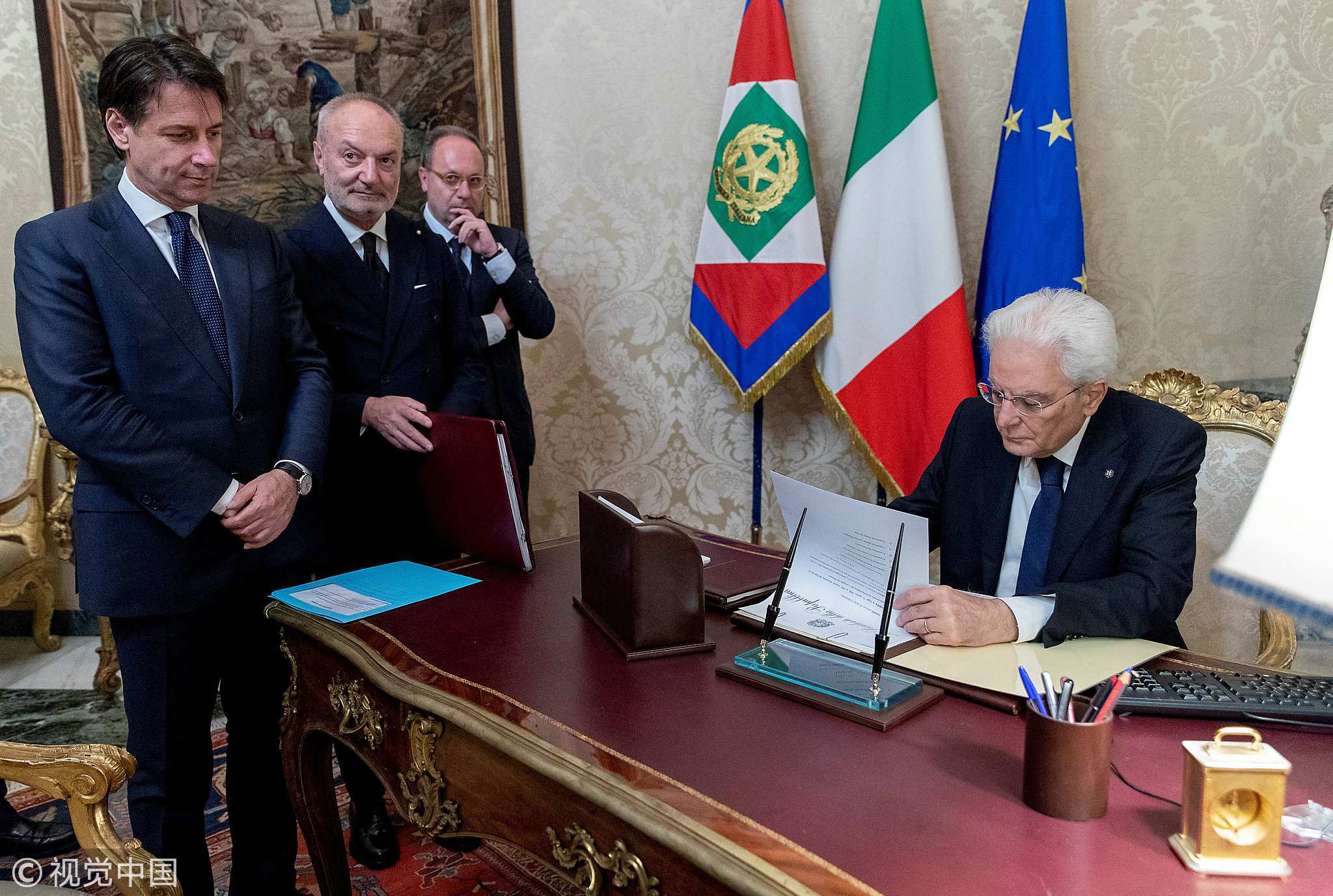
Italy's Prime Minister-designate Giuseppe Conte looks on as Italian President Sergio Mattarella signs documents at the Quirinal Palace in Rome, Italy, May 31, 2018. /VCG Photo
Italy's Prime Minister-designate Giuseppe Conte looks on as Italian President Sergio Mattarella signs documents at the Quirinal Palace in Rome, Italy, May 31, 2018. /VCG Photo
After Conte accepted the role, Chinese Foreign Ministry spokesperson Hua Chunying said Friday that China is pleased to see political and social stability and economic prosperity in Italy.
China is willing to join hands with the new government of Italy to further deepen political mutual trust as well as pragmatic cooperation to advance the China-Italy comprehensive strategic partnership, said Hua.
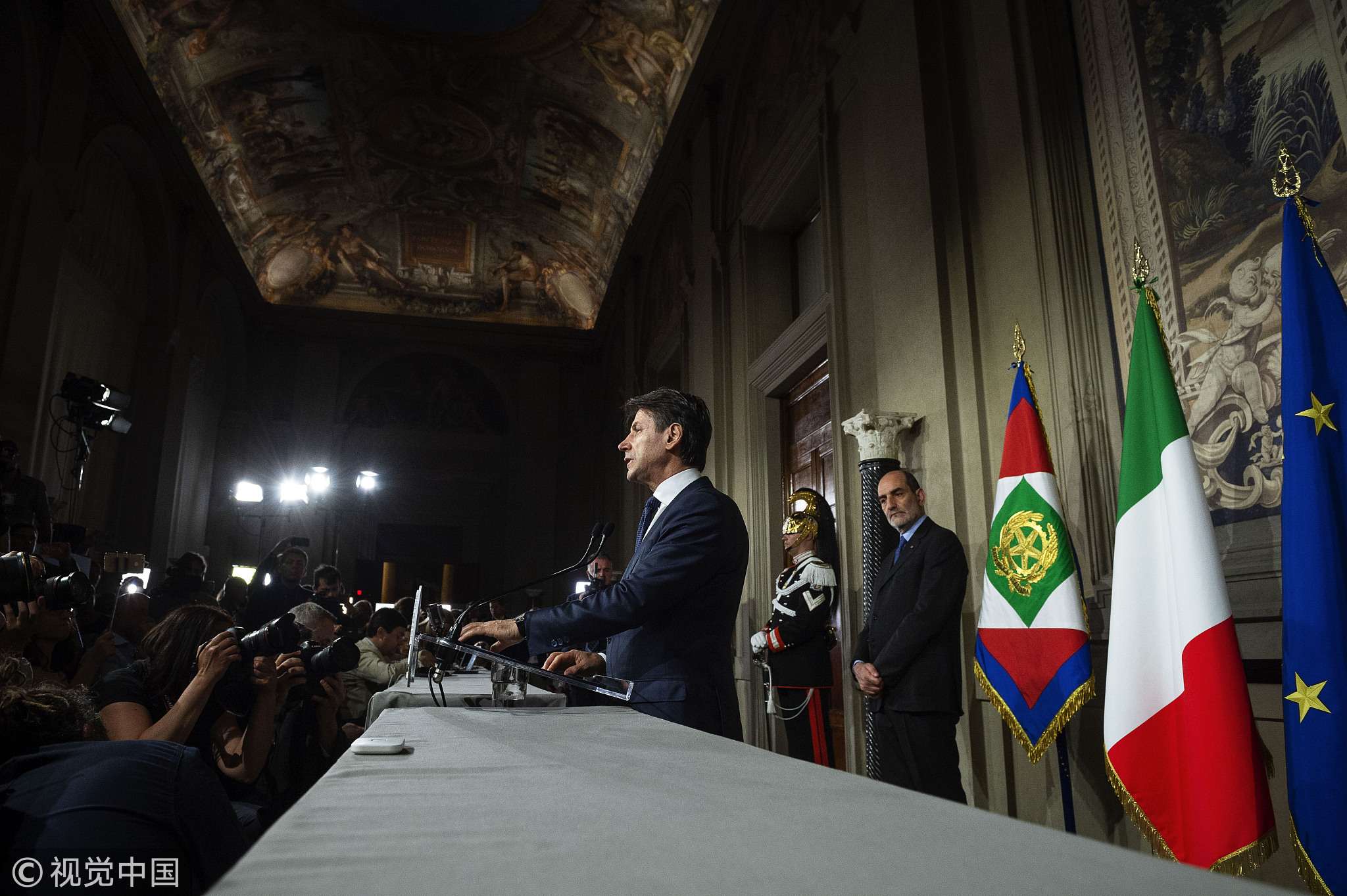
Law professor Giuseppe Conte, Italy's new prime minister-designate, speaks to the press to present his ministers list after being appointed by Italian President Sergio Mattarella on May 31, 2018, in Rome, Italy. /VCG Photo
Law professor Giuseppe Conte, Italy's new prime minister-designate, speaks to the press to present his ministers list after being appointed by Italian President Sergio Mattarella on May 31, 2018, in Rome, Italy. /VCG Photo
Italy has been in the throes of political turmoil for almost three months after inconclusive March elections, rocking financial markets and spreading unease among its euro partners.
Conte – a little known lawyer and political novice – announced his picks for the country's future cabinet after meeting with Mattarella.
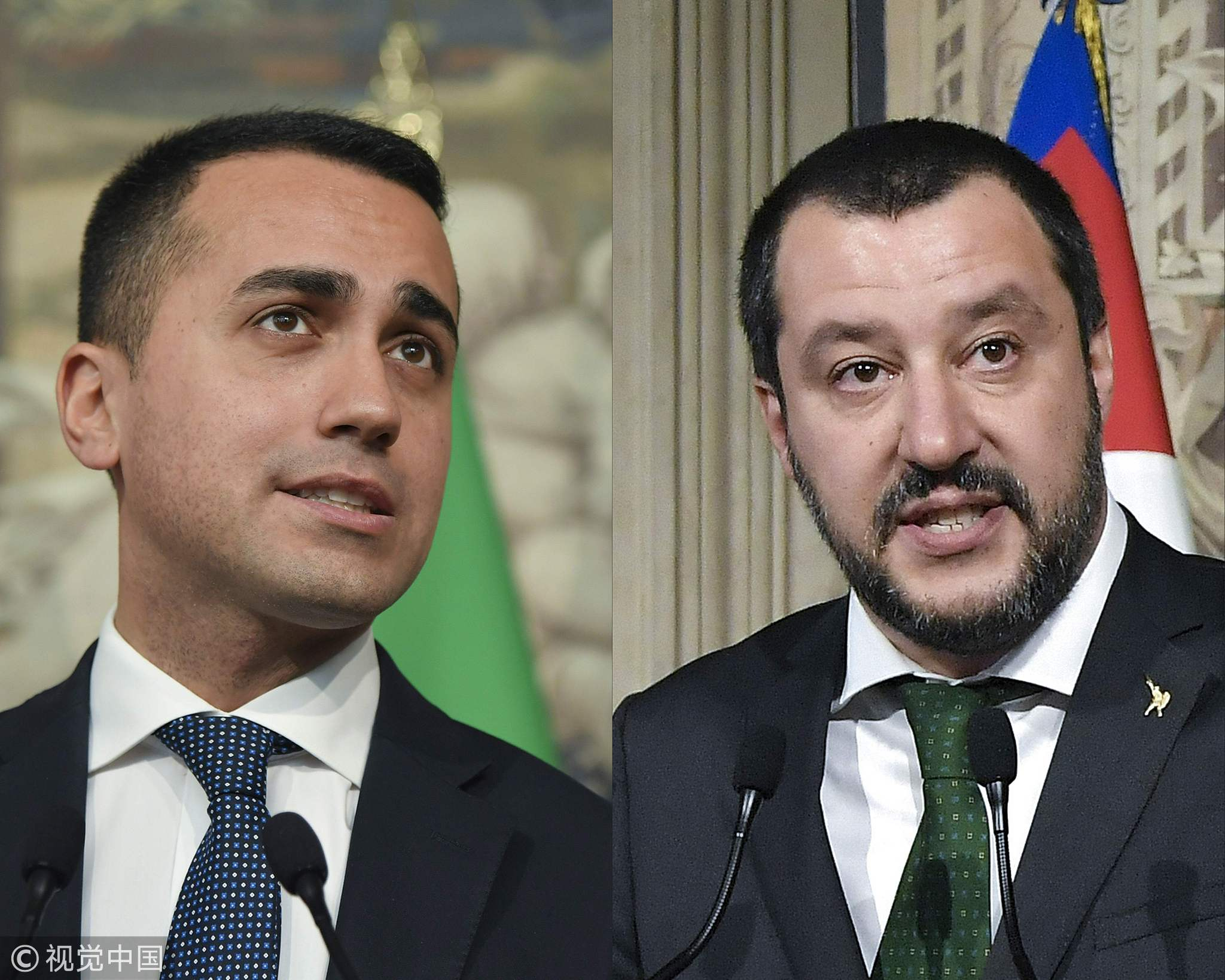
This file combo made on May 10, 2018, shows anti-establishment Five Star Movement (M5S) leader Luigi Di Maio and the leader of the far-right party Lega Matteo Salvini. /VCG Photo
This file combo made on May 10, 2018, shows anti-establishment Five Star Movement (M5S) leader Luigi Di Maio and the leader of the far-right party Lega Matteo Salvini. /VCG Photo
From the coalition, far-right League leader Matteo Salvini was named interior minister while Five Star Movement leader Luigi Di Maio is slated to become minister for economic development.
Paolo Savona, the eurosceptic economist who the populist coalition originally wanted for economy minister but was rejected by Mattarella, is still part of the cabinet as European affairs minister.
The role of economy minister was given to the less controversial Giovanni Tria, a political economist who advocates slashing taxes but is in favor of keeping Italy in the euro.
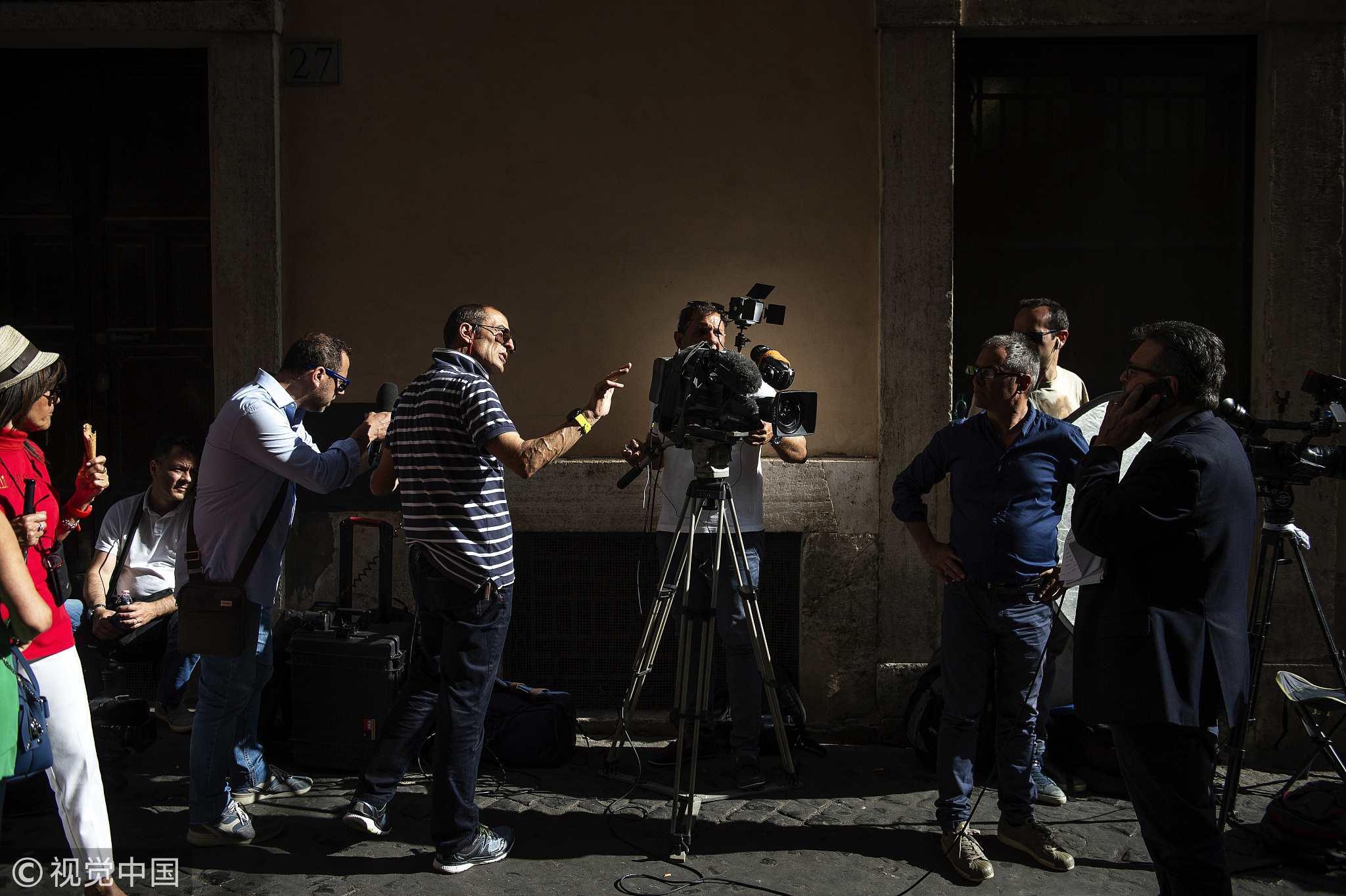
Journalists work outside the Italian Parliament during a new day of meetings for the formation of the new government on May 31, 2018, in Rome, Italy. /VCG Photo
Journalists work outside the Italian Parliament during a new day of meetings for the formation of the new government on May 31, 2018, in Rome, Italy. /VCG Photo
Brussels savvy Enzo Moavero Milanesi was appointed minister of foreign affairs.
According to Italian media the populist line-up will face a vote of confidence in both houses of parliament on Monday or Tuesday.
"Without promising any miracles, I can say that, after the first months of this government of change, I would like us to have a country with a little less tax and a little more security, a few more jobs and a few less illegal immigrants," said Salvini at a rally after the announcement.
Source(s): AFP

 ["china"]