
Tech & Sci
12:41, 03-May-2018
US safety agency says 'did not assess' Tesla Autopilot effectiveness
 ["china"]
Share







Copied
A US traffic safety regulator on Wednesday contradicted Tesla Inc’s claim that the agency had found that its Autopilot technology significantly reduced crashes, saying that regulators “did not assess” the system’s effectiveness in a 2017 report.
Autopilot, a form of advanced cruise control, handles some driving tasks and warns those behind the wheel they are always responsible for the vehicle’s safe operation, Tesla has said.
The US National Highway Traffic Safety Administration, which issued the statement, and National Transportation Safety Board are investigating a fatal crash in March in which the driver was using Autopilot.
Following that fatality, Tesla pointed to a 2017 NHTSA report on a May 2016 fatality involving a driver using Autopilot. The report said crash rates fell by 40 percent after installation of Autopilot’s Autosteer function and noted that this number was derived from Tesla airbag deployment data.
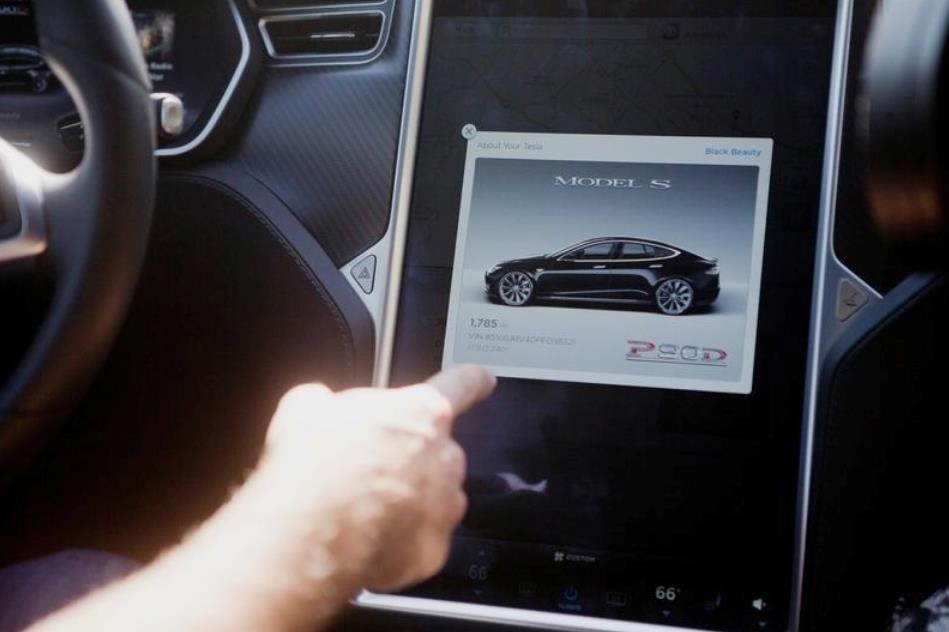
The Tesla Model S version 7.0 software update containing Autopilot features is demonstrated during a Tesla event in Palo Alto, California, US, October 14, 2015. /Reuters Photo
The Tesla Model S version 7.0 software update containing Autopilot features is demonstrated during a Tesla event in Palo Alto, California, US, October 14, 2015. /Reuters Photo
The agency said on Wednesday its crash rate comparison “did not evaluate whether Autosteer was engaged” and “did not assess the effectiveness of this technology.”
The agency described the Autopilot analysis in the 2017 report as a “cursory comparison” of airbag deployment rates before and after installation of the feature to determine whether models with Autosteer had higher crash rates. Such a finding “could have indicated that further investigation was necessary,” the agency said.
Tesla declined to comment.
In March, Tesla said that over a year ago, the US government found that its first iteration of Autopilot reduced crash rates by as much as 40 percent. “Internal data confirms that recent updates to Autopilot have improved system reliability,” it added.
On January 19, 2017, Musk tweeted: “The data show that the Tesla vehicles crash rate dropped by almost 40 percent after Autosteer installation.” Autosteer, a system that automatically keeps the vehicle in the center of a lane, is part of the Autopilot technology package.
The 2017 NHTSA probe found no evidence of a defect. Investigations into the death of Walter Huang, the driver in the March 23 Tesla car crash, are ongoing.
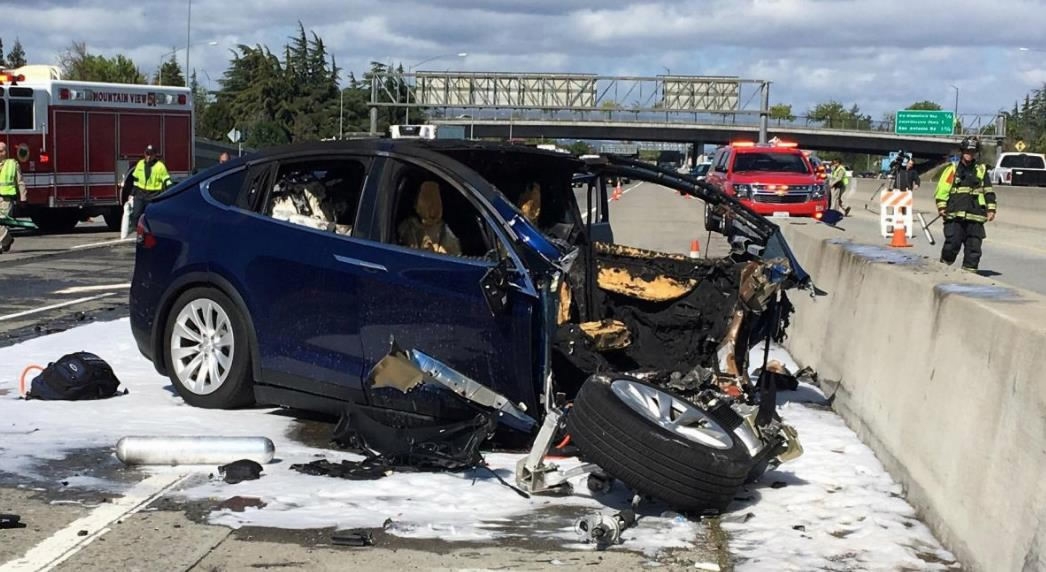
Rescue workers attend the scene where a Tesla electric SUV crashed into a barrier on US Highway 101 in Mountain View, California, US, March 25, 2018. /Reuters Photo
Rescue workers attend the scene where a Tesla electric SUV crashed into a barrier on US Highway 101 in Mountain View, California, US, March 25, 2018. /Reuters Photo
The NTSB confirmed last month it had two other pending investigations of incidents involving Tesla vehicles, including an August 2017 Tesla battery fire in Lake Forest, California, after an owner lost control and ran the vehicle into his garage.
The NTSB previously faulted Tesla in a 2016 fatal crash in Florida in which Autopilot was engaged. NTSB Chairman Robert Sumwalt said in 2017 that “system safeguards were lacking.”
He also noted that “Tesla allowed the driver to use the system outside of the environment for which it was designed and the system gave far too much leeway to the driver to divert his attention.”
Tesla said it had improved the system since the crash.
Tesla on Wednesday told investors in its quarterly financial report that on March 15 it released a “significant Autopilot update” that has been well received by its customers.
Source(s): Reuters