
Space
15:49, 24-Apr-2018
Chinese and Russian students plan to make satellites that will speak to one another by 2020
 ["china"]
Share







Copied
03:13
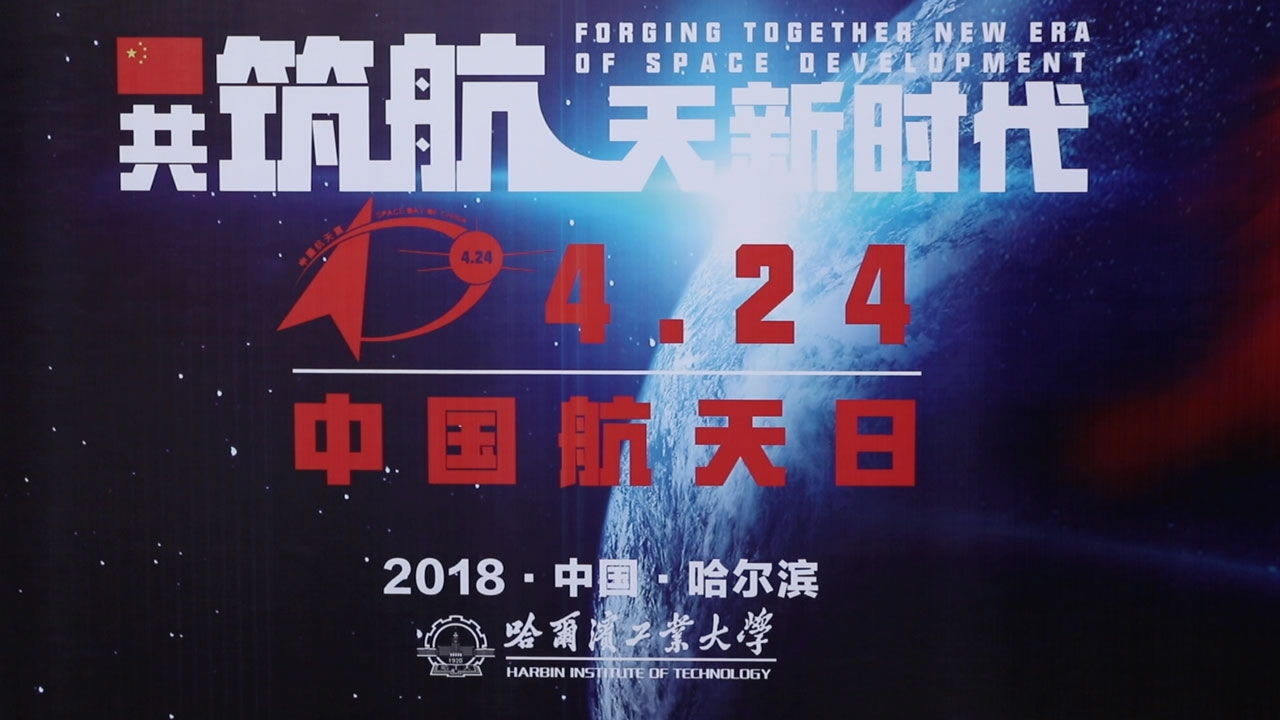
This year’s April 24 marks the third China Space Day. The event aims to increase awareness of the developments made in Chinese aerospace technology.
This year’s space day events are taking place on the campus of the Harbin Institute of Technology (HIT), and a group of students from the university are building a satellite which should launch in 2020.
The Association of Sino-Russian Technical Universities (ASRTU) was established in 2011, and now it has 51 member universities from China and Russia. In 2013, the association proposed to let students from the two countries gain some hands-on experience. Satellites weighing under 100 kilograms were a good place to start.
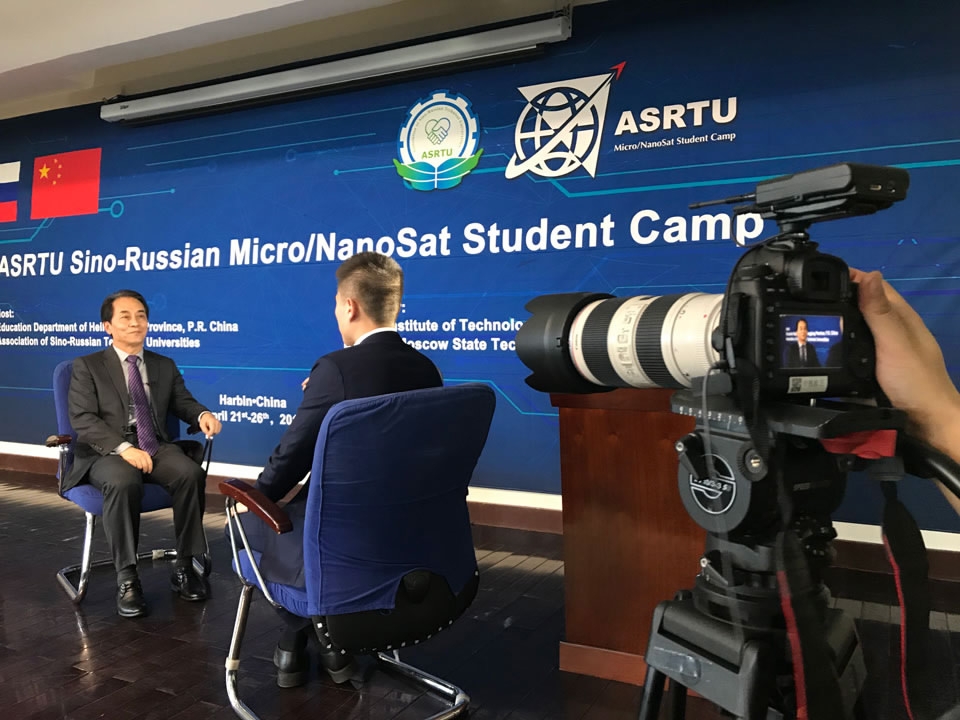
Ren Nanqi (L), the Vice President for the Harbin Institute of Technology speaks with CGTN on the schools’ campus in Harbin, Heilongjiang Province. /CGTN Photo
Ren Nanqi (L), the Vice President for the Harbin Institute of Technology speaks with CGTN on the schools’ campus in Harbin, Heilongjiang Province. /CGTN Photo
“Micro and nano satellites cost less and are easier to launch. While they have great commercial value, the technology also enables students to learn and get hands-on experience,” said Ren Nanqi, the vice president for HIT.
Students at HIT are not new to developing micro satellites. On Sept. 20, 2015, the Lilac Sat No.2 was launched into the space from the Taiyuan Satellite Launch Center. It weighs 12 kilograms, and is the first satellite designed, built and sent to space exclusively by students.
Now, the Lilac team is moving onto the ASRTU project.
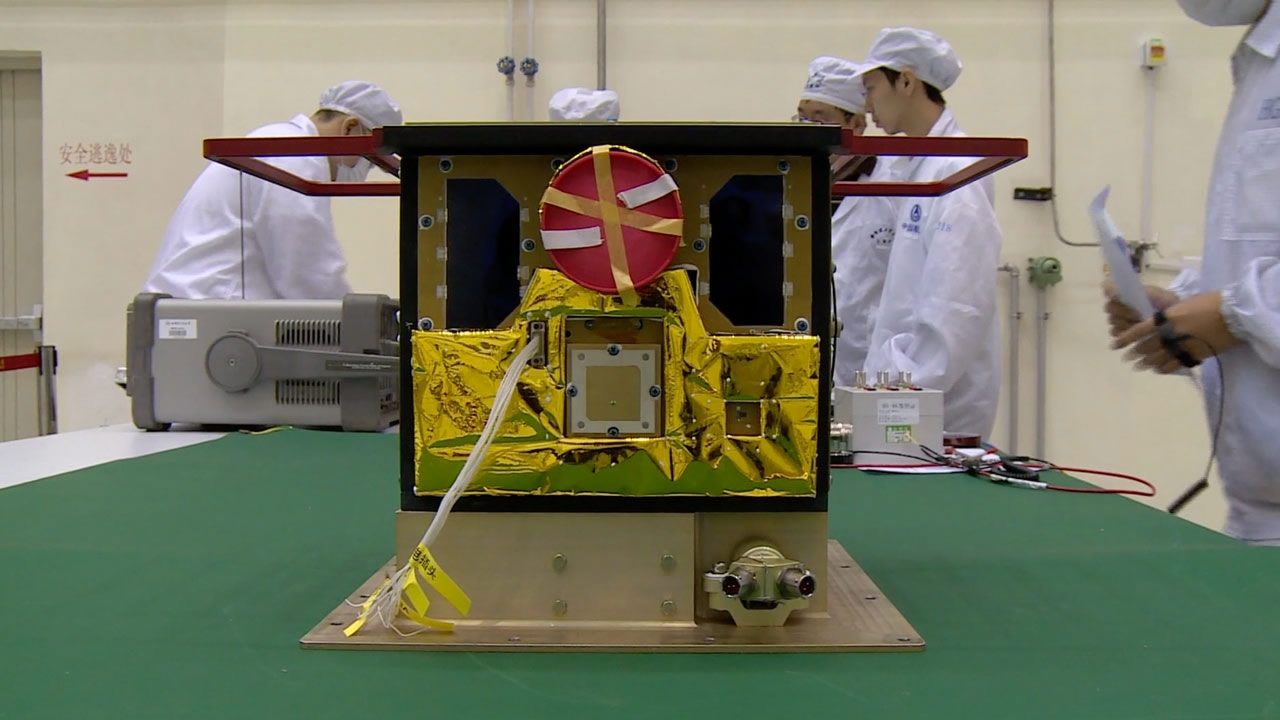
Students from the Harbin Institute of Technology work on the Lilac Sat project. /CGTN Photo
Students from the Harbin Institute of Technology work on the Lilac Sat project. /CGTN Photo
With one satellite built by Chinese students and another one built by Russian students, the pair are expected to launch aboard a Russian rocket in 2020, and there are plans to make the two satellites talk to one another.
“We are planning to have the two satellites communicate with each other, sharing their data. Institutes in both countries can receive the data so that we can share our resources and information,” said Dimitrii Fomin, an associate professor from Amur State University.
Qiu Shi is the project leader at HIT, and he said that images captured from their satellite can further help analyze the China-Mongolia-Russia Economic Corridor.
While the ASRTU project gives students a chance to peek into space, real-life astronauts think space exploration needs collaboration from different countries, and it is important to figure out ways to work in an international setting.
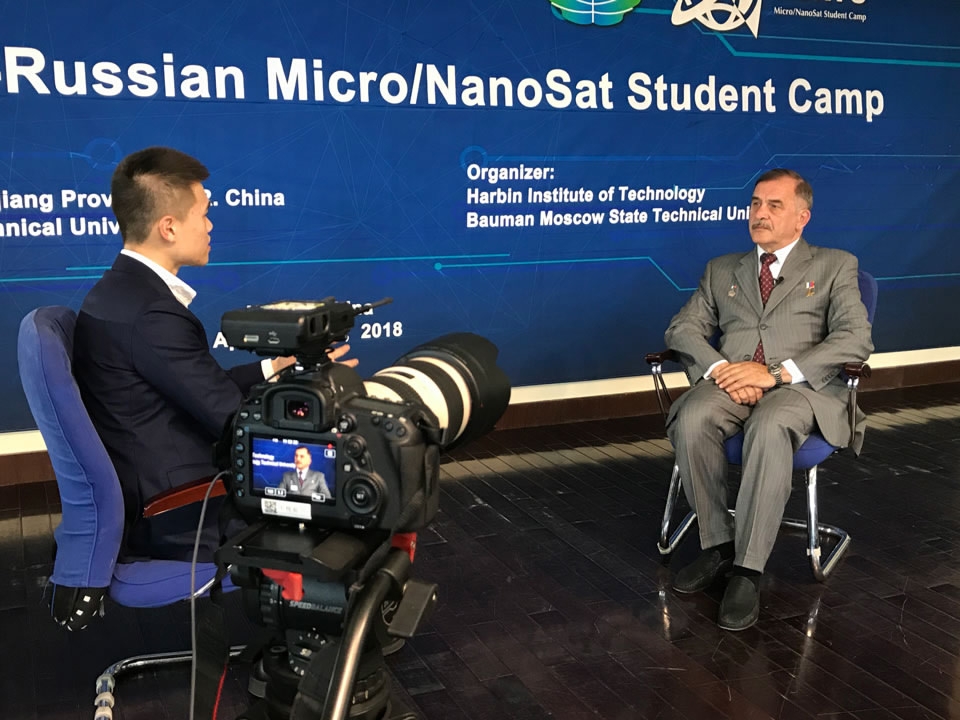
Pavel Vinogradov, the pilot-cosmonaut at S.P. Korolev Rocket and Space Corporation Energia (R), Speaks with CGTN. /CGTN Photo
Pavel Vinogradov, the pilot-cosmonaut at S.P. Korolev Rocket and Space Corporation Energia (R), Speaks with CGTN. /CGTN Photo
“I traveled to space three times. And in space, I have worked with people from countries including the US, France, Italy and Japan. It felt like we were working as a family. Exchanges are important for space technology — including exchanges among schools and across nations. Exchanges among schools can provide opportunities for students from different countries to learn how to work with different people from a young age,” said Pavel Vinogradov, the pilot-cosmonaut at S.P. Korolev Rocket and Space Corporation Energia.