
Transplant
22:43, 28-Apr-2018
Brains, eyes, testes: off-limits for transplants?
 ["china"]
Share







Copied
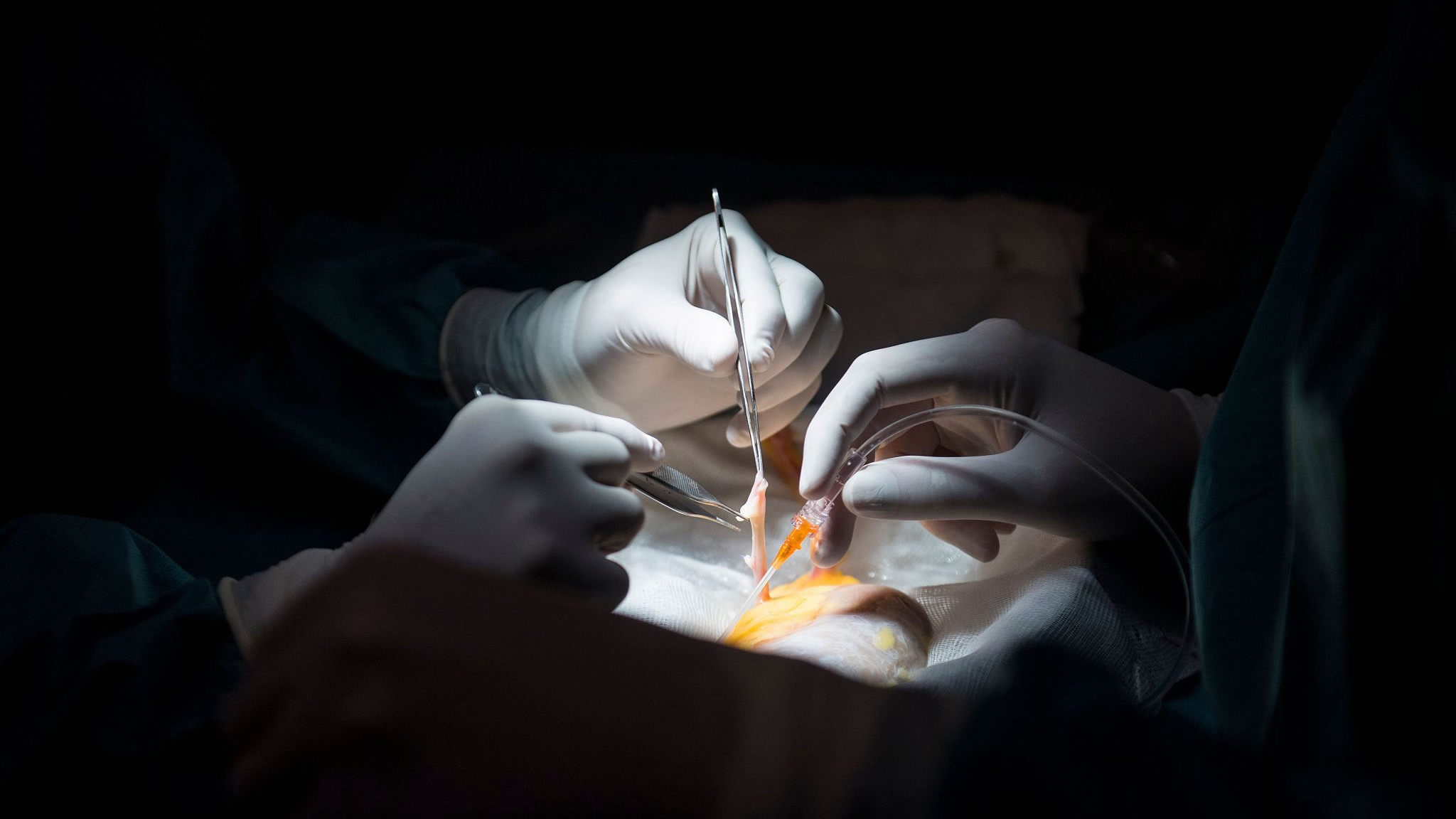
Since the world's first successful organ transplant in 1954 – a kidney – the discipline has advanced to the point where a wounded soldier could have his penis and scrotum replaced in a groundbreaking operation last month.
A Frenchman recently became the first person to receive a second face transplant after the first failed, and another made history by regrowing skin lost over 95 percent of his body, thanks to a graft from his twin brother.
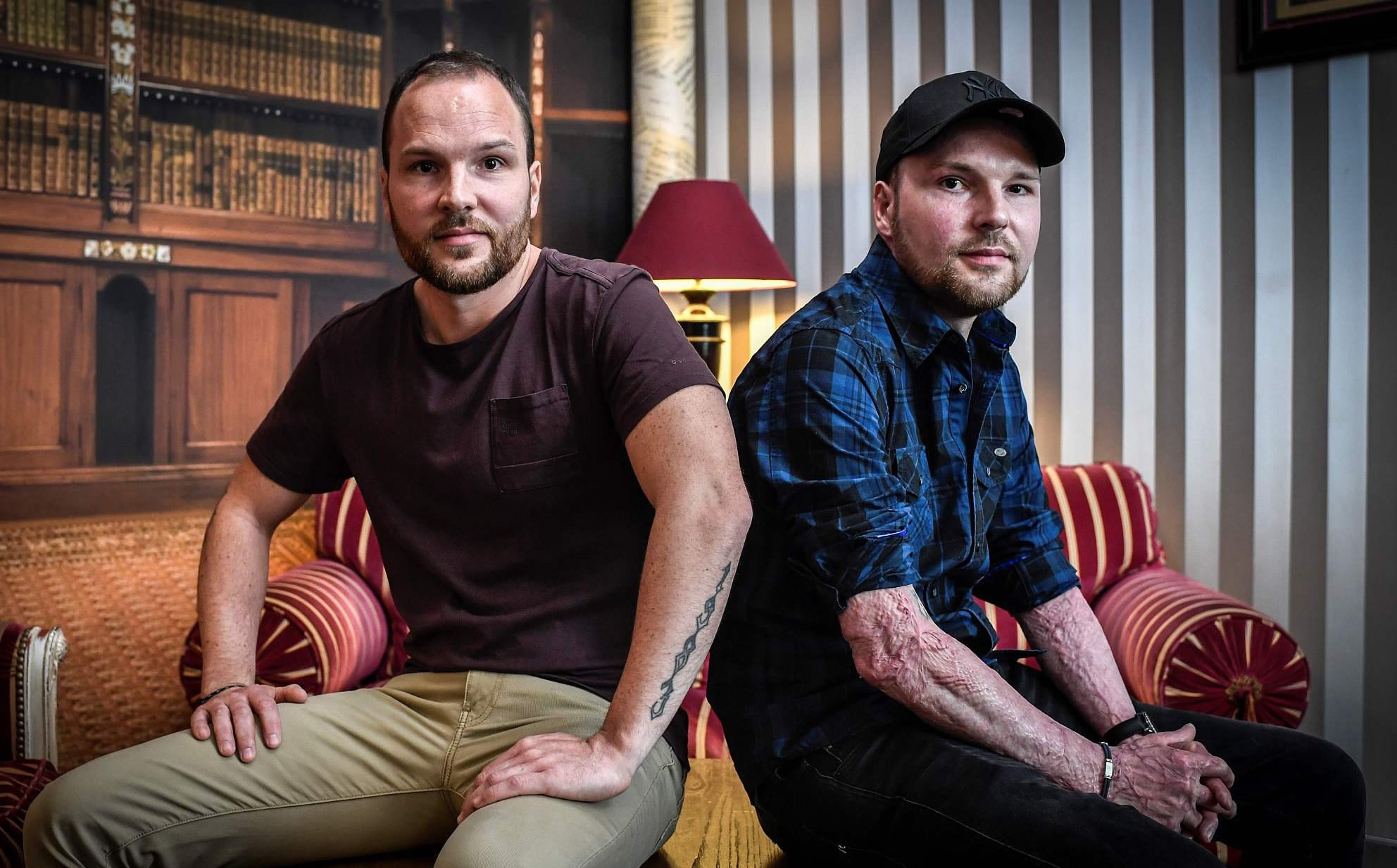
Franck (R), a 33-year-old who had suffered burns on over 95 percent of his body was saved by a skin transplant from his identical twin Eric (L). /VCG Photo
Franck (R), a 33-year-old who had suffered burns on over 95 percent of his body was saved by a skin transplant from his identical twin Eric (L). /VCG Photo
Transplants are no longer limited to the vital organs: heart, liver, or lungs. Nowadays, people can get a new hand, or even a uterus.
But some organs remain off-limits. For now.
Brain swap
Topping the list, brain transplants are a long way off, for both technical and ethical reasons, experts said.
"The most challenging organ to transplant is anything related to the nervous system, as we do not have effective techniques for nerve growth or regeneration," explained transplant surgeon of the University of Oxford, David Nasralla.
"For this reason, eye and brain transplants are currently beyond the scope of modern medicine."
Nerves carry messages through the body in the form of electrochemical pulses flitting between the brain and spinal cord, muscles and other organs.
An Italian-Chinese surgical duo set the science world aflutter by completing the first human head transplant on a corpse in November, 2017.
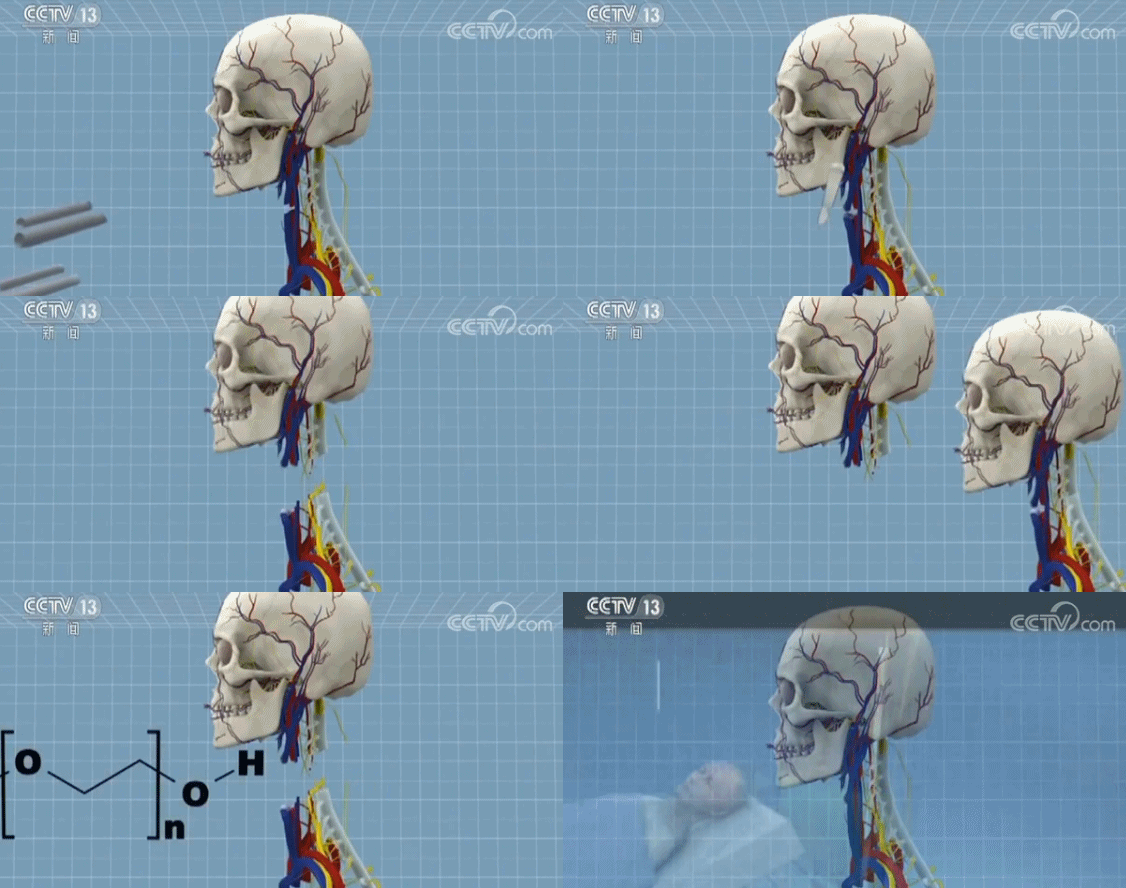
The process of a head transplant /Photo via CCTV.com
The process of a head transplant /Photo via CCTV.com
Still, many doubted the possibility to connect the nerve fibers of two spinal cords.
Above all else, the undertaking has raised troubling moral questions, including a very basic one: What constitutes a person? A brain alone?
"Even memories of the role the former body played in the creation of the subject's identity would encounter possible conflict with a new donor-given body," wrote bio-ethicists Anto Cartolovni and Antonio Spagnolo.
While according to Professor Ren Xiaoping, the Chinese surgeon in the head transplant duo, head transplant would naturally spark controversy, just like the first heart transplant half a century ago and the first hand transplant twenty years ago.
Fancy a pig heart?
Given the dire shortage of donor organs, the use of animal hearts, lungs or livers to save human lives has long been a dream hard to achieve of medical science.
But organ rejection has stood stubbornly in the way of inter-species "xenotransplants."
"It was tried in the 50s and 60s, with kidneys from chimpanzees, for example. But organ failure set in immediately, within days. They could not break through the species barrier," said Olivier Bastien, of France's biomedicine agency.
This is changing as scientists learn to modify the genes that prompt the immune system to attack intruder germs, but also foreign tissue perceived as a threat.
Researchers' focus is to modify the genes of donor animals so their organs will resist the human immune response, while also preventing the transfer of animal diseases.
Animal welfare is an added concern.
"Up to what point should we undermine the animal's immune system," asked Bastien – potentially exposing it to disease and suffering so we can harvest its organs?
Are there limits?
Few organs remain technically non-transplantable. But two are excluded, for now, due to their raising of ethical eyebrows – the testes and ovaries.
"A testicle transplant would amount to assisted reproduction in disguise," said Bastien.
One question is that if the recipient fathers children with his new sperm-producing testicles, whose offspring are they – his, or the donor's?
The same issue arises in the case of a head transplant onto a male body.
A paper last year in the Journal of Medical Ethics urged a rethink of risk-benefit ratio of non life-saving organ transplants.
"The greatest risk transplant recipients face comes from the powerful but noxious agents, immunosuppressives, which must be used to keep transplanted organs from being rejected," wrote Arthur Caplan and Duncan Purves.
A long list of possible side effects, including cancer, can be justified for a heart or lung transplant, they argued, but possibly less so for a new face, hand or penis.
"The shift away from saving lives to seeking to make them better requires a shift in the ethical thinking that has long formed the foundation of organ transplantation," the duo argued.
Source(s): AFP