
Opinions
19:40, 15-Oct-2018
Opinion: Renminbi depreciation is cyclical
Updated
19:04, 18-Oct-2018
 ["china"]
Share







Copied
Editor's note: Wang Jianhui is the deputy general manager of the R&D department at Capital Securities. The article reflects the author's opinions, and not necessarily the views of CGTN.
As the trade conflict has ramped up, China's currency has dropped sharply against the dollar, losing about nine percent of its value since April. Some believe the government is manipulating its currency, but others say the fall in the yuan's value is a reflection of the market.
This does more harm than good to the country. In fact, China has put a lot of work into stabilizing the yuan, a move which benefits both emerging markets and the the global economy as a whole.
However, evaluating a currency in a supermarket is easy: You can compare the money in your wallet with the price tags and get a good sense about purchasing power. When it comes to pricing the money in terms of a foreign currency, things can be tricky.
Unlike the store, which has fixed prices, exchange rates change all the time, and the direction of movements are often unclear.
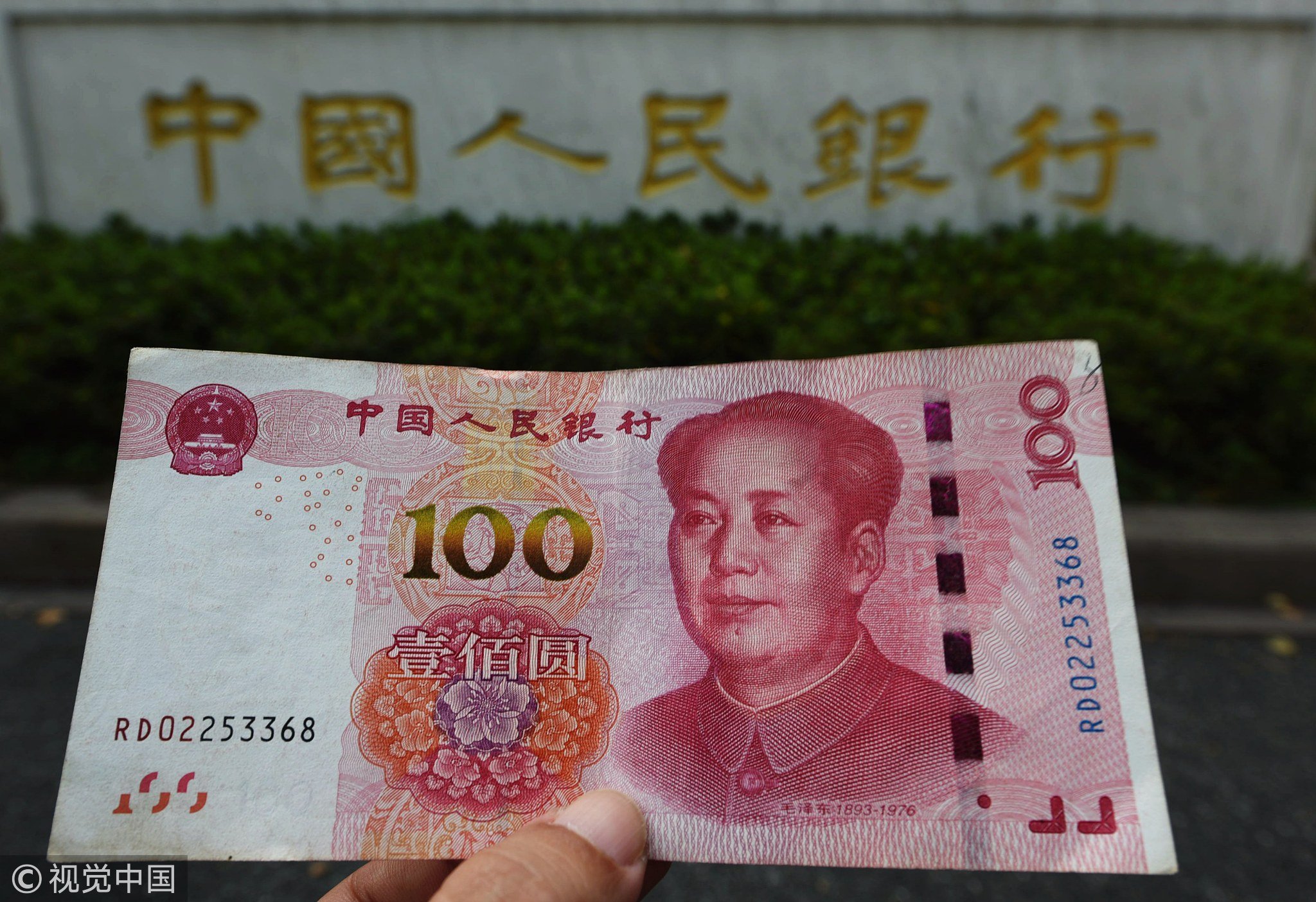
The photo shows the Chinese banknote that worth 100 yuan./ VCG Photo
The photo shows the Chinese banknote that worth 100 yuan./ VCG Photo
The first factor behind these changes come from the economic fundamentals. If the economy's performance is getting stronger and stronger, the currency and related assets are expected to generate more returns, and therefore become more valuable.
Between the second quarter of 2006 and 2008, China's economy, stimulated by the investment boom, grew at a “red hot” pace of between 11 and 15 percent, much more promising than the US, which was growing by roughly two percent.
Foreign capital flew into the country to prepare for future opportunities and the FDI surged by 81 percent in the meantime. The renminbi appreciated 14 percent against the US dollar within two years, albeit with some concerns about possible disadvantages in foreign trade.
Things changed in 2015, when the Chinese economy lowered from double digit growth to seven percent and the FDI experienced a drop of six percent. The balance of payment surplus to GDP ratio dropped from 3.9 percent to 1.5 percent in 2017.
In the second quarter of 2018, China's GDP growth continued to slow down to 6.7 percent, and Sino-US trade tension has deteriorated expectations further. The US economy, in contrast, has improved from 1.9 to 4.2 percent, and more and more multinationals started to move their cash from emerging economies back to the US.
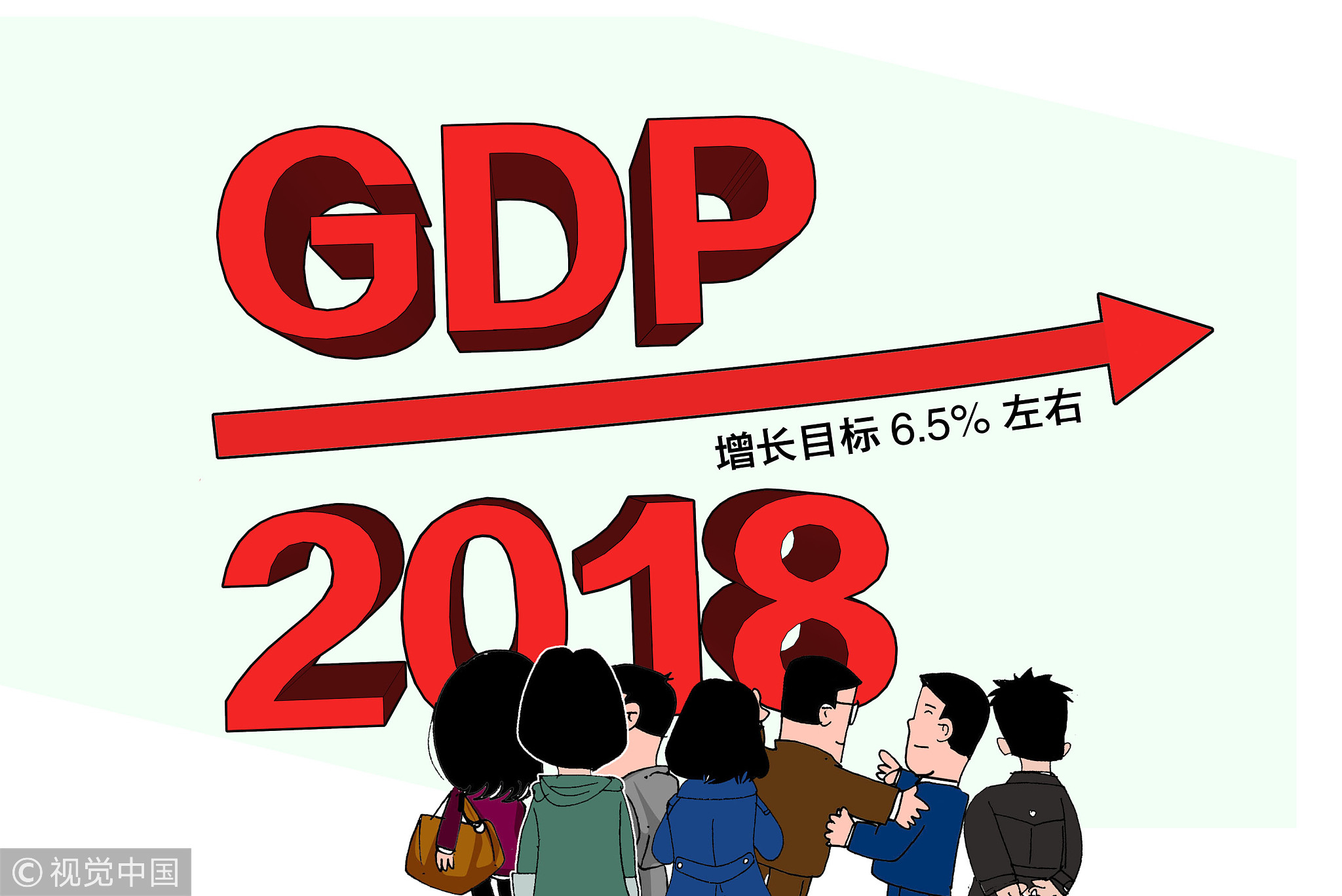
Characters in the picture read "The GDP growth target for 2018 is around 6.5 percent"./ VCG Photo
Characters in the picture read "The GDP growth target for 2018 is around 6.5 percent"./ VCG Photo
Hence, the renminbi depreciated by 11.4 percent since August 2015. Just like the economy, the foreign exchange rate also shows a cyclical trend.
Almost as important is the relation between supply and demand, which is determined by the central bank's monetary policy. Usually, loosening up policy in a country increases the money supply and downward pressure on the local currency. The depreciation could very likely happen if the home economy is not booming, and the foreign counterpart with better growth conditions follows a neutral or tightening policy.
Since 2015, PBOC has lowered the required rate of reserve eight times from 20 to 14.5 percent, enabling commercial banks to utilize more money for business.
The money supply measured by the indicator M2 reached 170 trillion yuan in 2017, 37.6 percent higher than in 2014. The Fed, in contrast, has lifted the target interest rate eight times to 2.25 percent, attracting capital to come back from emerging economies, including China.
The Chinese renminbi./ VCG Photo
The Chinese renminbi./ VCG Photo
By the end of 2017, the M2 volume was 13.9 trillion US dollars, 11 percent more than that in 2014. That could also explain renminbi's weakness in the past three years.
Such monetary policy measures are often used as counter-cyclical tools and the foreign exchange rate has also exhibited certain characteristics of this economic cycle, but in a different, trickier way.
Finally, open market operations by the central bank and the supervision measures of other governmental bodies play a key role, especially during abnormal fluctuations or sudden shifts. The IMF requires that ”a member shall avoid manipulating exchange rates to gain an unfair competitive advantage over other members”, and “should intervene in the exchange market if necessary to counter disorderly conditions”.
Due to their ambiguous nature and complex involvement, this type of policy action could easily provoke concerns from politicians and economists, both domestically and internationally.
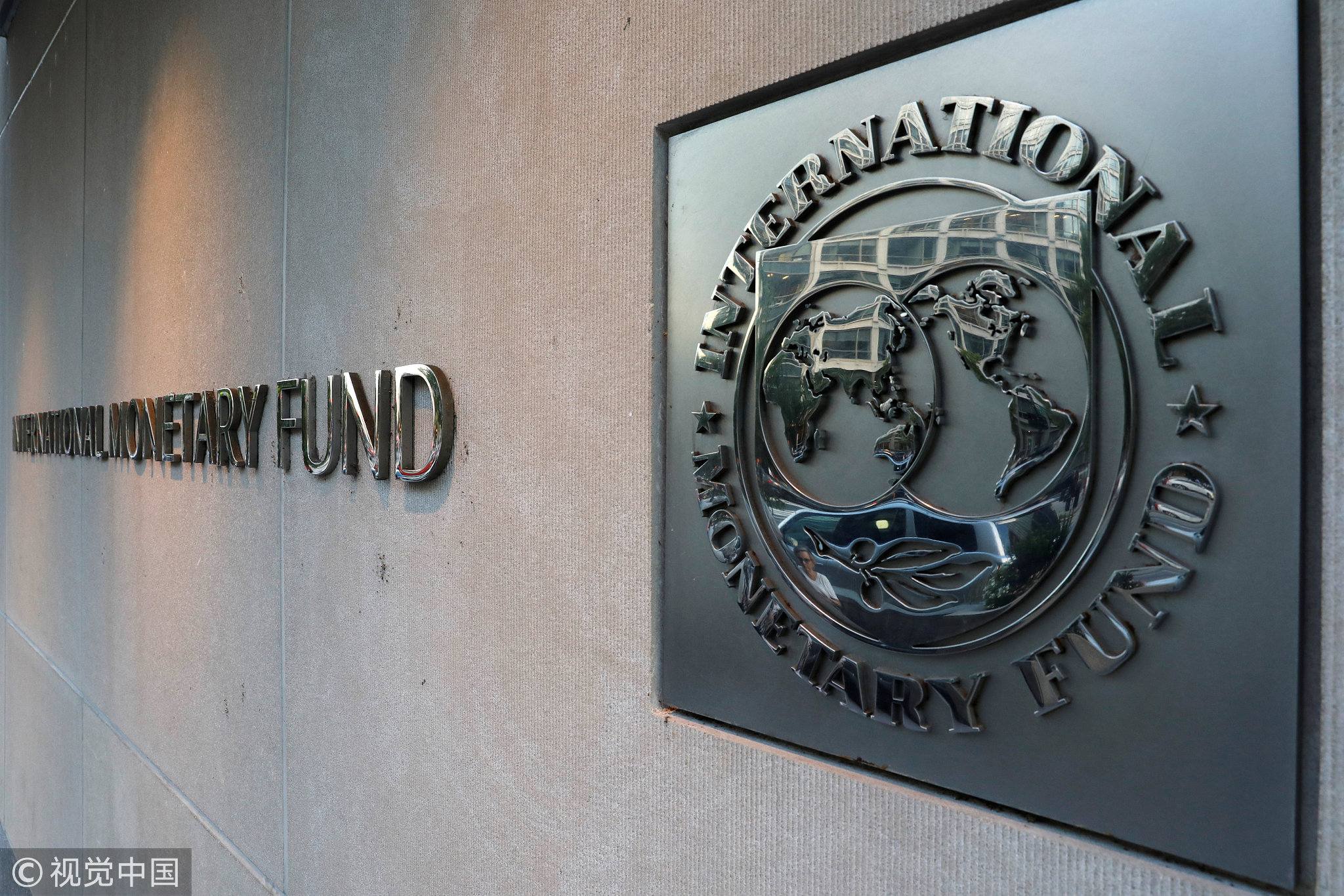
International Monetary Fund (IMF) logo is seen outside the headquarters building in Washington, US./ VCG Photo
International Monetary Fund (IMF) logo is seen outside the headquarters building in Washington, US./ VCG Photo
The State Administration of Foreign Exchange also joined the battle to protect the renminbi by restraining the investment demand for foreign currencies. The outcome has so been far mixed: The foreign reserve remains above the psychologically important three trillion US dollar level after losing 470 billion US dollars since August 2005 but the exchange rate has only gained marginally against US dollar.
Given the cyclical weakness, the central bank and other authorities obviously have limited means to smooth out the short and mid-term fluctuations.
(If you want to contribute and have special expertise, please contact us at opinions@cgtn.com.)