
World
21:09, 02-Oct-2018
Germany agrees on immigration law to tackle labor shortages
Updated
20:53, 05-Oct-2018
 ["china"]
Share







Copied

Germany's coalition parties agreed on a new immigration law on Tuesday to attract more skilled workers from countries outside the European Union (EU), in a politically risky push to fill a record number of job vacancies and stabilize the public pension system.
Record-high employment and falling joblessness have led to a tightening labor market in Europe's largest economy, with employers struggling to staff more than a million positions and work-related bottlenecks limiting overall economic growth.
As Germany's workforce is expected to shrink over the next decades due to an ageing population and low birth rates, more migrants are seen as crucial to help firms find workers whose pension contributions support the growing number of retirees.
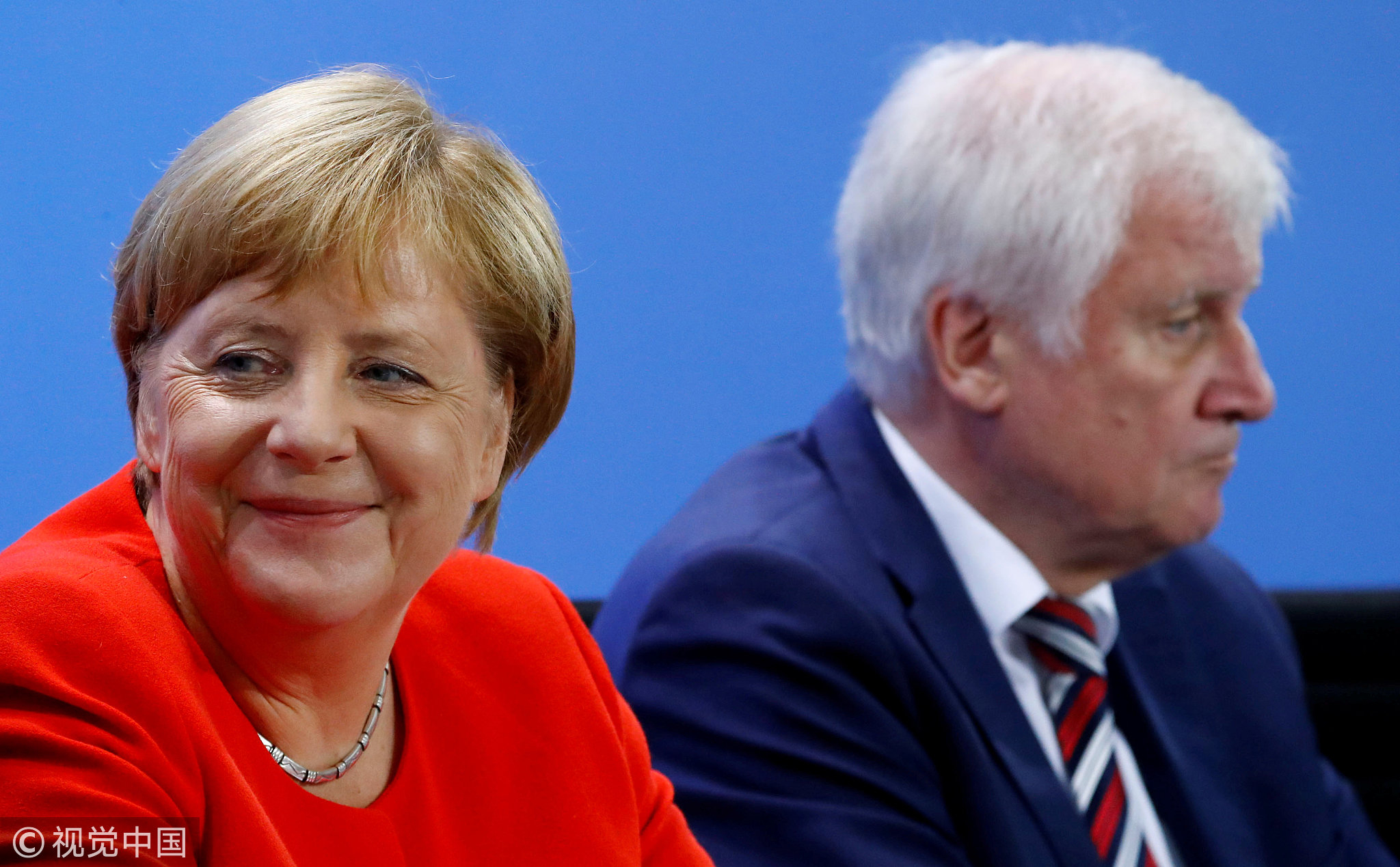
German Chancellor Angela Merkel and Interior Minister Horst Seehofer address a news conference following the so-called housing summit in Berlin, Germany, September 21, 2018. /VCG Photo
German Chancellor Angela Merkel and Interior Minister Horst Seehofer address a news conference following the so-called housing summit in Berlin, Germany, September 21, 2018. /VCG Photo
But the new immigration law, agreed over night by center-right Chancellor Angela Merkel, hardline Interior Minister Horst Seehofer and Social Democrat Labour Minister Hubertus Heil, risks angering those voters who already feel neglected following the arrival of more than a million refugees since 2015.
The unprecedented influx of asylum seekers, mainly from Muslim countries in the Middle East, has already caused a popular backlash and propelled the far-right Alternative for Germany (AfD) party into the national parliament.
Seehofer said the compromise deal would remove labor market hurdles for non-EU citizens with job qualifications and German language skills while avoiding new incentives for refugees.
"We maintain the principle of separation of asylum and labor migration," Seehofer told reporters during a joint new conference with Heil and Economy Minister Peter Altmaier.
"With today's agreement, we have made it possible for the economic upswing to continue without an abrupt end," Altmaier said, adding that it would strengthen Germany's competitiveness at a time when other countries were espousing stricter immigration rules.
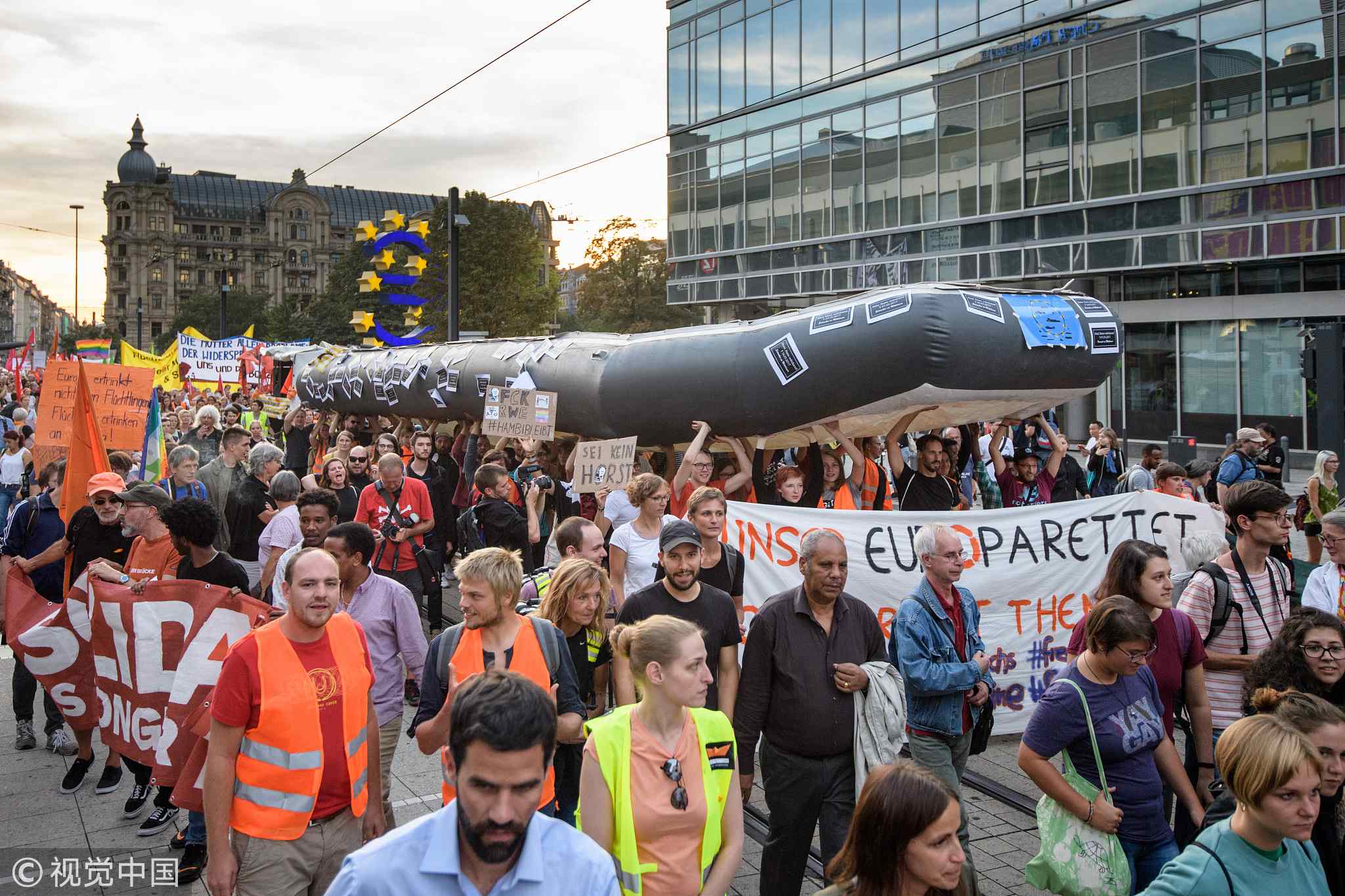
Protesters demanding solidarity with migrants and refugees and demonstrating against the policies of German Interior Minister Horst Seehofer march in Frankfurt, Germany, September 17, 2018. /VCG Photo
Protesters demanding solidarity with migrants and refugees and demonstrating against the policies of German Interior Minister Horst Seehofer march in Frankfurt, Germany, September 17, 2018. /VCG Photo
"With this, we can stimulate additional economic growth by several tenths of a percent. This is quite a lot," he added.
The coalition parties agreed the outline of the law, approved by cabinet on Tuesday, that companies will be allowed to recruit foreign workers in all professions, regardless of an official list of sectors suffering labor shortages.
The paper also proposes that the government will no longer insist that companies give preference to German citizens in filling vacancies before looking for non-EU foreigners.
In addition, foreign graduates and workers with vocational training will get an opportunity to come to Germany for six months to look for a position if they meet certain job qualifications and German language requirements.
They also have to prove that they have enough financial resources so they will not depend on welfare benefits during their stay in Germany, the parties agreed.
The parties also found a compromise wording on the disputed question of how to avoid the deportation of well-integrated asylum seekers who have found work and learned German.
(Cover photo: Tailor Abid Ali, left, migrant from Pakistan, and founder Nora Azzaoui, work at the non-profit organization Mimycri in Berlin, Germany, July 23, 2018. /VCG Photo)
Source(s): Reuters