
Opinions
09:54, 26-Jul-2018
Opinion: US hands out checks to farmers while complaining about subsidies
Updated
09:05, 29-Jul-2018
 ["china"]
Share







Copied
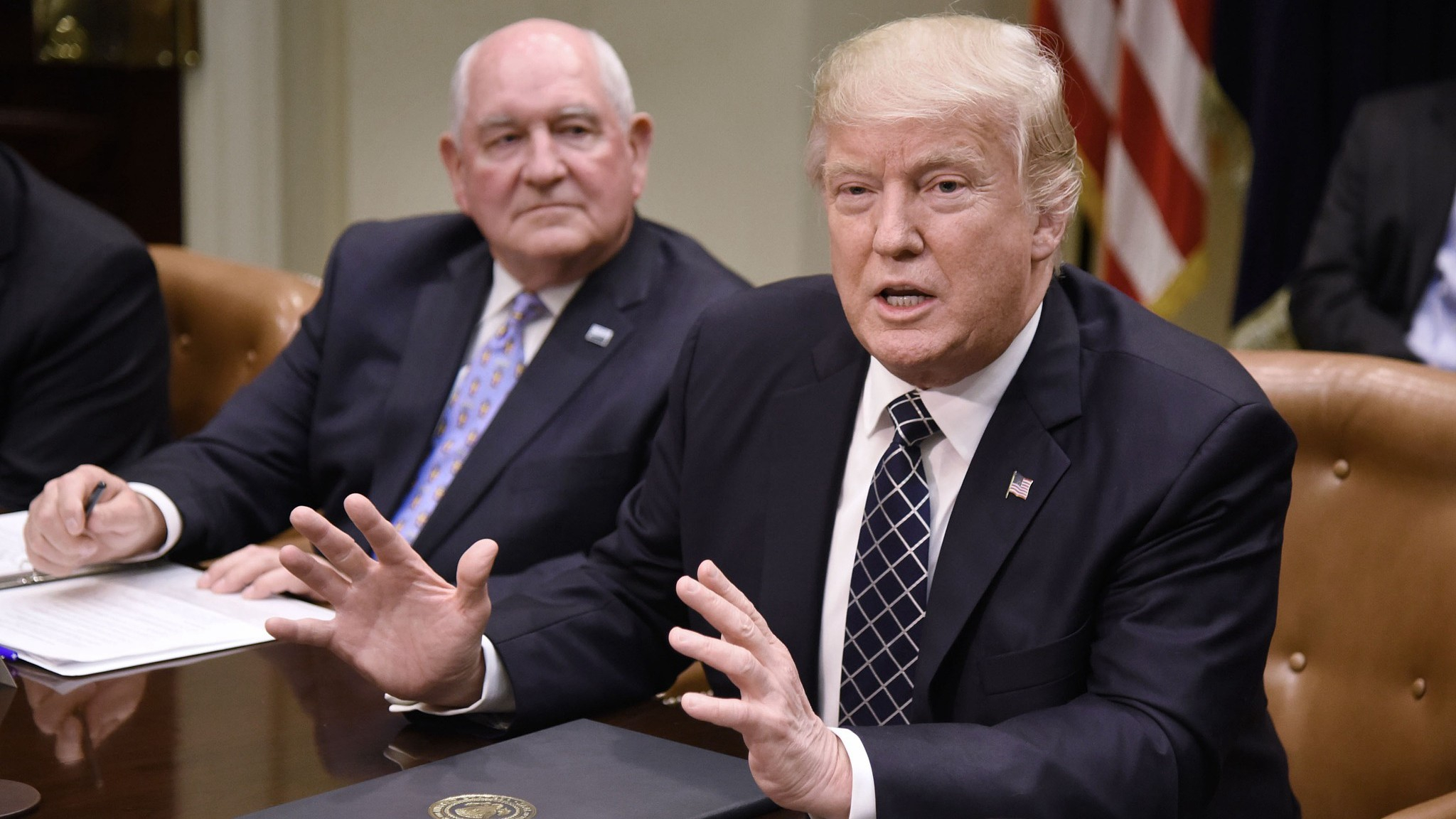
Editor's note: The following is an edited translation, from China Plus, of a commentary on the US-initiated trade dispute from the Chinese-language "Commentaries on International Affairs."
US President Donald Trump said on Tuesday that his administration will provide 12 billion US dollars of agricultural subsidies to American farmers to help tide them over during the country's escalating trade frictions with China and the European Union, among others.
One of the reasons given by the Trump administration for launching its trade wars was that other countries were subsidizing their exports to the United States – exactly what the United States is now doing to its trading partners.
By using taxpayer money to subsidize the agricultural sector, the White House is trying to solicit votes for the mid-term elections in November. But is writing checks to America's farmers helping the White House solve the country's problems?
Blake Hurst, President of the Missouri Farm Bureau, said that unless the White House changes its policies, the pressure on the domestic agricultural industry will continue, and short-term temporary remedies won't provide relief. This sentiment was echoed by Brian Kuehl, the executive director of Farmers for Free Trade: "American farmers want to trade, not tariffs".
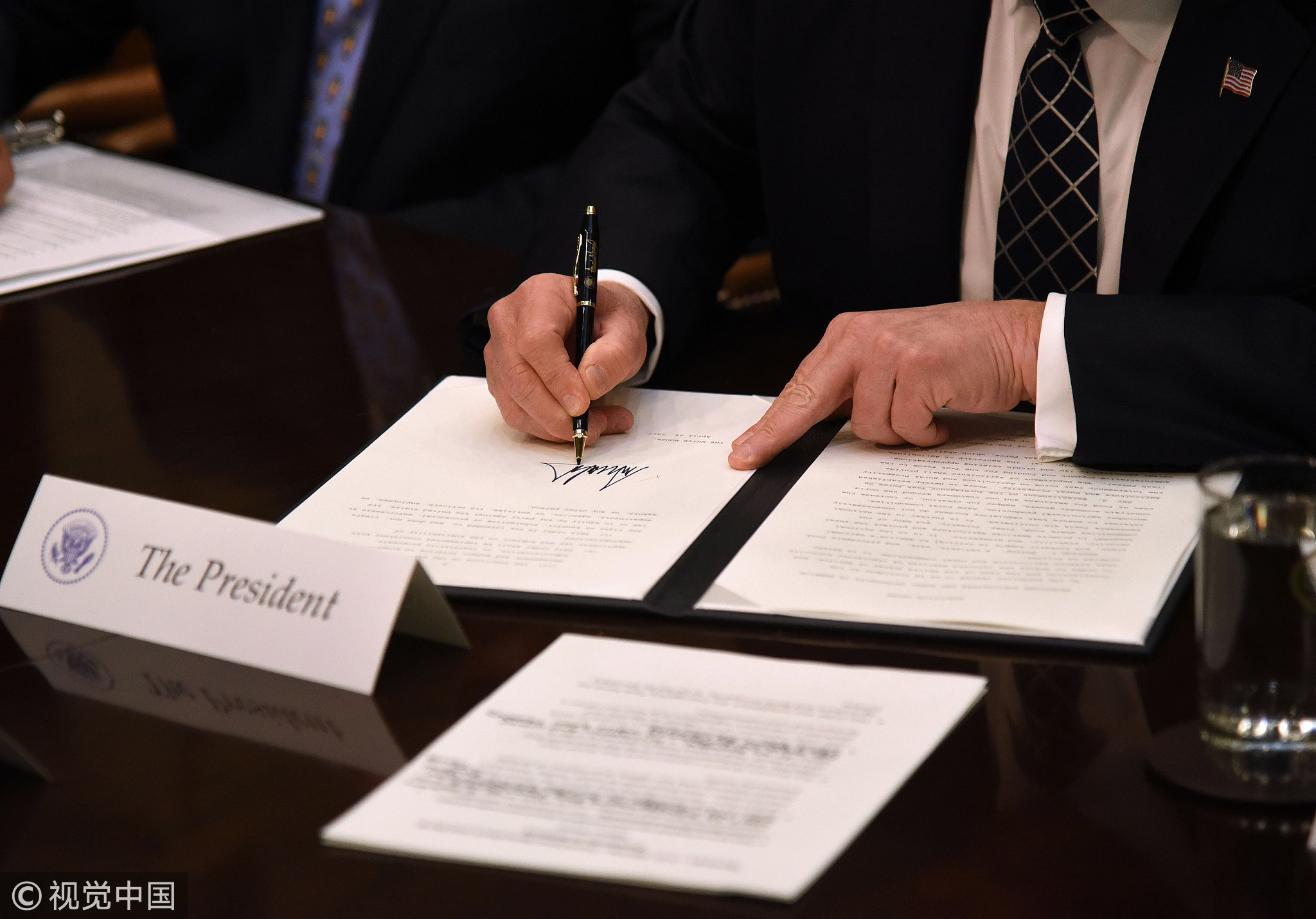
April 25, 2017: US President Donald Trump signs the Executive Order Promoting Agriculture and Rural Prosperity in America during a round-table with farmers in the Roosevelt Room of the White House in Washington, DC./ VCG Photo
April 25, 2017: US President Donald Trump signs the Executive Order Promoting Agriculture and Rural Prosperity in America during a round-table with farmers in the Roosevelt Room of the White House in Washington, DC./ VCG Photo
"They want to compete and win, not be 'protected' by Washington D.C. from the foreign markets they've dominated for decades," he said, "we need this Administration to end the trade war and to open new markets so farmers can get back to doing what they do best: selling made-in-America [agricultural] products across the globe."
And offering subsidies to farmers generates its own problems. As Alaska Senator Lisa Murkowski asked, "What about the manufacturing sector? What about the energy sector? The oil and gas industries? Where do you draw the line?"
As an editorial carried by the New York Times noted, "Why shouldn't manufacturing companies and other businesses ask to be made whole for having to pay higher prices for steel and aluminum after Mr. Trump raised tariffs on those metals? What about the workers at Harley-Davidson who will lose their jobs when the company moves some production overseas?"
If the Trump administration wants to subsidize the industries affected by its trade war, where is it going to find the money to pay for them? And are the subsidies legal? Other countries are likely to challenge the United States at the World Trade Organization about the legality of propping up its agricultural industry to the tune of 12 billion US dollars.
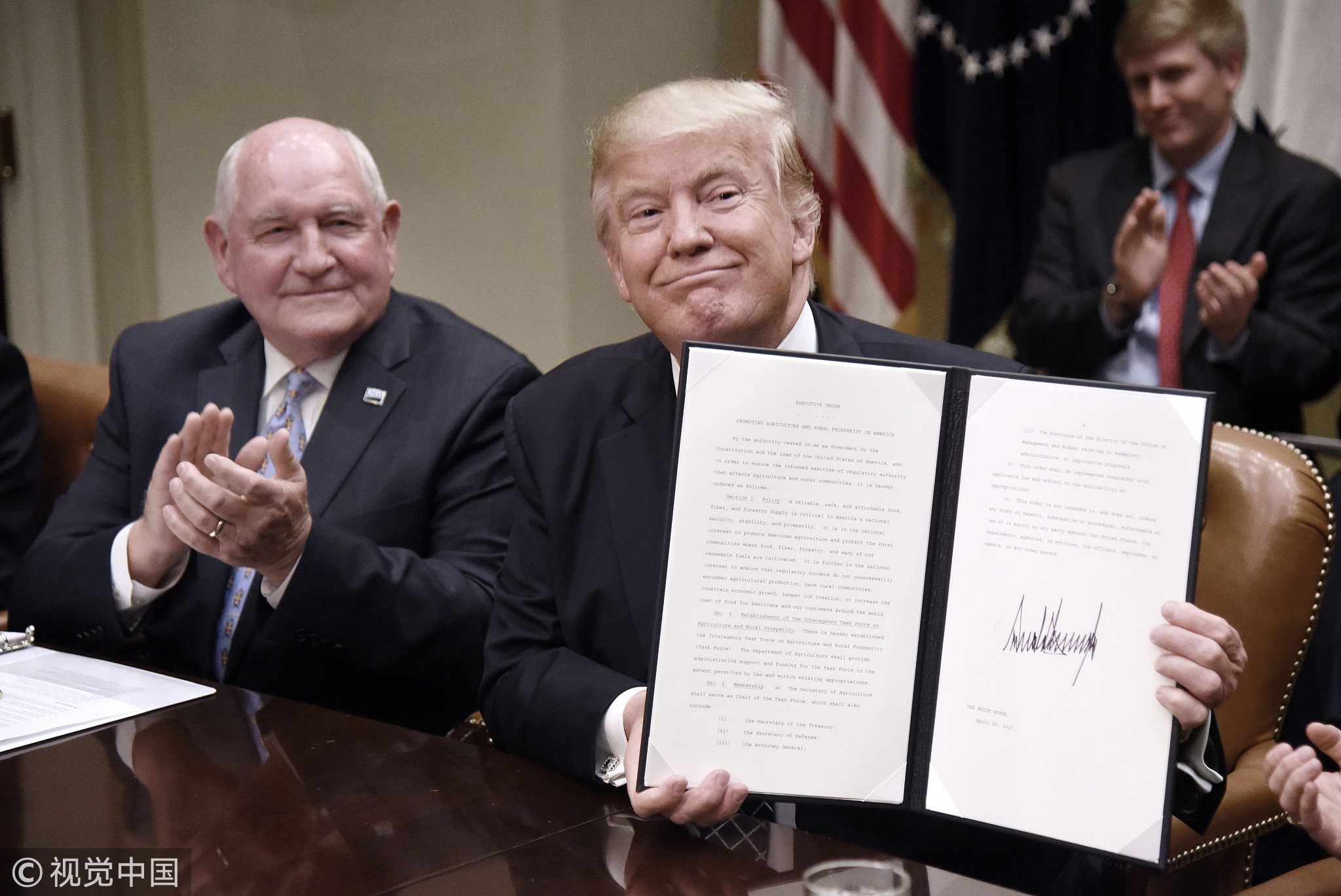
April 25, 2017: US President Donald Trump signs the Executive Order Promoting Agriculture and Rural Prosperity in America as Agriculture Secretary Sonny Perdue looks on during a round-table with farmers in the Roosevelt Room of the White House in Washington, DC./ VCG Photo
April 25, 2017: US President Donald Trump signs the Executive Order Promoting Agriculture and Rural Prosperity in America as Agriculture Secretary Sonny Perdue looks on during a round-table with farmers in the Roosevelt Room of the White House in Washington, DC./ VCG Photo
Republican Senator Ben Sasse said, "This trade war is cutting the legs out from under farmers and the White House's 'plan' is to spend 12 billion dollars on gold crutches."
The Trump administration's tariffs and bailouts aren't going to "make America great again, they're just going to make it 1929 again," said the senator, referring to the year that would see the start of the Great Depression.
And Senator Rand Paul tweeted, "Tariffs are taxes that punish American consumers and producers. If tariffs punish farmers, the answer is not welfare for farmers — the answer is to remove the tariffs."
By granting assistance to farmers, the United States is signaling its intention to continue the trade war. The move reflects Washington's practice of double standards when it comes to international trade, which in turn highlights the hypocrisy and hegemony of the United States.
Granting financial subsidies to farmers also reveals that the Don Quixote approach of the Trump administration not only creates a lot of uncertainty for other countries and jeopardizes the global multilateral trading system, but also brings serious confusion to his own country.