
Politics
22:39, 08-May-2018
Chinese premier calls for China-Japan ties to 'set sail again'
 ["china"]
Share







Copied
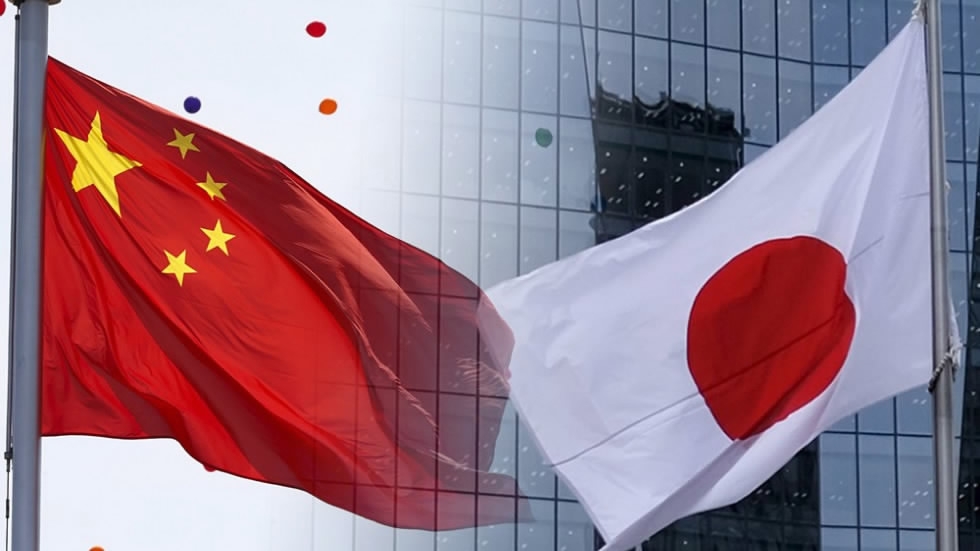
Chinese Premier Li Keqiang has called for fresh joint efforts by China and Japan towards the cause of peace and friendship between the two countries to "set sail again".
In a signed article in Japanese newspaper Asahi Shimbun on Tuesday, titled "Let the Cause of Peace and Friendship between China and Japan Set Sail Again", Li said, "I am coming here to promote the long-term, healthy and steady development of China-Japan relations."
The premier arrived in Tokyo on Tuesday evening for an official visit which will last until May 11 at the invitation of Japanese Prime Minister Shinzo Abe.
China and Japan are important neighbors, Li said. "Although there are dozens of direct flights between Beijing and Tokyo each day and it takes just a little over three hours flying between the two cities, we have walked a long way in recent years to improve and develop China-Japan ties."
In recent years, relations between the two countries have experienced twists and turns, and exchange and cooperation in various areas have been affected, Li said.

Police officers man a security checkpoint set up near Tokyo's Haneda airport on May 8, 2018, the day before Japan, China and S. Korea hold a summit in the capital. /VCG Photo
Police officers man a security checkpoint set up near Tokyo's Haneda airport on May 8, 2018, the day before Japan, China and S. Korea hold a summit in the capital. /VCG Photo
China and Japan are Asia's top two economies and the world's second and third largest economies respectively. Li said he has often thought that "if China-Japan relations can always stay on the right track of healthy and stable development, it would not only bring more benefits to people of the two countries, but also create a stronger boost to the peace and stability and development and prosperity of northeast Asia and the whole world."
Currently, China-Japan ties are showing a momentum of improvement and standing at the crossroads of returning to normal track, he said.
Li stressed the importance of adhering to the principles and spirit of the four key political documents signed between the two countries. These are the 1972 Sino-Japanese Joint Statement, the 1978 China-Japan Treaty of Peace and Friendship, the 1998 China-Japan Joint Declaration, and a joint statement on advancing strategic and mutually beneficial relations inked in 2008.
"It has been proved by reality that as long as we stick to the principles and spirit of the four political documents, China-Japan relations will go smoothly. Otherwise, the ties will suffer setbacks," Li said in the article.
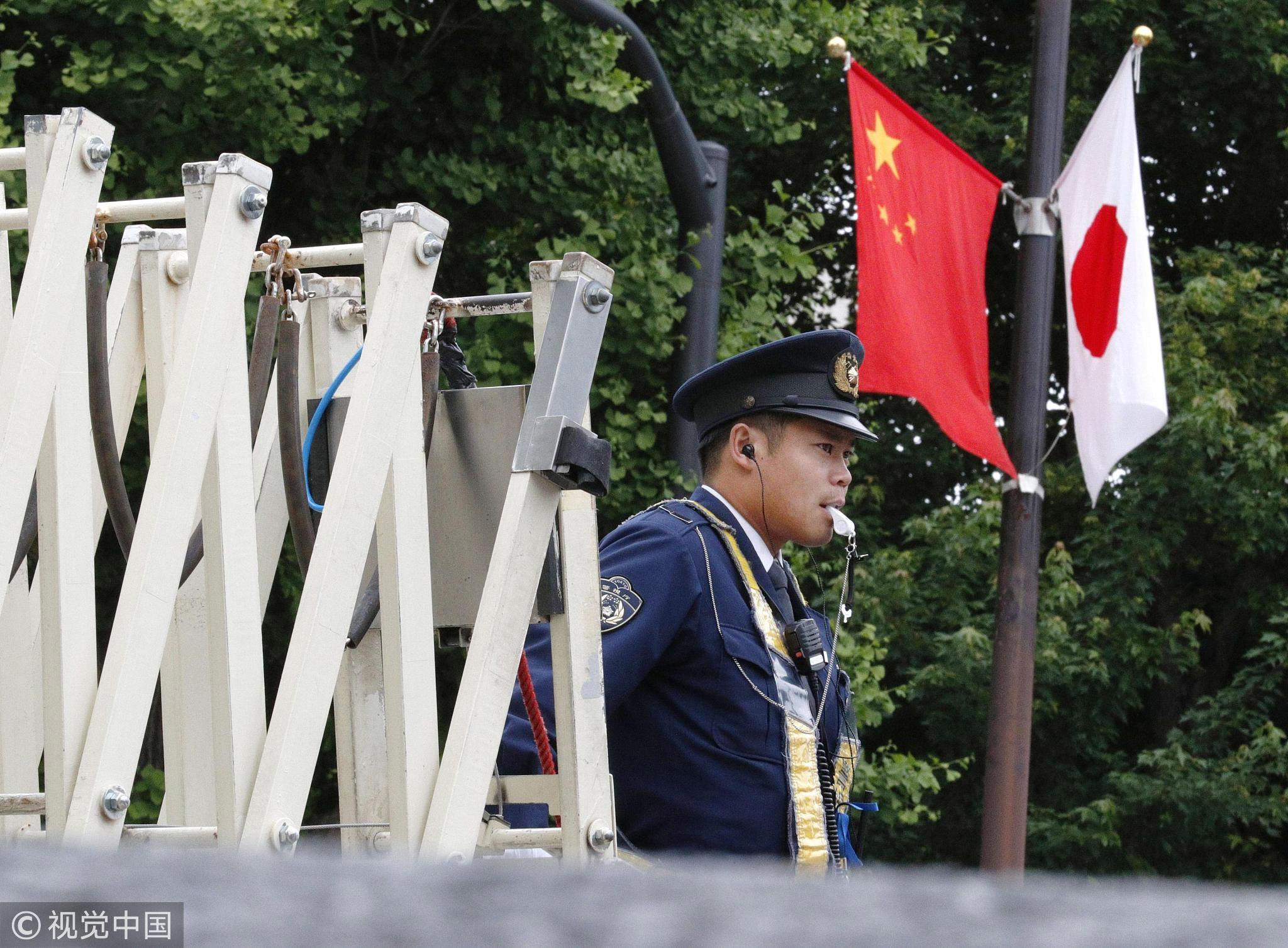
A police officer stands on duty close to the Diet building in Tokyo on May 8, 2018, ahead of the Japan-China-South Korea summit to be held the following day. /VCG Photo
A police officer stands on duty close to the Diet building in Tokyo on May 8, 2018, ahead of the Japan-China-South Korea summit to be held the following day. /VCG Photo
The same year that China and Japan signed the Treaty of Peace and Friendship, China also launched the historic process of its reform and opening up. "Looking to the future, China, as the largest developing country, still sees development as its top priority," the premier said.
On China-Japan-South Korea relations, Li urged the three countries to promote regional stability and development, and safeguard free trade and a rule-based multilateral trade system by accelerating the establishment of a trilateral free trade zone and negotiations on the Regional Comprehensive Economic Partnership.
On cooperation on the Belt and Road Initiative, the premier said he had learned from some Japanese companies that they are willing to share the enormous opportunities created by the initiative.
Li said the two economies are highly complementary. There are broad prospects for the two countries to expand practical cooperation in fields such as energy conservation and environmental protection, scientific and technological innovation, high-end manufacturing, finance, sharing economy, and healthcare and pension. There is also great potential for the companies of the two countries to conduct third-party market cooperation.
During the visit, the premier is expected to witness the signing of cooperation deals in health and medical science, the service sector and social security.
The two countries are also expected to sign a currency swap deal. China is expected to grant Japan a renminbi qualified foreign institutional investor quota.
China and Japan are now faced with new opportunities to upgrade their mutually beneficial and win-win cooperation, Li said.
He said the two countries should strengthen cooperation in culture and tourism and have people from both sides conduct exchanges more effectively on more platforms.
During the visit, China will present Japan with a pair of crested ibis to show Chinese people's friendship with the Japanese.
Source(s): Xinhua News Agency