
Opinions
09:43, 27-Aug-2018
Opinion: Same denuclearization goal, different paths for US, DPRK
Updated
09:18, 30-Aug-2018
 ["china"]
Share







Copied

US President Donald Trump has abruptly canceled Secretary of State Mike Pompeo's planned trip to the DPRK, amid reports that Pyongyang has yet to pull the plug on its nuclear program. Are the two instances related?
It was the first time that Trump acknowledged that denuclearization efforts on the Korean Peninsula had stalled. His decision to nix Pompeo's visit to the DPRK came a few days after the International Atomic Energy Agency said Pyongyang continues to develop its nuclear program.
02:36
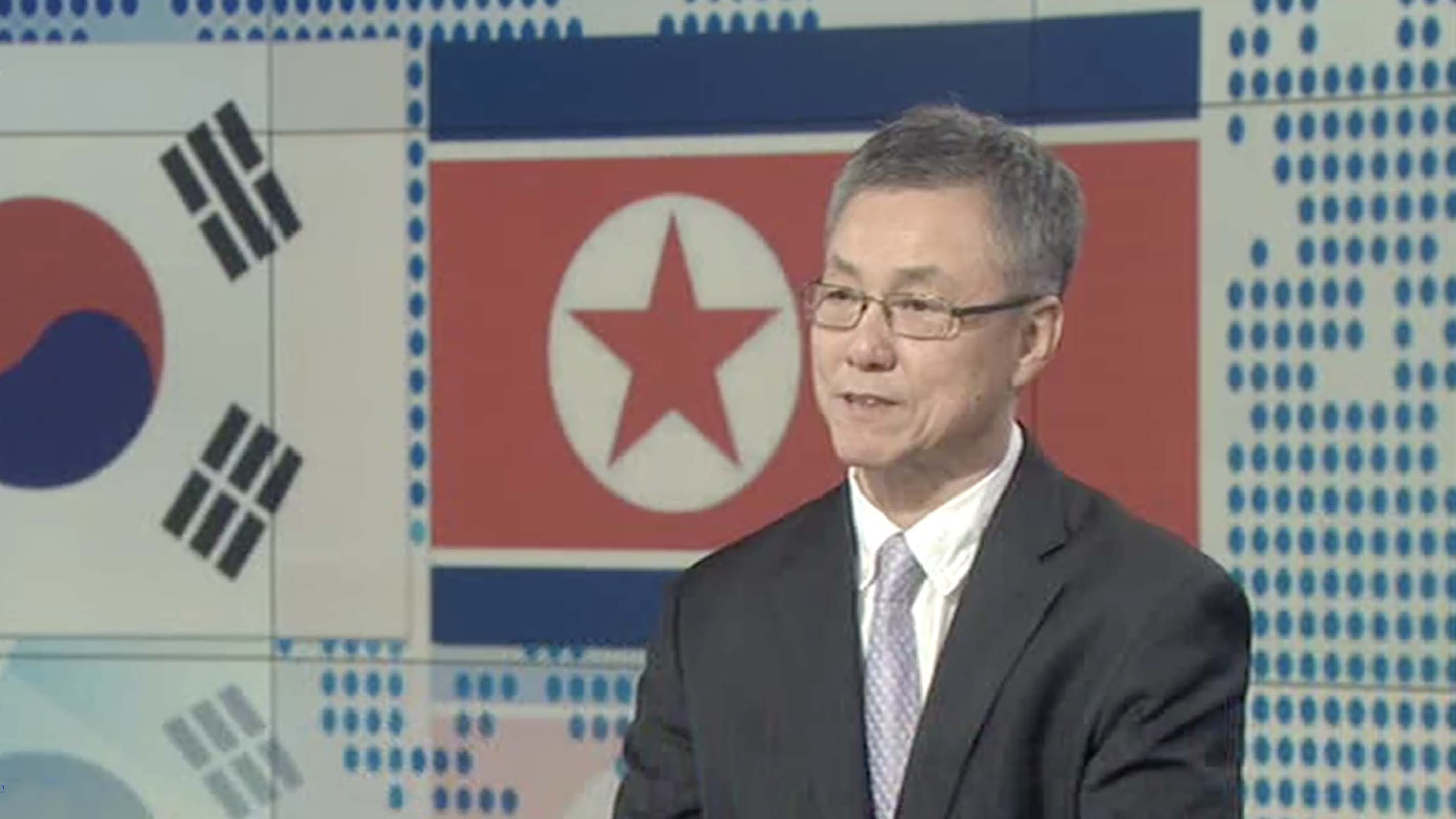
Yang Xiyu, a senior fellow at the China Institute of International Studies in Beijing does not see any connection between the two incidents. Yang said the reason behind Washington’s recent move is its belief that the trip would not yield any tangible benefits.
Pompeo's visit was aimed at pushing Pyongyang to give up its nuclear weapons or at least demonstrate its denuclearization commitments. However, the US later realized a single trip would not be effective.
Washington thus decided to cancel the trip one day after it was announced to ramp up pressure on Pyongyang. The move is seen as a symbolic gesture to push the DPRK to speed up its part towards the denuclearization process.

Representatives of Korean business groups in Kaesong Industrial Park, Seoul, watch the meeting between the leaders of the DPRK and the United States, June 12, 2018. /VCG Photo
Representatives of Korean business groups in Kaesong Industrial Park, Seoul, watch the meeting between the leaders of the DPRK and the United States, June 12, 2018. /VCG Photo
Despite both sides committing to the denuclearization of the peninsula, their cooperation has not been smooth, Yang noted. He explained that Pyongyang and Washington have adopted different approaches and at present there are no signs that either one of them is making any compromise.
The DPRK thinks both sides should be compromising at the same time, which Yang called a "synchronous" approach. Meanwhile, the US is taking a stance of "one time for all," which means that Washington considers denuclearization as a prerequisite for further talks.
The US wants the DPRK to denuclearize first before the two sides could talk further on other issues, and there are no guarantees that Washington would give what Pyongyang wants after it gets rid of its nuclear arsenal. Yang said it is therefore unfair for Pyongyang as it may not get the benefits it expects.
The two sides should reach a consensus first on their approaches towards the denuclearization process. Otherwise, any progress on the issues would be hard to achieve.