
China
13:26, 05-Aug-2018
Chinese authorities push for efforts in preventing myopia among schoolchildren
Updated
12:42, 08-Aug-2018
 ["china"]
Share







Copied
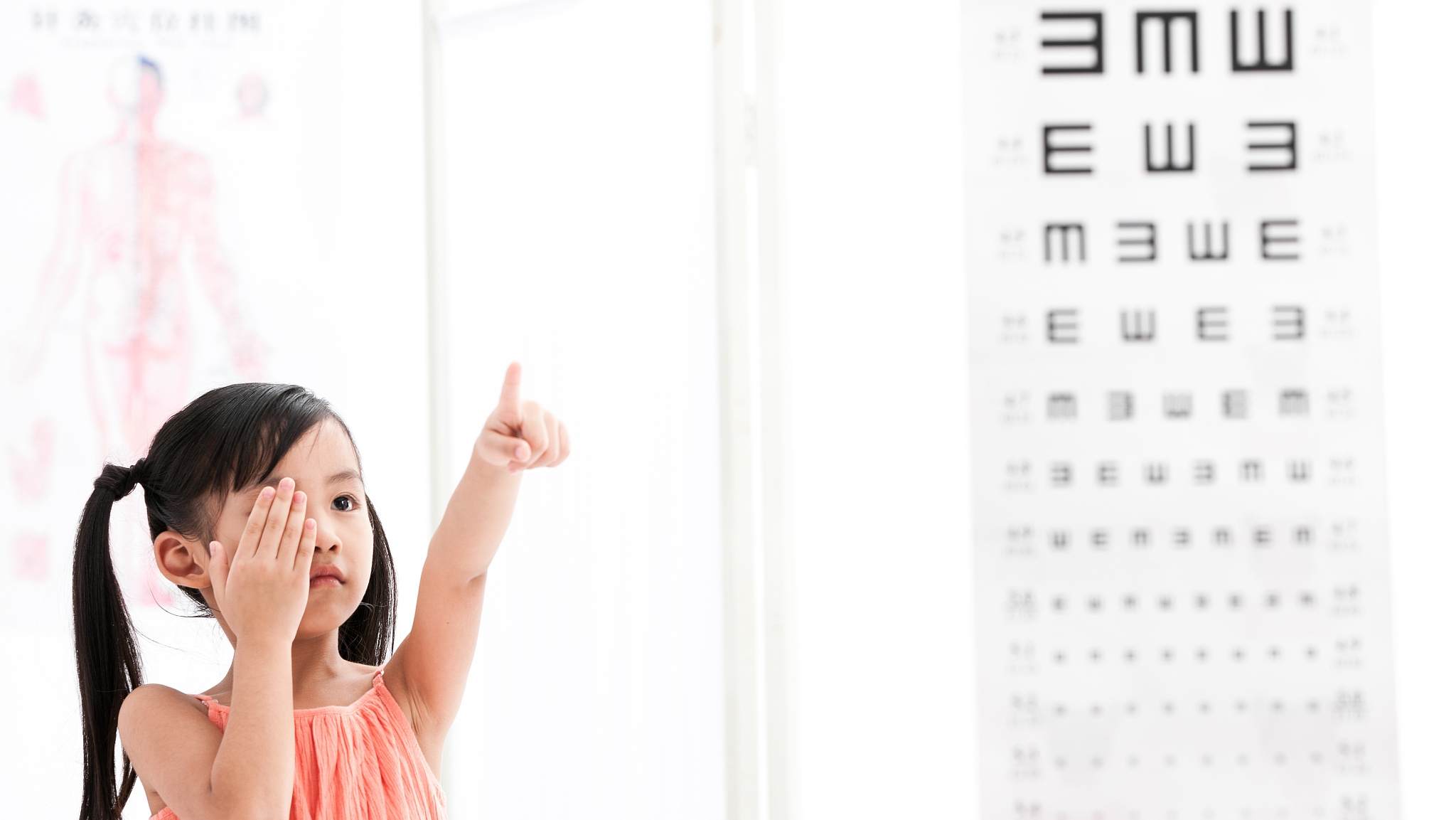
China’s education ministry and national health commission have jointly drafted an implementation plan in order to help prevent myopia among children and teenagers. They have called upon schools and families to reduce students’ homework load and increase time for outdoor activities.
The plan was issued after the latest government report revealed that more than 36 percent of fourth graders and 65 percent of eighth graders in China wore glasses to school.
The draft plan, now soliciting public opinions, will hold government departments responsible and incorporate children’s myopia rate in their performance evaluation system. National and provincial education, health and sports departments will be required to take measures in prevention and correction of short-sightedness among schoolchildren.
According to the plan, with joint efforts from students, parents, schools, health administrations and government departments, the myopia rate should decrease to below three percent for six-year-old children by 2030.
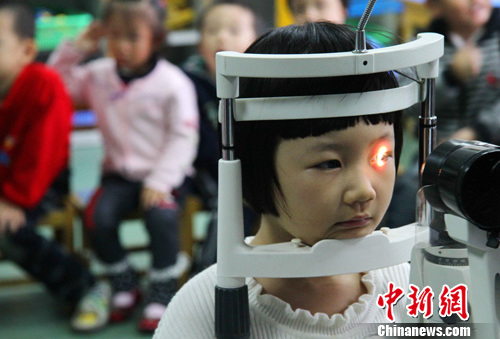
Nearly 40 percent primary students have myopia in China, WHO report says. /Chinanews Photo
Nearly 40 percent primary students have myopia in China, WHO report says. /Chinanews Photo
The plan also suggests that less than 38 percent of primary students and no more than 70 percent of high school students should be wearing glasses by 2030.
According to a report published by World Health Organization (WHO) last year, China has the largest proportion of myopic teenagers in the world. Over 70 percent of high school and university students are diagnosed with near-sightedness.
“One contributing reason is the heavy workload and academic performance pressure placed on students,” Doctor Yang Zhikuan, vice supervisor of Chinese Ophthalmological Society’s optometry division told China National Radio.
Insufficient outdoor exposure and use of digital products are also two prominent reasons leading to myopia among children, Doctor Yang said.
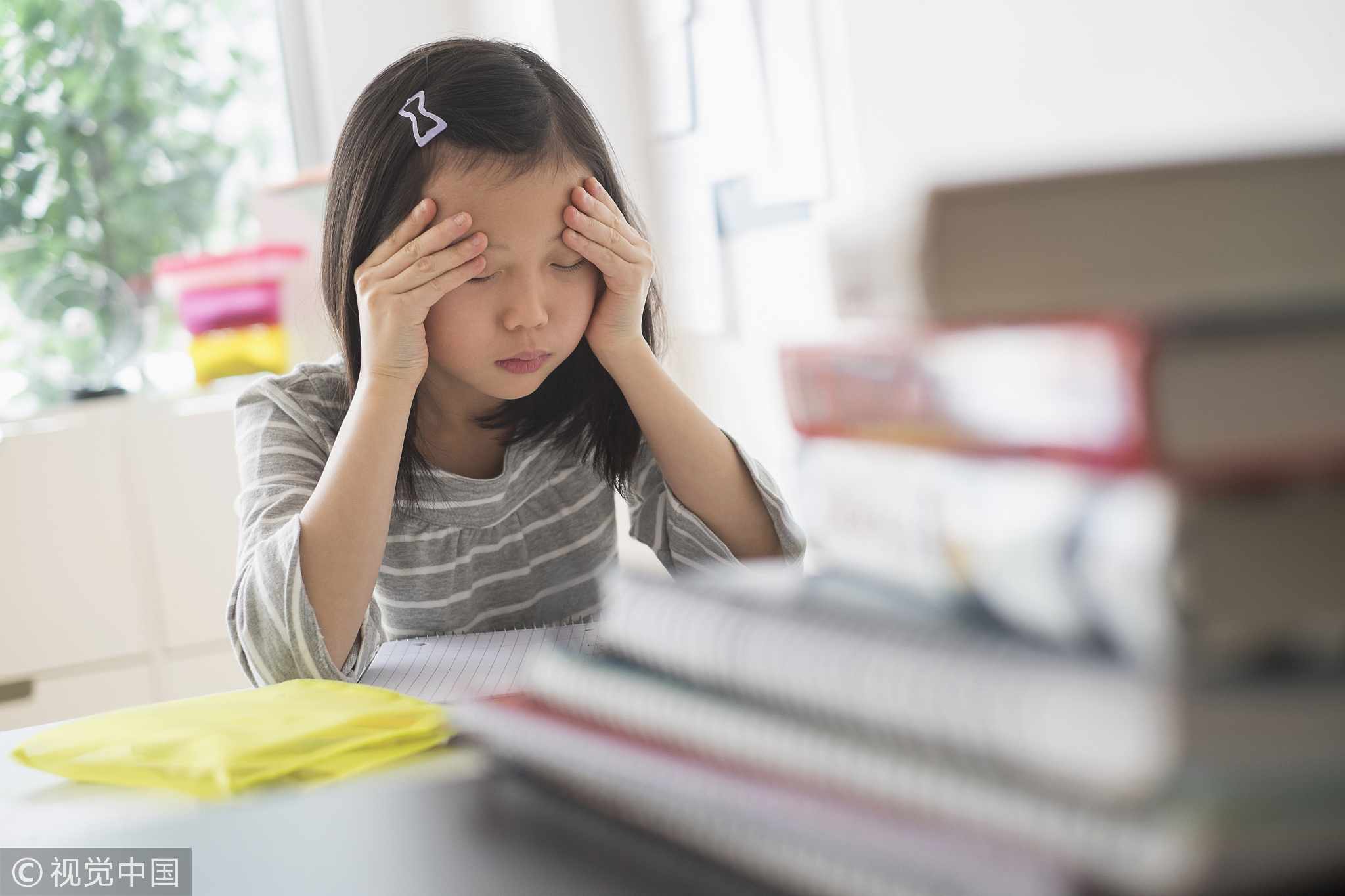
The draft plan suggests that first and second graders should be freed from written homework. /VCG Photo
The draft plan suggests that first and second graders should be freed from written homework. /VCG Photo
Back in 2013, the country’s education ministry issued a nationwide requirement banning written homework for first and second graders. However, given the highly competitive entry examinations for secondary schools, many worried parents kept sending their children to cram schools from an early age.
The draft plan thus suggests that both parents and schools should help students reduce homework time, and that provincial governments should no longer gauge performance of education departments based on students’ test scores.
In addition, parents are encouraged to take students outside for more outdoor activities and help them reduce time spent on digital products. According to WHO’s report on impact of myopia, when children spend more than two hours per day outdoors, the risk of myopia can be heavily reduced.