Editor's note: Tom Fowdy is a UK-based political analyst. The article reflects the author's opinion, and not necessarily the views of CGTN.
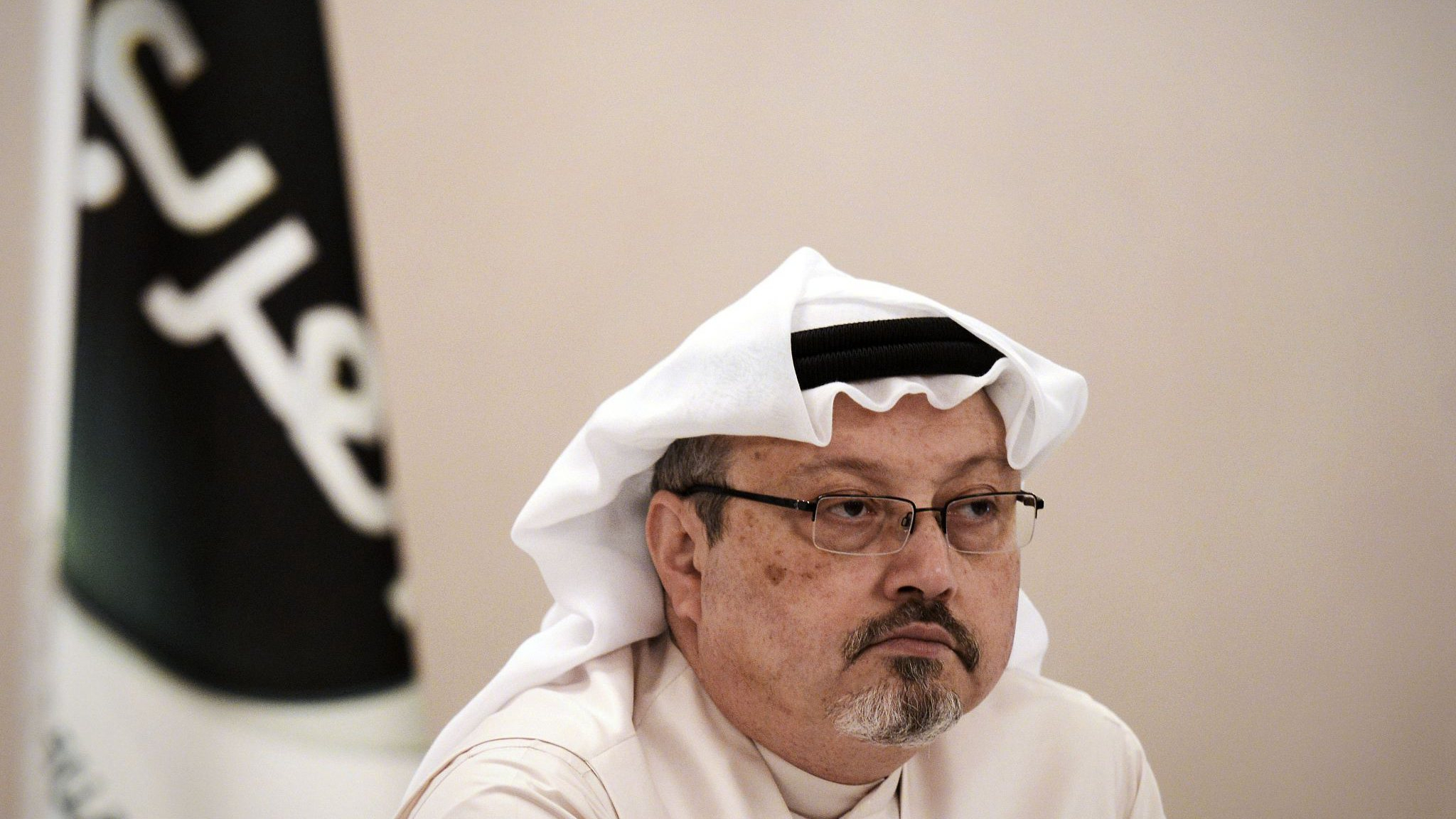
The unexpected disappearance of Saudi journalist Jamal Khashoggi in Turkey and rumors of his alleged demise have sent ripples through the Western world. The Wahhabi state, a longstanding ally of Europe and the United States, has naturally received heavy criticism over the issue.
President Trump has threatened “severe punishment” against the Islamist monarchy, while a number of high-profile businesses have cancelled or vowed to review their commercial interests in the country.
The emergence of such stinging criticism against Riyadh comes as a surprise as Western governments have always chosen to be mute owing to the enormous fiscal and strategic benefits that close ties with the kingdom have brought.
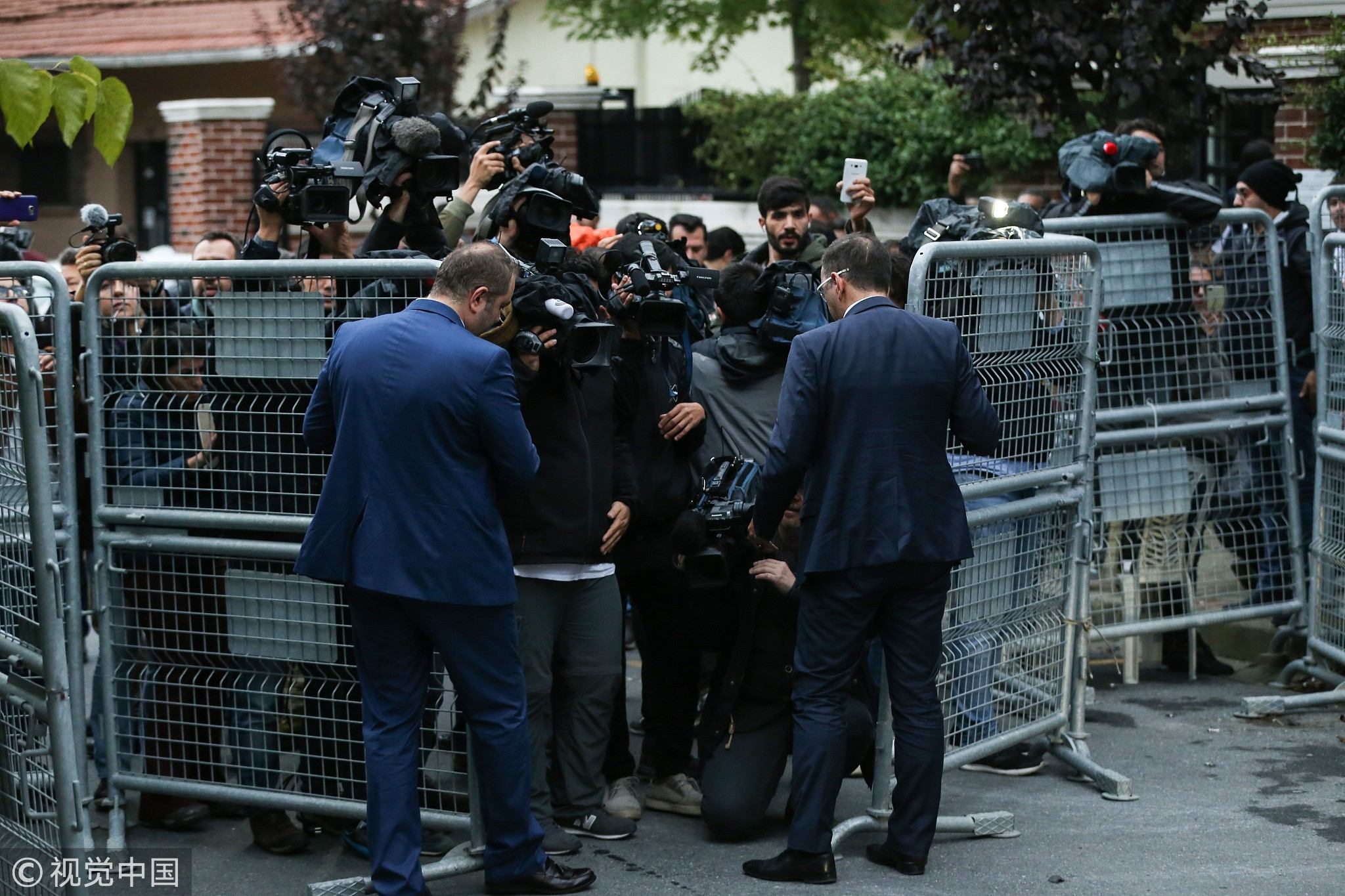
Journalists gather as Saudi authorities enter the Saudi consulate as the waiting continues on the disappearance of prominent Saudi journalist Jamal Khashoggi in the Consulate General of Saudi Arabia in Istanbul, Turkey, October 15, 2018. /VCG Photo.
Journalists gather as Saudi authorities enter the Saudi consulate as the waiting continues on the disappearance of prominent Saudi journalist Jamal Khashoggi in the Consulate General of Saudi Arabia in Istanbul, Turkey, October 15, 2018. /VCG Photo.
However, should we mark Khashoggi's disappearance as a fundamental turning point in how the West deals with the country? Not likely. For it is a relationship anchored upon the mutual spoils of war and petroleum, void of any kind of moral vision. Talk of change would be misunderstanding the reality of the situation.
A West-Saudi fallout overnight is improbable. The cozy relationship between the Occident and the Saudi monarchy constitutes the cornerstone of an entire economic, political and strategic order in the Middle East built in the early 20th century and consolidated in the decades thereafter.
The emerging kingdom was given support by Great Britain in 1916 in rebellion against the Ottomans. Then, in 1941, it made a pact with the United States via the medium of Aramco, which offered it political protection in exchange for oil access. America has since used the state as the backbone of its own regional order and economic interests.
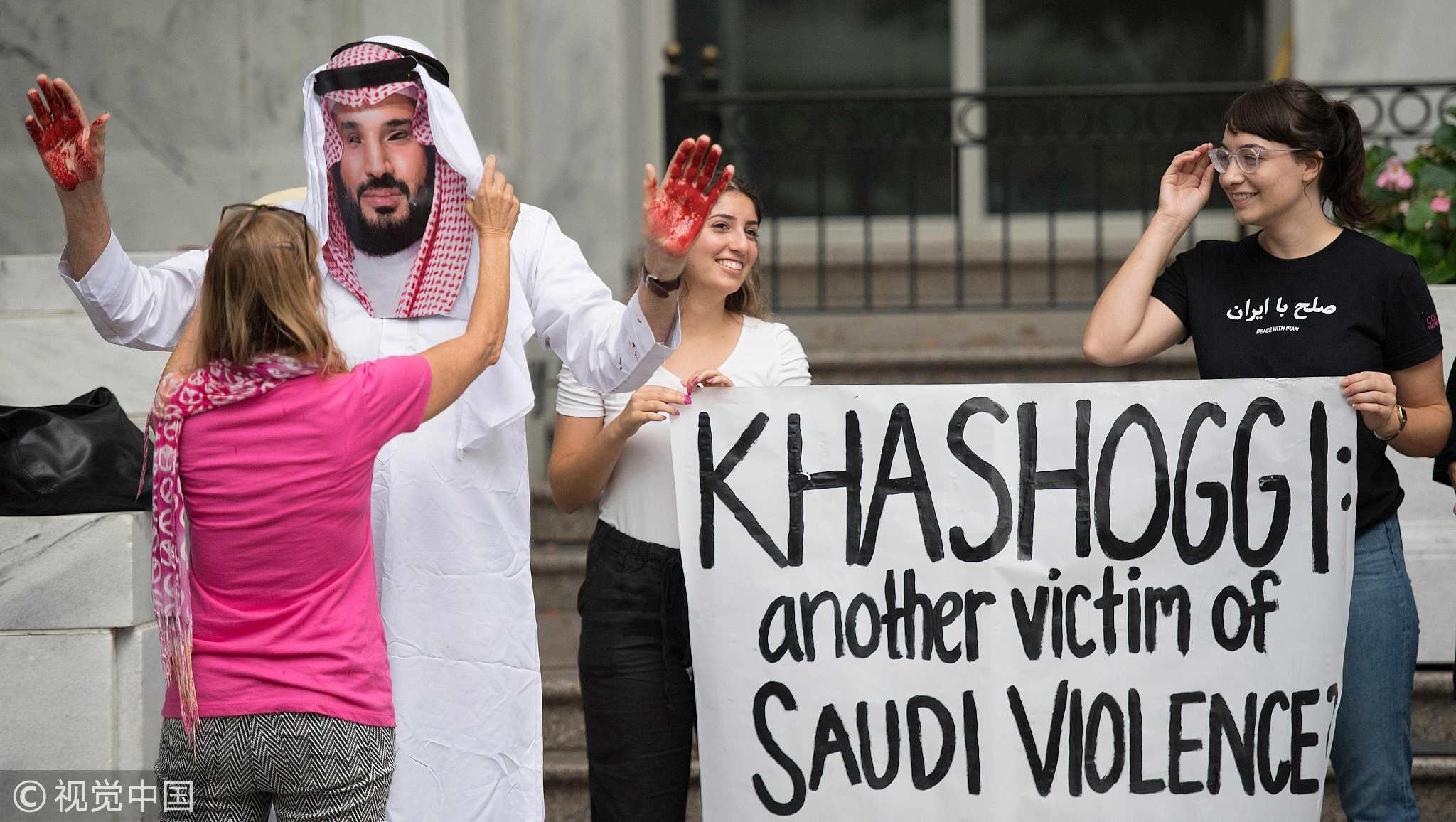
A demonstrator dressed as Saudi Arabian Crown Prince Mohammed bin Salman with blood on his hands protests with others outside the Saudi Embassy in Washington, DC, demanding justice for missing Saudi journalist Jamal Khashoggi, October 8, 2018. /VCG Photo.
A demonstrator dressed as Saudi Arabian Crown Prince Mohammed bin Salman with blood on his hands protests with others outside the Saudi Embassy in Washington, DC, demanding justice for missing Saudi journalist Jamal Khashoggi, October 8, 2018. /VCG Photo.
During the Cold War, the religiously conservative Saudis sought to resist and challenge the revolutionary, secular Arab states which were aligned with the Soviet Union. To do this, they utilized their newly found prosperity to position fundamentalist Islam as a weapon against Arab socialism.
As the ideology of Egypt's Nasser was discredited through military defeat, the power and wealth of the Saudi state undisputedly changed the ideological landscape of the Middle East. Islamist revival movements emerged from the '70s onwards in every country.
Given the rise of Saudi inspired Islamism, as strategy and money have ruled supreme in Western judgment, Khashoggi is not the first moral dilemma the relationship has faced. Instead, the West's foreign policies have gone hand in hand with the kingdom's activities to create a toxic brew of radical religious extremism and even terrorism.

US President Donald Trump speaks to the media before boarding Marine One on the South Lawn of the White House in Washington, DC, US, Oct. 13, 2018. /VCG Photo.
US President Donald Trump speaks to the media before boarding Marine One on the South Lawn of the White House in Washington, DC, US, Oct. 13, 2018. /VCG Photo.
Alongside an unending number of US wars and interventions within the region, the West consistently supported and gave diplomatic tacit backing to Saudi operations in Libya, Yemen and Syria, all of which together have contributed to the rise of destructive of extremist movements. As radicalism has spread out from the region and even brought terrorist attacks onto Western soil, the allure of profit firmly upholds the status quo.
This ironclad support for the Saudis has thus held firm despite public disdain. Consider Yemen, where Western elites have stood silently on the Saudi carpet bombing and embargo of the country. If it were an adversary, they would be calling for “humanitarian intervention” and placing sanctions on the country, there would be an outcry in the media and a never-ending moralization to make the case for war.
Yet instead, Britain and America are instead selling billions in arms to the kingdom and are perpetuating the fighting. It's not a secret. When Trump first responded to the news and alleged story of Khashoggi's disappearance, he said bluntly there would be no action, because “they bring too much money into the United States.” Nobody could have put it in better or more simple terms.
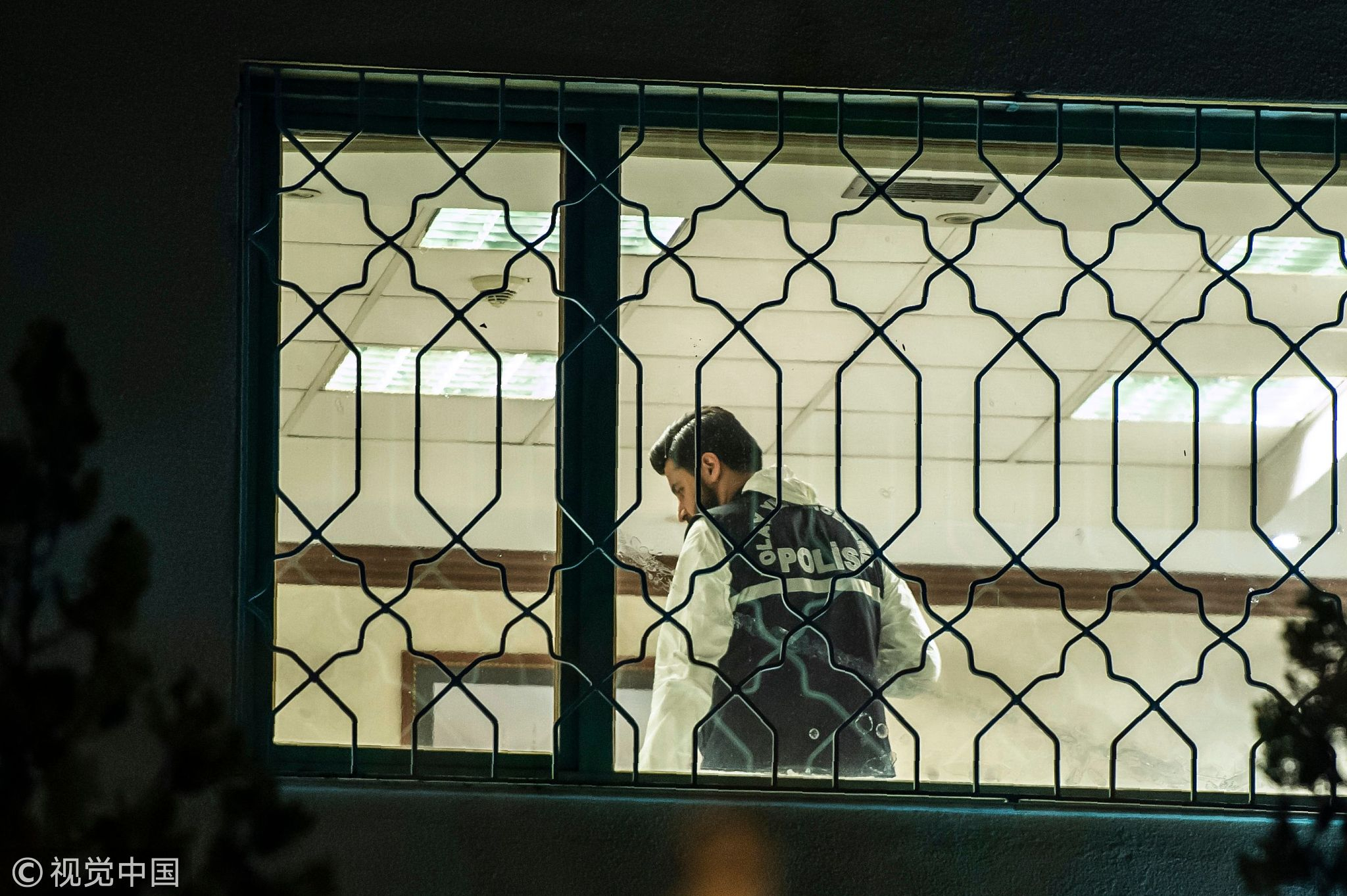
A Turkish forensic police officer works in Saudi Arabia's consulate in Istanbul during the investigation over missing Saudi journalist Jamal Khashoggi, October 15, 2018. /VCG photo
A Turkish forensic police officer works in Saudi Arabia's consulate in Istanbul during the investigation over missing Saudi journalist Jamal Khashoggi, October 15, 2018. /VCG photo
As a result, we shouldn't expect much to change. Western nations will posture and say a few words, but they won't seriously act against the Saudi monarchy or cut ties, because on an economic, strategic and military level, far too much is at stake.
Despite such countries claiming that they advocate an ethical policy of human rights, Saudi Arabia has always stood as a glaring exception to that discourse.
Middle Eastern lives and religious extremism have long been a worthy price to pay for guns, oil and strategic hegemony. Don't for one moment assume that the disappearance of one man can uproot nearly 80 years of Middle Eastern policy and strategy. That's not what it's all about; it never was what it was all about.
(If you want to contribute and have specific expertise, please contact us at opinions@cgtn.com.)

 ["china"]