
Opinions
16:26, 06-Jul-2018
Opinion: How could the 16+1 Sofia Summit bring closer China-EU cooperation?
Updated
14:52, 09-Jul-2018
 ["china"]
Share







Copied
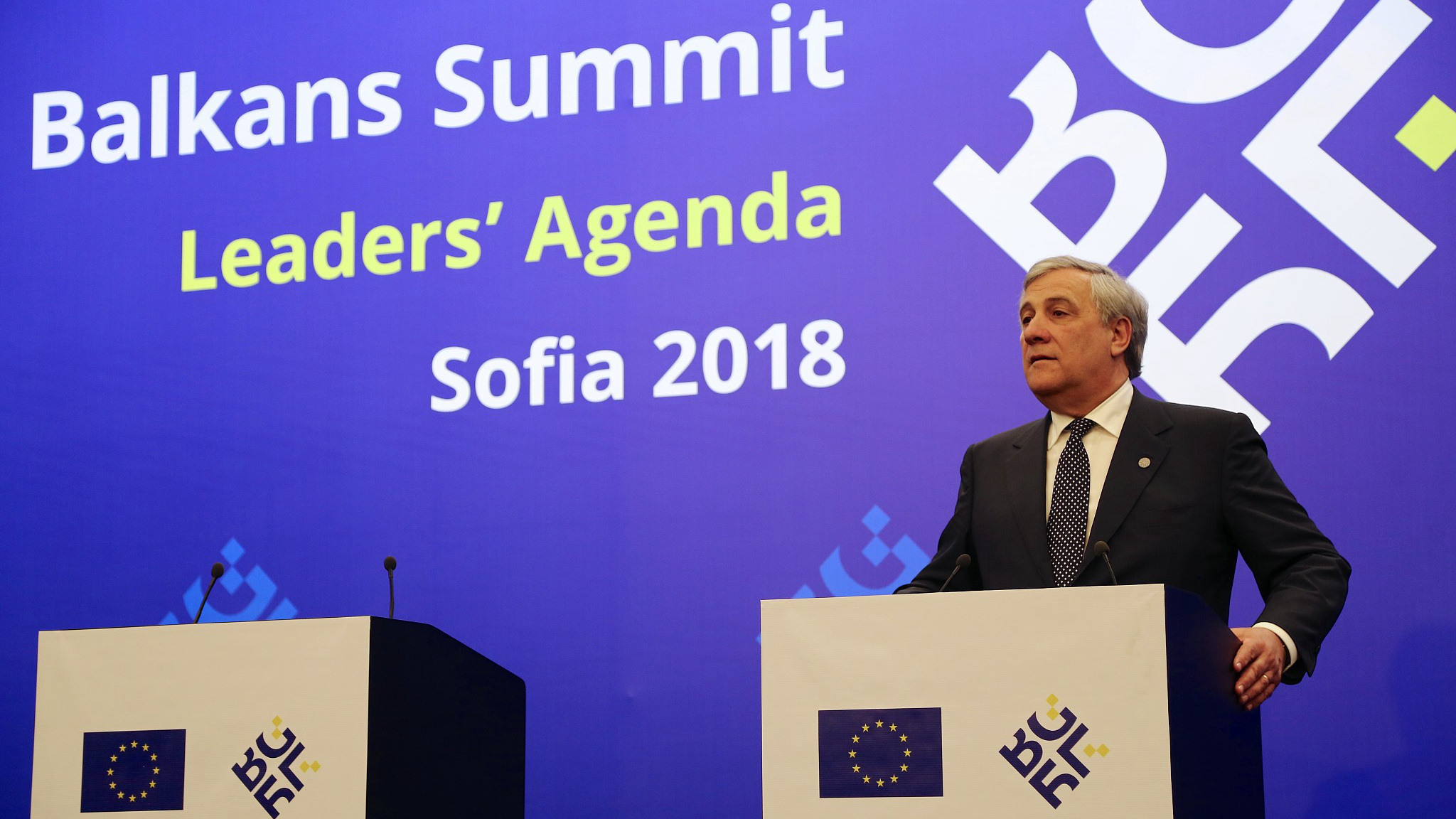
Editor’s note: Yan Shaohua is an assistant professor at Guangdong University of Foreign Studies, and also a research fellow at Guangdong Institute for International Strategies.
If we recognize that there are still gaps to be bridged between China and the EU, then Bulgaria could be the new bridge.
Two things have afforded Bulgaria a unique role in China-EU relations in the year 2018: as the holder of the EU's rotating presidency and as the host of the seventh 16+1 summit.
Following the end of its EU presidency on June 30, Bulgaria became a host of the 16+1 summit on July 5, dispelling doubts that China might delay the summit which had been scheduled for the Bulgarian capital Sofia later this year.
This has put Bulgaria in a good position to bridge the gap between the EU and China in regard to the evolving 16+1 cooperation framework. In particular, Bulgaria is expected to bring about synergies between the EU and China’s initiatives in the Western Balkans.
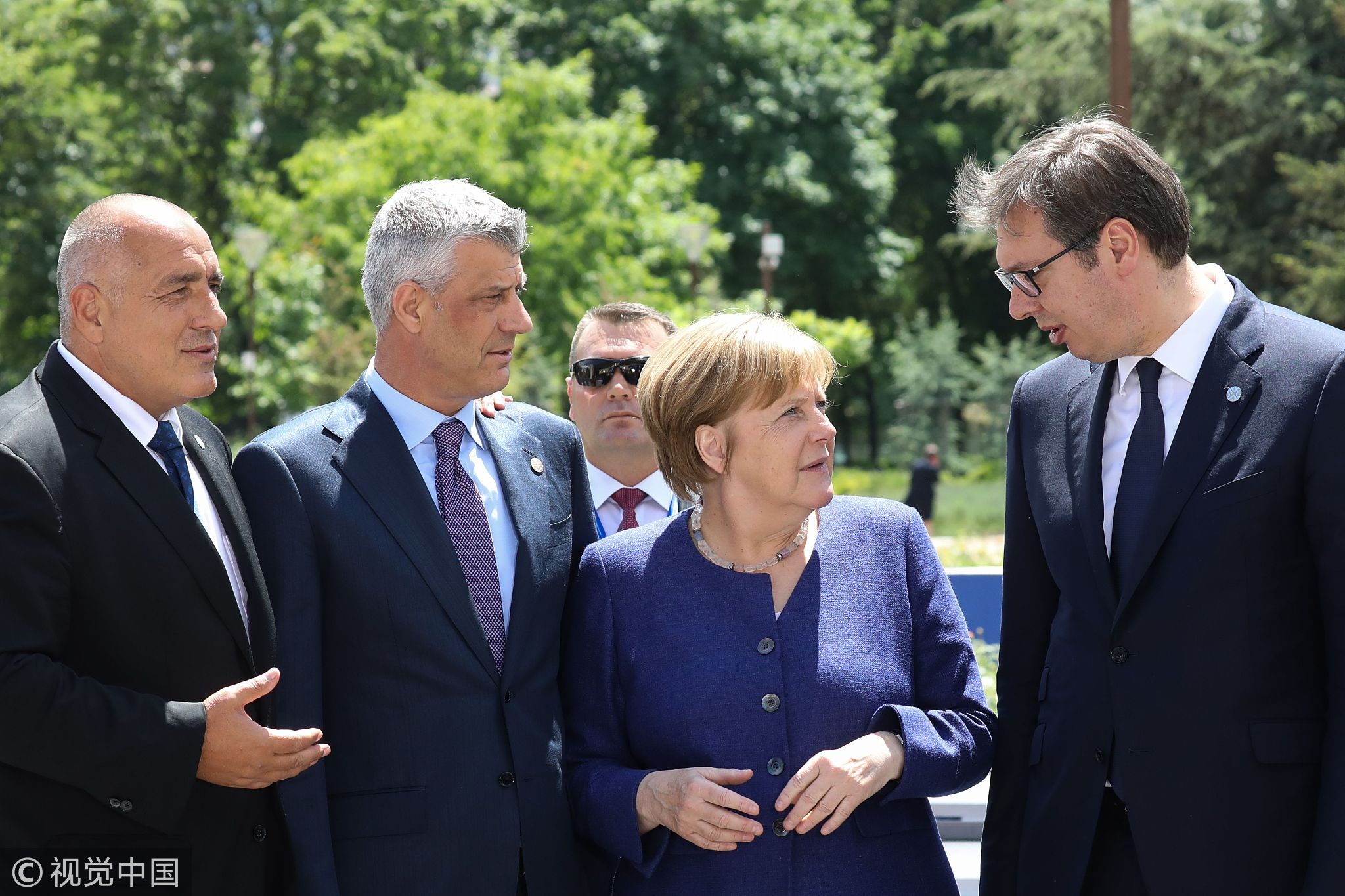
Bulgarian Prime Minister Boyko Borisov, Kosovo's President Hashim Thaci, German Chancellor Angela Merkel and Serbian President Aleksandar Vucic speak together prior to the family photo during an EU-Western Balkans Summit in Sofia on May 17, 2018. /VCG Photo.
Bulgarian Prime Minister Boyko Borisov, Kosovo's President Hashim Thaci, German Chancellor Angela Merkel and Serbian President Aleksandar Vucic speak together prior to the family photo during an EU-Western Balkans Summit in Sofia on May 17, 2018. /VCG Photo.
Since its initiation in 2012, the 16+1 framework has injected further impetus into the relations between China and the Central and Eastern European countries (CEEC), but it has also raised doubts and concerns from the EU.
As the 16+1 framework includes 11 EU member states and five Balkan countries, the EU is worried about the framework’s impact on both the EU’s internal cohesion and its relations with Western Balkans.
The EU sees the 16+1 as a Trojan horse threatening to divide the continent, while China insists that it is conducive to the balanced development of Europe as well as the broader China-Europe relations.
In order to bridge this perceptual gap, China’s rhetoric has to be translated into reality, and the Western Balkans could be the place where China and the EU should work together to translate rhetoric into reality.
Due to geographical and cultural proximity, Bulgaria shows a natural interest in the Western Balkans. And while holding the rotating presidency of the EU, Bulgaria has done an excellent job in bringing the Western Balkans under the spotlight of the EU.
This has been illustrated by an EU-Western Balkans Summit in Sofia in May, which was the first of its kind in 15 years since the 2003 Thessaloniki summit established an EU accession prospect for Western Balkan countries.

Bulgarian Prime Minister Donald Tusk (L), European Council President, and Jean-Claude Juncker (R), European Commission Chief, attend the EU-Western Balkans Summit in Sofia, Bulgaria, on May 17, 2018. /VCG Photo.
Bulgarian Prime Minister Donald Tusk (L), European Council President, and Jean-Claude Juncker (R), European Commission Chief, attend the EU-Western Balkans Summit in Sofia, Bulgaria, on May 17, 2018. /VCG Photo.
Some say the Sofia summit is no more than a reaffirmation or complement to the Thessaloniki process, yet if we examine closely, the Sofia summit has signaled a subtle change in the EU’s approach towards the region.
The EU’s traditional approach is mainly developed within the accession process which is claimed to be based on political mediation, stabilization, economic cooperation and legal harmonization.
Yet, in reality, the EU’s conditionality policies have been more linked to political matters and security concerns often supersede other considerations, despite the fact that the EU is the largest trading partner and leading investor in the region.
This imbalance is timely addressed in the Sofia declaration which highlighted social-economic development as a priority agenda of the EU in the region. In particular, the EU pledges to "enhance substantially connectivity in all its dimensions: transport, energy, digital, economic and human."
Therefore, it is clear that the EU seeks to strengthen economic cooperation and connectivity in order to underpin its dual policy of stabilization and integration in the Western Balkans.
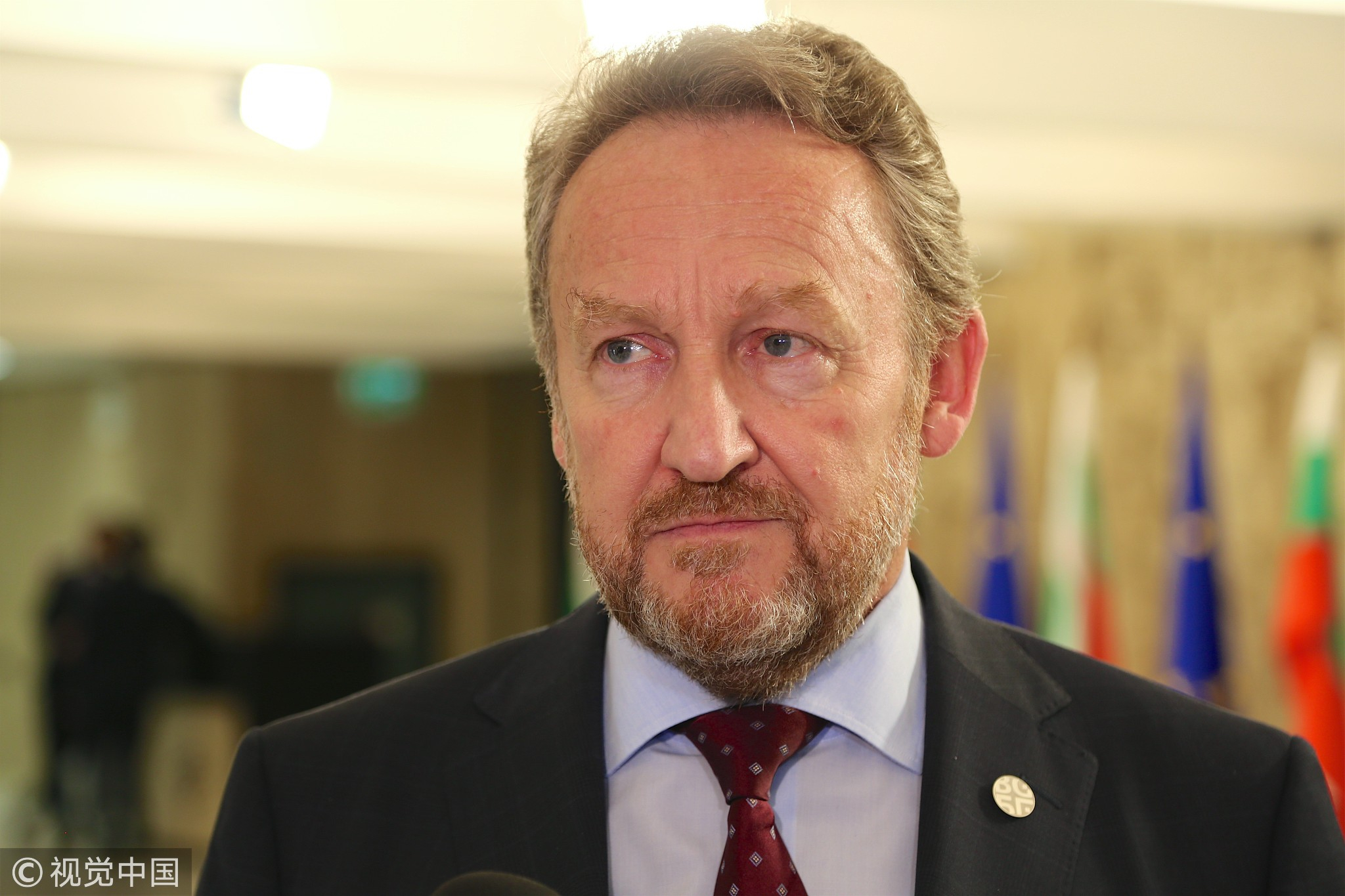
The Chairman of Presidency of Bosnia and Herzegovina, Bakir Izetbegovic, takes part in the EU-Western Balkans Summit in Sofia, Bulgaria, on May 17, 2018. /VCG Photo.
The Chairman of Presidency of Bosnia and Herzegovina, Bakir Izetbegovic, takes part in the EU-Western Balkans Summit in Sofia, Bulgaria, on May 17, 2018. /VCG Photo.
Like it or not, China’s engagement with the Western Balkans in the framework of 16+1 has certainly contributed to the change in the EU’s approach.
China is well aware of the European orientation of the Balkan states which are undergoing fundamental transformation and Europeanization process, and there is no intention from the part of China to derail that process. This is largely reflected in China’s more development-oriented approach towards the region.
Within the 16+1 framework, China has chosen to focus on low-political and economic affairs, in particular in regional connectivity and infrastructure investments.
The roads, railways, ports, bridges and other infrastructure projects that China invests in the Western Balkans are aimed to improve connectivity not only between the Western Balkans and Europe but also between Europe and China via the Western Balkans.
Therefore, it is not difficult to identify common agendas between the EU and China in the Western Balkans.
A trilateral cooperation between China, EU and the Western Balkans on regional connectivity could be a good starting point.
With closer cooperation on connectivity, China’s engagement with the Western Balkans in the 16+1 framework could serve not only its own ties with Europe but also the Western Balkans’ path towards better connection and integration with the EU.
As outgoing EU rotating presidency holder and host of the 16+1 summit, Bulgaria is expected to bring the EU closer to the 16+1 framework or bring China closer to the EU’s integrative mechanism, both of which could serve to promote closer China-EU cooperation in the Western Balkans.