
Health
17:58, 18-Oct-2018
Mental health in China: Living with bipolar disorder
Updated
17:34, 21-Oct-2018
 ["china"]
Share







Copied
Studies on the prevalence of bipolar disorder in China have revealed much lower rates than in Western countries. However, experts believe that the figures may be misleading, since stigma associated with mental illness means that a significant majority of Chinese sufferers are not diagnosed.
Bipolar disorder is a severe, yet relatively common, mental disorder. The main symptom is emotional instability, manifested in periods of depression, and in manic and hypomanic episodes.
A national survey conducted five years ago revealed that less than 0.5 percent of the Chinese population - roughly six million people - are known to be suffering from bipolar disorder. However, misdiagnosis and an unwillingness to seek treatment indicate that in reality, the figure may be much higher. Global averages range between one percent and four percent, so the true number of sufferers in China could be nearly 30 million.
In a society that is generally unable and often unwilling to help sufferers, being diagnosed as bipolar can result in a loss of one's friends, even one's career. As Dr. Zhang Ling, director of the Center for Mood Disorders at Beijing Anding Hospital, explained: "In the prevailing cultural and social climate, people with mental illness face discrimination in China. Many patients refuse to accept being diagnosed with a mental illness, as they're likely to be described as psychopath or mad, and face huge stress. So, many of them choose not to see a doctor."
Someone who has experienced at first hand social attitudes towards bipolar disorder in China over the past 20 years is Charles. The 47-year-old works for an NGO supporting people who suffer from the condition. He was inspired to help, after himself being diagnosed as bipolar in the 1990s.
"It was when I worked in the Shekou district of Shenzhen," said Charles. "During work, I think I first became depressed, and then shortly after I had a manic episode. I started to say something people couldn't understand, and my colleagues realized that I must have some psychotic disorder. So, two of them took me on a flight to Beijing, and I was already exhausted so I didn't resist. I felt safe when I saw my parents in Beijing."
03:07
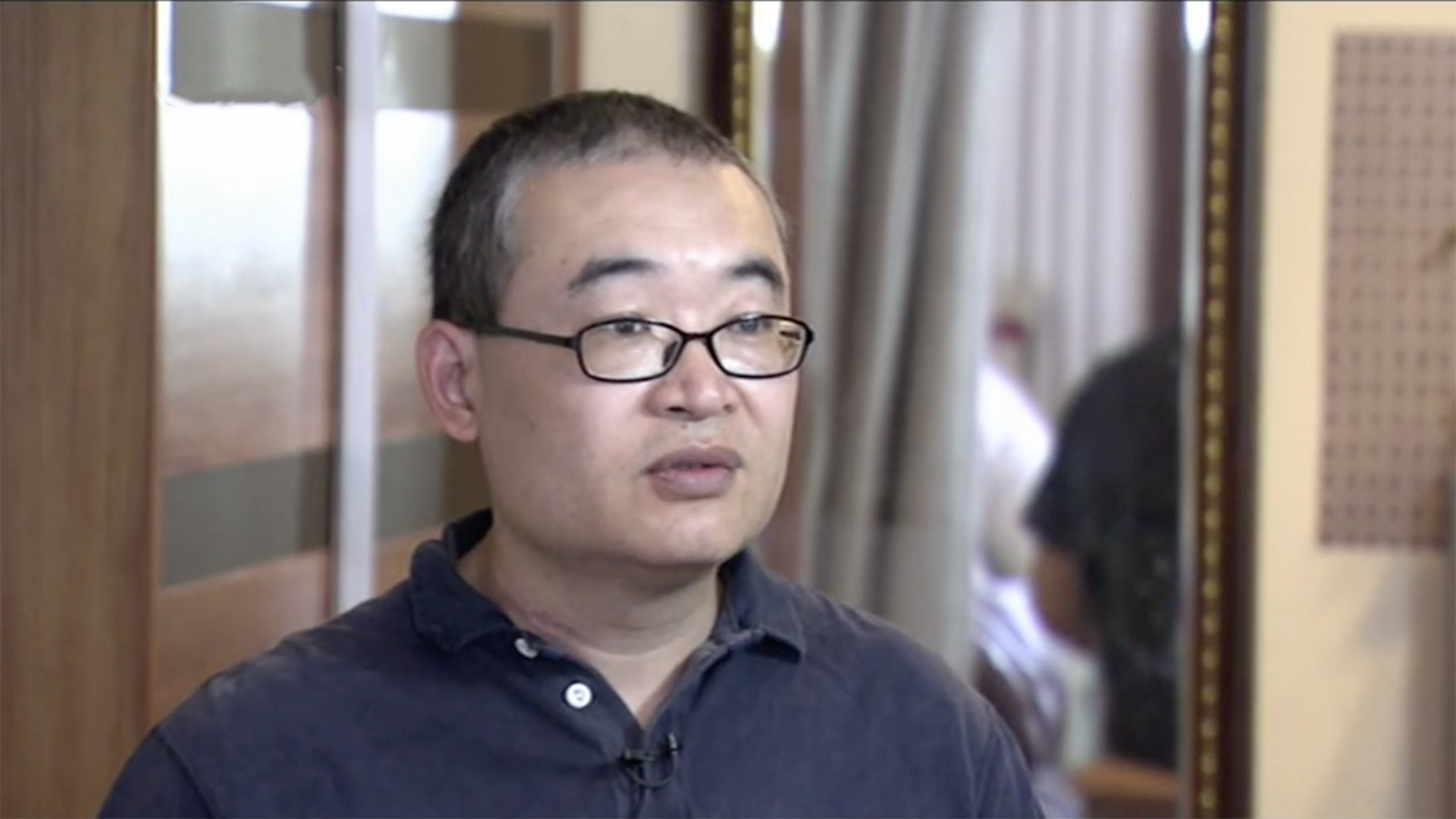
20 years ago, neither Charles nor his mother had ever heard of bipolar disorder. Today, he is living a relatively normal life and has come to terms with his condition, thanks in part to the daily medication he takes. However, it has been a long and dangerous road he has had to follow, to reach this point.
"I once wished I could leave this terrible world. The pain was indescribable," he said. "I kept hearing noises that weren't there. When the hallucinations were just normal, I heard people talking in my brain and making comments or cursing. I could take that. But when it got serious it felt like someone was messing around with my brain and stamping on my shoulder. It was so painful."
Charles was eventually driven to attempt suicide. Today, he is grateful that he failed. He has succeeded in creating a carefully-selected circle of friends, and has even found a partner. This has contributed to a much more positive outlook on life.

Finding a partner can be a struggle for bipolar people in China. /CGTN Photo
Finding a partner can be a struggle for bipolar people in China. /CGTN Photo
Charles has been married for six years.
"I met my wife because of my illness," he said. "She's also bipolar. She's a very capable woman, very strong and I liked her right away. So I pursued her and succeeded in the end. I think a lot of people accept us as we are. In my circle of friends who are bipolar many are married, with many of them getting married even after they were diagnosed."
Yet, there is one shadow the couple cannot escape. They don't plan on having children, as they're concerned that any offspring might inherit the condition.
"The thought of my kids having bipolar disorder hurts me like hell," Charles said. "Before my dad passed away he asked me if I wanted to have kids. I admitted that I didn't. I think he really wanted grandchildren. It's something that haunts me when I think about it."
Anding Hospital's Dr. Zhang confirms that there is a genetic risk with bipolar.
"Especially if a person's first-degree relatives have this disease, they will have a much higher risk of inheriting it than others," she said. "If a parent suffers from bipolar disorder, the risk for their kids having the disease will be 10-20 percent higher."
Having overcome his own demons, Charles is now a positive role model for other bipolar sufferers. As he said: "You need to accept that it's part of who you are… (it) doesn't mean you can't live a great life."
Rediscovering China is a 30-minute feature program offering in-depth reports on the major issues facing China today. It airs on Sundays at 10:30 a.m. BJT (0230 GMT), with a rebroadcast at 11:30 p.m. (1530 GMT), as well as on Mondays at 8:30 a.m. (0030 GMT) and Fridays at 1:30 p.m. (0530 GMT).
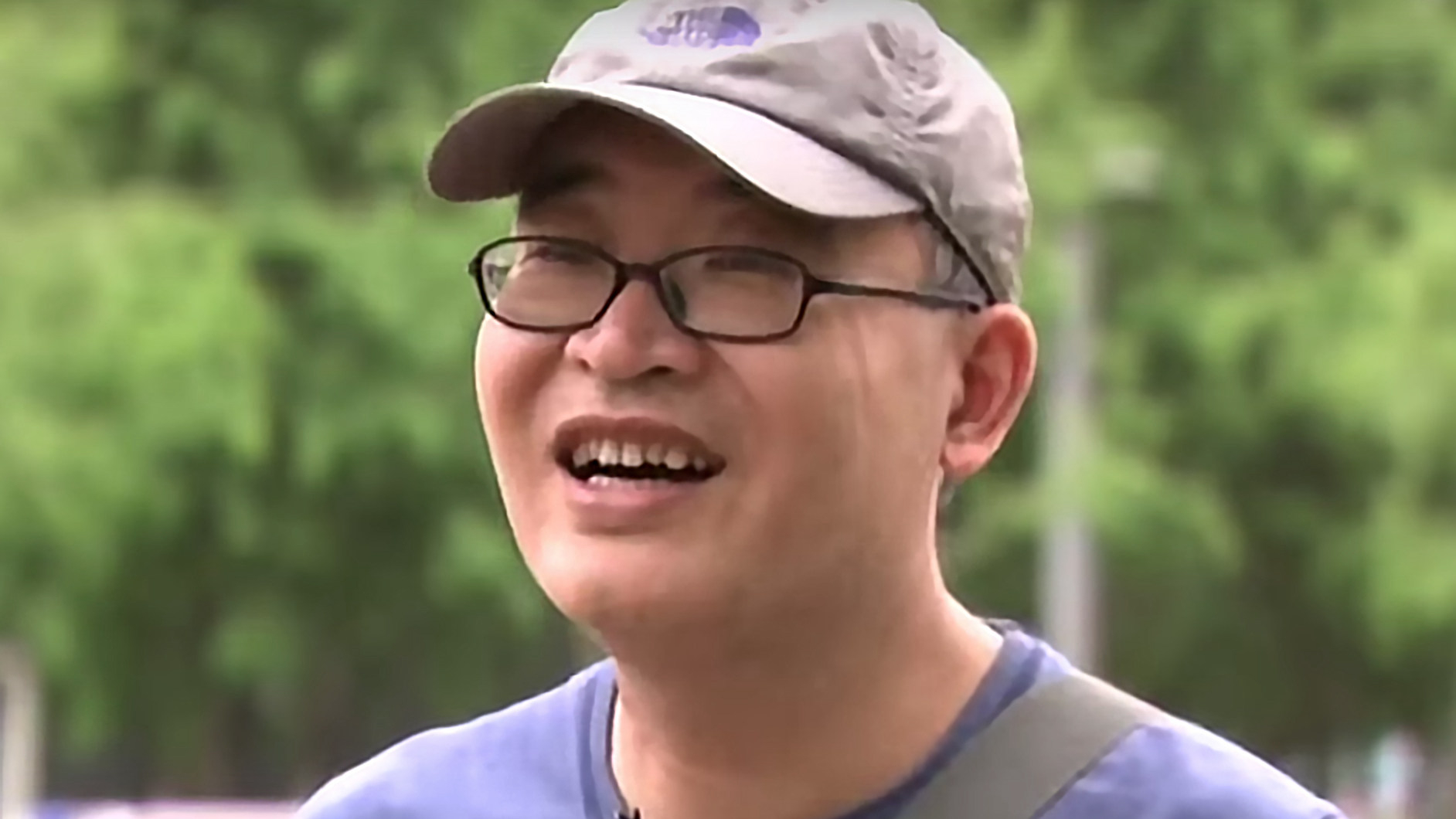
(Top image: Charles, who was diagnosed as bipolar in the 1990s but now a positive role model for other bipolar sufferers, is in interview with CGTN. /CGTN Photo)