01:00
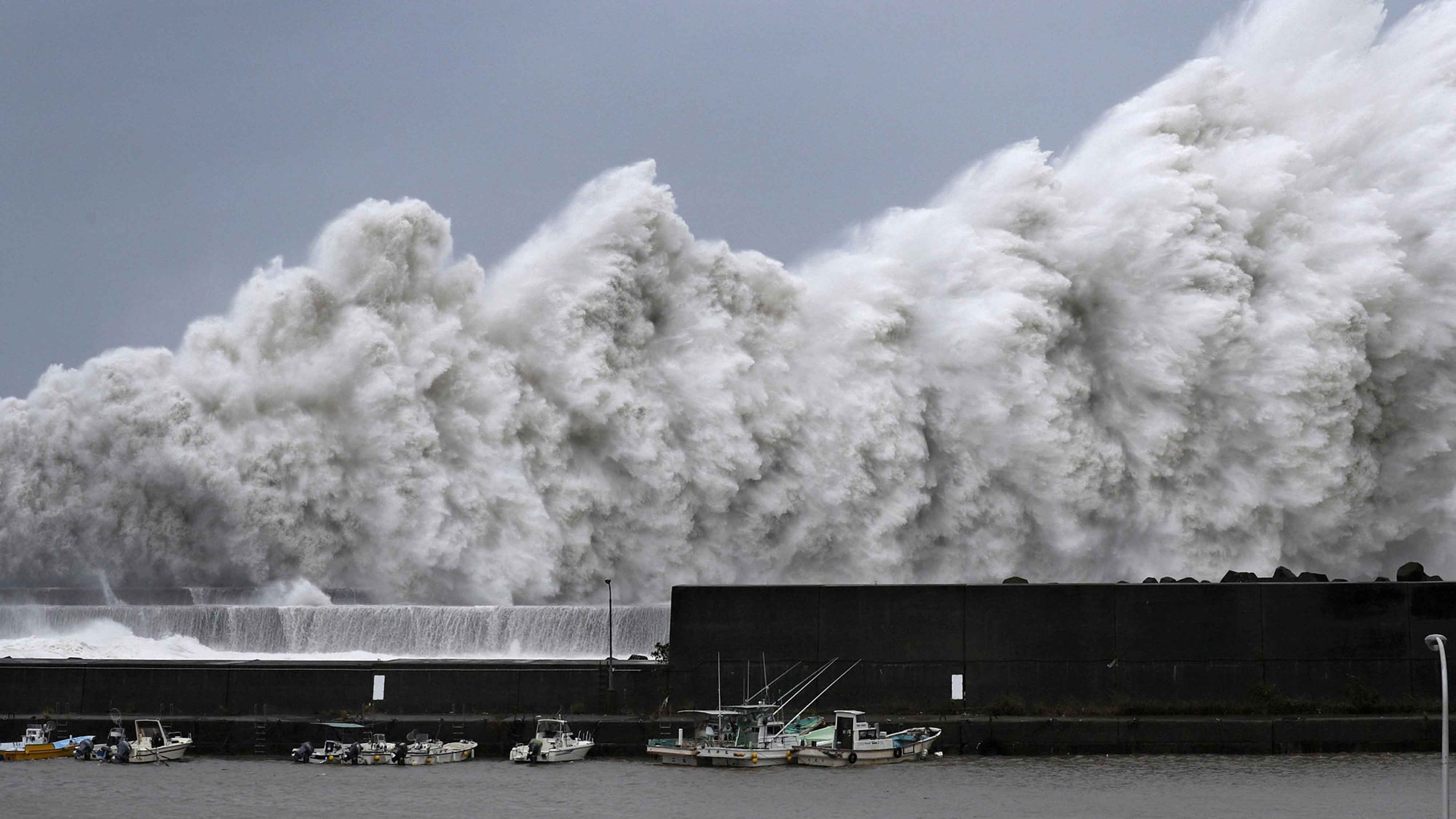
The strongest typhoon to hit Japan in 25 years made landfall Tuesday, killing nine people and injuring over 160 others, as it battered the western part of the country with violent winds and heavy rainfall.
The strong gusts ripped sheeting from rooftops, toppled trucks on bridges and swept a tanker anchored in Osaka Bay into a nearby bridge leading to the Kansai International Airport.
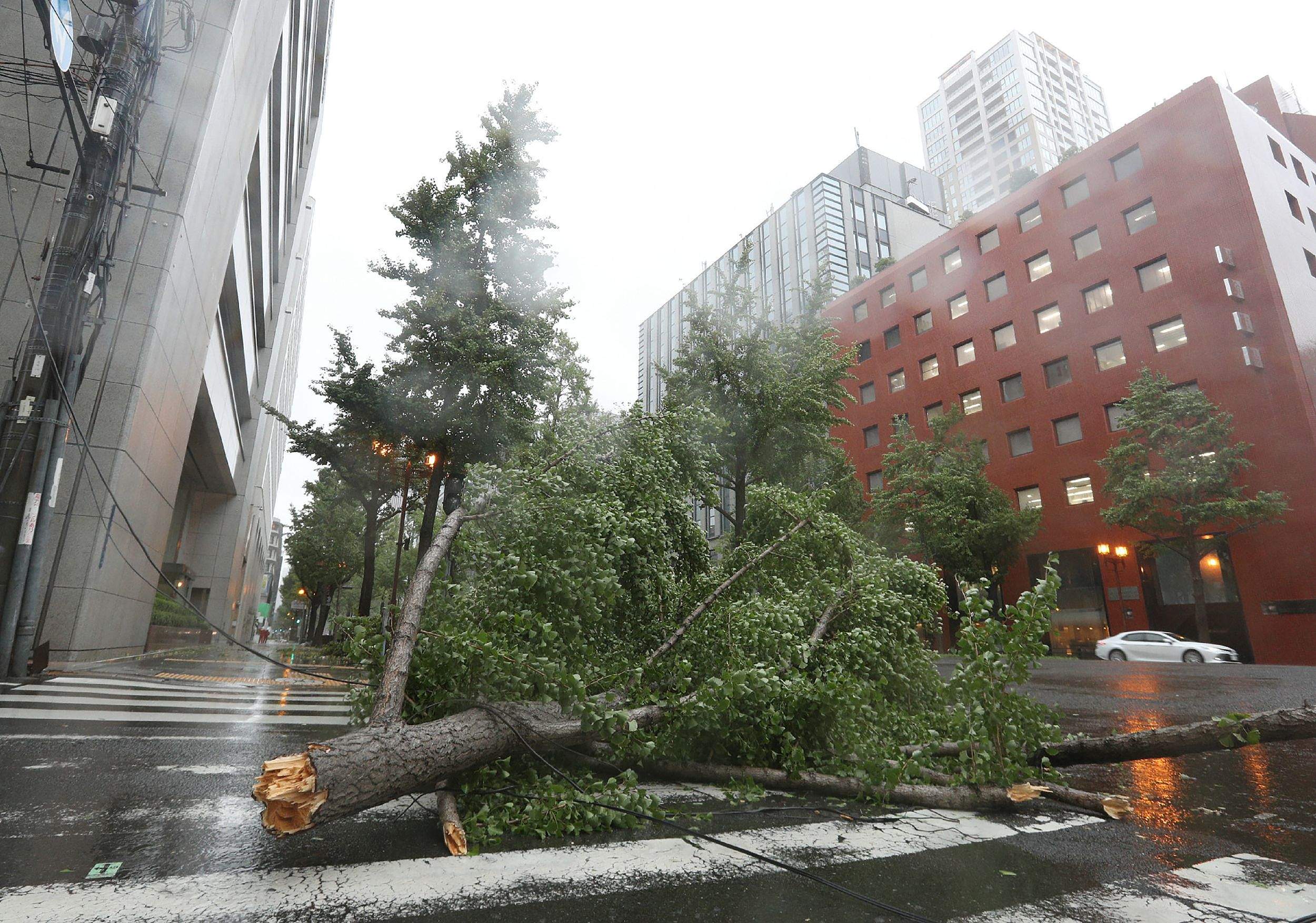
A tree toppled by strong winds lies on Midosuji street in central Osaka, Japan, September 4, 2018. /VCG Photo
A tree toppled by strong winds lies on Midosuji street in central Osaka, Japan, September 4, 2018. /VCG Photo
High waves whipped up by the storm also flooded parts of the seaside airport, where all flights were cancelled, and the severe weather caused power outages and travel chaos across much of the country.
Typhoon Jebi made landfall around noon local time, slamming into the western part of the country and packing winds of up to 216 kilometers per hour. The fast-moving storm quickly crossed the country, and by nightfall was on the verge of leaving land and heading out to sea from Ishikawa in central Japan.
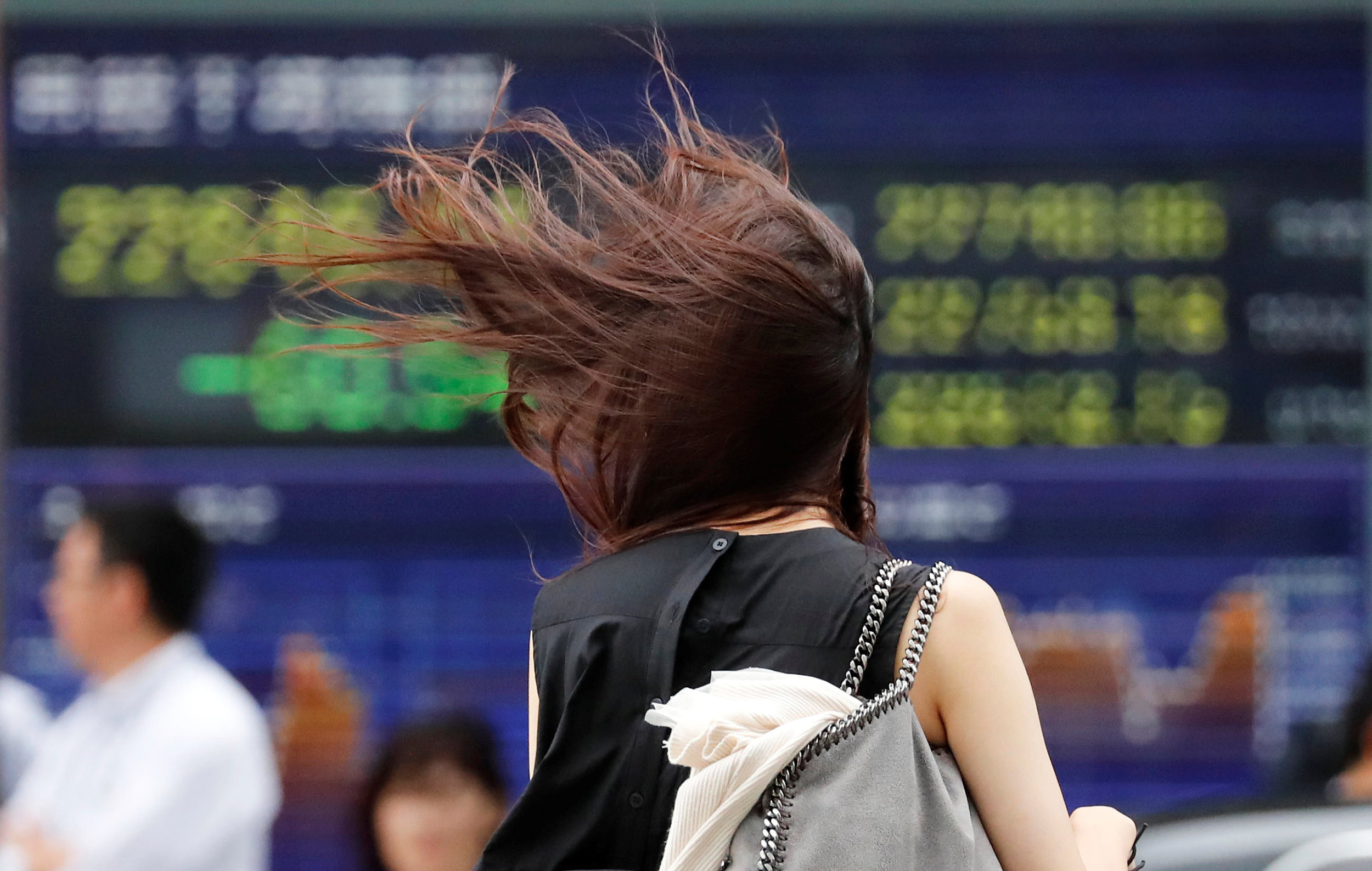
A woman struggles against strong wind caused by Typhoon Jebi, in front of an electronic stock quotation board in Tokyo, Japan, September 4, 2018. /VCG Photo
A woman struggles against strong wind caused by Typhoon Jebi, in front of an electronic stock quotation board in Tokyo, Japan, September 4, 2018. /VCG Photo
Local media reported two deaths from the storm, including a 71-year-old man killed in western Shiga prefecture after being trapped under a warehouse that collapsed from strong winds.
Public broadcaster NHK said 97 people had been injured across the storm's path, none of them critically.
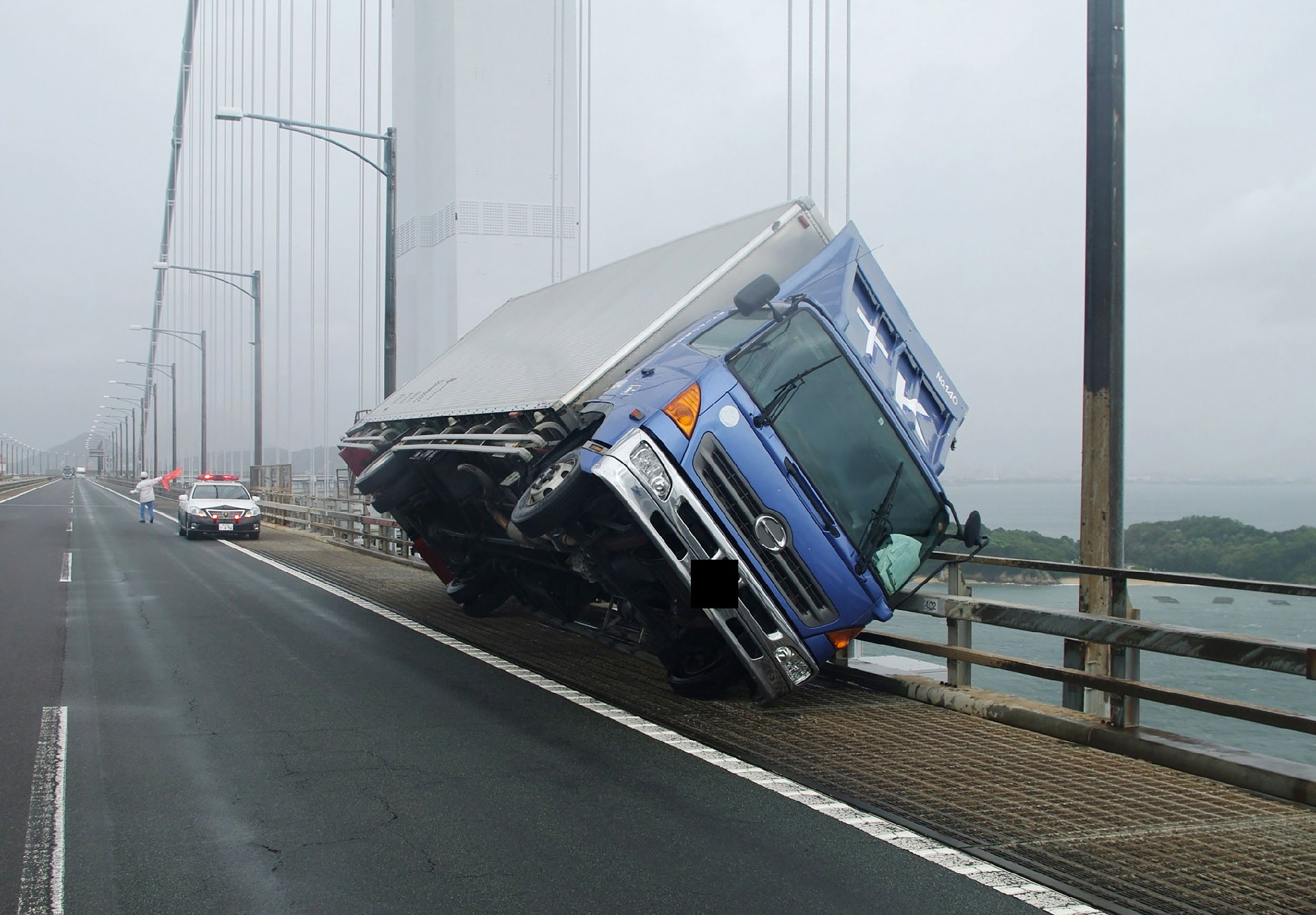
A truck tilted at an angle after being blown over by strong winds caused by Typhoon Jebi on the Seto Ohashi bridge in Sakade, Kagawa prefecture on Japan's Shikoku island, September 4, 2018. /VCG Photo
A truck tilted at an angle after being blown over by strong winds caused by Typhoon Jebi on the Seto Ohashi bridge in Sakade, Kagawa prefecture on Japan's Shikoku island, September 4, 2018. /VCG Photo
The airport was closed after runways and parts of its basement were flooded by high waves, a transport ministry official confirmed.
Elsewhere, the winds whipped away part of the ceiling from Kyoto station and peeled off multi-story scaffolding attached to a building in Osaka.
Evacuations urged
Local media said more than a million households were left without power by the storm, and evacuation advisories were issued for nearly 1.2 million people, though only another 16,000 were under stronger –though still not mandatory – evacuation orders.
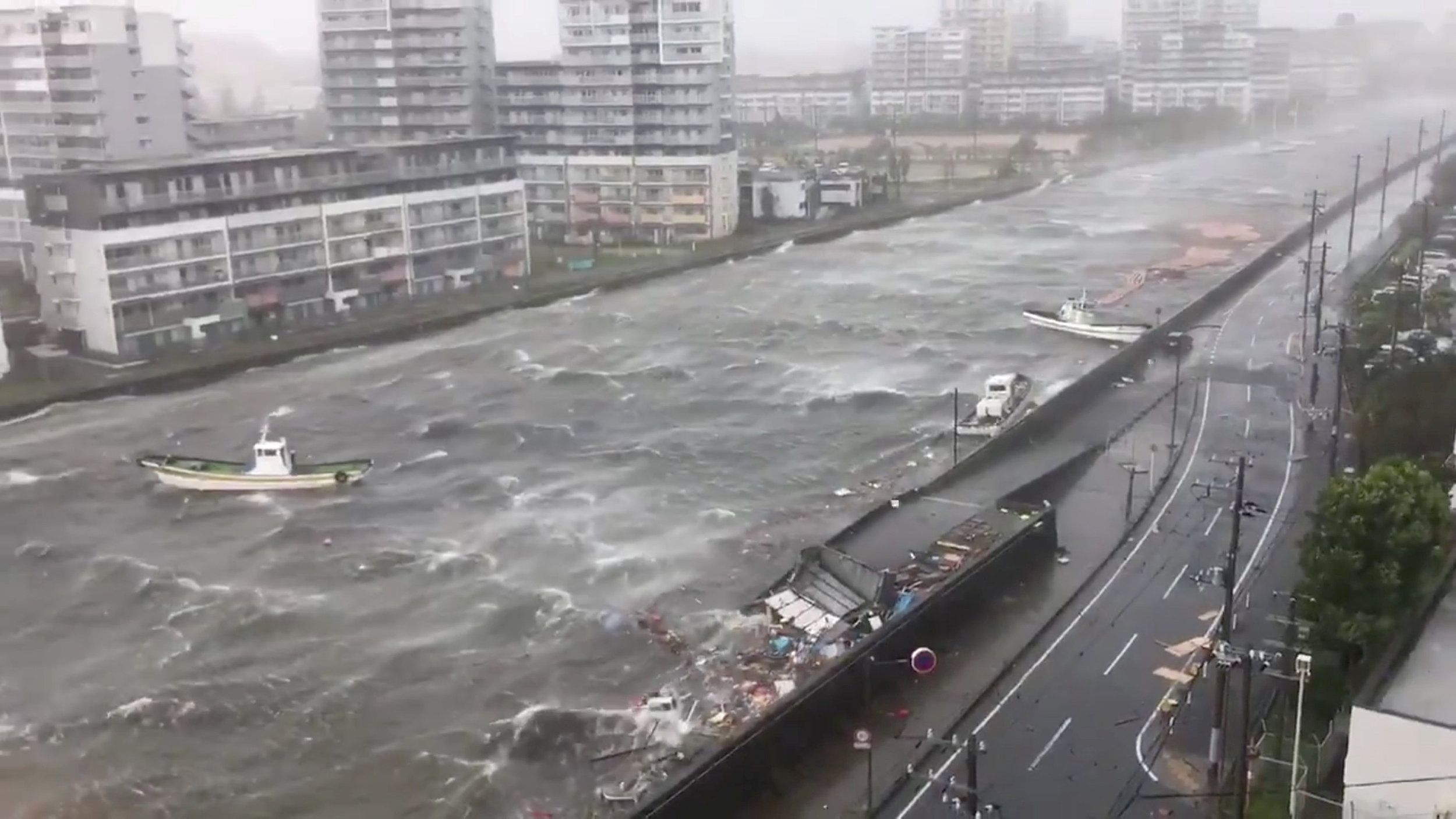
Boats float along with debris during Typhoon Jebi in Nishinomiya City, Hyogo Prefecture, Japan, September 4, 2018. /VCG Photo
Boats float along with debris during Typhoon Jebi in Nishinomiya City, Hyogo Prefecture, Japan, September 4, 2018. /VCG Photo
Prime Minister Shinzo Abe had urged people to evacuate early and ordered his government to take all necessary measures to protect residents, after the weather agency warned of landslides, flooding and violent winds, as well as high tides, lightning and tornadoes.
"I urge the Japanese people to take action to protect your lives, including preparing and evacuating early," he said.
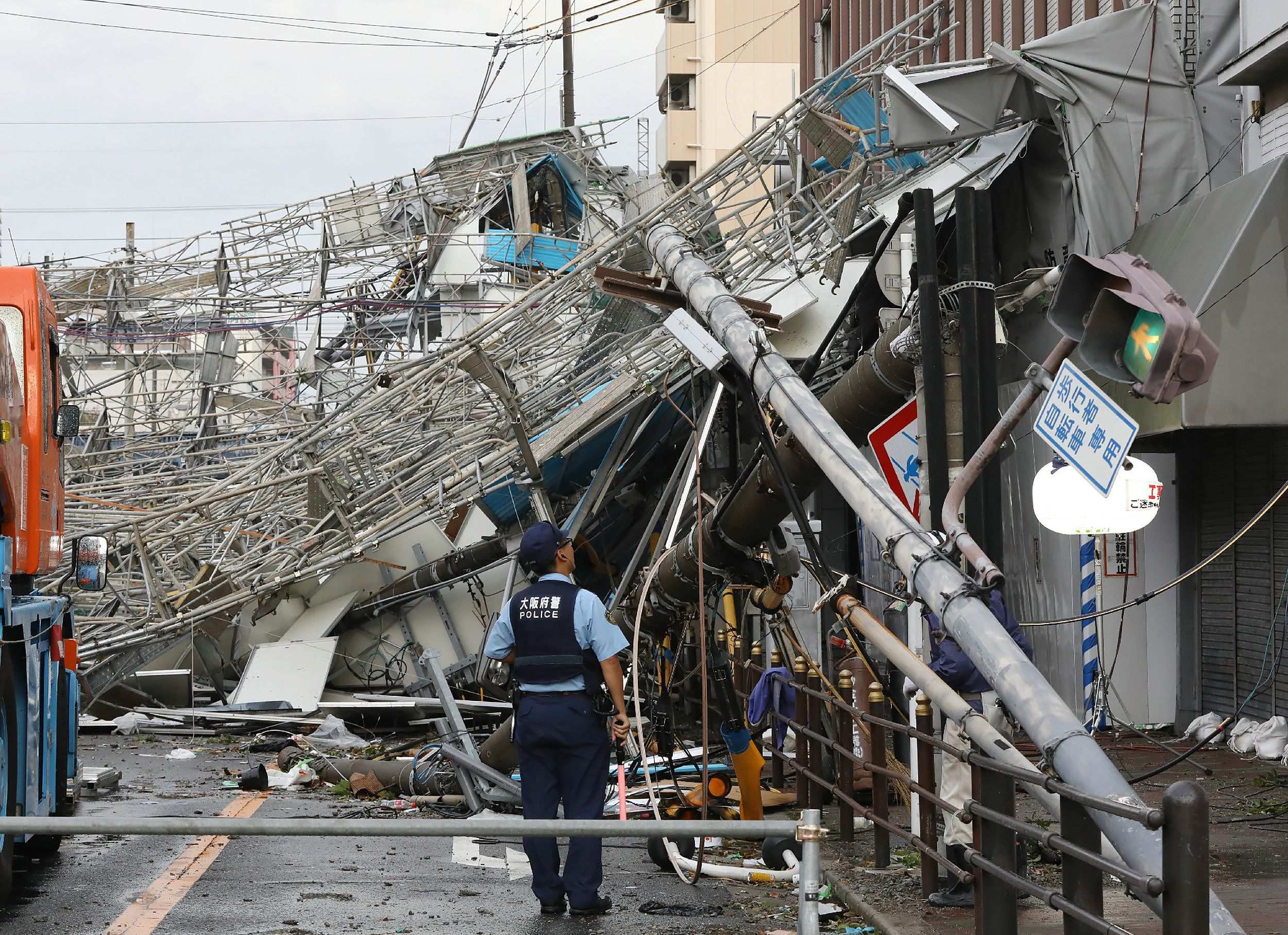
Damaged traffic boards and telecommunication relay poles are seen after they were brought down by strong winds caused by Typhoon Jebi in Osaka on September 4, 2018. /VCG Photo
Damaged traffic boards and telecommunication relay poles are seen after they were brought down by strong winds caused by Typhoon Jebi in Osaka on September 4, 2018. /VCG Photo
Arriving on land, Jebi had winds of up to 162 kilometers per hour at its center, making it a "very strong" typhoon, the weather agency's chief forecaster Ryuta Kurora told AFP.
"This is (the strongest) since 1993."
Primary and middle schools in the storm's path were closed while regional businesses also reacted quickly, with Universal Studios Japan in Osaka shutting down for Tuesday along with factories for several large manufacturers.
Nearly 800 flights were cancelled, including several international flights departing and arriving at Nagoya and Osaka, along with ferries, local train services and some bullet train lines.
Jebi has a similar trajectory to Typhoon Cimaron which made landfall on Aug. 23, disrupting transport but causing limited damage and few injuries.
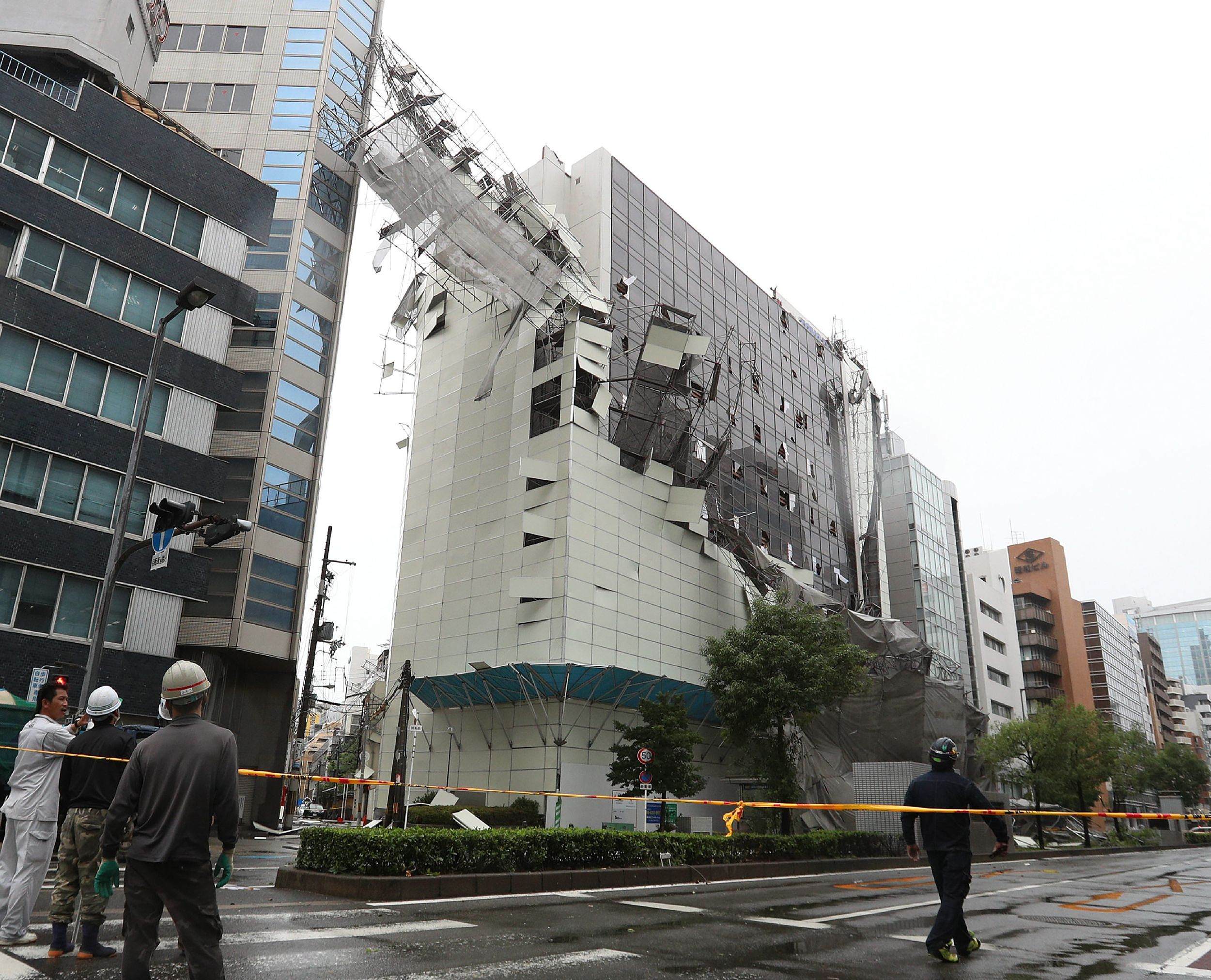
Damage from loose construction scaffolding due to weather patterns from Typhoon Jebi is seen in Osaka on September 4, 2018. /VCG Photo
Damage from loose construction scaffolding due to weather patterns from Typhoon Jebi is seen in Osaka on September 4, 2018. /VCG Photo
Japan is regularly struck by major storms during the summer and autumn.
The country has been sweating through a record deadly heatwave that followed devastating rain in parts of central and western Japan that killed over 200 people.
The sustained rain caused widespread flooding and landslides in July, devastating entire villages and forcing thousands from their homes.
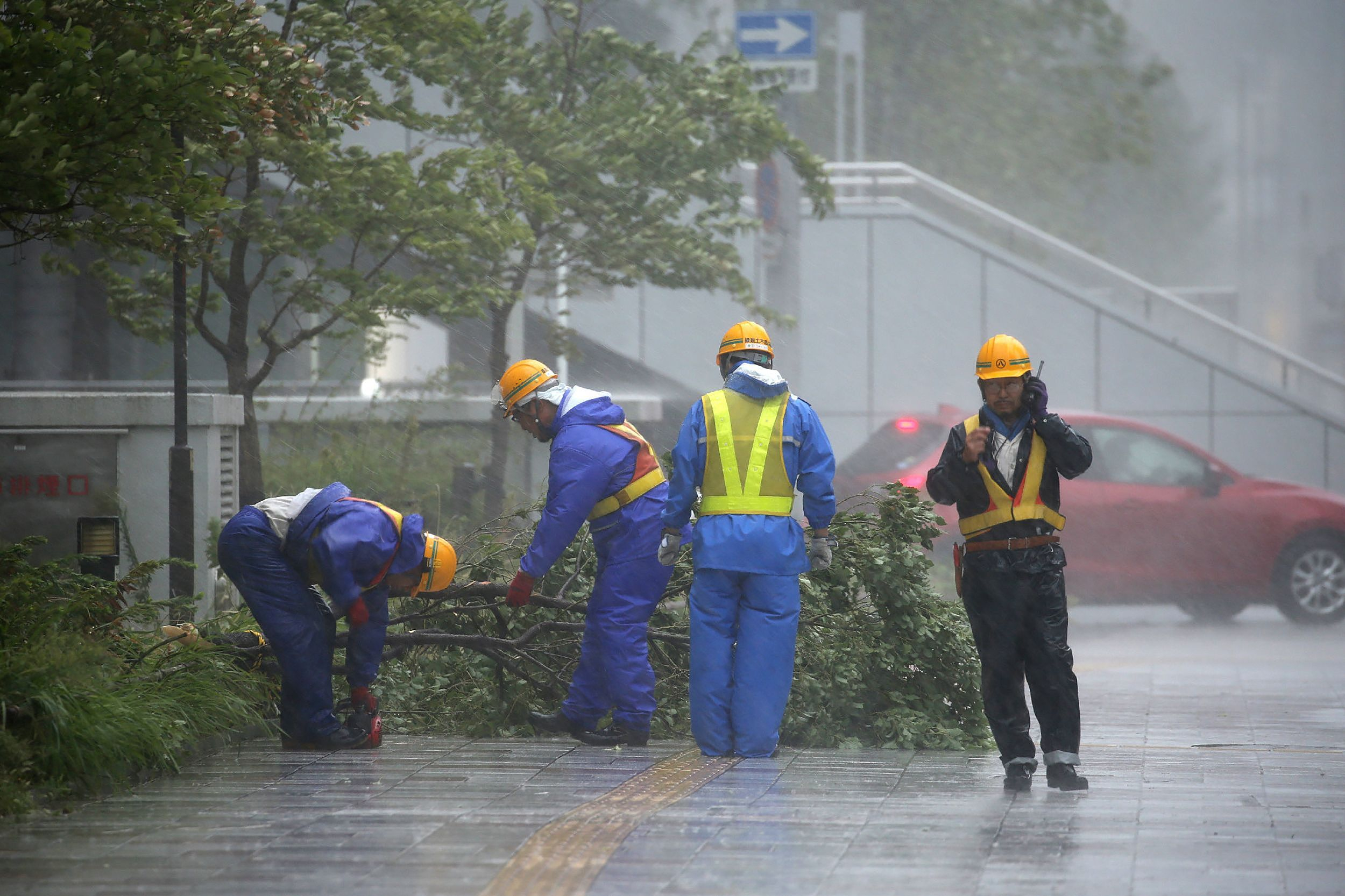
Local government workers remove a fallen tree along a sidewalk in Nagoya on September 4, 2018. /VCG Photo
Local government workers remove a fallen tree along a sidewalk in Nagoya on September 4, 2018. /VCG Photo
The flooding and landslides proved so deadly in part because many people did not heed evacuation warnings, which are not mandatory.
Since the disaster, authorities have urged people to take the warnings more seriously and prepare to leave home immediately after they are issued.
Source(s): AFP

 ["china"]