
World
08:02, 07-Jun-2018
At least 99 dead, Guatemala suspends rescue after volcano eruption
 ["china"]
Share







Copied
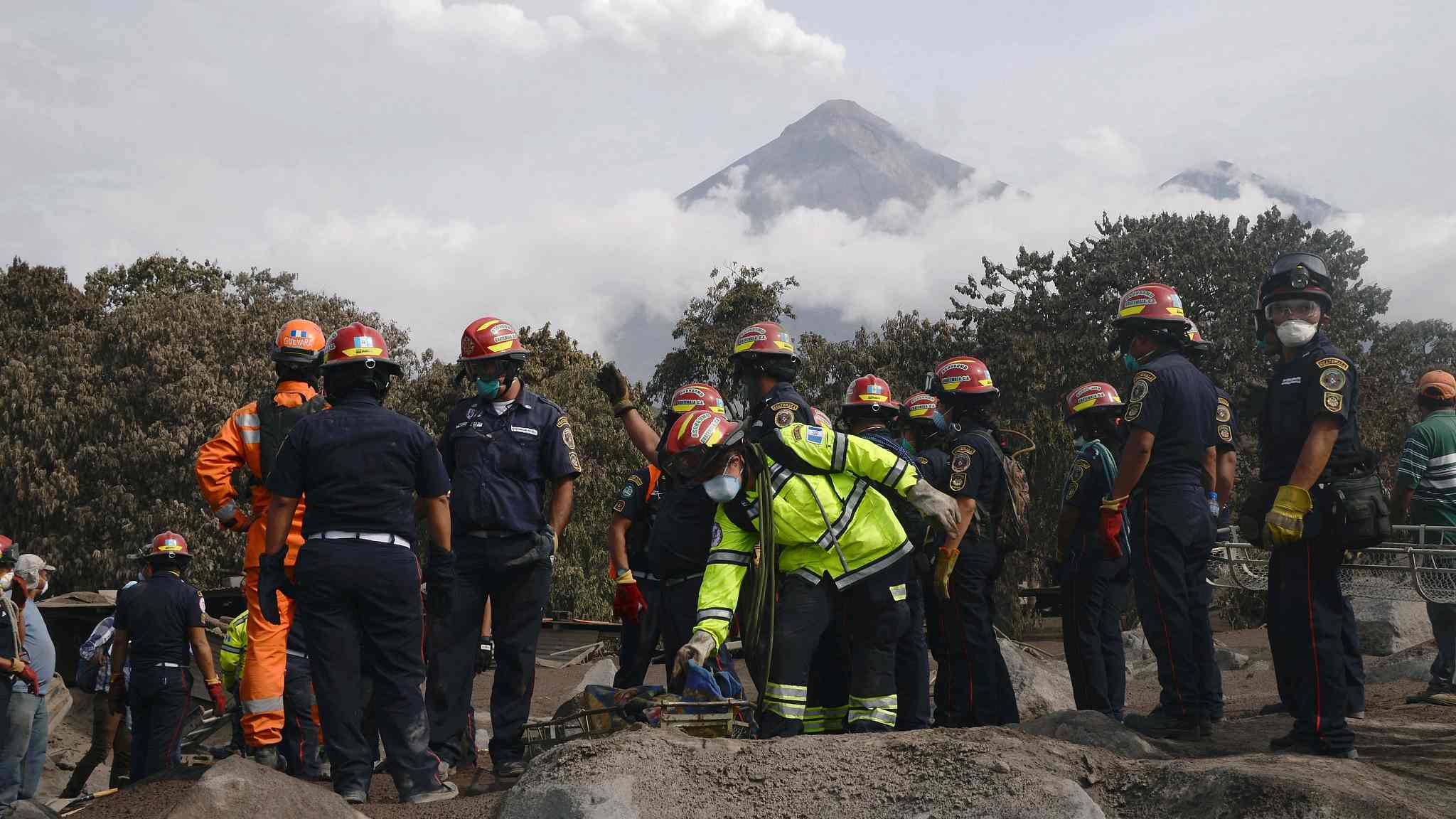
Guatemala suspended rescue efforts in Fuego volcano eruption zone due to the potential dangers workers may face, says Guatemala's national disaster agency.The death toll from the massive Fuego volcano eruption in Guatemala has risen to at least 99, with only 28 having been identified, according to Guatemala's National Forensic Sciences Institute (INACIF). The disaster on Sunday was the volcano's biggest eruption in four decades.
Guatemala’s seismological, volcanic and meteorological institute Insivumeh heightened its warnings after the volcano erupted again on Tuesday, forcing evacuations and sending rescue workers scrambling for cover.
But by Wednesday morning, rescuer workers were back at work with pickaxes, metal rods and flashlights in hand, risking their lives in search of victims or any survivors. Bulldozers stood by to help.
“We can only work in places where we can stand on the roofs of houses... because the ash is very hot. There are places where you stick the pickaxe or rod in and we see a lot of smoke coming out and fire and it’s impossible to keep digging because we could die,” said 25-year-old rescuer Diego Lorenzana.
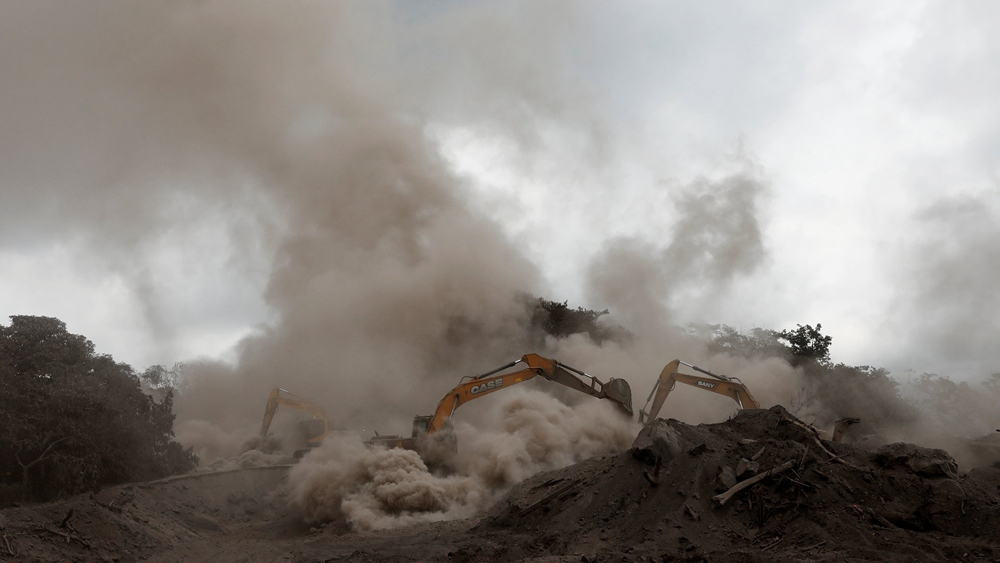
Rescue workers work with excavators at an area affected by the eruption of the Fuego volcano at San Miguel Los Lotes in Escuintla, Guatemala, June 6, 2018. /VCG Photo
Rescue workers work with excavators at an area affected by the eruption of the Fuego volcano at San Miguel Los Lotes in Escuintla, Guatemala, June 6, 2018. /VCG Photo
"We already have data with names and locations where there are missing persons and that number is 192," Sergio Cabanas, head of Guatemala's disaster management agency, said earlier in the day.
Experts warned Wednesday that heavy rains in the area could provoke avalanches due to the large flows of volcanic mud, known as lahars, since the eruption on Sunday.
Volcanologists recorded the volcano exploding several times an hour Wednesday, which generated a fresh 4,700 meter high column of gray ash.
"The explosions are generating moderate avalanches that have an approximate distance of 800 to 1,000 meters," the Vulcanology Institute said.
It said the lahars could sweep down the mountain laden with concrete, rocks up to a meter in diameter and tree trunks.
"The activity continues and the possibility of new pyroclastic flows in the next hours or days cannot be ruled out, so it is recommended not to remain near the affected area," it said.
Guatemala’s national disaster management agency, Conred, said 1.7 million people have been affected by the volcanic eruption and over 12,000 have been evacuated.
Source(s): AFP
,Reuters