
Opinions
10:59, 24-May-2018
The Heat: DPRK diplomacy – US and ROK presidents meet at White House
 ["china"]
Share







Copied
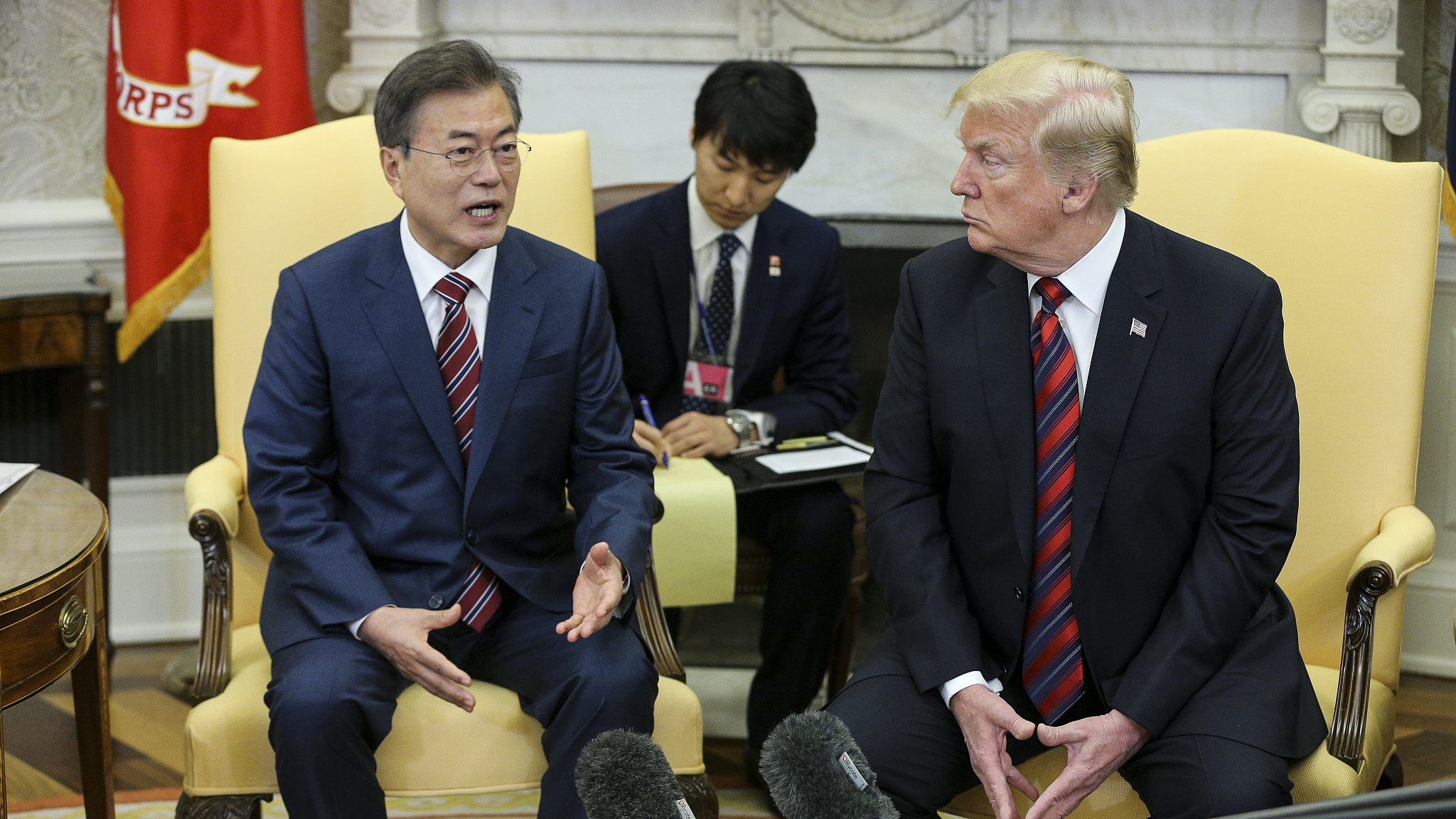
US President Donald Trump met with the Republic of Korea (ROK) President, Moon Jae-in, at the White House on Tuesday. The leaders discussed the planned nuclear talks between Trump and the Democratic Republic of Korea (DPRK) leader, Kim Jong Un, expected to take place in three weeks.
But President Trump is now raising doubts about whether next month’s summit with the DPRK will even happen. The proposed summit between Trump and Kim is scheduled to take place on June 12 in Singapore.
During a meeting with ROK President Moon Jae-In in Washington, Trump said there’s a chance the meeting could be postponed. President Moon met with Kim Jong Un at the demilitarized zone in April and came to Washington to share his insights.
In this edition of The Heat, Xu Qinduo, a senior researcher at the Pangoal Institution, and Kang Myung-koo, a professor of political science at Baruch College of the City University of New York, shared their views with CGTN. Also joining were Brian Becker, an analyst on US-DPRK relations, who has traveled to the DPRK numerous times, and Jonathan Broder, Washington-based senior writer for Newsweek.
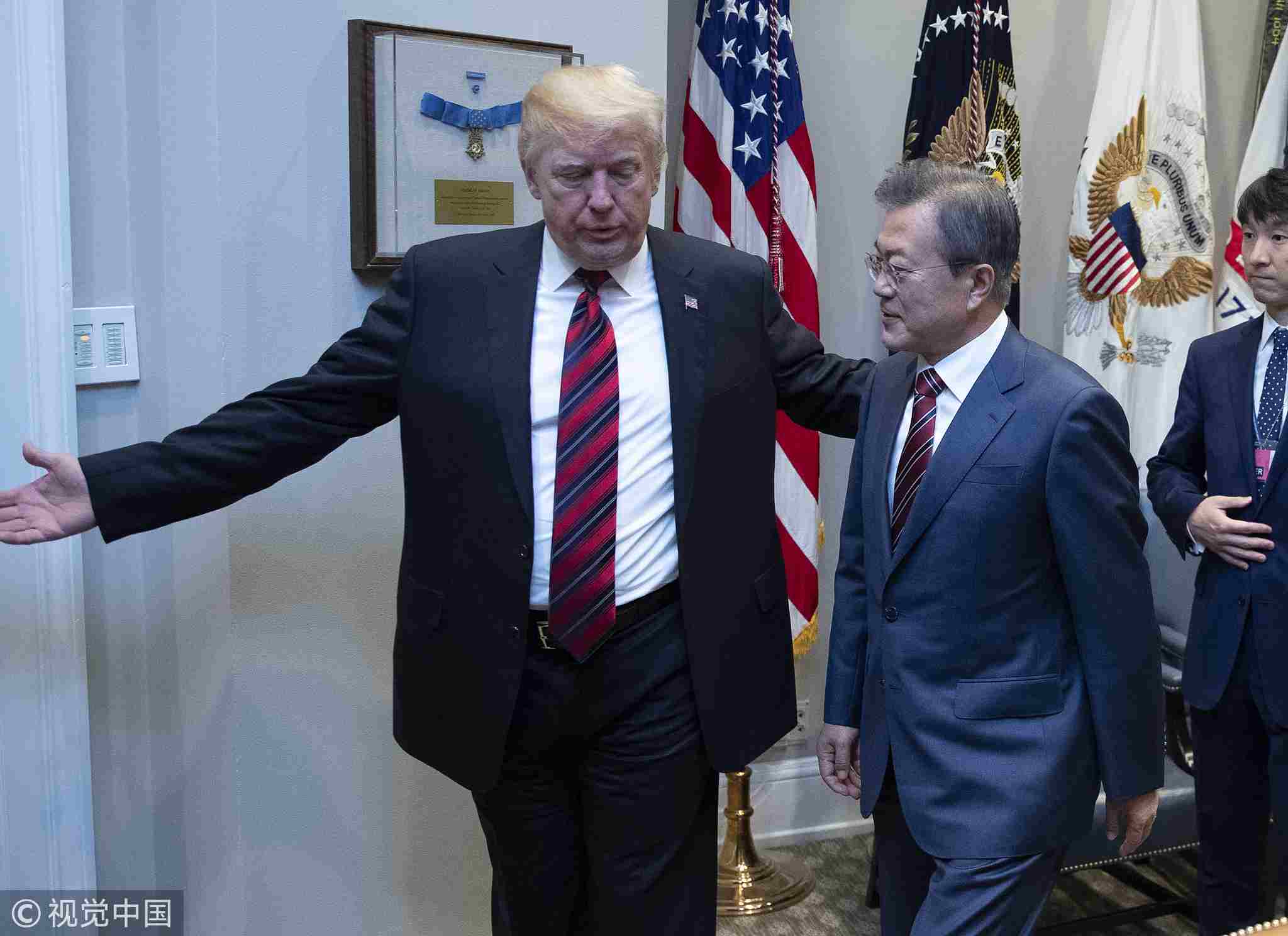
US President Donald Trump (L) guides ROK President Moon Jae-in to a meeting at the White House in Washington, May 22, 2018. /VCG Photo
US President Donald Trump (L) guides ROK President Moon Jae-in to a meeting at the White House in Washington, May 22, 2018. /VCG Photo
Kang Myung-koo raised doubt about President Moon’s optimism and the upcoming summit between Kim Jong Un and Donald Trump. He said that if the final outcome is uncertain and the outcome itself is risky, under such situations actions would try to minimize the loss, rather than maximizing the gain.
“In other words, from President Trump’s point of view, denuclearization, you know, complete denuclearization, so called CVD, and then you know some kind of compensation and economic assistance. That kind of scenario is the best scenario," Kang said.
But from the perspective of Kim Jong Un, you know (DPRK wants) some simultaneous or staged gradual denuclearization, guaranteeing the survival of the regime and the system itself, and gaining more economic assistance or relieving the sanction,” Kang added. He also believed that if both sides back down from the summit, Trump and Kim would lose more.
01:37
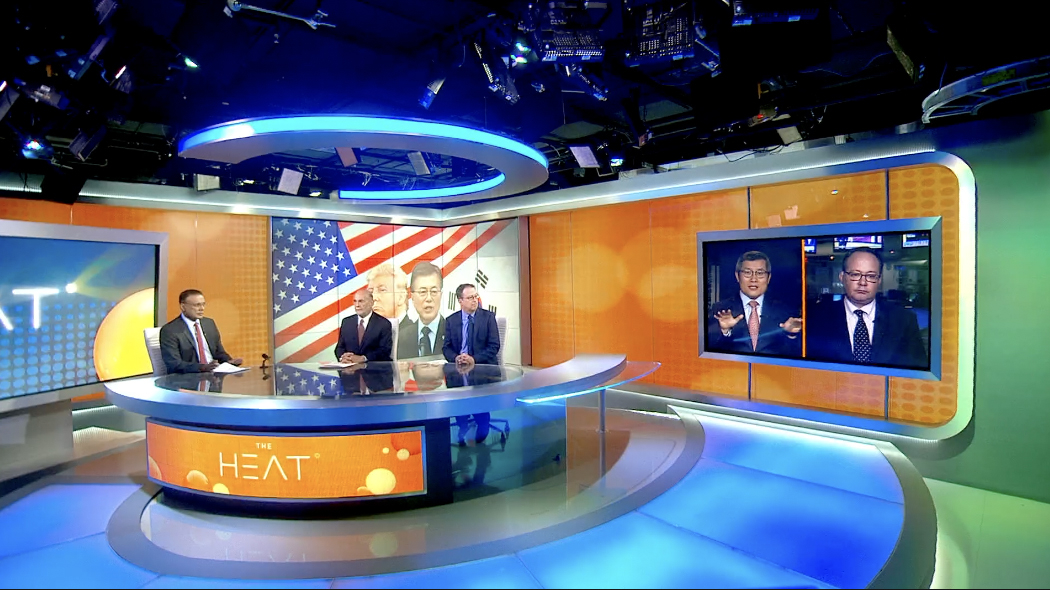
“How (the) DPRK defines denuclearization is going to be one of the main issues on the table when they meet in Singapore,” Jonathan Broder commented. “As far as (the) DPRK is concerned, that also includes the United States denuclearizing the Korean Peninsula. There’s a US aspect of denuclearization as a part of this as well.”
Brian Becker added, “I think there’s something of a difference of opinion and it’s reflective also within the larger Washington establishment, including within the Pentagon.” Brian Becker thought Mike Pence was “out of step with the President” on this issue, as Pence reiterated the Libya model that John Bolton advocated, whereas Trump’s base was not on a warmonger state.
Xu Qinduo explained why there was a strong reaction from the DPRK on the Libya model. “Ultimately, Beijing supports the peace talks wholeheartedly, because peace and stability ultimately is in the interests of Beijing, in the interests of (the) ROK, and also (the) US and (the) DPRK.”
The Heat with Anand Naidoo is a 30-minute political talk show on CGTN. It airs weekdays at 7:00 a.m. BJT and 7:00 p.m. Eastern in the United States.