
Tech & Sci
12:05, 09-Aug-2018
Two years on, death of 30 stranded sperm whales remains a mystery
Updated
12:04, 12-Aug-2018
 ["europe"]
Share







Copied
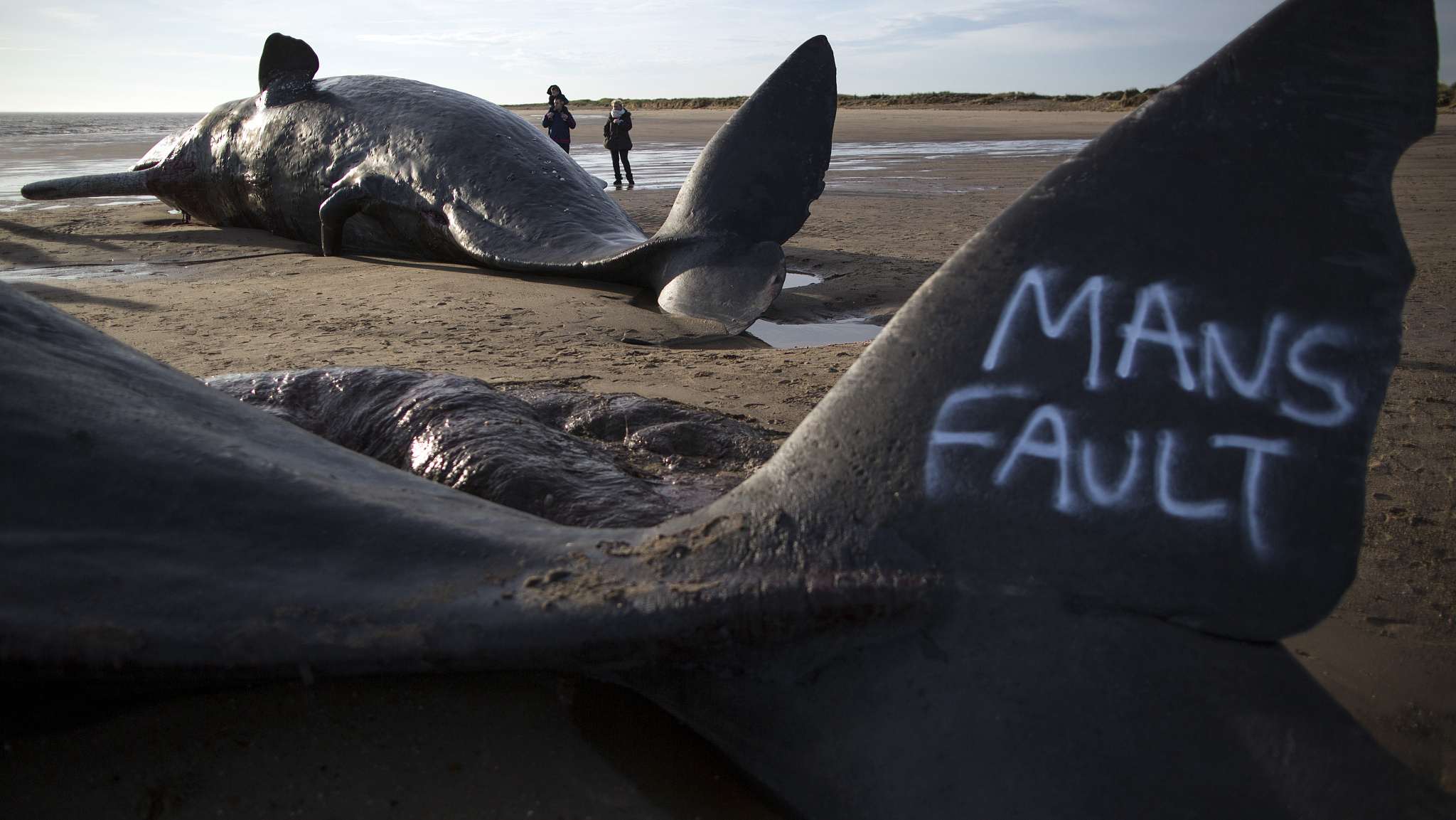
Two years after 30 sperm whales were found stranded in the North Sea, the cause of their death remains shrouded in mystery, as a recent investigation couldn’t ascertain the exact reason behind their deaths.
The whales were found beached for weeks in the coastlines of the UK, France, the Netherlands and Germany in January 2016. The sperm whales, a deep diving species, rarely enter the shallow waters of the North Sea as it has very few squid, their main diet.
Teams of international scientists from Europe had jointly launched a probe to find the reason behind their stranding and subsequent death. The examination of 27 cadavers revealed whales suffering from several infections, including parasites and a new herpes virus.
“Being able to rule out disease as the primary cause of the event makes other causes more likely. So, we continued to investigate and look for different possible causes,” researchers claimed.
The team concluded in a study released today, “that the event most probably occurred due to a combination of several complex environmental factors, rather than any single factor.”
“We found no evidence of man-made trauma due to entanglement or ship-strike, nor was there evidence of significant levels of chemical pollution,” said Lonneke Ijsseldijk, lead author of the study.
“Marine earthquakes, harmful algal blooms and changes in sea surface temperature were also considered as possible drivers of the series of stranding but were ruled out.”
The study also maintained that it remains unclear why these animals entered the North Sea. “They typically inhabit deeper waters from the equator to Polar Regions, and the southern North Sea is a highly abnormal habitat for sperm whales.”
Rob Deaville, co-author of the study, explained that as highly specialized deep-water feeders, whales’ biosonar wouldn’t have been able to function effectively in this very shallow region.
The shallow water becomes an acoustic dead zone for these species, and they were unable to find the way back to deep waters.
“Although it was impossible to conclusively establish a reason for the animal’s entry into the North Sea region, we’ve still been able to learn a significant amount from this study,” he added.
Stranded whales are most likely to die of hunger, dehydration and organ failures. Their heavy body mass is supported by water; When stranded in shallow water, their body weight exerts significant pressure on internal organs.
In 2002, 45 pilot whales re-beached at Cape Cod in Massachusetts. Authorities euthanized 25 to relieve them from the pain of slow death. Every year, thousands of whales, dolphins, and porpoises get into trouble on coastlines around the world.
These large marines and aquatic animals get stranded because of errors in navigation, noise from military exercises, or from exploration surveys at sea for oil and gas, asserted Whales and Dolphin Conservation (WDC), a UK-based charity group.
Scientists from the Zoological Society of London (ZSL), Utrecht University and University of Veterinary Medicine Hannover participated in the study.
(Cover Image, January 25, 2016: Graffiti saying "mans fault" is seen on the tail of one of the three sperm whales that were found washed ashore on a beach near Skegness over the weekend, in Skegness, England. /VCG Photo)