
Opinions
11:33, 31-Aug-2018
China's 'reciprocal' model or Western aid 'handouts', which way for Africa?
Updated
10:52, 03-Sep-2018
 ["china"]
Share







Copied

Editor's note: Francis Onditi is the dean of the School of International Relations and Diplomacy at Riara University. The article reflects the author's opinions, and not necessarily the views of CGTN.
As China-Africa relations deepen, the debate rages on whether or not African states should continue depending on Western-led aid 'handouts' or embrace other progressive models of development?
Nothing can be of great importance to this debate than the Forum on China-Africa Cooperation (FOCAC). The leverage for FOCAC lies in the inventiveness of Beijing to embed the principles of 'reciprocity' and 'non-interference' in her engagement with African states.
Reciprocity is particularly important at this time when African states are undergoing political and economic renaissance within a turbulent global system. In this erratic system, China's rapid economic growth could see the shift of development focus from the traditional North to South, with China taking center-stage.

Passengers ride Ethiopia's new tramway on September 20, 2015, in Addis Abada. /VCG Photo.
Passengers ride Ethiopia's new tramway on September 20, 2015, in Addis Abada. /VCG Photo.
This shift of development focus might usher in a new era of 'intense strategic competition' for Africa. This competition might culminate into a tug of war-the 'reciprocal’ powers versus 'the handout' powers. In my humble prediction of this scenario, the epicenter of the struggle will definitely be 'Africa'.
It is early to conclude who will win the 'war'. But, there are empirical indicators showing a rapidly growing strength of China. In this foreseeable future, what are the opportunities for Africa? How should FOCAC handle the imminent threats that might stifle China-Africa relations?
The China-Africa relationship is implemented within the 12-year-old FOCAC framework.
FOCAC builds on China's long-term relationship with more than 50 African states based on a win-win strategy. Critiques have faulted the China-Africa cooperation as one founded on twisted economic prospects, with African states playing the role of 'underdogs'.

VCG Photo
VCG Photo
However, as development trend confirms, China's role in Africa's infrastructure and construction industry remains steadfast. China's investment in the continent increased from 20 billion US dollars in 2012 to 60 billion US dollars in 2014.
Some have contested that there is a clear moral imperative attached to China’s involvement in Africa. One, on the list of denunciations against Chinese engagement in Africa, is the violation of human rights.
But, when FOCAC is contrasted with the insidious western-led aid culture on the continent, it would be unusual to deny that despite the international assistance that flows to Africa, the continent remains debt-laden.
The continent receives 50 billion US dollars of aid annually. It is implausible to note that over the past 60 years 1 trillion US dollars of development-related aid has been transferred to Africa. Yet the continent's real per-capita income today is lower than it was 50 years ago.
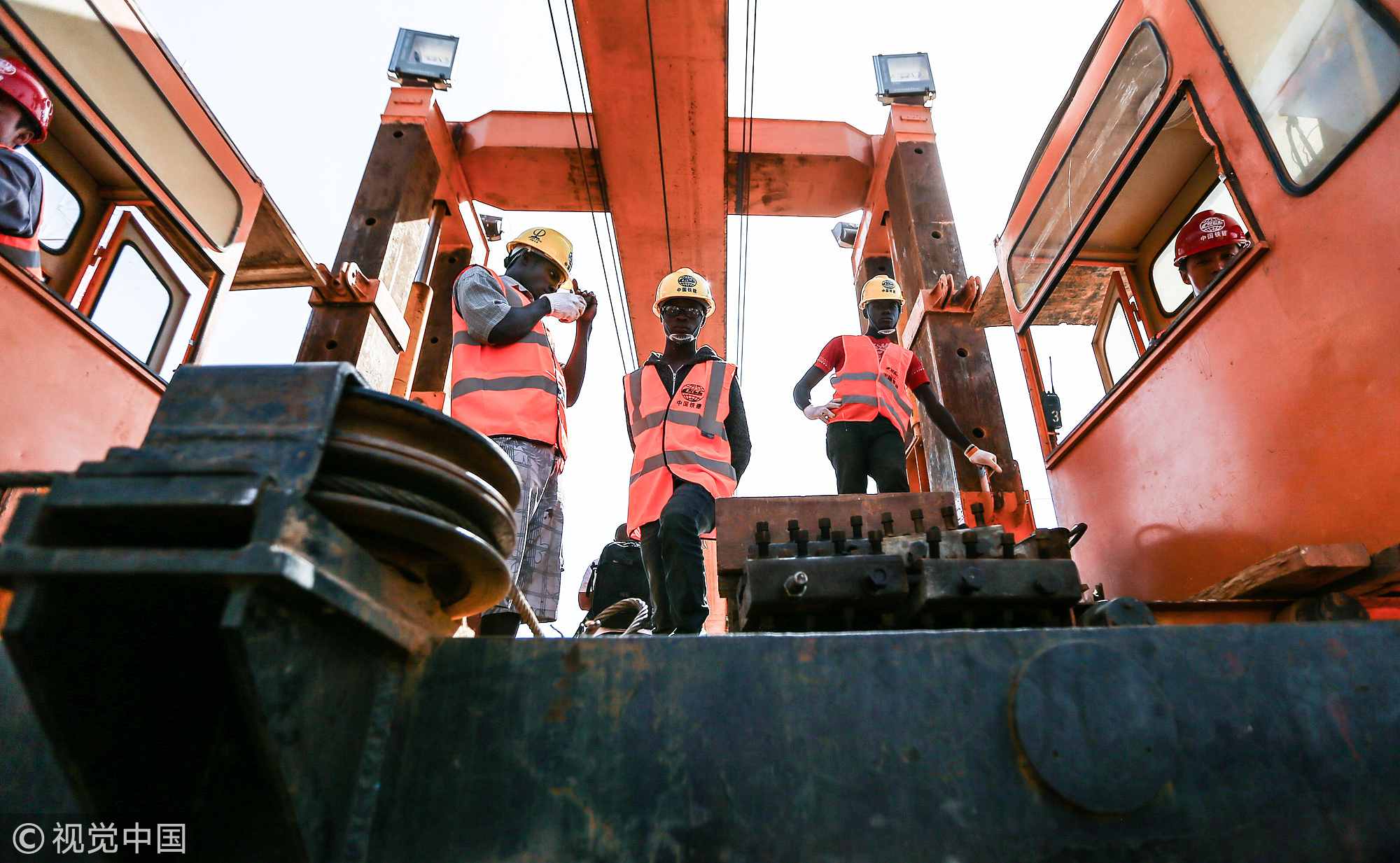
On December 1, 2014, Africa's first China-standard modern railway was paved in Nigeria. /VCG Photo.
On December 1, 2014, Africa's first China-standard modern railway was paved in Nigeria. /VCG Photo.
This 'handout' type of development has been described as a 'humanitarian disaster'. No wonder, African countries still pay close to 20 billion US dollars in debt repayment per annum, a stark reminder that aid is impulsive.
While the 'handout' type of development is struck in the infusion of aid leading to a vicious cycle of debts, China's 'reciprocal' value-based approach is anchored on respect for each other. This value system frames China's foreign policy, including trade relations with African states.
China's rapid economic growth in the last decades has raised demand for African goods. This demand has been traded under better terms of trade, leading to improved export volumes from Africa.
With deepening China-Africa trade ties, the continent's growth rate averages 7 percent. Between 2002 and 2011, the poverty rate dropped by 13 percentage points. On a similar note, the per capita GDP growth rate of an average African country has been 2.8 percent in 2000 from the 0.6 percent in the 1990s.
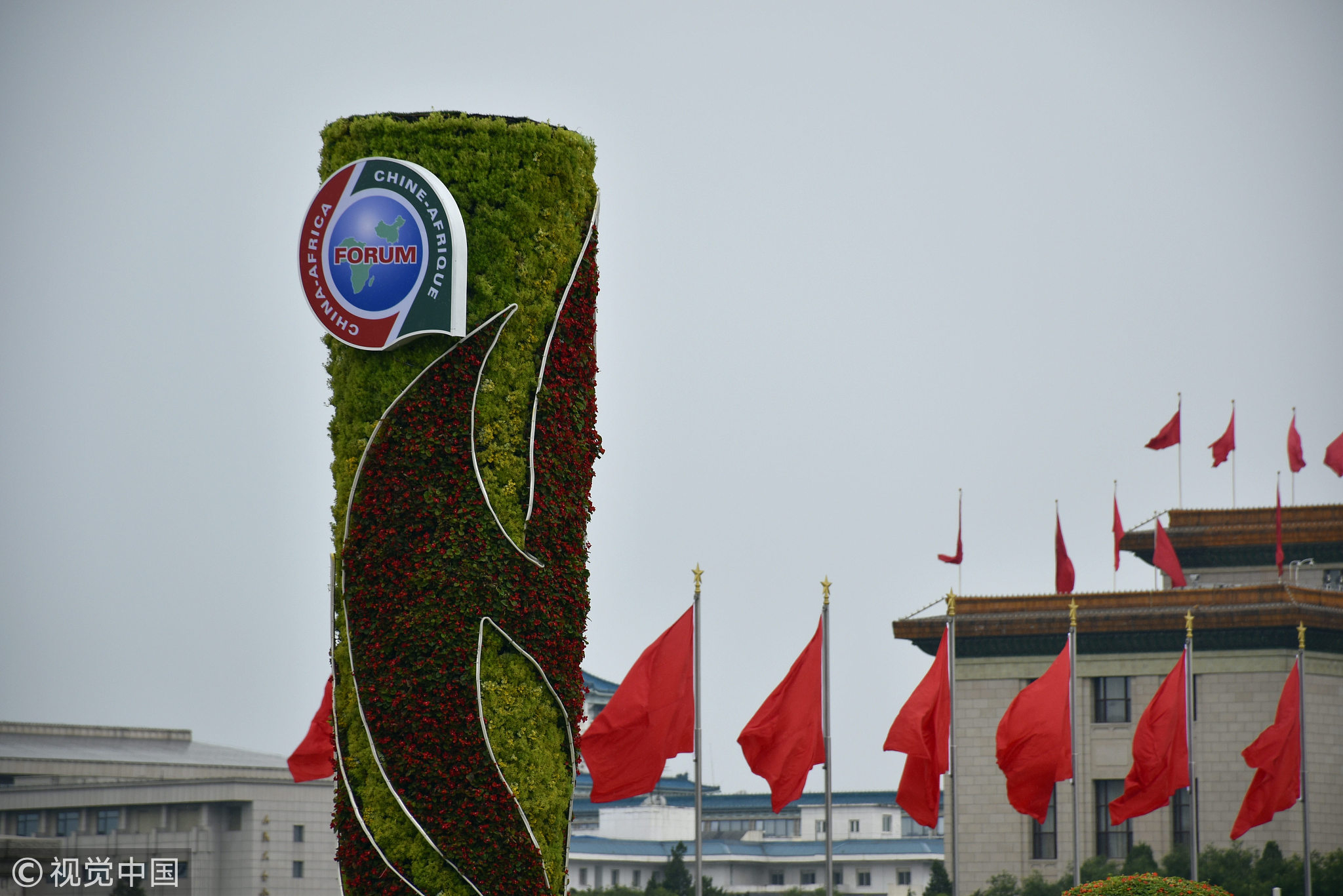
VCG Photo
VCG Photo
The World Investment Report puts China's direct foreign investment (FDI) at 32 billion US dollars in 2014 compared to 15 billion US dollars in 2012. Although this figure represents less than 5 percent of the total stock of foreign investment on the continent, China's share of the overseas outward direct investment (ODI) would still be modest.
Besides the economics of China-Africa relations, this cooperation could immensely contribute to the evolution of institutions and norms:
The establishment of Confucius Institutes in 2005 at the University of Nairobi has led to the establishment of more than 46 similar institutions across the world.
The Export-Import Bank of China and the China Development Bank should closely engage African macroeconomic policies.
For the sustainability of this relationship, strong foundations of 'mutual symbiosis' as opposed to what critics have described as ‘self-interest’ relationship should be the barometer of success.