
Politics
23:00, 25-Jun-2018
France resists Balkan accession talks despite EU's open door
 ["china"]
Share






Copied
France and the Netherlands are holding out against European Union plans to allow membership talks with Albania and Macedonia over concerns the decision could further stoke anti-immigration sentiment in the bloc, EU diplomats said.
With broad support for membership talks from other EU governments and the European Commission, Albania and Macedonia hope Europe ministers will agree on the go-ahead during the meeting on Tuesday in Luxembourg, which EU leaders would support at a summit on Thursday.
After Macedonia and Greece resolved a decade's old dispute about the former's name which had blocked the membership process, opening talks would mark the most explicit step yet in the bloc's attempts to renew its expansion to the six western Balkan countries after years of neglect for the region.
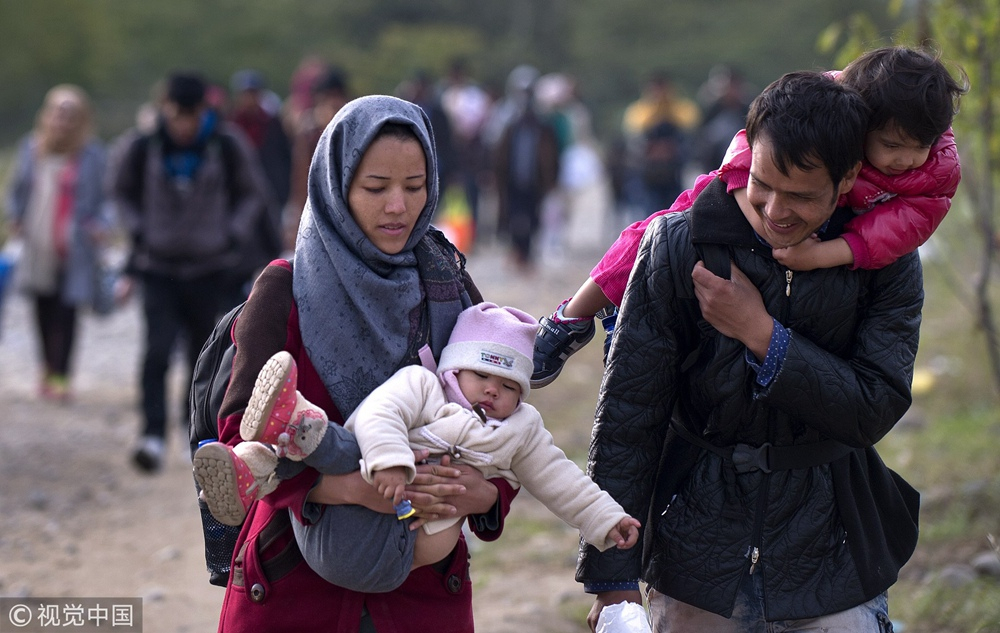
October 29, 2015: Migrants cross the Greek-Macedonian border near Gevgelija. /VCG Photo
October 29, 2015: Migrants cross the Greek-Macedonian border near Gevgelija. /VCG Photo
But French President Emmanuel Macron told the European Parliament in April he could not support so-called enlargement without more internal reform of the bloc first, and diplomats say the French position has not changed.
Other diplomats say migration concerns are at the core.
"Reforms are expected before we can open negotiations because we have a high level of requirements," said a French diplomatic source.
France and the Netherlands sent other EU governments a paper in May saying the lack of judicial reforms, endemic corruption and organized crime were reasons why Albania and Macedonia were not ready for EU membership talks, according to diplomats.
"Their view is that the conditions for opening accession negotiations are not there," an EU diplomat said.

European Commission President Jean-Claude Juncker (L) shakes hands with French President Emmanuel Macron during an informal EU summit on migration at EU headquarters in Brussels, Belgium on June 24, 2018. /VCG Photo
European Commission President Jean-Claude Juncker (L) shakes hands with French President Emmanuel Macron during an informal EU summit on migration at EU headquarters in Brussels, Belgium on June 24, 2018. /VCG Photo
Two other EU diplomats and two EU officials said Macron's deeper concern was that opening membership talks with Albania and Macedonia would play into the hands of far-right politicians who are gaining support with populist pledges to stop migration.
"Macron feels that this opens a flank to the political right because of the reputation of organized crime in Albania," an EU official said. "They don't want to open this before European elections next year," the official said, referring to next May's vote for the European Parliament.
Germany on board
The European Union's chief executive Jean-Claude Juncker, who visited Albania, Bosnia, Kosovo, Macedonia, Montenegro and Serbia in March, has warned the Balkans could face a return to war without any hope of joining the bloc.
The six countries, all bar Albania emerging from the breakup of Yugoslavia, are considered future members.
Britain's imminent departure from the European Union and Turkey's stalled membership bid prompted the Commission to propose an intensification of accession talks with the Western Balkans, even if the most advanced aspirants, Serbia and Montenegro, are unlikely to join before 2025 at the earliest.
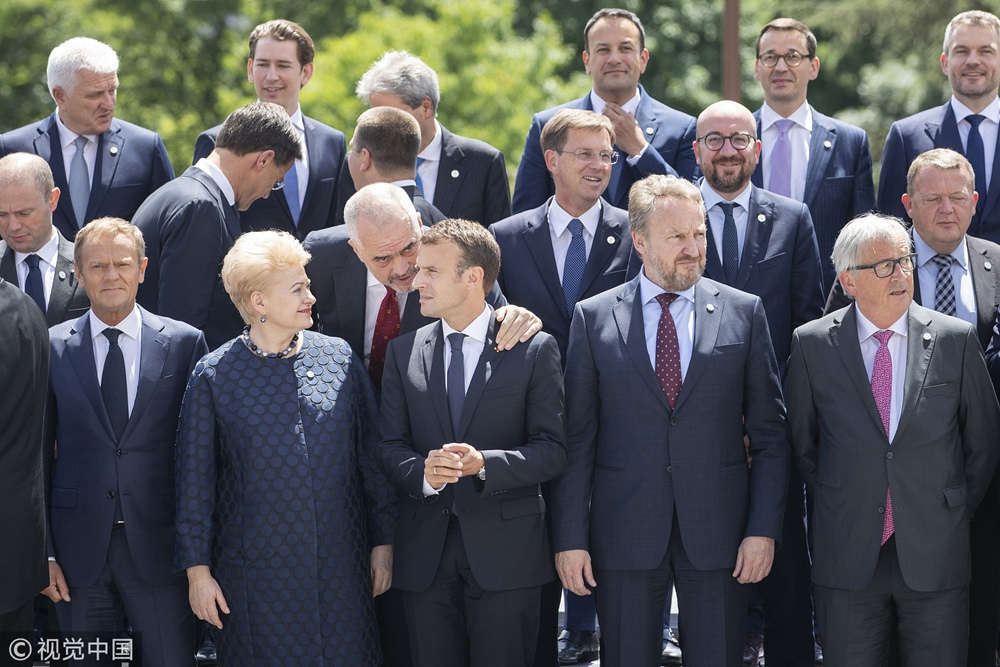
Political leaders pose for a photo during an EU-Western Balkans Summit in Sofia, Bulgaria on May 17, 2018. /VCG Photo
Political leaders pose for a photo during an EU-Western Balkans Summit in Sofia, Bulgaria on May 17, 2018. /VCG Photo
While Germany shares French concerns about whether talks could start with Albania and Macedonia, Chancellor Angela Merkel has decided to back expansion for geopolitical reasons.
"France should see the strategic dimension of bringing the Western Balkans closer to EU," a German government source told Reuters. "We argue that the opening talks are not the closure of accession negotiations," the source said.
Commission officials agree. They see a compromise with Paris by stressing that EU membership is still a decade away because of the many reforms needed to join the bloc.
The formal negotiations would only be opened in about a year's time because they would need a so-called EU conference with support from all capitals to get underway.
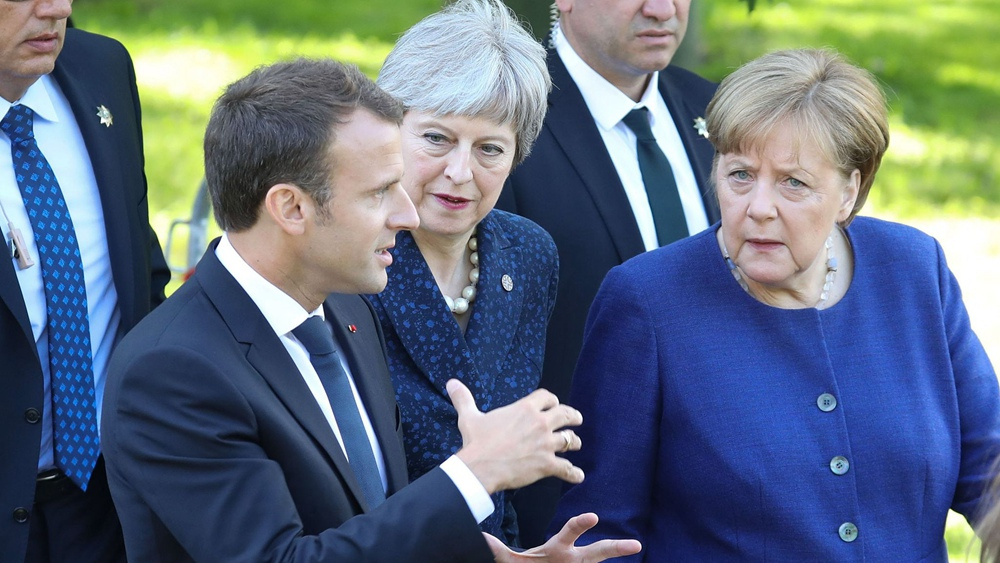
(Top photo: French President Emmanuel Macron (L), Britain's Prime Minister Theresa May (C) and German Chancellor Angela Merkel walk together during an EU-Western Balkans Summit in Sofia, Bulgaria, May 17, 2018.)
Source(s): Reuters