
Money Stories
19:32, 02-May-2019
'A big bula' from ADB annual meeting in Fiji
 ["other"]
Share







Copied
09:22
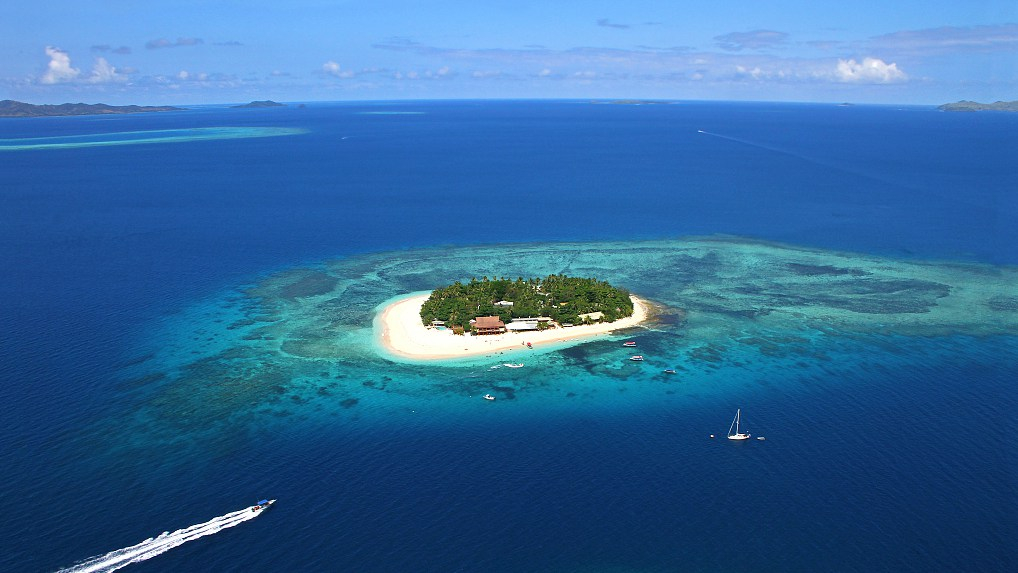
The 52nd Annual Meeting of the Asian Development Bank (ADB) is currently underway in Nadi, Fiji, the beautiful island country in the Pacific Ocean. During the press conference, ADB President Takehiko Nakao was asked whether the ADB would reduce its lending to China, like what the World Bank is doing.
"Regarding our lending to China, it is now focusing on climate change and environment. And country performance strategy for China for 2021 to 2025 will be discussed next year," the president said.
03:05
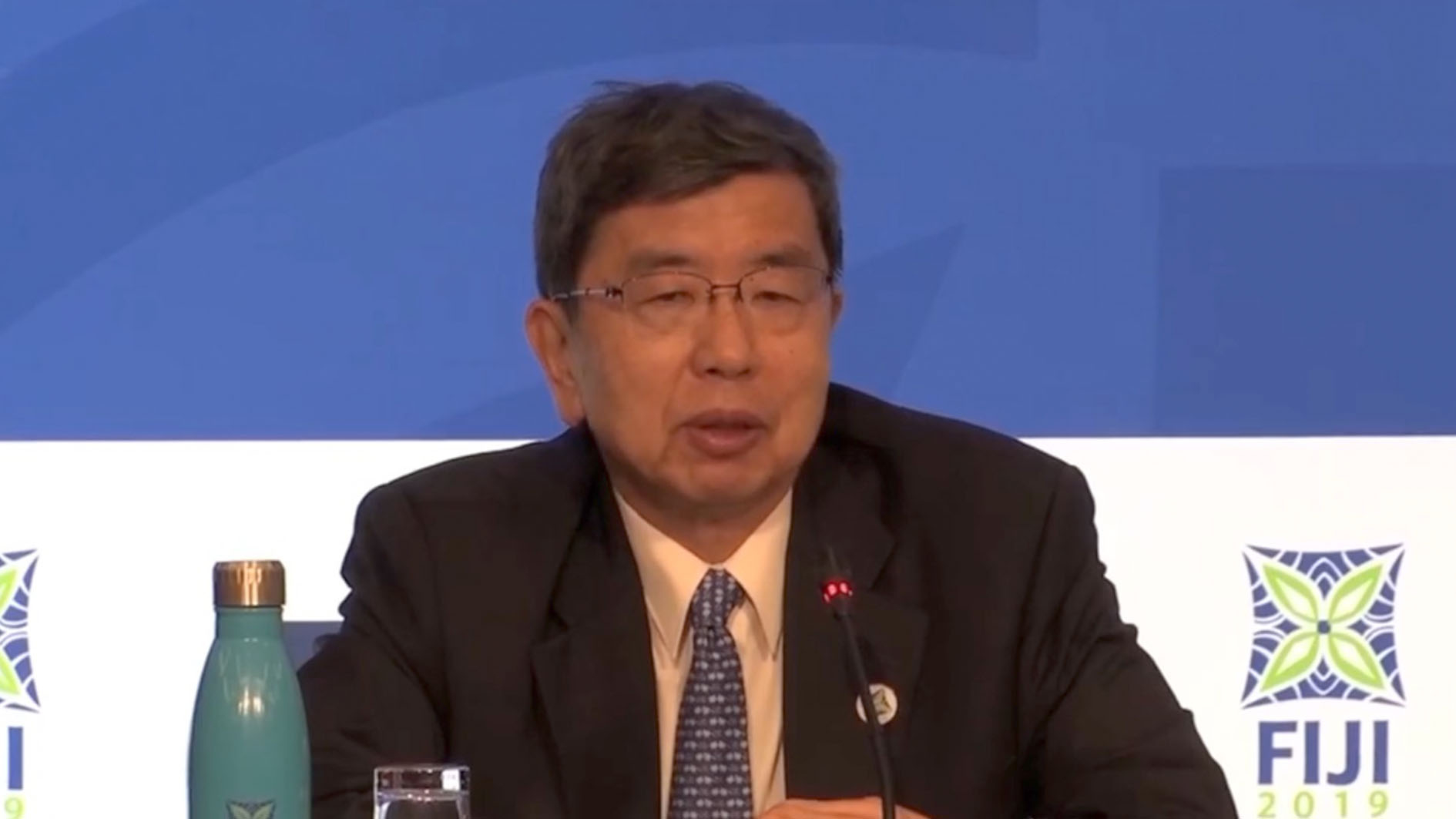
"We already reduced our lending to China in share," he said, adding that the ADB's committed loans to China fell to 12 percent of its total in 2018 from 19 percent in 2013 and "in approval basis, it declined from 14 percent to 11 percent".
This is the first time the annual meeting is held in a Pacific developing country, which highlights the importance of protecting the environment. The ADB just announced it would step up assistance to the group of 15 countries ranging from Papua New Guinea (PNG) to Vanuatu, which are vulnerable to the damage of climate change.
The so-called "Action Plan for Healthy Oceans and Sustainable Blue Economies" will expand financing and technical assistance for ocean health and marine economy projects to five billion U.S. dollars from 2019 to 2024, including co-financing from partners.
"It's a historic announcement," said Craig Leeson, director of "A Plastic Ocean" and Global Chief Evangelist for Plastic Oceans International.
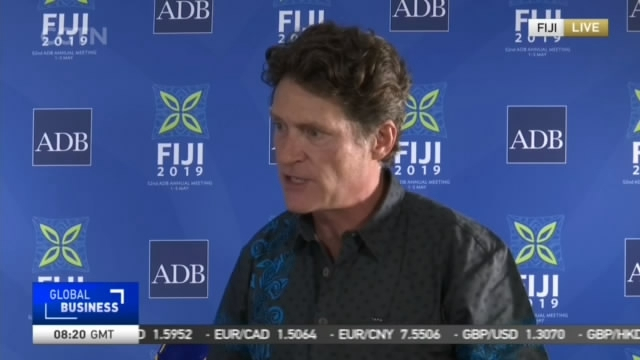
Craig Leeson, director of “A Plastic Ocean” and Global Chief Evangelist for Plastic Oceans International. /CGTN Photo
Craig Leeson, director of “A Plastic Ocean” and Global Chief Evangelist for Plastic Oceans International. /CGTN Photo
"It really does make me optimistic for the future… Economies realized 2.5 trillion U.S. dollars through oceans to the global economy. And if we are going to maintain that, then we need to protect, restore and sustain that environment and ecosystem," he added.
Ocean ecosystems have been pushed to the brink of collapse by the threats of climate change, pollution, and illegal and unregulated fishing, among others. Unless immediate action is taken, about 90 percent of Asia and the Pacific's coral reefs will be dead by 2050, and all commercially exploitable fish stocks will disappear by then.
"What we see is that unless we fix climate change, unless we deal with over-development and over-fishing, then we are not going to have these (ocean) resources – we need these resources as the species to survive," Leeson warned.
He appreciated ADB's announcement in translating that shift into the actual economies themselves in the very local and regional way.
"Five billion U.S. dollars is a lot of money. And I think if that is deployed correctly, particularly at the local level and all sources sectors, in providing employment to women, in subsidizing new industries and new entrepreneurs moving away from fishing exploitation into tourism, diving, into areas where there is big dollar, and then it can be achieved," he suggested.
Moreover, Leeson remarked legislation as the key, saying that "we have to force not only companies but also individuals to act responsibility."