
Business
13:17, 21-Jun-2018
Trump nominee for EXIM Bank could boost trade after 3-year hiatus
 ["north america"]
Share







Copied
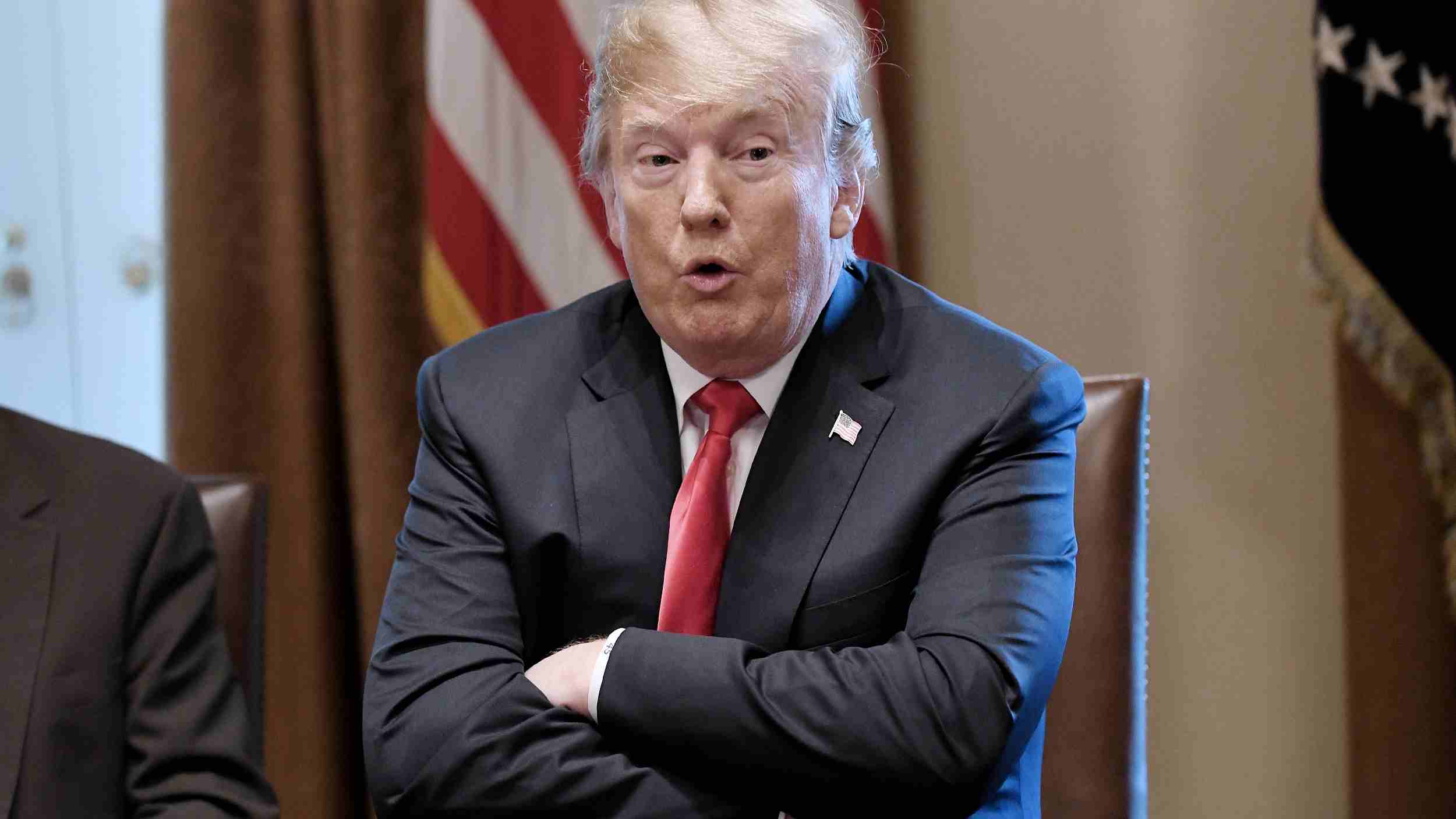
A three-year hiatus for the US Export-Import Bank (EXIM Bank), believed to have cost American exporters as much as 40 billion US dollars in lost trade deals, may be over, as the White House has expected while nominating a new president.
On Wednesday, the White House announced that President Donald Trump had nominated Kimberley Reed for the top role at the EXIM Bank, after previous nomination Scott Garrett was rejected by a Senate panel in December.
What is the US EXIM Bank?
The institution is supposed to help US companies with export financing, acting as an intermediary between exporters and importers by guaranteeing loans, providing insurance to exporters and financial support to foreign parties looking to buy American goods.
However, the EXIM Bank has been left mostly dormant since 2015, with no leader in place and several board members refusing to take up seats. Without a board in place to ratify decisions, EXIM has been unable to help out with any foreign trade transaction worth more than 10 million US dollars.
In the meantime, export-import banks and institutions backed by foreign governments have continued to support their own domestic companies, with Europe and China exploiting the gap left by the deadlock hanging over the US EXIM Bank since June 2015.
In 2014, the last year that the bank had a functioning board in place, the bank provided financing on deals worth more than 27 billion US dollars, supporting 164,000 jobs in the US, according to the Financial Times.
According to Reuters, once the bank comes back online with a full board, it will have to deal with a backlog of trade deals worth 42 billion US dollars seeking financing.
Why the three-year delay?
While the EXIM Bank once played an important role in boosting US exports and making “made-in-America” goods more competitive on the international stage, many conservative Republicans – including Donald Trump at one stage – have spoken out against the bank.

EXIM Bank was previously criticized for being "Boeing's Bank," after as much as 40 percent of EXIM financing went to subsidizing the aircraft manufacturer. /VCG Photo
EXIM Bank was previously criticized for being "Boeing's Bank," after as much as 40 percent of EXIM financing went to subsidizing the aircraft manufacturer. /VCG Photo
The institution was blamed for providing too much support to giant companies like Boeing at the expense of SMEs, while other opponents spoke out against the use of taxpayer money in supporting “corporate welfare” for private enterprises.
Trump told the Wall Street Journal last April that he was initially against the EXIM Bank, but had changed his mind, saying “instinctively you would say it’s a ridiculous thing, but actually it’s a very good thing and it actually makes money.”
However, Trump’s first nominee for the role of president, Scott Garrett, was vocally opposed to the mission of the bank and was rejected by a Senate committee amid concerns that he could entirely close the 84-year-old institution.
How could a new EXIM president change trade for the US?
After heavy criticism for imposing tariffs on billions of dollars’ worth of foreign imports in the name of boosting US competitiveness and tackling the trade deficit, Trump probably should have looked closer at resuming EXIM’s trade financing first.
Talking to the New York Times, Fred Hochberg, the bank’s last chairman who left his post in 2017, said “if you want to be able to reduce trade deficits and you want to be able to export more, particularly capital goods, that’s what an Export-Import Bank does.”
The US has lost ground on trade in recent years after other countries provided extensive support to domestic enterprises looking to expand business overseas, with Chinese companies supported by the China Development Bank, Sinosure and the Chinese Import-Export Bank.
Sinosure, China’s provider of export insurance, underwrote 524.6 billion US dollars’ worth of insurance to domestic firms in 2017, according to China Daily.
The China EximBank meanwhile signed an agreement with the National Development and Reform Commission in March this year to provide financing worth 800 billion yuan (126.4 billion US dollars) to domestic emerging industries, according to Xinhua.