
Biz Analysis
17:28, 02-Apr-2019
Where is the yuan's exchange rate heading in 2019?
Updated
20:24, 02-Apr-2019
 ["china"]
Share







Copied
02:27

The Chinese yuan's exchange rate in 2019 will be basically stable, though variations are likely, according to a financial analyst.
"There are three possible scenarios," Guan Tao, senior fellow of the China Finance 40 Forum and former director of the Department of Balance of Payments at the State Administration of Foreign Exchange told CGTN after giving his original assessment at the Refinitiv 2019 RMB Outlook Summit in Shanghai.
"Firstly, if the market has confidence in the government's determination and capacity to keep the exchange rate stable, the market will not attack the yuan. In this case, the yuan will see two-way fluctuations.
"Secondly, if the Chinese economy stabilizes while the U.S. dollar weakens, and China-U.S. trade relations improve, these developments will boost market confidence and then the yuan may appreciate, which we have seen at the beginning of this year.
"And thirdly, we should also prepare for the worst."
Guan cautioned that "if the economy sees unexpected downward pressure, while the U.S. dollar strengthened due to various reasons, and China-U.S. trade relations worsen, market sentiment and supply-demand relations may take a hit and affect the yuan's exchange rate."
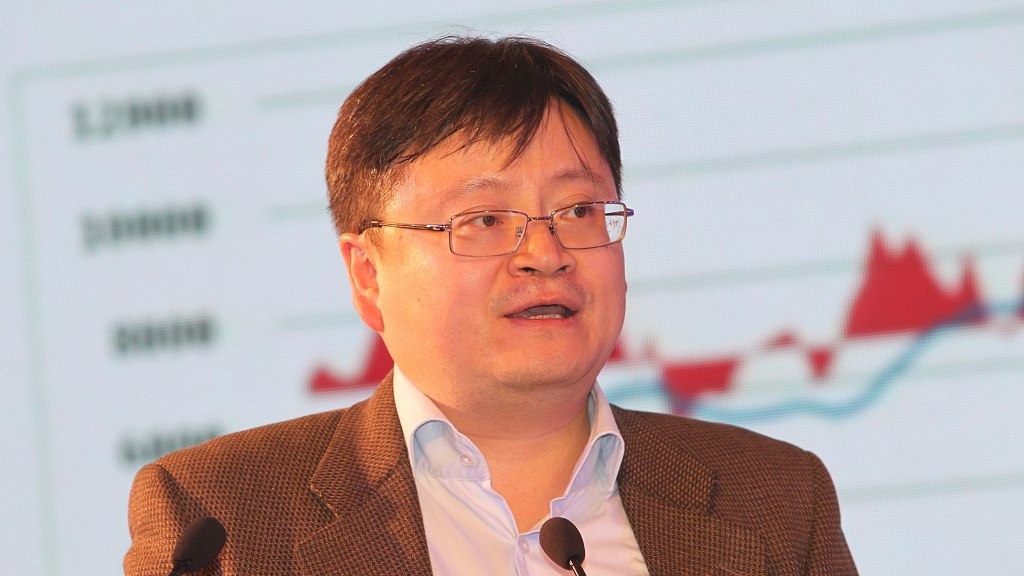
Guan Tao, senior fellow of the China Finance 40 Forum and former director of the Department of Balance of Payments at the State Administration of Foreign Exchange. /VCG Photo
Guan Tao, senior fellow of the China Finance 40 Forum and former director of the Department of Balance of Payments at the State Administration of Foreign Exchange. /VCG Photo
He also shared his insights on the Chinese economy going forward. Many believe that the economy will bottom out in the second half of the year due to the government's stimulus package.
"Now the mainstream expectation is we will see stabilization and improvement in the second half (of 2019), after a slow start. I think the possibility is increasing," Guan told CGTN.
Meanwhile, he remarked on the importance of "resilience" during the shift from high-speed growth to high-quality growth.
"We should pay more attention to indicators such as employment, financial risks. We should also reduce reliance on credit expansion and investment, and focus on consumption, service industry and innovation-driven growth," he explained.
Talking about deleveraging financial risks, Guan projected that the government would continue to lower the leveraging level of state-owned sectors, but at the same time, it would increase financing to small- and medium-sized enterprises.