
World
16:38, 02-Jul-2018
The Rohingya refugees stranded in no man's land
Updated
16:23, 05-Jul-2018
 ["china"]
Share







Copied
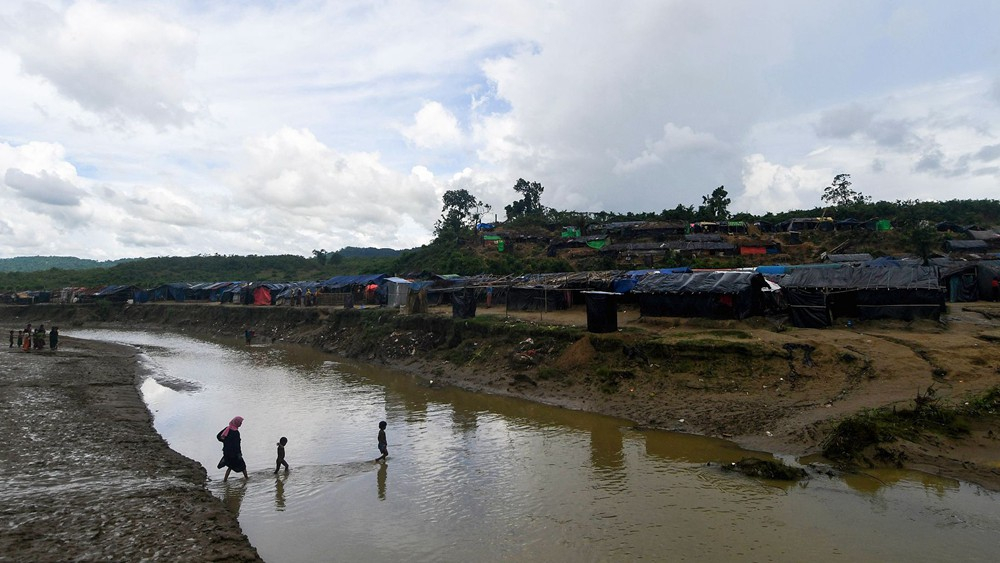
Crossing the three posts of Border Guard Bangladesh, the security force that guards the border, one can see a hamlet of temporary shelters across the Tombru canal. With the first spell of heavy rains, the canal is full with muddy rainwater and children can be seen having fun in the summer heat.
It's the canal that divides Myanmar and Bangladesh. Just between the canal and the border fence of Myanmar is a small stretch of land called the "no man's land." More than 1,200 Rohingya families live along this strip of land divided into three sections -- north, south and middle.
They were the first ones to arrive here when the military crackdown began across the border in Myanmar. "We stayed here because this was closest to home just outside the border. One of the reasons not to move out from here is that we feel close to home and initially we thought we would go back soon," explains Dil Mohammed, one of the leaders of the Rohingya camp in no man's land. By the time they changed their minds, registrations of new refugees were suspended.
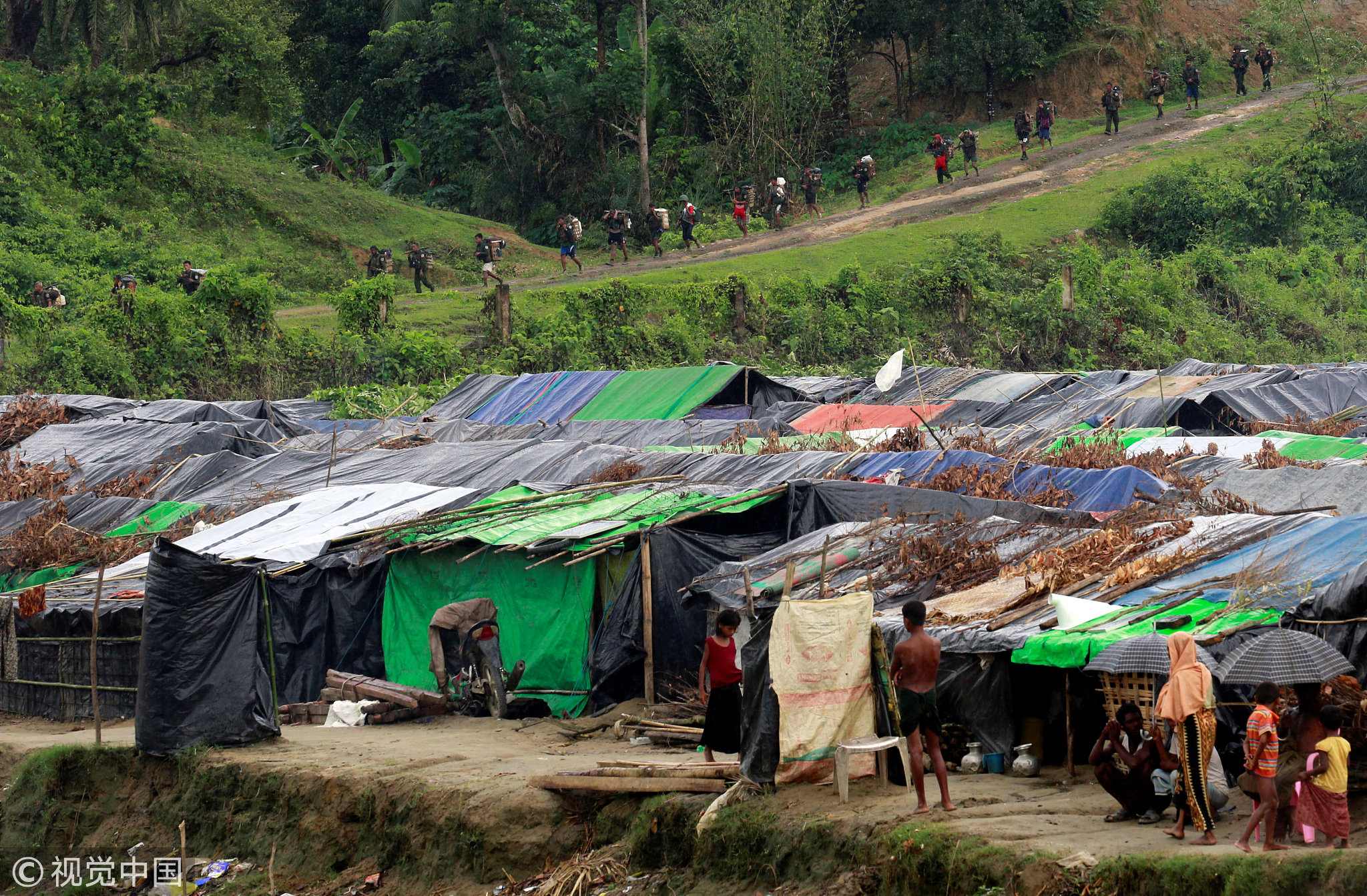
Rohingya refugees stand outside their temporary shelters in "no man's land" between Bangladesh-Myanmar border, September 9, 2017. /VCG Photo
Rohingya refugees stand outside their temporary shelters in "no man's land" between Bangladesh-Myanmar border, September 9, 2017. /VCG Photo
The love for home forced them to camp here but there are many other hurdles in their survival here. Aid agencies provide food and some shelter, but for other needs, they have to fend for themselves.
About 10 people have died since they moved here. Of these, two were children who died of diarrhea and pneumonia. They could not save a pregnant woman and her baby because of the lack of any medical facility in no man's land. Mohammed shares with us the woes of the people living there. "In emergency case, we have to depend on BGB to help us to take our people to other camps, where a medical facility is available."
They are allowed through the Bangladesh border for two hours daily to pick up necessities. And twice a week, doctors visit the camp to provide medical help. Leading this life of hardship for almost ten months, many are now giving up. "We won't be able to stay here anymore. We are trying to move to another place. We came here to save our children. I feel that my children will die here. The river water rises till here when it rains. Our houses will drown (sic)," says Noor Ayehsa, almost in tears.
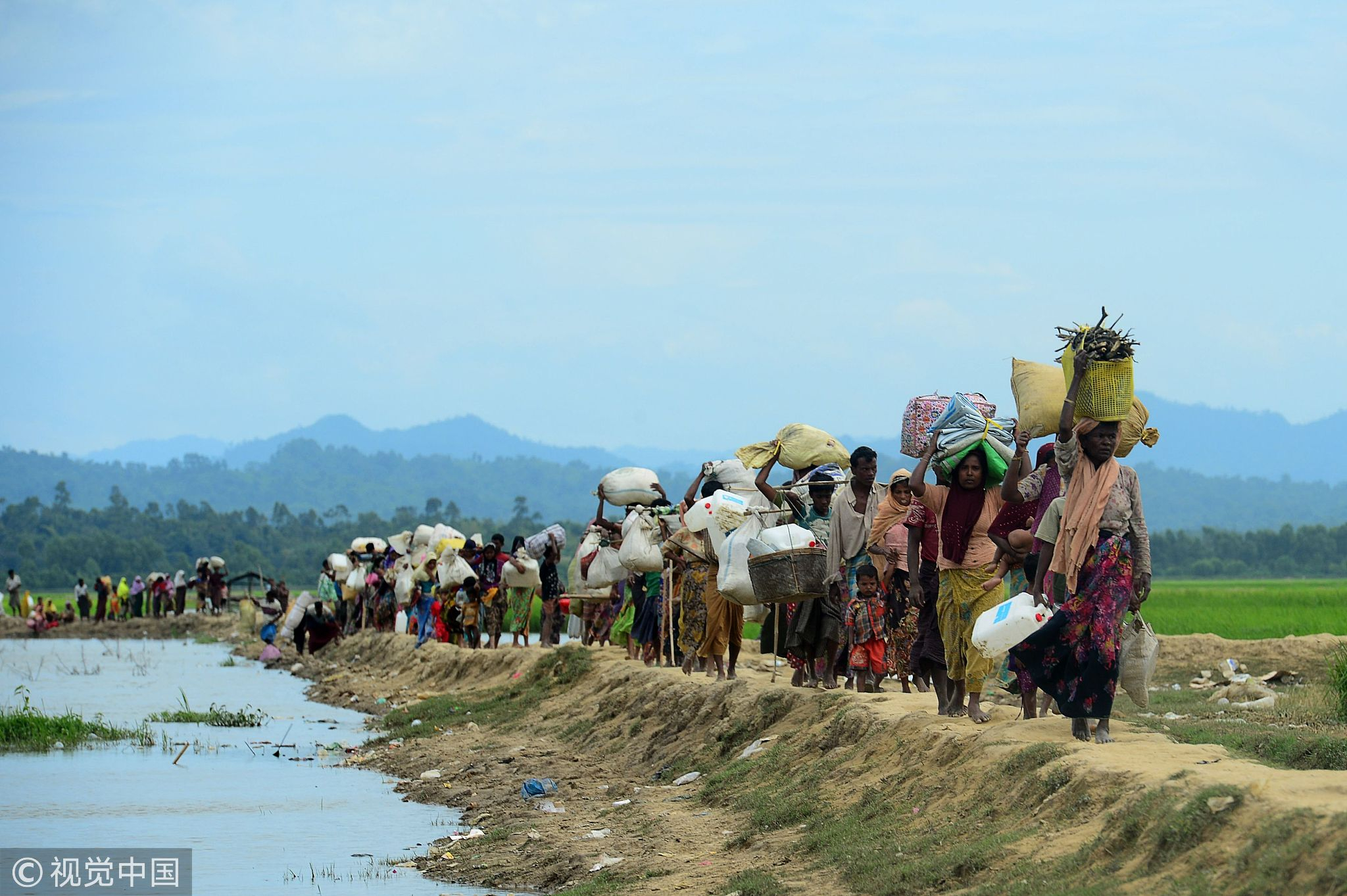
Rohingya refugees walk near the "no man's land" area between Bangladesh and Myanmar, October 19, 2017. /VCG Photo
Rohingya refugees walk near the "no man's land" area between Bangladesh and Myanmar, October 19, 2017. /VCG Photo
The last heavy spell of rain was disastrous for the people as the water level in the canal rose up toward the houses. It was a flood-like situation. On top of the difficulties they face there is pressure from the Myanmar military to vacate the no man's land. Mohammed Rafique explains the fear of living here: "We live here in fear always. They try to chase us by shouting on the mike and speakers all day saying you are Bengali go away to Bangladesh. We feel scared and now water is also rising in the canal. We are really afraid to stay here."
These families live in the shadow of fear with just one hope that soon they will be back home. They have stayed back here with the hope of being the first ones to be repatriated. Though talks are on to send back the ones stuck in no man's land, nothing concrete has yet come out.