
Politics
08:50, 08-May-2018
How will Premier Li's visit reset China-Japan ties?
 ["china"]
Share







Copied
03:26
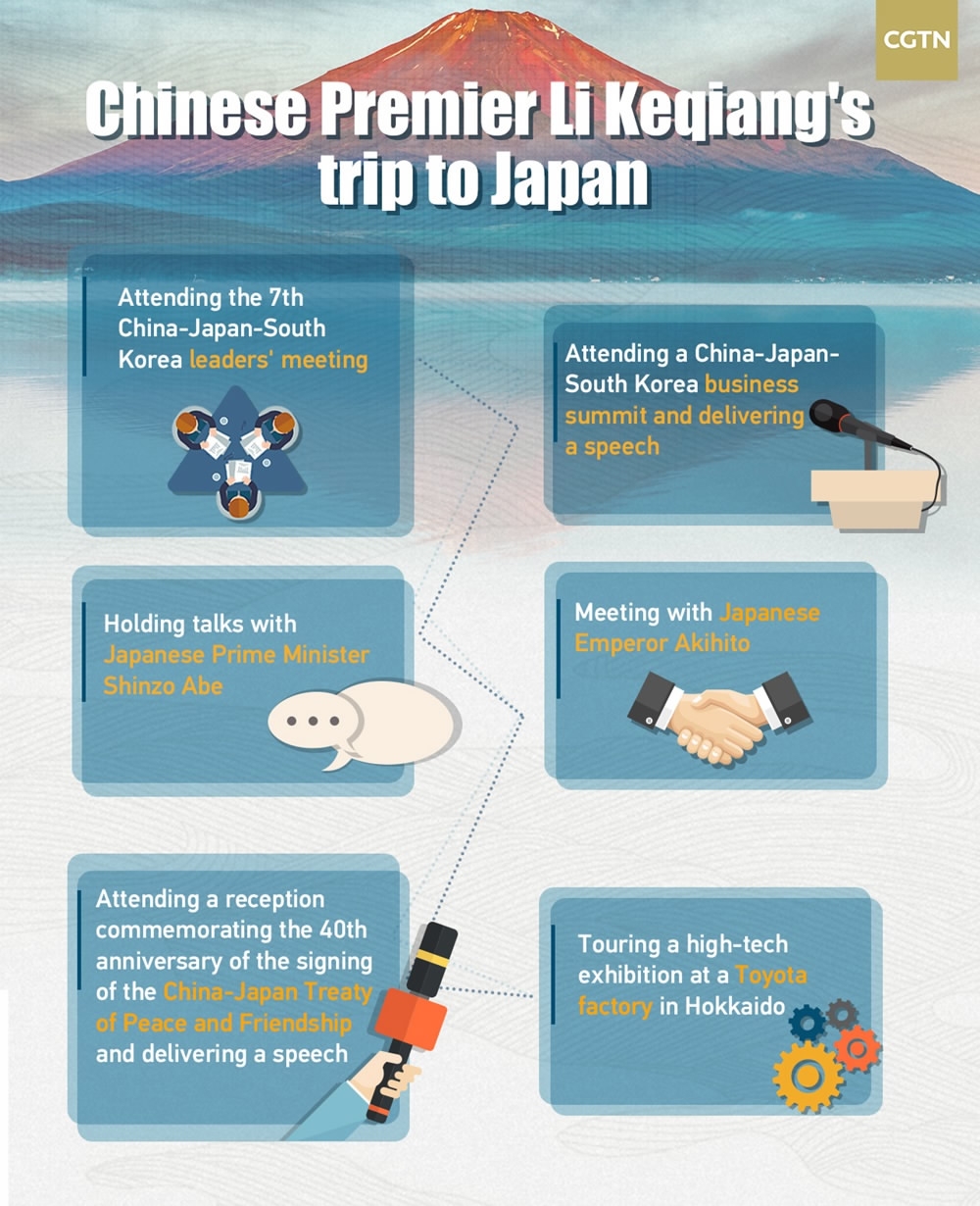
Chinese Premier Li Keqiang will pay an official visit to Japan this week, where he will also attend the seventh China-Japan-South Korea leaders' meeting. It is the first trip to Japan by a Chinese premier in seven years and the first official visit since 2010.
Six years after an escalation of tensions over the Diaoyu Islands, the two East Asian neighbors are trying to bring their relations back on normal track. But after a decade of twists and turns, Beijing remains cautious.
"If we have seen a spring in the China-Japan relationship, we must also watch out for any possible return of chills," Li said at a press conference on the sidelines of China's annual legislative session in March. "We need to work together for the sustained, steady development of this relationship."
In a phone conversation with Japanese Prime Minister Shinzo Abe last week, Chinese President Xi Jinping also called for joint efforts to bring the ties back on normal track and make sure that they consistently advance in the right direction.
This year marks the 40th anniversary of the signing of the China-Japan Treaty of Peace and Friendship. Li, scheduled to meet with Abe and Japanese Emperor Akihito during the visit, is expected to urge Tokyo to re-honor the spirit of the treaty and match words with deeds.
From 'ping-pong diplomacy' to territorial disputes
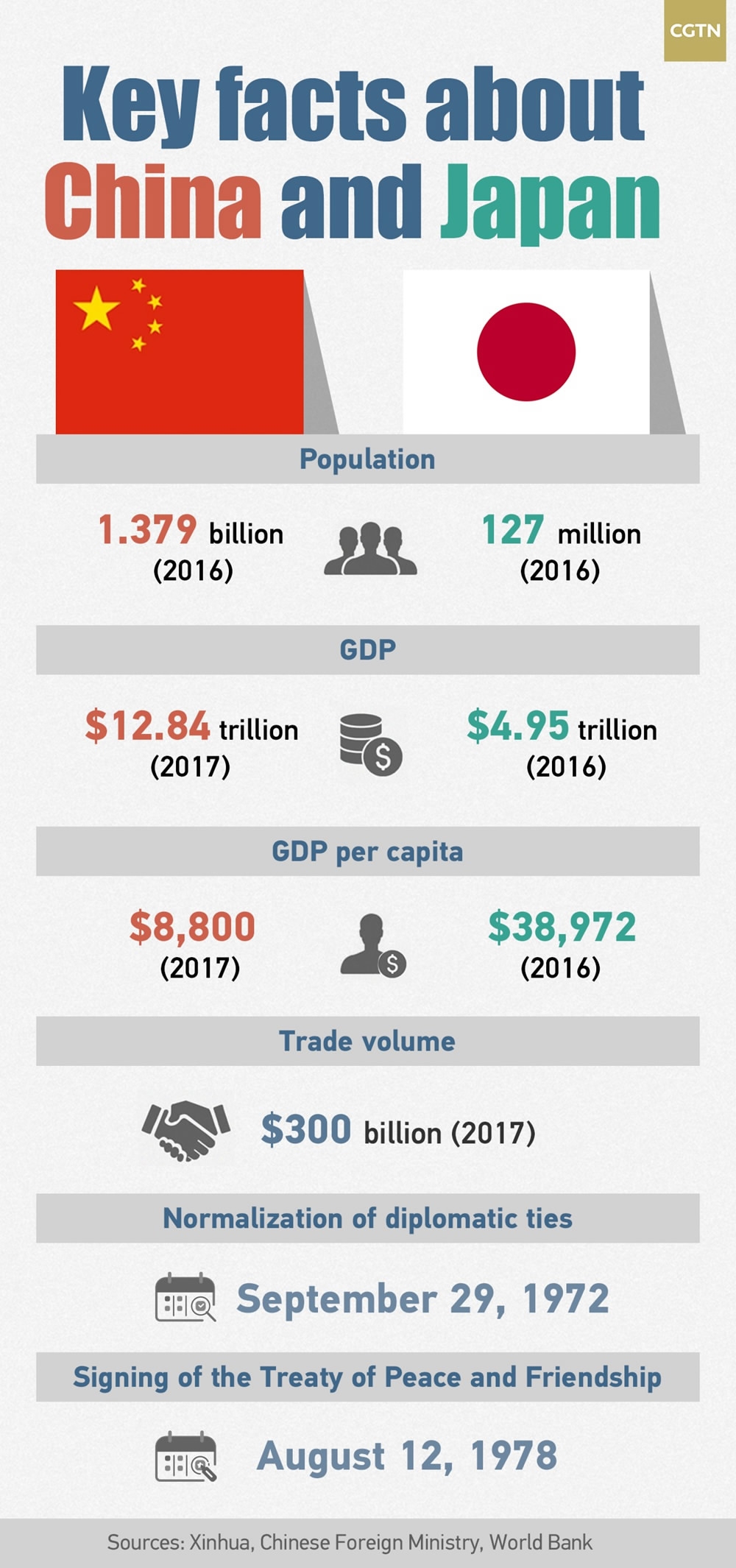
Since the normalization of their diplomatic relations in 1972, ties between China and Japan have experienced rounds of ups and downs – the past decade was no exception.
In May 2008, then Chinese President Hu Jintao played table tennis with Japanese player Ai Fukuhara during his state visit to Japan, rekindling memories of the well-known "ping-pong diplomacy" between Beijing and Washington in the early 1970s.

May 8, 2008: Then Chinese President Hu Jintao (R) plays table tennis with Japanese player Ai Fukuhara during his state visit to Japan. /Xinhua Photo
May 8, 2008: Then Chinese President Hu Jintao (R) plays table tennis with Japanese player Ai Fukuhara during his state visit to Japan. /Xinhua Photo
Then Chinese Premier Wen Jiabao – Li's predecessor – traveled to Japan several times, either for the China-Japan-South Korea leaders' meeting or an official visit to Tokyo. In May 2011, he visited Japan's quake-hit area in Fukushima.
However, tensions rose sharply in 2012 over Japan's unilateral move to "nationalize" the Diaoyu Islands, claimed by both countries, leading to a halt in bilateral high-level exchanges.
Japanese politicians' frequent visits to the notorious war-linked Yasukuni Shrine made things worse.

This file photo taken on a marine surveillance plane B-3837 shows the Diaoyu Islands and nearby islands. /Xinhua Photo
This file photo taken on a marine surveillance plane B-3837 shows the Diaoyu Islands and nearby islands. /Xinhua Photo
Read more:
Gradual rapprochement
The tensions that had lasted over two years began to thaw in November 2014, when world leaders gathered in Beijing for a summit of the Asia-Pacific Economic Cooperation (APEC).
On the sidelines of the event, China and Japan reached a four-point consensus to improve bilateral ties, agreeing to resume political, diplomatic and security dialogue while acknowledging different positions on the Diaoyu Islands. Xi also had a meeting with Abe.
Since then, leaders of the two countries have resumed interactions on the sidelines of multilateral gatherings. The Japanese prime minister visited China again in September 2016 for a summit of the Group of 20 (G20) in Hangzhou.

November 11, 2017: Chinese President Xi Jinping (R) meets with Japanese Prime Minister Shinzo Abe in Da Nang, Vietnam, on the sidelines of an APEC meeting. /Xinhua Photo
November 11, 2017: Chinese President Xi Jinping (R) meets with Japanese Prime Minister Shinzo Abe in Da Nang, Vietnam, on the sidelines of an APEC meeting. /Xinhua Photo
The rapprochement has gained momentum since last year, as the two sides seek to enhance communication over situations on the Korean Peninsula and trade issues. Japan has also showed enthusiasm in the China-proposed Belt and Road Initiative.
In a show of goodwill, Abe paid a visit to the Chinese embassy in Tokyo in late September for a ceremony marking China's National Day. In November, he met with Xi and Li in Vietnam and the Philippines respectively while attending international meetings. This April, the two countries resumed their high-level economic dialogue after nearly eight years.
Abe has invited Li to visit Japan on several occasions, according to the Chinese premier.
Complicated ties
Nevertheless, the rapprochement remains fragile, and flashpoints such as the East China Sea dispute and Japan's unwillingness to face up to its history of aggression could easily derail the encouraging trend.
China and Japan still lack political and strategic trust as well as clear and feasible positioning of their relationship, according to Jin Linbo, a senior research fellow at the China Institute of International Studies (CIIS).
Picturing the future development of their complicated relations, Jin told CGTN that the two neighbors can maintain smooth and stable ties in the near future, but "cooperation and friction will coexist" in the bilateral relations over a longer period.
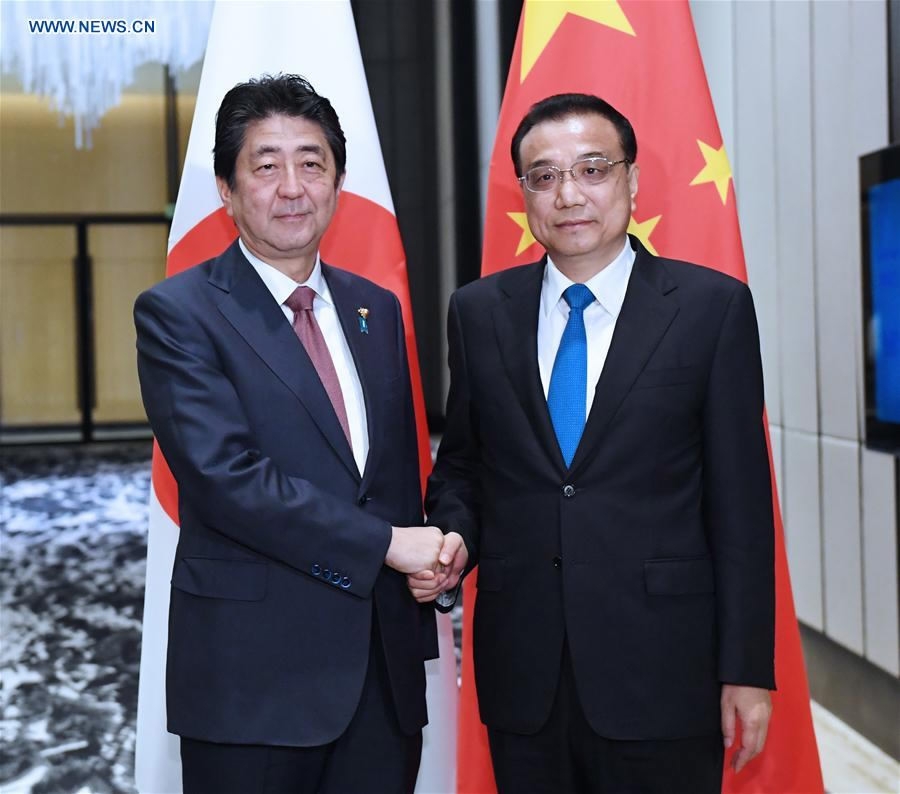
November 13, 2017: Chinese Premier Li Keqiang (R) meets with Japanese Prime Minister Shinzo Abe in Manila, Philippines, on the sidelines of the 20th China-ASEAN (10+1) leaders' meeting. /Xinhua Photo
November 13, 2017: Chinese Premier Li Keqiang (R) meets with Japanese Prime Minister Shinzo Abe in Manila, Philippines, on the sidelines of the 20th China-ASEAN (10+1) leaders' meeting. /Xinhua Photo
As the two countries celebrate the 40th anniversary of the signing of the Treaty of Peace and Friendship, Beijing called on Tokyo to cherish the momentum of rapprochement; Abe also expressed Japan's willingness to push forward comprehensive improvement and development of bilateral relations; both sides said they should view each other as partners rather than threats.
To transform the warm words into concrete political trust, more efforts need to be made between the world's second and third largest economies – both to expand common ground and to properly handle their differences.