
World
18:58, 08-May-2019
Abortion: Georgia becomes latest U.S. state to sign 'heartbeat bill' into law
 ["north america"]
Share







Copied
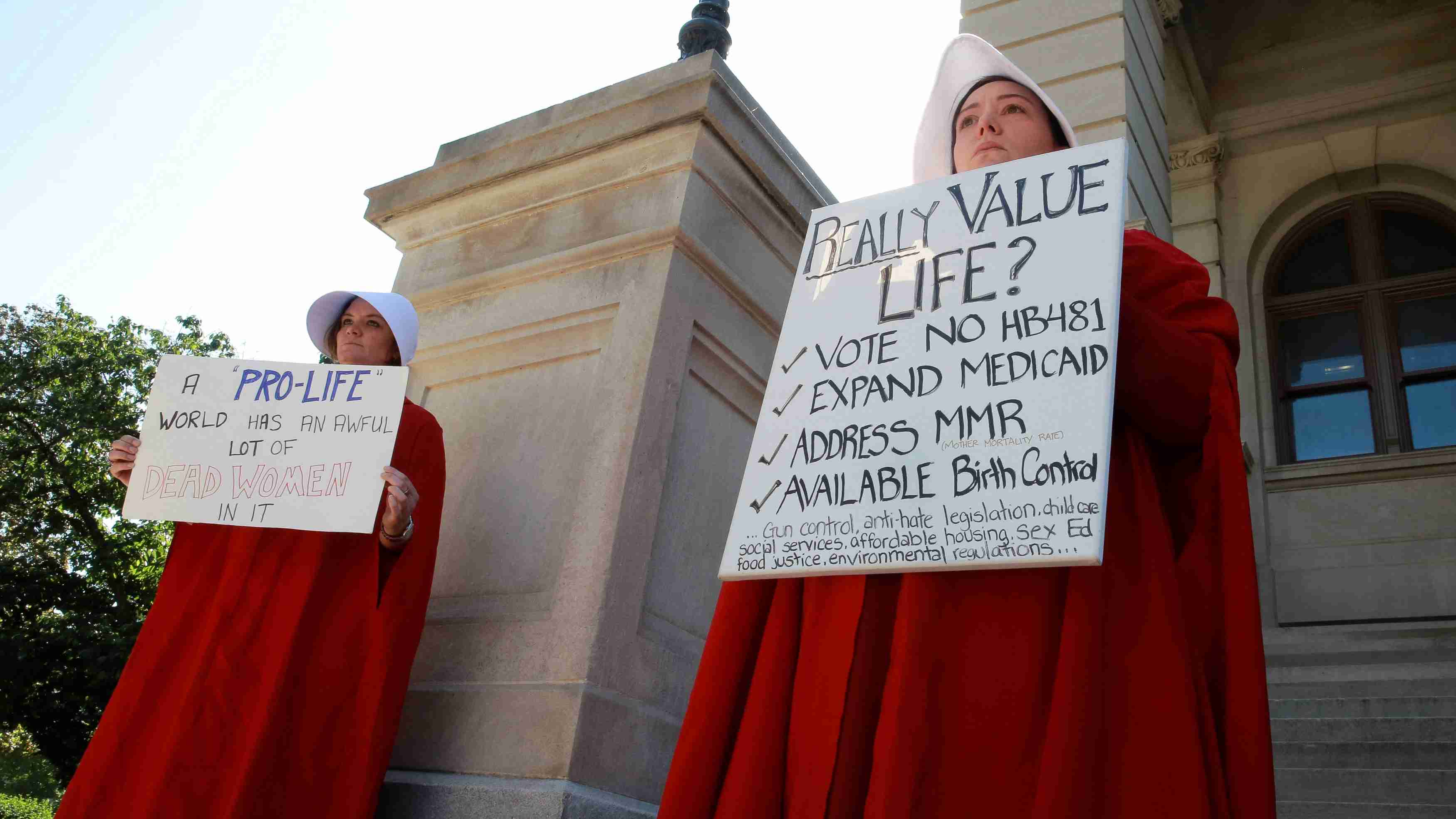
The governor of the U.S. state of Georgia, Brian Kemp, signed a disputed new piece of legislation on Tuesday that would ban abortions as early as six weeks into a pregnancy, the latest move in a campaign that many fear could lead to the overturning of a key 1973 abortion ruling.
The so-called "heartbeat bill" would outlaw abortions as soon as a fetus's heartbeat is detected. Proponents of the bill say aborting a fetus with a heartbeat amounts to murder. "We must protect life at all stages," Kemp said as he signed the bill into law.
Opponents however point out that most women are not even aware that they are pregnant at the six-week mark, so that the new law is basically a ban on all abortions.
Georgia follows in the footsteps of Ohio, Kentucky, Iowa and Mississippi, all of which have signed heartbeat bills over the past year.
Other states like South Carolina, Louisiana, Alabama and Texas have also been considering stricter anti-abortion legislation.
Abortion law at risk
Abortion has been legal in the U.S. since the landmark Roe v. Wade Supreme Court ruling in 1973.
But efforts to restrict access or ban abortion altogether have gained momentum under the Trump administration.
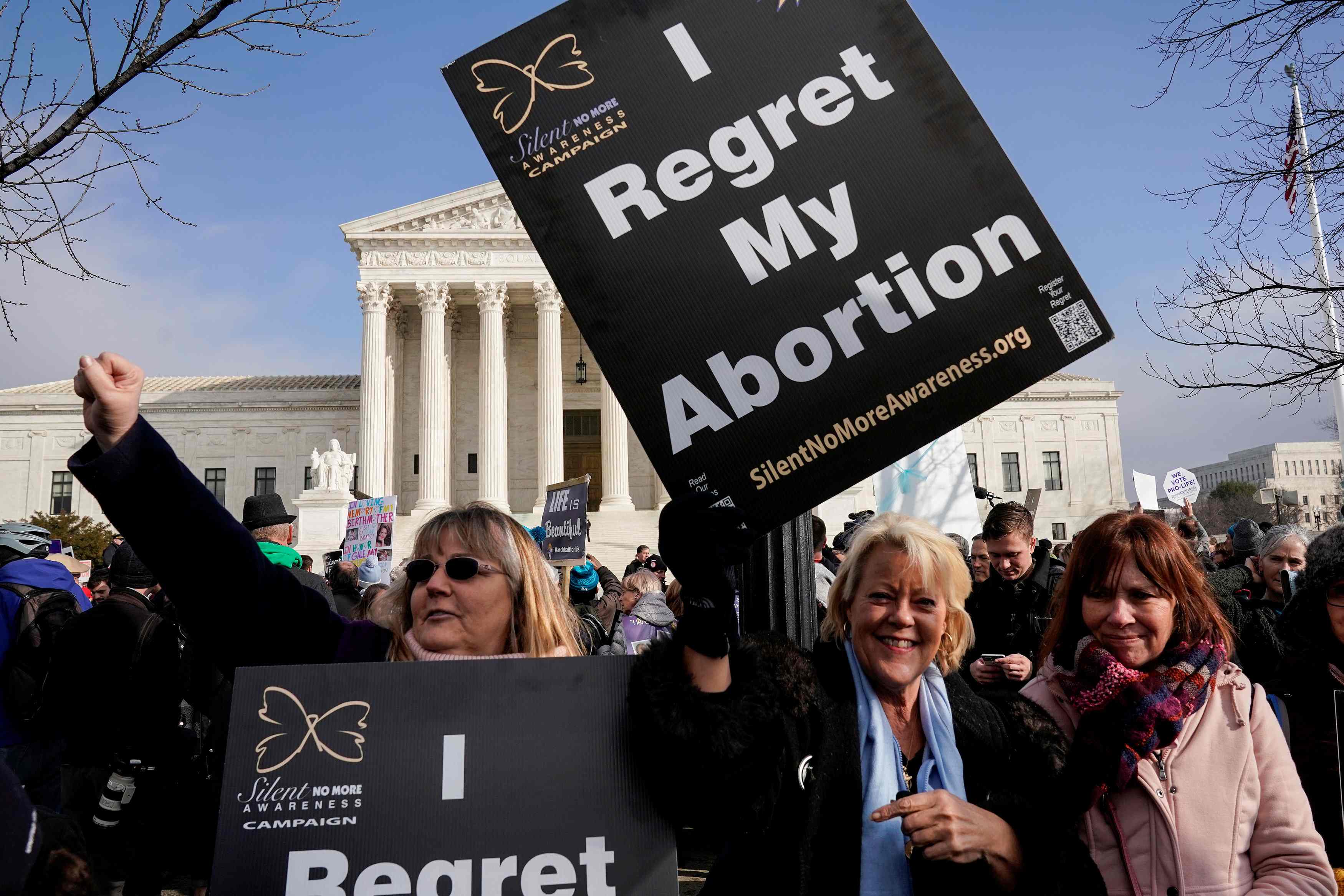
Anti-abortion marchers rally at the Supreme Court in Washington, D.C., January 18, 2019. /Reuters Photo
Anti-abortion marchers rally at the Supreme Court in Washington, D.C., January 18, 2019. /Reuters Photo
As a presidential candidate, Donald Trump already made clear he was prepared to overturn Roe v. Wade and appoint Supreme Court justices to achieve that.
His two appointees so far, Neil Gorsuch and Brett Kavanaugh, are conservatives who are widely seen as being in favor of limiting or banning abortion.
With at least 16 abortion cases possibly making their way to the Supreme Court, justices may be forced to make a new ruling on the issue sooner rather than later.
'See you in court!'
But even as efforts to restrict abortion have multiplied – one Democratic senator has cited 250 bills in 41 states over the past three months – there has also been a concerted push-back.
Iowa's heartbeat bill was struck down by a state judge in January. The one in Kentucky was put on hold by a federal court until a hearing could be held on its constitutionality.
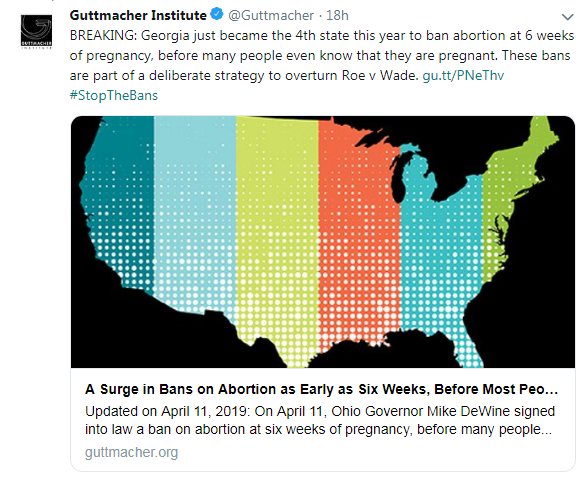
CGTN screenshot of Guttmacher Institute's Twitter feed.
CGTN screenshot of Guttmacher Institute's Twitter feed.
Barely signed into law, Georgia's bill also faces legal action.
"We'll be suing to make sure this law never takes effect," the Center for Reproductive Rights tweeted on Tuesday. "We will see you, sir, in court," Staci Fox, CEO of Planned Parenthood Southeast, added in a message to Kemp.
Limiting when, how and where
If it gets through, Georgia's House Bill 481 will come into force on January 1, 2020.
While it rules out access to abortion once a fetal heartbeat is detected, it allows exceptions if the mother's health is at risk, or in the case of rape or incest.
This led to one anti-abortion group, Georgia Right to Life, pulling its support for the proposal, on the basis that it did not go far enough.
The wide divergences in anti-abortion legislation have long complicated the issue. Proposals range from bans on specific procedures and at certain stages in pregnancy, to efforts to intimidate and pressure patients and doctors and restrict access to medical facilities, according to Planned Parenthood.
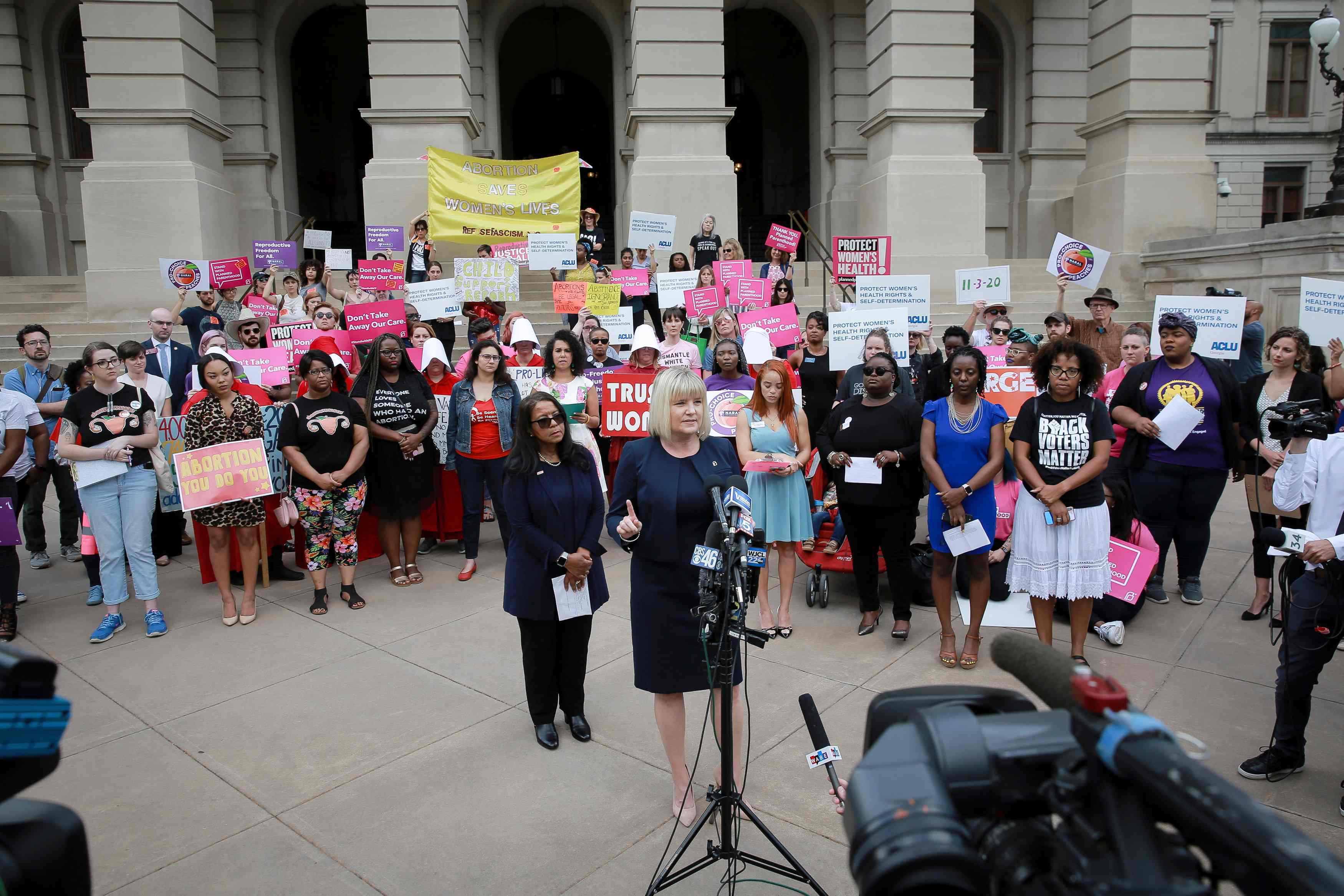
Staci Fox (C), CEO of Planned Parenthood
Southeast, speaks at a protest against Georgia's "heartbeat bill" at the
Georgia State Capitol in Atlanta, Georgia, May 7, 2019. /Reuters Photo
Staci Fox (C), CEO of Planned Parenthood Southeast, speaks at a protest against Georgia's "heartbeat bill" at the Georgia State Capitol in Atlanta, Georgia, May 7, 2019. /Reuters Photo
According to the Guttmacher Institute, which specializes in abortion research and policy analysis, one in four women in the U.S. has an abortion before the age of 45.
Flashpoint 2020
In any case, abortion will remain a hot political issue going into the 2020 presidential election.
In an online post on Medium on Tuesday, Democratic candidate Kirsten Gillibrand vowed, if elected, to only nominate judges and Supreme Court justices "who will commit to upholding Roe v. Wade as settled law and protect women's reproductive rights."
"The decision about if and when to start a family should be made by a woman and her doctor – not Republican legislators, not Brett Kavanaugh and certainly not Donald Trump," she said.
(Cover picture: Two protesters hold signs while dressed as Handmaids in protest of Georgia's anti-abortion "heartbeat bill" at the Georgia State Capitol in Atlanta, Georgia, May 7, 2019. /Reuters Photo)