
Tech & Sci
10:52, 08-May-2018
Study: Babies brains may understand emotions of others
 ["china"]
Share






Copied
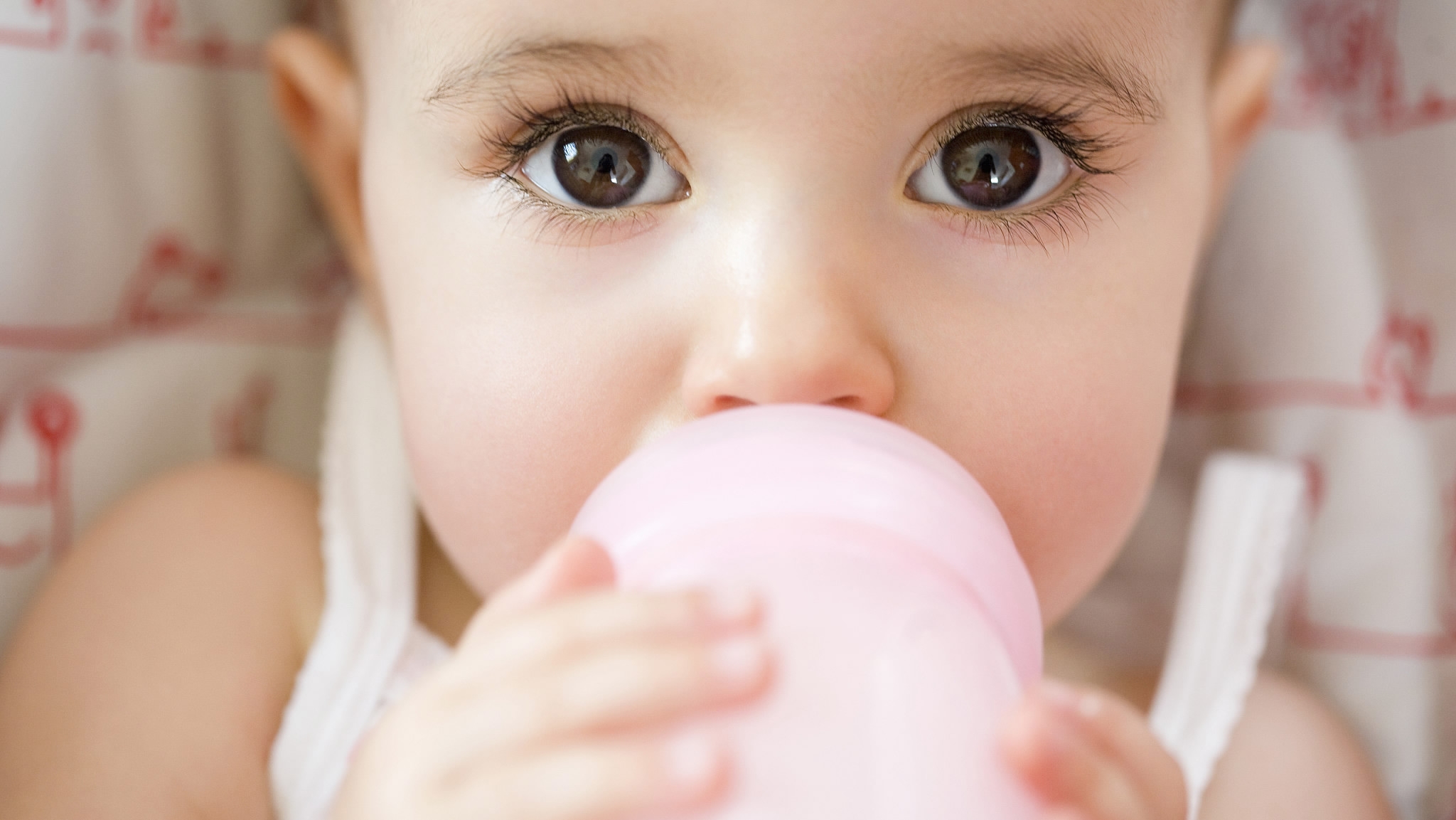
Scientists have found evidence to support the notion that babies can read other people’s beliefs and mental states during a brain-imaging study.
The study, conducted by the University of Illinois, showed that babies’ brain activities undergo changes when they viewed videos of an actor who saw – or failed to see – an object being moved to a new location, a reaction that was also seen in adults who were asked to watch the same videos.
The monitored brain region is thought to play a role in processing other people’s beliefs.
“This suggests that the infant brain, like that of adults, may distinguish when others hold true and false beliefs,” said University of Illinois psychology professor Daniel Hyde, who led the new research.
In the previous study, UI researchers used the same brain-imaging methodology of looking at activity in the temporal-parietal junction (TPJ), a brain region thought to play a role in theory of mind, as previous studies used in adults, referring to the ability to think about other people’s mental states.
They recorded activity in the TPJ as adults viewed a video of an actor watching – or not watching – a puppet move a toy from one location to another.
This time scientists used an emerging technology called near-infrared spectroscopy, a method that allows infants to sit on their parents' lap and watch whatever presented to them with just a specific cap to capture their brain activity in the TPJ.
After the experiment, they found that the TPJ in infants responds very similarly to that of adults when viewing different video scenarios.
“We wanted to see whether there was a parallel between activity in the TPJ in infancy and what occurs in adults during these scenarios that some people claim engage theory of mind,” Hyde said.
“The logic is that if this region responds in a similar way in infants, you can draw a more direct comparison to what adults and older children are doing.”
Hyde said the new findings do not suggest that infants have a fully developed theory of mind in the first year of life. "This simply provides a foundation for developing a deeper understanding of other people's thoughts and beliefs."
(Top Image: VCG Photo)
Source(s): Xinhua News Agency