
Politics
15:08, 14-Aug-2018
Mali waits for results after presidential runoff vote
Updated
14:26, 17-Aug-2018
 ["africa"]
Share







Copied
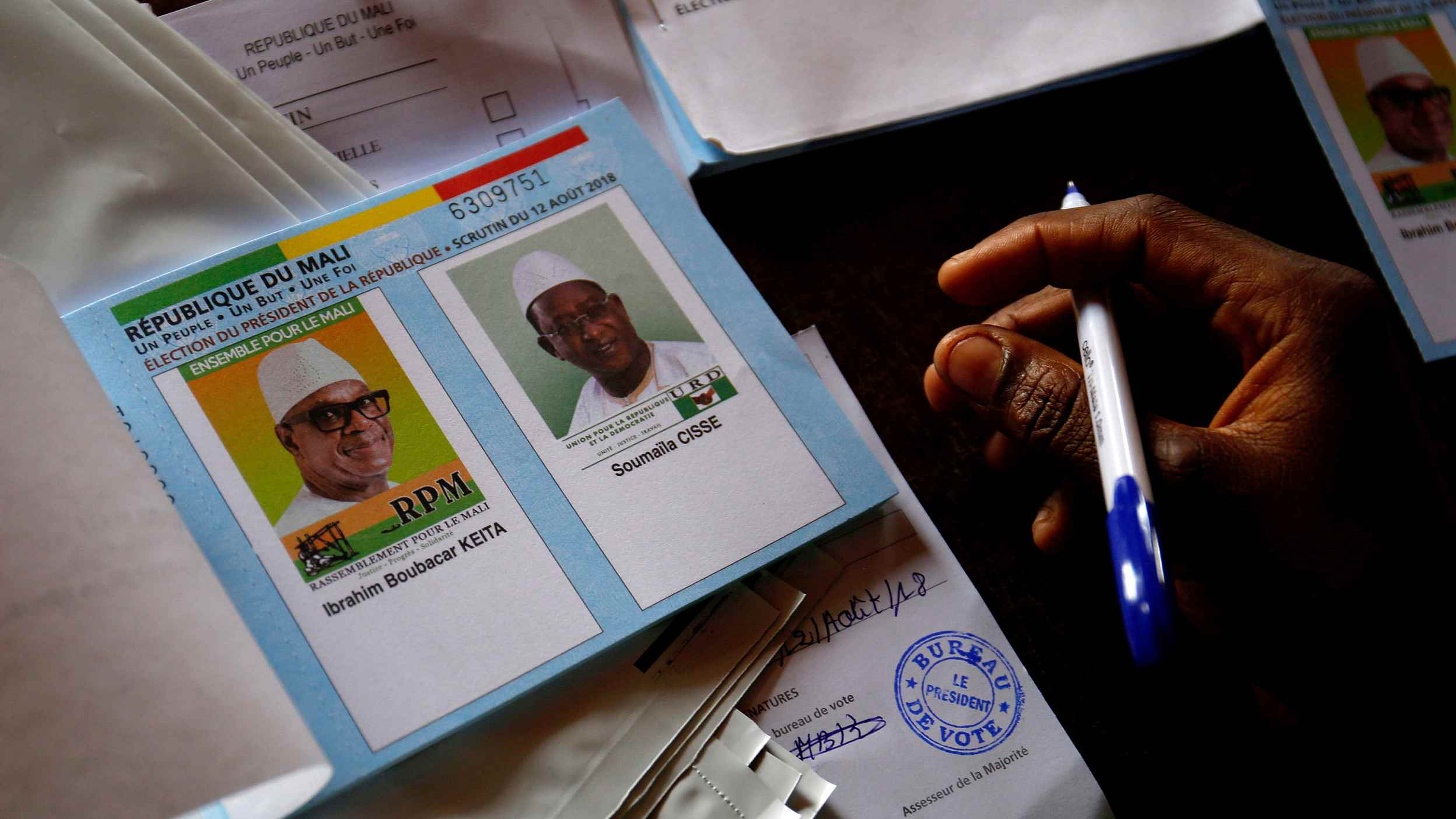
Ballot counting was underway on Monday after Malians voted in a run-off presidential election on Sunday.
President Ibrahim Boubacar Keita is the clear frontrunner in a reprise of his 2013 faceoff against former finance minister Soumaila Cisse.
In a preliminary report published on Monday, African Union election observers said the voting was carried out "in acceptable conditions." The European Union also said that in the 300 polling stations its observers visited, no "major incident" occurred.
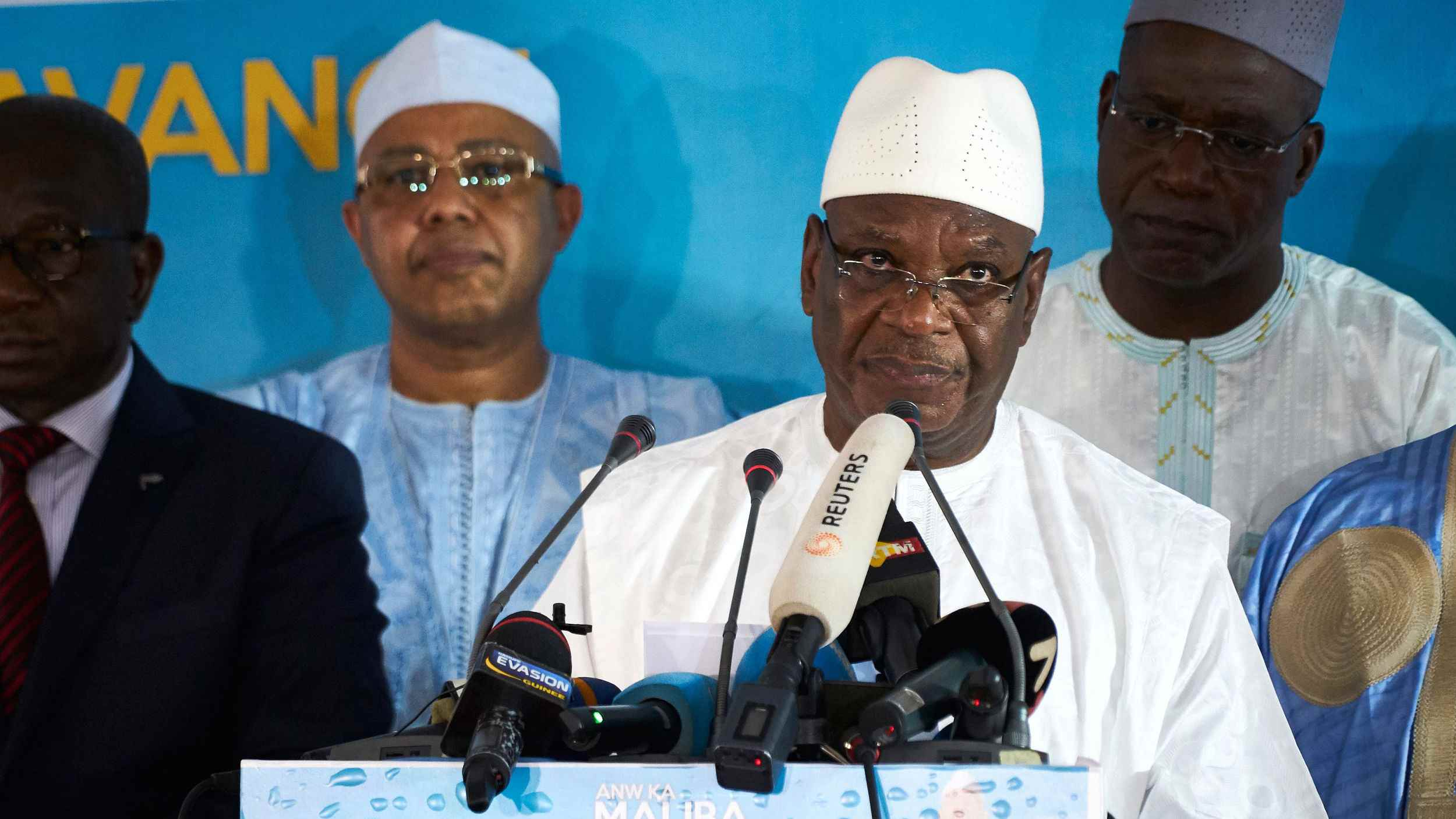
Incumbent Malian President Ibrahim Boubacar Keita addresses supporters at his party headquarters in Bamako, August 3, 2018. /VCG Photo
Incumbent Malian President Ibrahim Boubacar Keita addresses supporters at his party headquarters in Bamako, August 3, 2018. /VCG Photo
Threats by jihadist militants forced nearly 500 polling stations – about two percent of the total – to stay closed during Sunday's run-off, the government said. The overseer of a polling station in Arkodia, in the northern region of Timbuktu, was shot dead on Sunday by armed Islamist militants, local officials added.
Aside from this "dramatic case," the government said the poll occurred without incident.
In the first-round vote on July 29, Keita was clearly ahead, with 42 percent against 18 percent for Cisse. Cisse failed to rally the support of other parties behind him for the runoff, leaving the incumbent seemingly on track for a second consecutive landslide.
Results are expected by midweek at the earliest.
Cisse questions results
Cisse on Monday insisted that fraud had taken place and said he would not accept the election results.
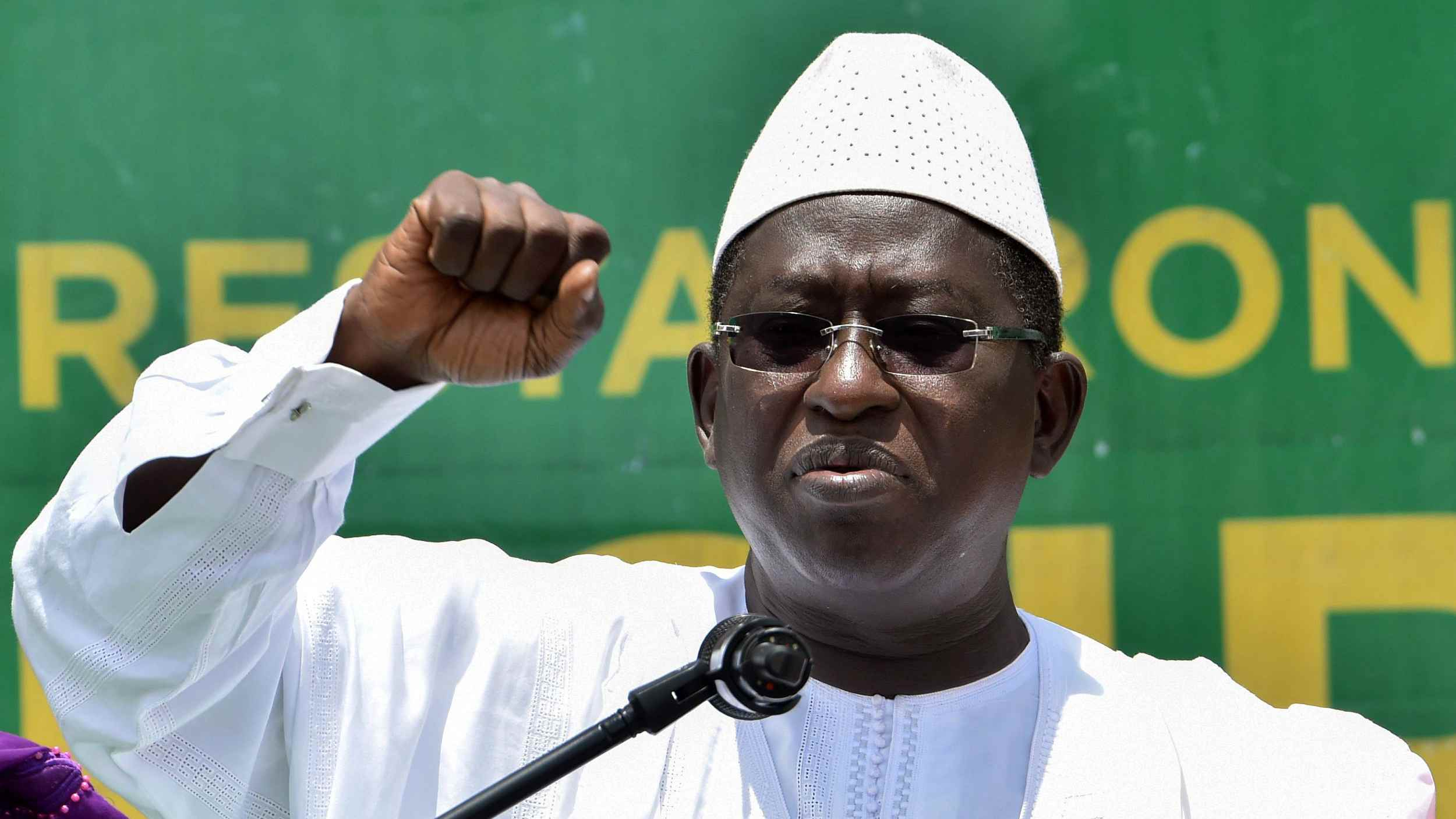
Malian opposition leader Soumaila Cisse gestures as he addresses supporters at his party's headquarters in Bamako, August 3, 2018. /VCG Photo
Malian opposition leader Soumaila Cisse gestures as he addresses supporters at his party's headquarters in Bamako, August 3, 2018. /VCG Photo
"The fraud is proven, this is why there are results we will not accept," Cisse said at his party's headquarters in Bamako.
Hopes for stability
Mali, a landlocked nation that's home to at least 20 ethnic groups where the majority of people live on less than two US dollars a day, has battled jihadist attacks and intercommunal violence for years. Beyond its borders, the international community hopes that the winner will consolidate a 2015 accord that the fragile Sahel state sees as its foundation for peace.
The deal brought together the government, government-allied groups and former Tuareg rebels. But jihadist violence has spread from the north to the center and south of the vast country and spilled into neighboring Burkina Faso and Niger, often inflaming communal conflicts.
A state of emergency heads into its fourth year in November. France still has 4,500 troops deployed alongside the UN's 15,000 peacekeepers and a regional G5 Sahel force aimed at rooting out jihadists and restoring the authority of the state.
(With input from agencies)
11845km