
Business
08:46, 23-Jul-2018
G20 leaders call for stepped-up trade dialogue
Updated
08:10, 26-Jul-2018
 ["china"]
Share







Copied
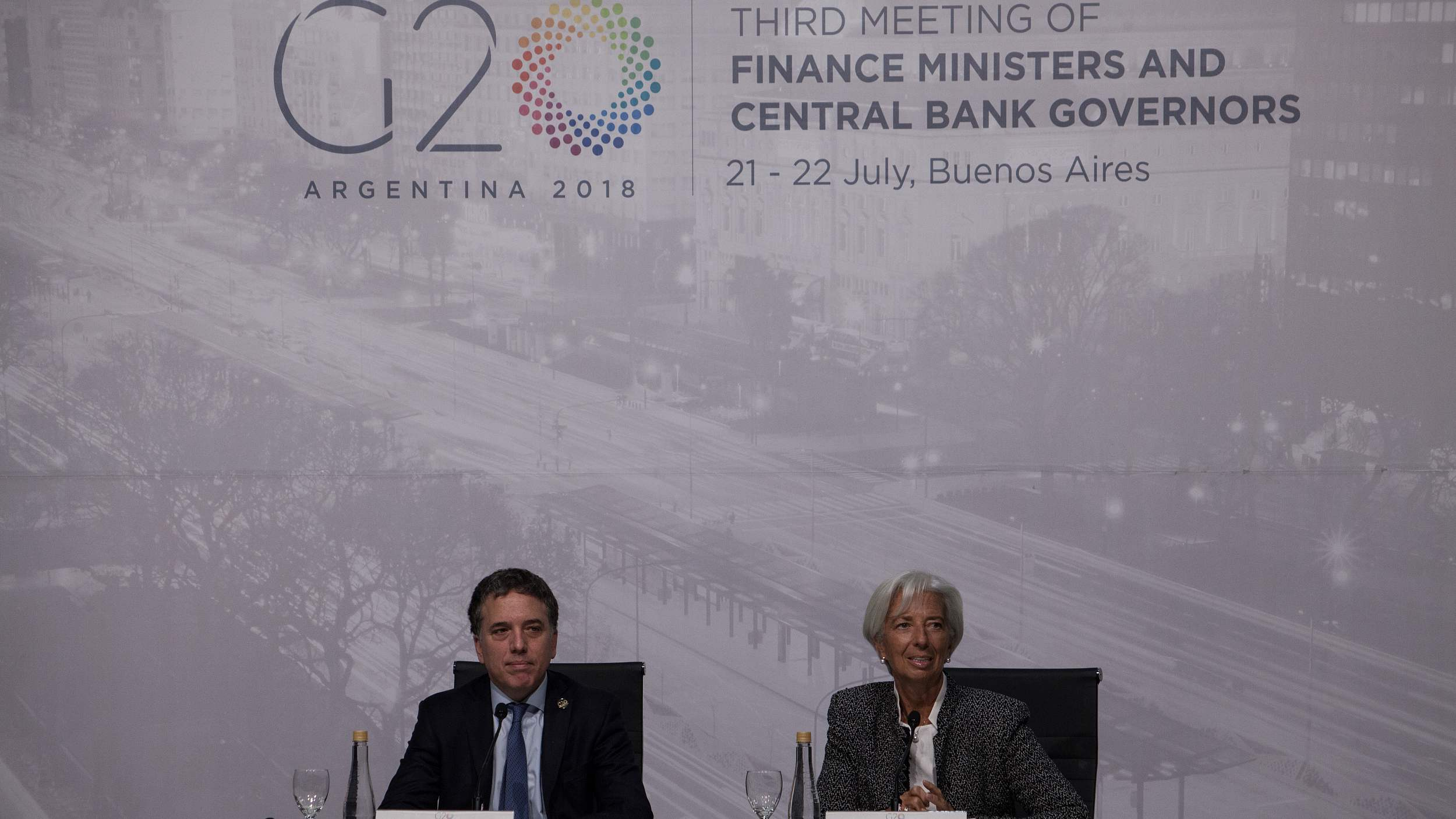
Global finance leaders called on Sunday for stepped-up dialogue to prevent trade and geopolitical tensions from hurting growth, but ended a two-day G20 meeting with little consensus on how to resolve multiple disputes over US tariff actions.
The finance ministers and central bank governors from the world’s 20 largest economies warned that growth, while still strong, was becoming less synchronized and downside risks over the short- and medium-term had increased.
“These include rising financial vulnerabilities, heightened trade and geopolitical tensions, global imbalances, inequality and structurally weak growth, particularly in some advanced economies,” the G20 finance officials said in a communique.
“We ... recognize the need to step up dialogue and actions to mitigate risks and enhance confidence,” the communique said.
This marked a strengthening of language compared to their previous statement issued in March, in which they simply “recognize the need for further dialogue.”
“The latest language suggests a great deal of urgency about resolving these issues,” Australia Treasurer Scott Morrison said in an interview, adding that the ministers had made it clear in the discussion that they were concerned about “tit-for-tat measures” and that open trade was the goal.
The weekend talks in Buenos Aires came at a time of escalating rhetoric in the trade conflict between the United States and China, the world’s largest economies, which have so far slapped tariffs on 34 billion US dollars' worth of each other’s goods.
US Treasury Secretary Steven Mnuchin told a news conference on Sunday that he had no substantive discussions on trade with China’s finance minister, Liu Kun, at the G20 gathering, engaging mainly in “chit-chat.”
Managing Director of the International Monetary Fund (IMF), Christine Lagarde, has also reiterated the risks of protectionist trade policies having a negative impact on the world economy.
During a Saturday press conference, Lagarde noted recent global Gross Domestic Product (GDP) forecasts amid the United States' application of heavy tariffs on various foreign imports.
Lagarde said that the IMF has analyzed the hypothetical consequences of trade restrictions due to tariffs and said that "everything indicates" that the global GDP would be negatively affected.
The director reported that the institute was working "with interested parties" on a study to analyze repercussions from the tariff measures.
The IMF recently predicted that global GDP growth would be cut by 0.5 percent by 2020 if all the threatened tariffs were implemented.
Lagarde said that the US economy would also suffer, describing it as "vulnerable."
Source(s): Reuters
,Xinhua News Agency