
Opinions
18:09, 19-Oct-2018
Opinion: How likely is a ‘No-deal’ Brexit?
Updated
17:29, 22-Oct-2018
 ["china"]
Share







Copied
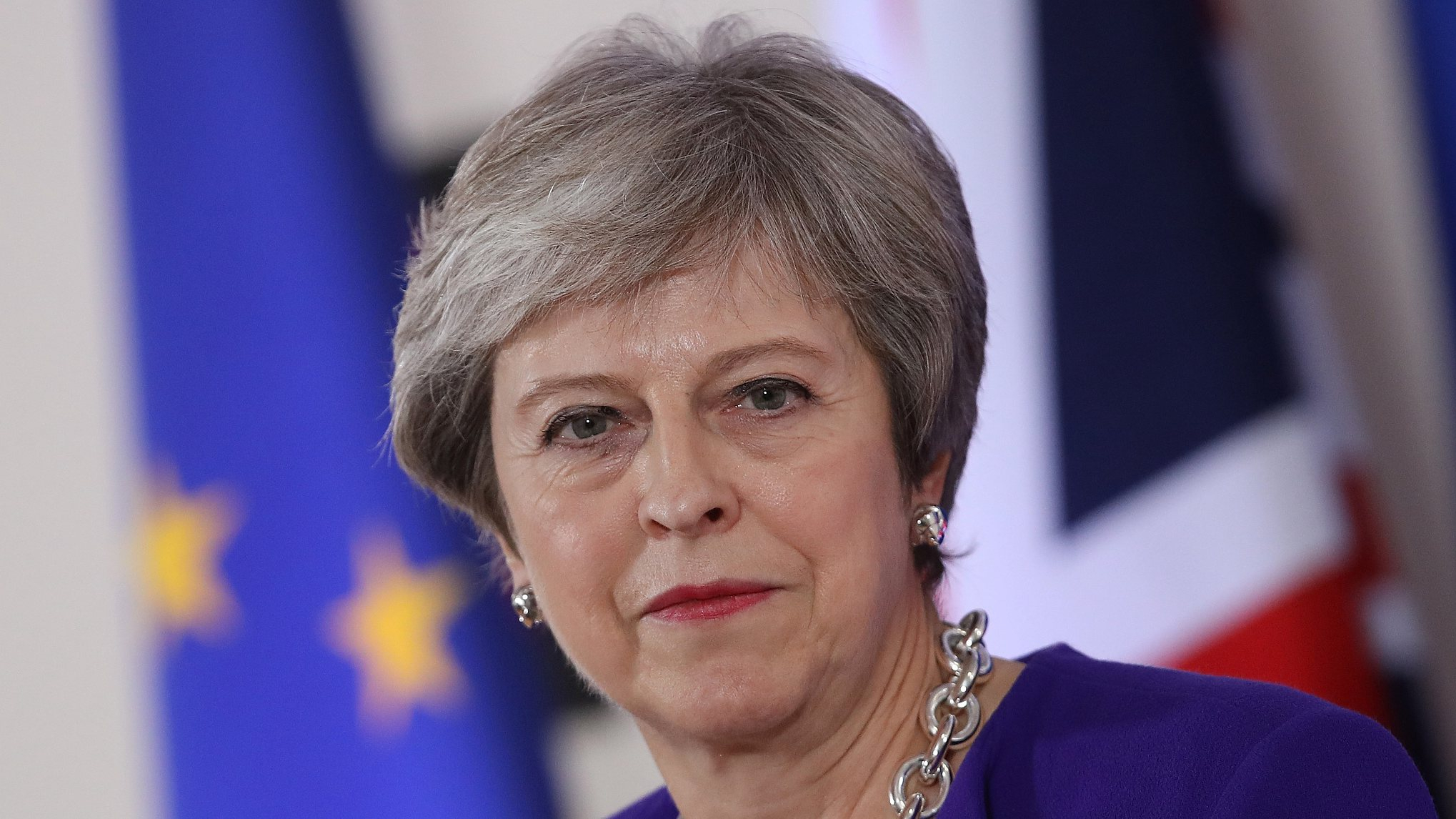
Editor's note: David Phinnemore is a professor of European Politics from the School of History, Anthropology, Philosophy and Politics at Queen's University Belfast. The article reflects the author's views, and not necessarily those of CGTN.
This week's European Council meeting in Brussels was supposed to be the occasion when UK Prime Minister Theresa May sealed the deal with fellow EU on the terms of its withdrawal from the bloc. No deal was reached.
Indeed, the European Council was remarkable for how little time it spent discussing “Brexit.” May presented for 15 minutes, offering her perspective on the state of negotiations before leaving the heads of government or state of the other 27 EU members to reflect over dinner on their collective position. The outcome was a statement indicating that “not enough progress” had been achieved and calling on the EU's chief negotiator, Michel Barnier, “to continue his efforts to reach an agreement in accordance with previously agreed European Council guidelines.”
So, with less than six months to go before March 29, 2019, and the UK's scheduled departure from the EU, the terms of withdrawal are still to be decided. Time is running out to secure a deal and to ensure that deal gains the approval of the UK Parliament as well as the European Parliament.
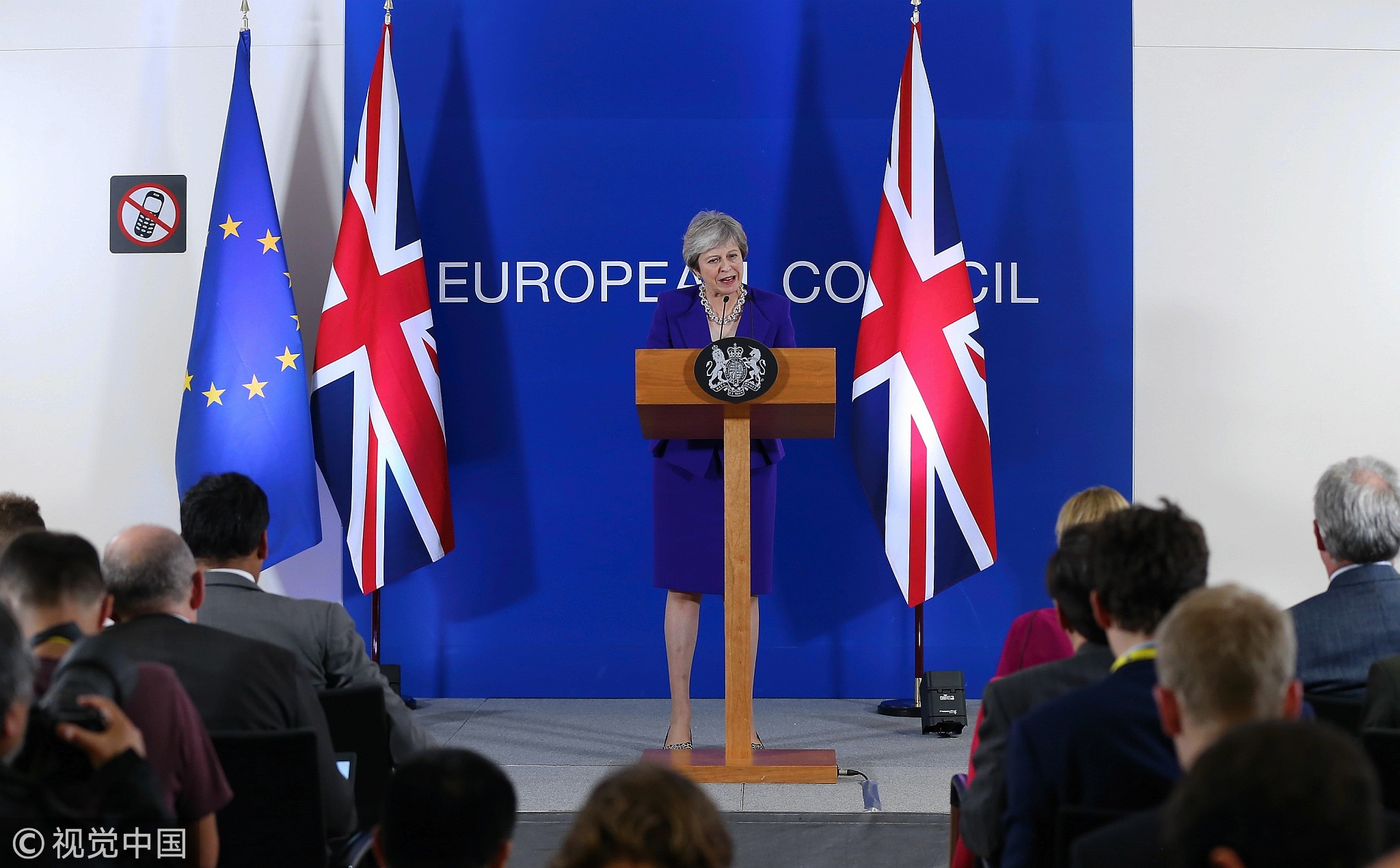
British Prime Minister Theresa May holds a press conference after the second day of the European Union leaders summit at the European Council in Brussels on October 18, 2018. /VCG Photo
British Prime Minister Theresa May holds a press conference after the second day of the European Union leaders summit at the European Council in Brussels on October 18, 2018. /VCG Photo
The main issue to be resolved is the so-called Northern Ireland “backstop.” This is a proposed arrangement designed to ensure no hardening of the currently invisible border on the island of Ireland. The need for such an arrangement is widely accepted: a return of any border controls or checks could undermine the peace process in Northern Ireland.
The UK government supports the idea of a backstop – in effect, an insurance policy should future negotiations on the future UK-EU relationship fail to deliver no hard border. However, it opposes the current EU proposals which could see Northern Ireland remain in the EU Customs Union and its single market for goods and so treated differently from the rest of the UK.
Others fear that an alternative of a UK-wide backstop would keep the UK in the EU Customs Union and so deny the UK the opportunity to conclude its own free trade agreements with countries around the world.
The problem for May is not only that the EU is insistent on a backstop, but that members of her own government and party are threatening to oppose any deal with the EU that contains the current proposal. There is also the position of Northern Ireland's vocal Democratic Unionist Party on which May relies for a majority in parliament. It is vehemently opposed to any outcome that sees Northern Ireland treated differently from the rest of the UK and has also threatened to vote against the government if necessary.
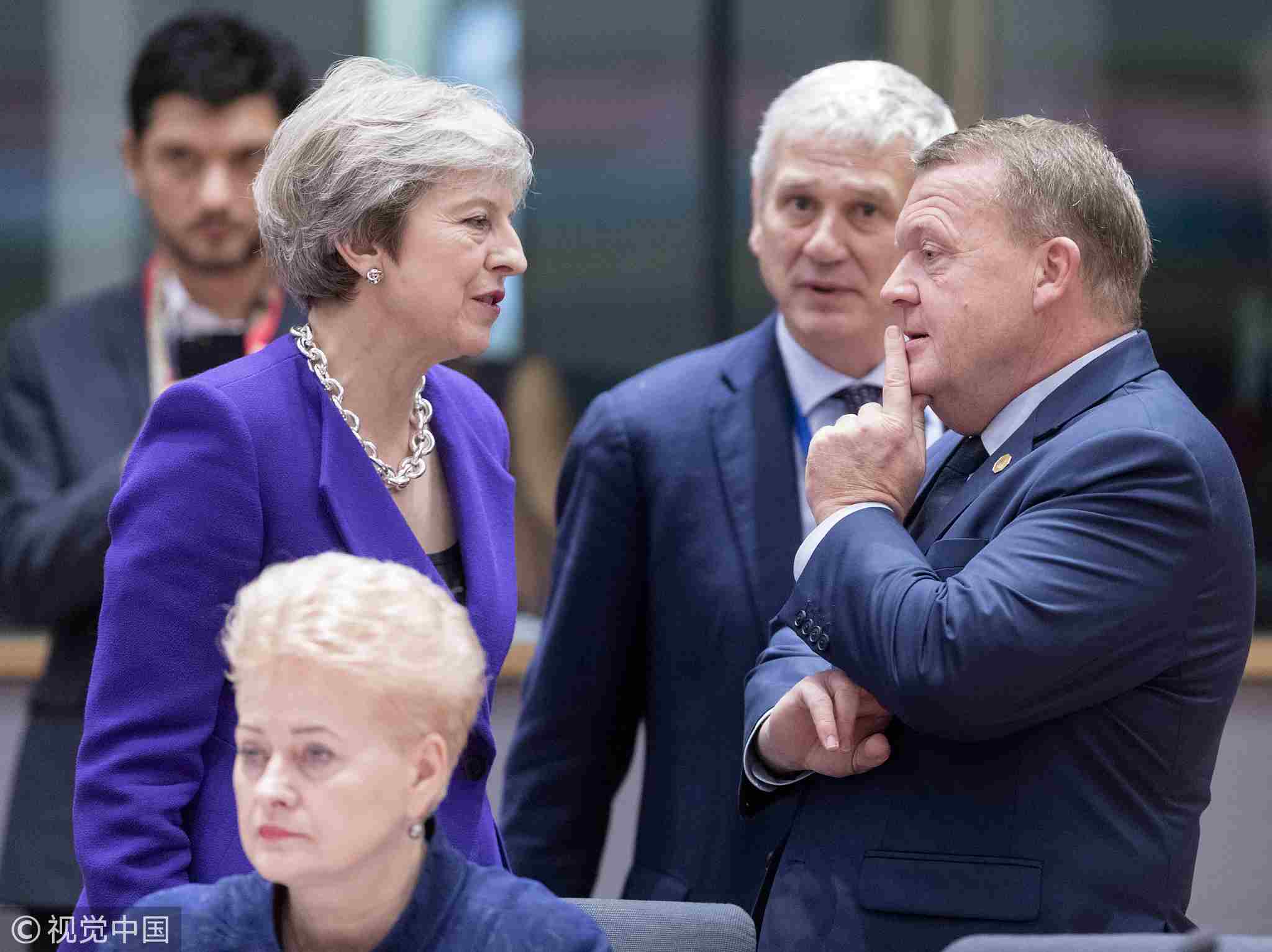
Prime Minister of the United Kingdom Theresa May (L) is talking with the Danish Prime Minister Lars Lokke Rasmussen (R) and the Lithuanian President Dalia Grybauskaite (sitting) during an EU chief of state summit in the Europa, the EU Council headquarter on October 18, 2018, in Brussels, Belgium. /VCG Photo
Prime Minister of the United Kingdom Theresa May (L) is talking with the Danish Prime Minister Lars Lokke Rasmussen (R) and the Lithuanian President Dalia Grybauskaite (sitting) during an EU chief of state summit in the Europa, the EU Council headquarter on October 18, 2018, in Brussels, Belgium. /VCG Photo
May is in an almost impossible situation; if she concedes to the EU, it doesn't currently look like she would be able to get the resulting deal approved by the UK Parliament. If so, the UK will be crashing out of the EU in little more than five months.
Although some cavalier Brexiteer MPs are perfectly content to see a “no deal” Brexit, the vast majority of MPs want a deal. The EU wants a deal, too. So, the European Council has agreed that it would convene again in November to conclude a withdrawal agreement. To do so, it needs to see “decisive progress” in negotiations.
Whether May can concede ground so that “decisive progress” can be recorded remains to be seen. The coming months will be tense with all parties also increasing preparations for a “no deal” Brexit. As the prospect of “no deal” becomes increasingly real, minds may become more focused on reaching an agreement. A “no deal” cannot, however, and should not be ruled out.
(If you want to contribute and have specific expertise, please contact us at opinions@cgtn.com.)