
Politics
16:41, 14-Jun-2018
Merkel calls for unity as EU migration divisions exposed
 ["europe"]
Share







Copied
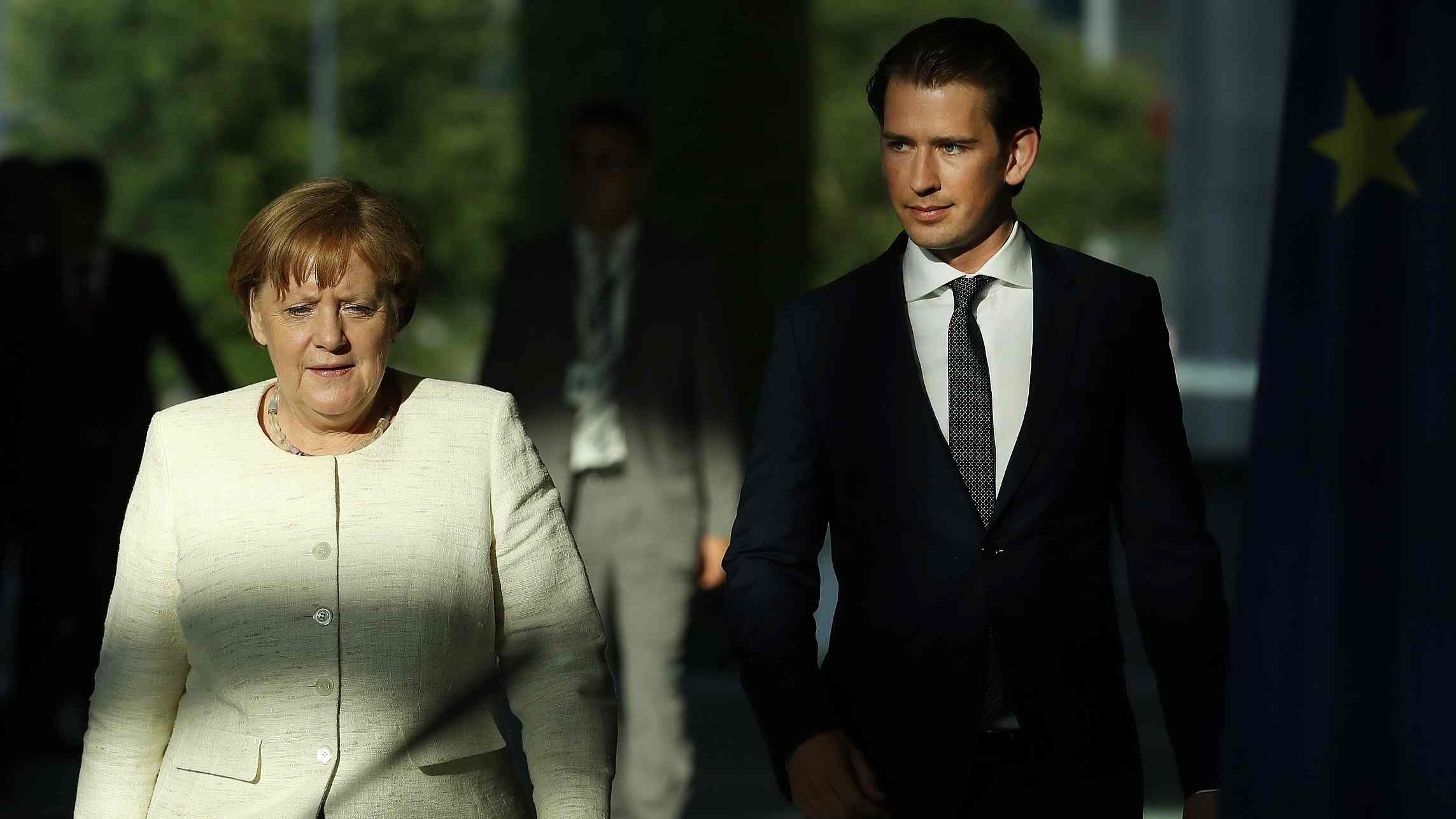
Divisions in European capitals over migration policy have been exposed in recent days following the new Italian government's refusal to allow a migrant ship to dock.
German Chancellor Angela Merkel again called for a unified EU approach on Wednesday, as France and Italy engaged in a war of words sparked by Rome's refusal to accept the Aquarius, a charity ship carrying 629 migrants.
The decision to reject the ship was condemned as "cynical and irresponsible" by French President Emmanuel Macron, but Italian interior minister Matteo Salvini – also the leader of the League, part of the governing coalition -- hit back on Wednesday, calling on France to accept 9,000 migrants and demanding that Macron apologize for "unacceptable" comments.
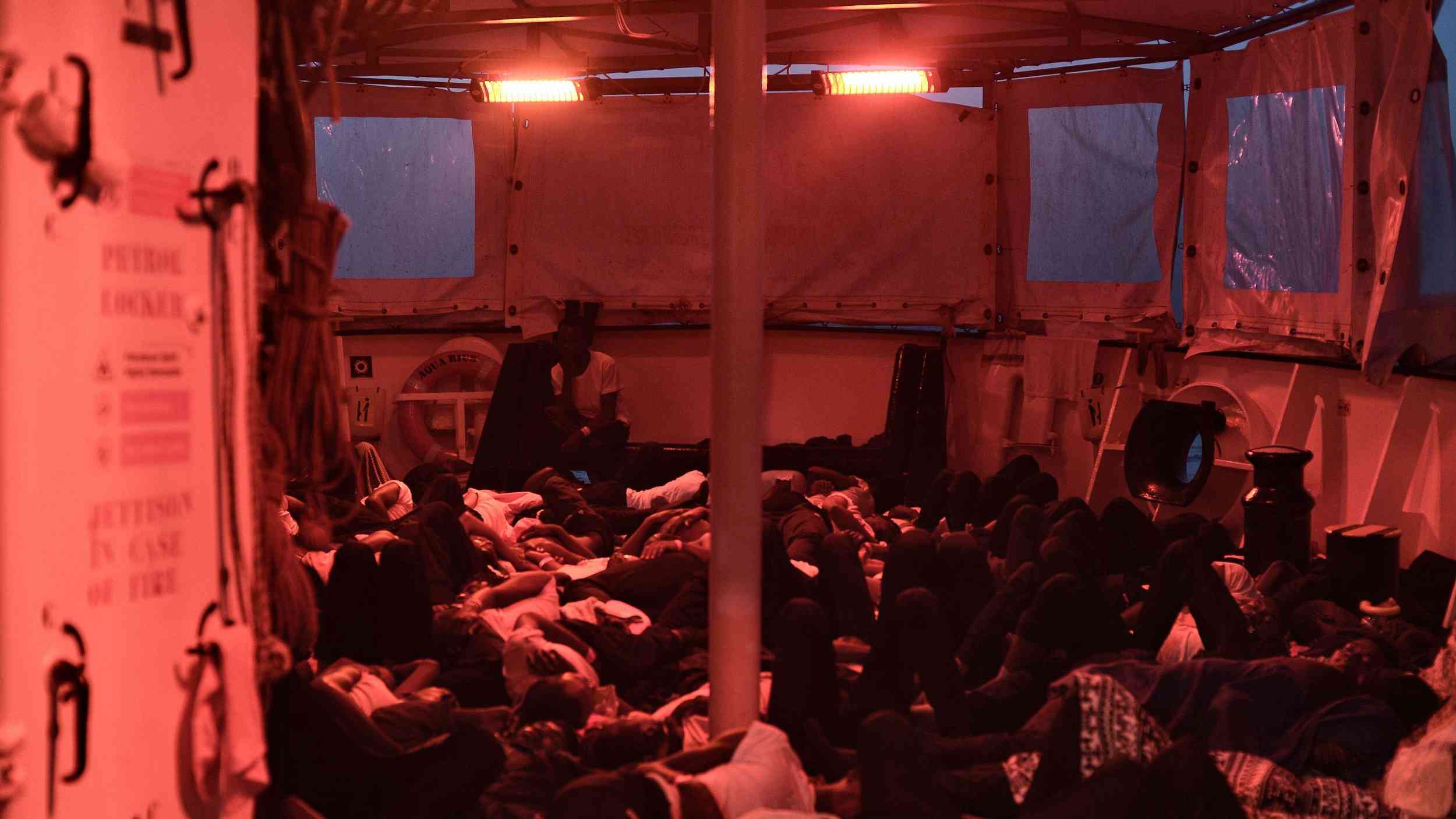
Rescued migrants sleep aboard the ship Aquarius, in the search-and-rescue zone in the Mediterranean Sea on June 12, 2018. /VCG Photo
Rescued migrants sleep aboard the ship Aquarius, in the search-and-rescue zone in the Mediterranean Sea on June 12, 2018. /VCG Photo
"Such statements are undermining relations between Italy and France," Italy's foreign ministry added.
Italy's new economy minister Giovanni Tria has canceled a trip to meet his counterpart Bruno le Maire in Paris, and Salvini has indicated a meeting – with talks set to focus on migration – between Prime Minister Giuseppe Conte and Macron scheduled for Friday could be scrapped. Conte has since confirmed the meeting will go ahead.
The Aquarius has now been granted permission to dock in Spain. It is expected to arrive on Saturday.
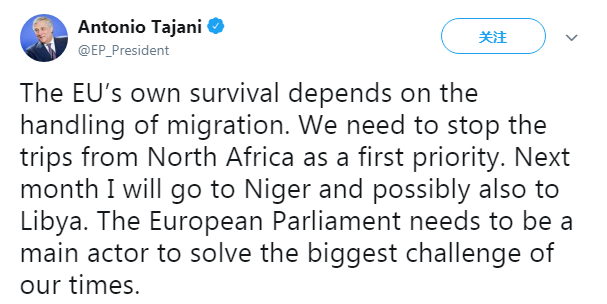
The European Parliament's president on Wednesday said the dispute over migration was threatening "the survival" of the 28-nation bloc. "The EU's own survival depends on the handling of migration," Antonio Tajani tweeted, calling it "the biggest challenge of our times."
Twitter Screenshot
Twitter Screenshot
Austrian Chancellor Sebastian Kurz, meanwhile, is expected to push for a crackdown on illegal migration when his country takes control of the Council of the European Union in July. He has brought together an "axis of the willing" – interior ministers from Austria, Germany and Italy – to push for a hardline EU approach on illegal migration.
Kurz said he was hoping for the support of the Netherlands and Denmark for his proposal. Hungary, Poland, the Czech Republic and Slovakia have also previously resisted taking in refugees under the EU quota system.
Horst Seehofer, the German interior minister and head of the CSU, which is in alliance with Merkel's CDU, is in dispute with his chancellor over migration policy. Seehofer appears to have signed up to the "axis of the willing" without Merkel's endorsement.
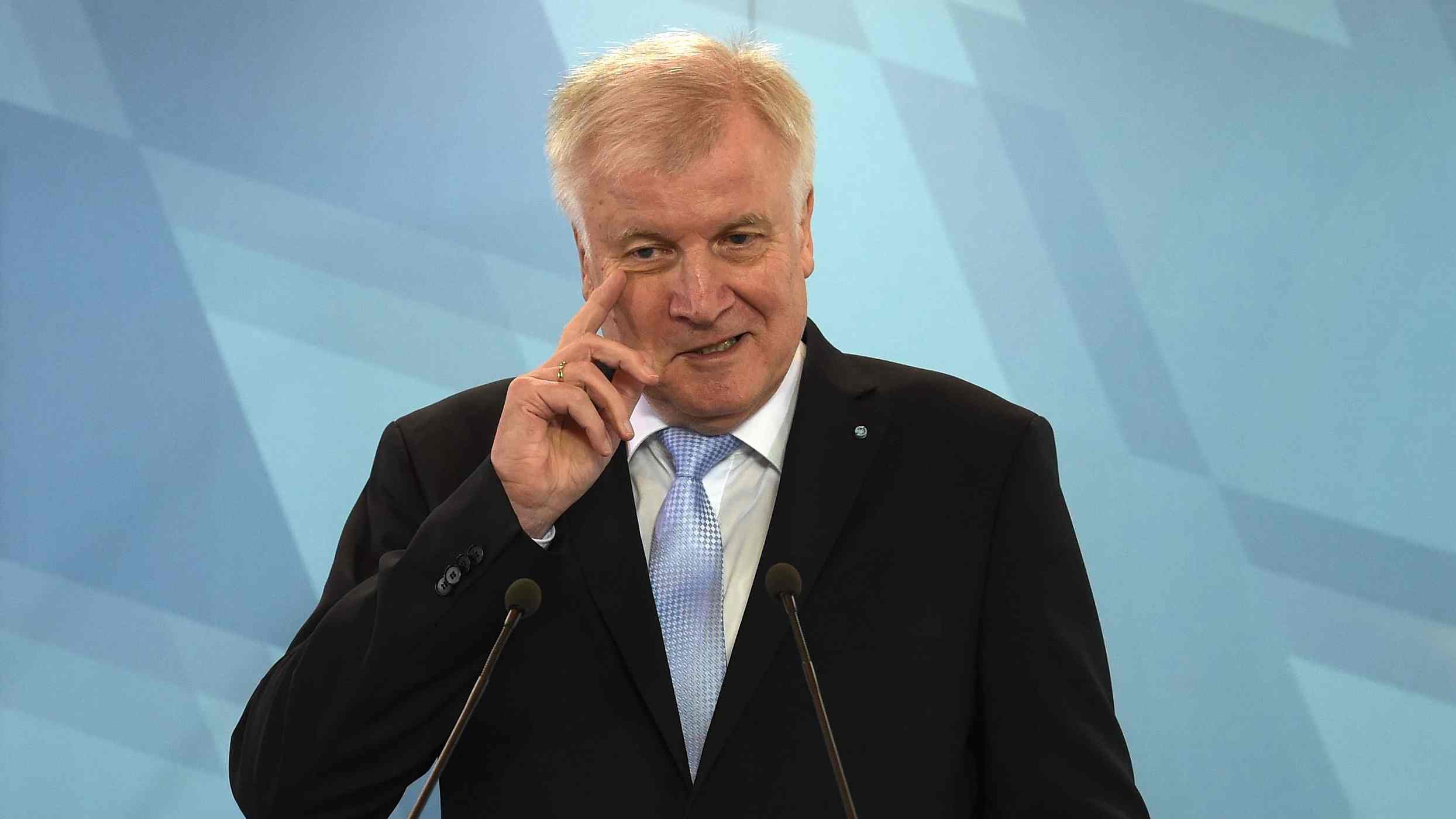
Horst Seehofer gives his last press conference as Bavarian State Premier following a meeting with the Bavarian cabinet on March 13, 2018. /VCG Photo
Horst Seehofer gives his last press conference as Bavarian State Premier following a meeting with the Bavarian cabinet on March 13, 2018. /VCG Photo
Merkel adopted an open-door migrant policy in 2015, and has rejected Seehofer's proposal to turn away at the border migrants who are registered in other EU states.
The German chancellor is continuing to try to put together a common approach to migration acceptable to all members of the 28-nation EU.
"It's very, very important to me that Germany also does not act unilaterally, but that everything we do is orderly, discussed, with agreements with others, so that we have a really unified European approach," Merkel told reporters on Wednesday.
The dispute over migration policy is coming to a head shortly before a key European Council summit, scheduled for June 28-29.